


Vintage Computer Desk
A vintage computer desk serves as a sturdy timber workspace repurposed from traditional pedestal and writing desks.
Vintage Computer Desk
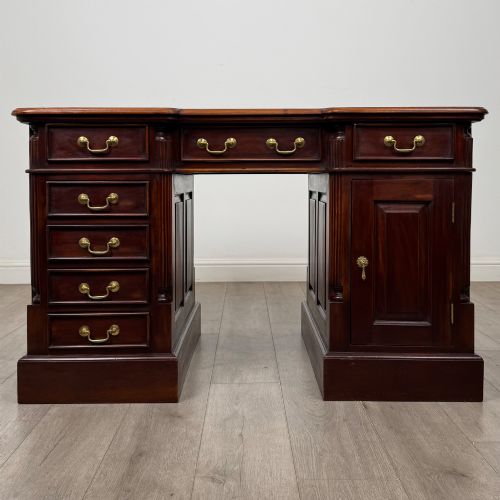
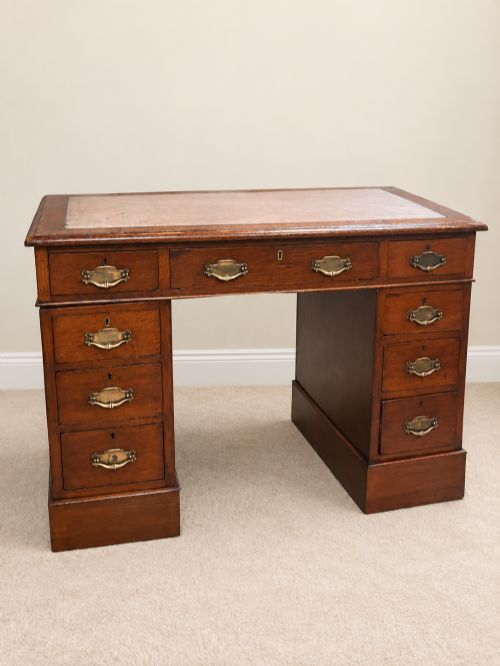
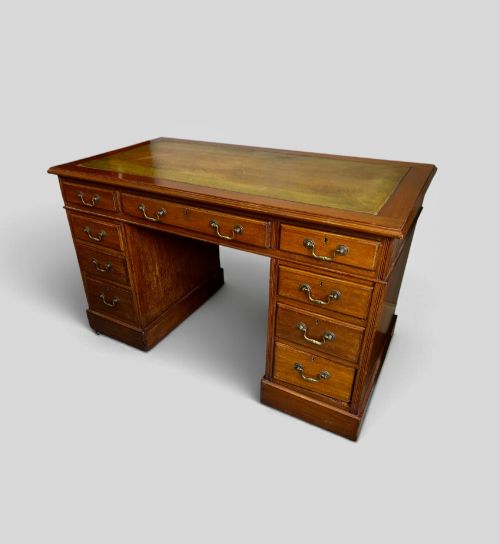
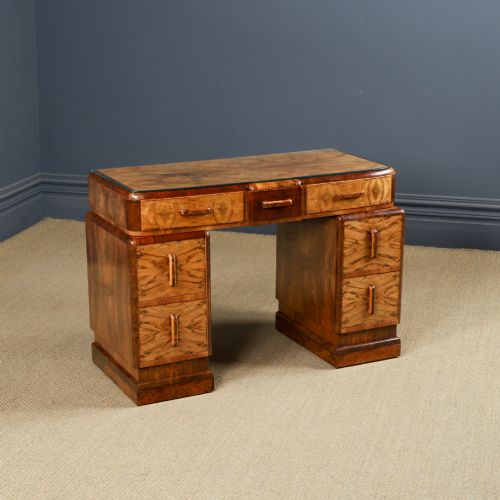
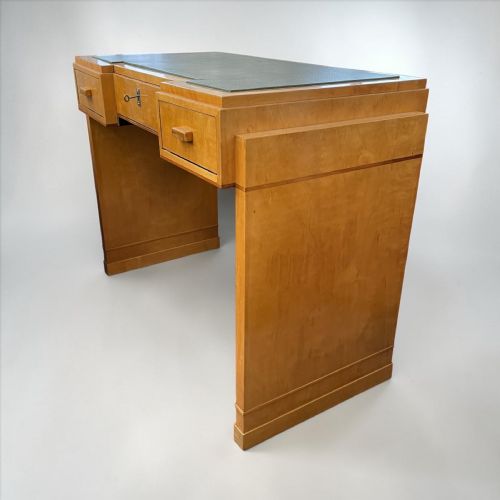
When you search for a vintage computer desk, you are looking at substantial timber writing furniture that adapts naturally to modern technology. These pieces originate from various periods including Victorian, Edwardian, and Art Deco eras, built long before personal computers existed but proportioned well for modern equipment.
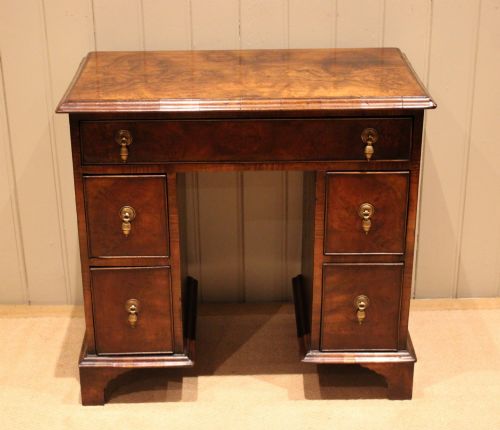
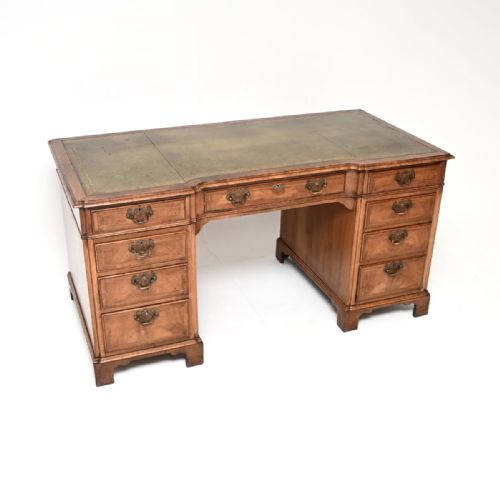
The most common form you will meet on this page is the pedestal desk or kneehole writing table. These sturdy forms provide ample surface area and internal drawer space, constructed originally from dense hardwoods rather than modern laminates or manufactured boards.
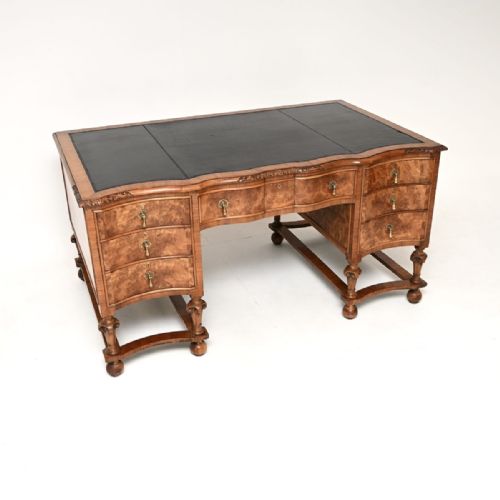
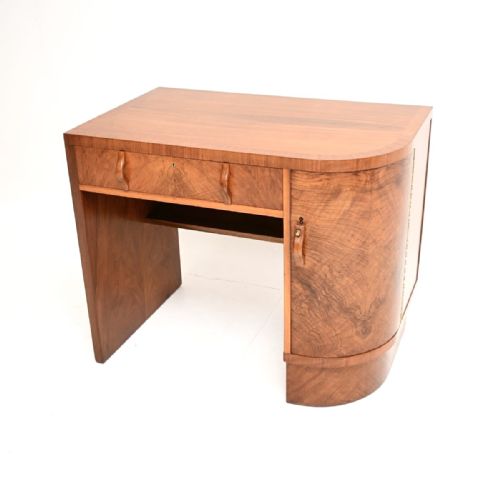
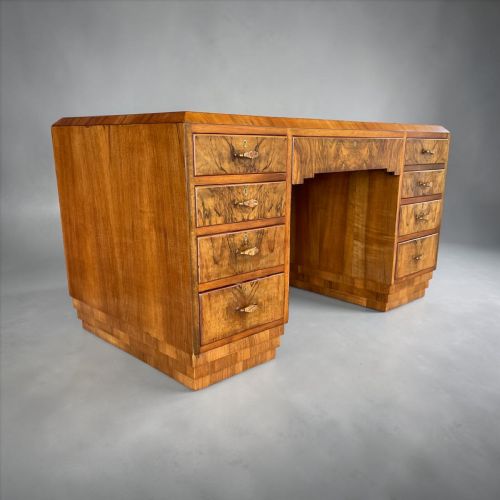
The materials and styles span from 19th century mahogany and oak to 1930s burr walnut and sleek Art Deco designs. Buyers choose these older wooden desks to gain robust construction and rich timber grains that flat-pack furniture simply cannot match.
Materials and construction methods
Cabinet makers built these desks using solid timbers like mahogany, oak, and walnut, frequently applying decorative veneers such as burr walnut and burr elm to primary surfaces. These woods provide natural strength and distinct figuring that seasoned over decades.
Working surfaces often incorporate inset panels of tooled leather, framed by crossbanded borders and solid timber mouldings. Internal drawer boxes utilise traditional dovetailed joints, showing sturdy construction designed to withstand daily use.
Several desks retain hidden secret drawers tucked discreetly beneath the main writing surface for your modern gadgets.
Markers of superior quality
Quality in these desks shows in the selection of timber figures and the precision of the cabinet work. Pieces featuring book-matched burr walnut veneers or finely grained mahogany display a higher grade of craftsmanship than plain utility items.
The integrity of the structural joinery, the smooth action of deep pedestal drawers, and the preservation of original brass hardware or leather inserts separate standard examples from finer commissions.
Maple and Co
The Vintage Computer Desk Glossary
- Pedestal desk
- A heavy freestanding desk comprising two supporting pedestals of drawers with a central connecting section.
- Kneehole desk
- A compact writing table featuring a central recess for the legs, flanked by banks of smaller drawers.
- Burr walnut
- A highly figured timber veneer taken from the knotted growth of a walnut tree, prized for its swirling grain patterns.
- Partners desk
- A large double-sided desk designed with drawers and cupboards on both faces to accommodate two people working opposite each other.
- Dovetailed joint
- A traditional interlocking woodworking joint used to secure drawer corners with high tensile strength.
Vintage Computer Desk: Frequently Asked Questions
Can I fit modern computer equipment on a vintage desk?
These robust timber desks offer deep writing surfaces and wide kneehole spaces that accommodate modern monitors and keyboards comfortably.
Many pedestal and writing tables provide enough width to support multiple screens alongside a computer tower placed underneath or to the side.
How do I care for the leather top on my desk?
The inset leather surfaces benefit from gentle cleaning with a slightly damp cloth followed by a neutral leather cream to keep the material supple.
Avoid using harsh chemical solvents or placing hot mugs directly onto the leather to preserve the traditional gold-tooled borders.
Are these desks easy to move around a room?
Most pedestal desks are exceptionally heavy because they utilise solid hardwoods like oak, mahogany, and walnut throughout their construction.
Many traditional pedestal designs separate into three distinct sections consisting of two drawer pedestals and a top surface, which makes transport easier.
How do I identify a Victorian desk from an Edwardian one?
Victorian desks generally display heavier proportions and darker mahogany or walnut timbers with robust brass drawer pulls.
Edwardian pieces often embrace lighter oak or satin birch finishes, sometimes incorporating Georgian revival styling with simpler geometric lines.