




Georgian Dressing Chest
A georgian dressing chest offers versatile compartmentalised storage, combining the utility of a writing desk and a dressing table in one Georgian form.
What a georgian dressing chest is
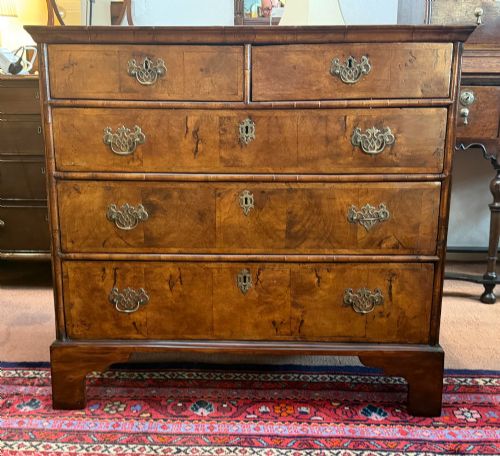
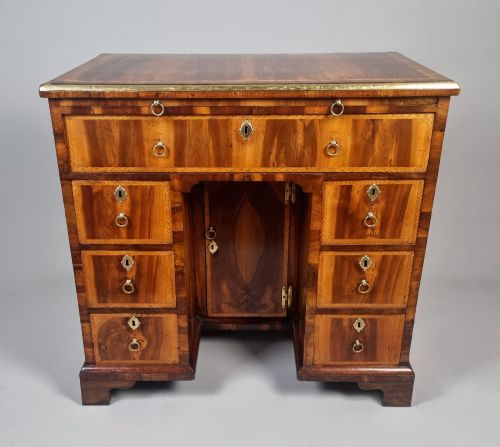
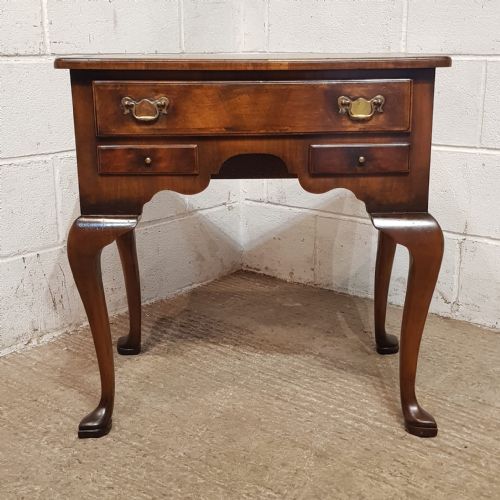
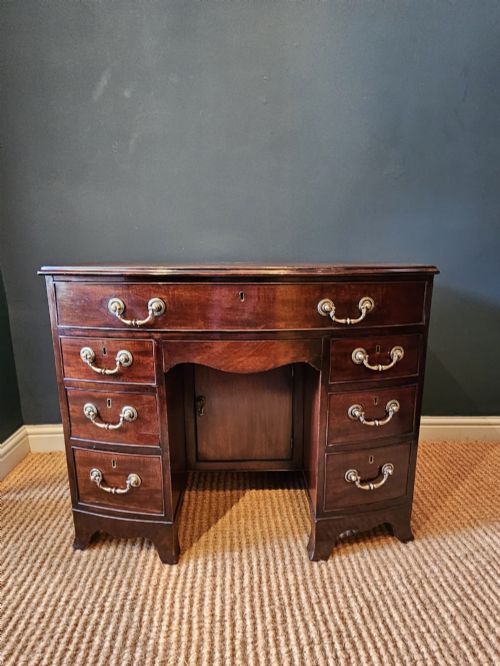
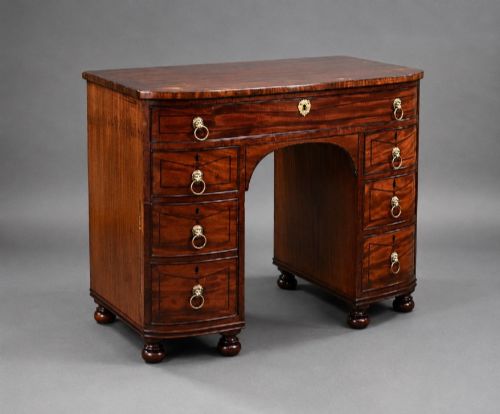
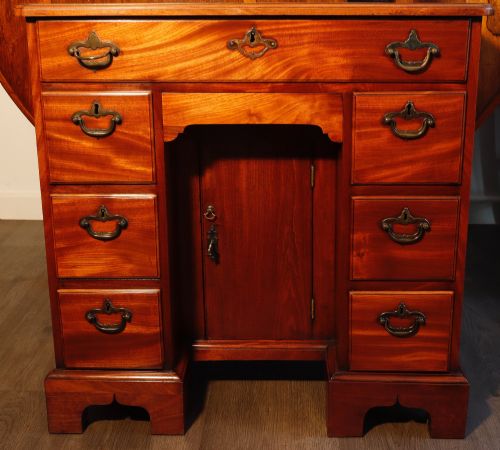
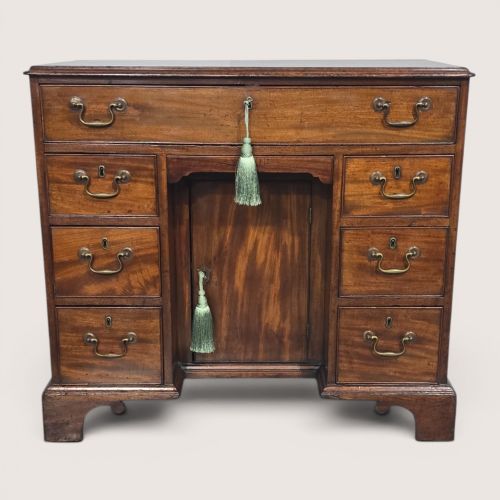
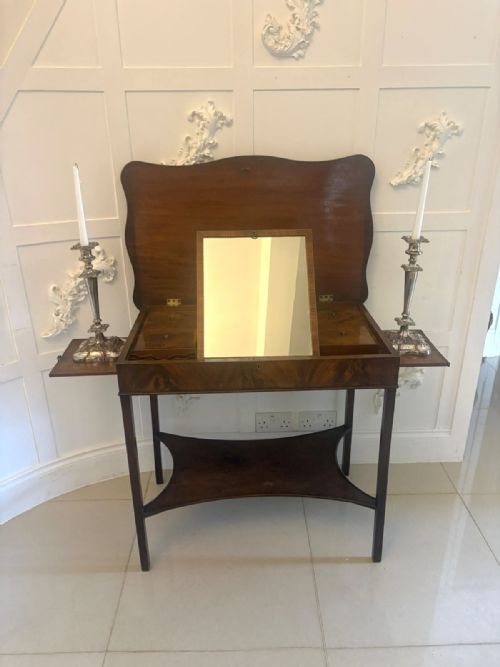
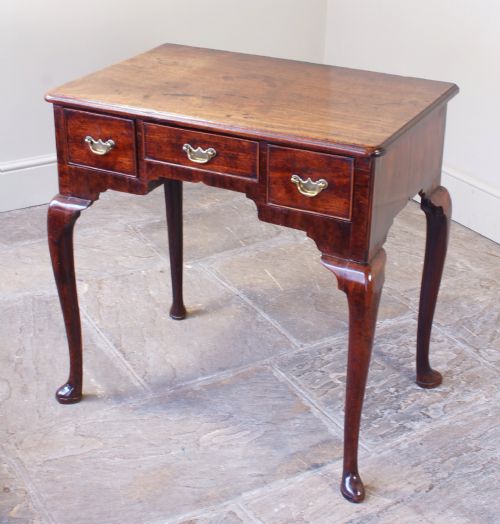
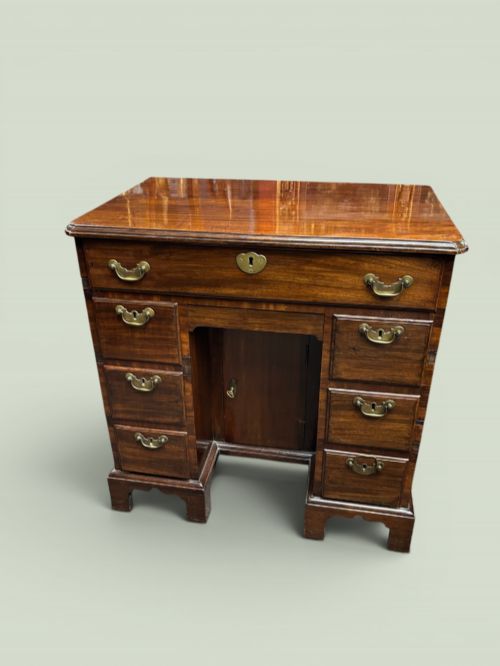
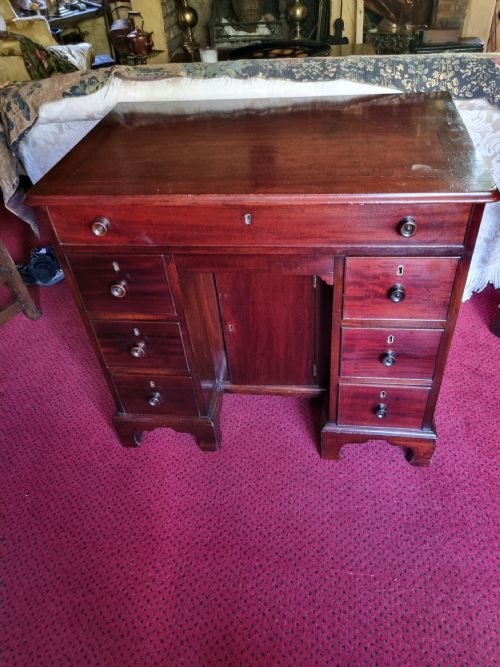
When searching for a georgian dressing chest, buyers encounter a utilitarian form designed for personal grooming and private correspondence. These pieces date from the 18th century and the Georgian period, appearing in forms such as gentleman's dressing chests, kneehole desks, and low chests of drawers.
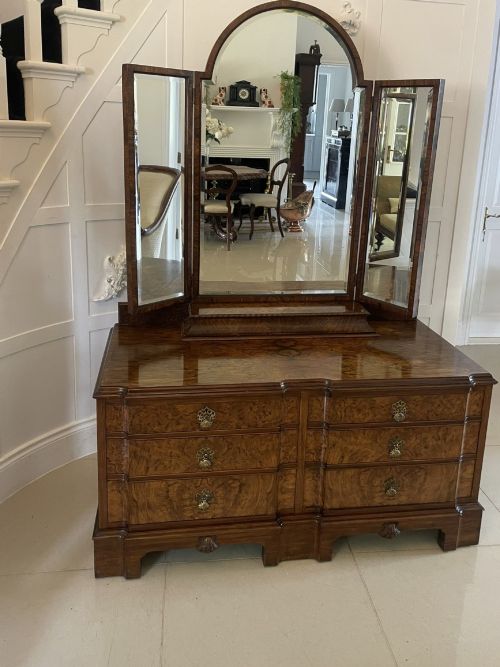
The most common versions met on this page are mahogany gentleman's dressing chests featuring fitted top drawers with compartments for personal items. Other variations include oak, yew wood, pine, and burr walnut examples, alongside pieces with integrated mirrors, writing slides, or secretaire drawers.
Makers and craftsmen of the period constructed these chests to serve multiple functions within domestic spaces. Surviving examples demonstrate forms ranging from simple country pine to sophisticated serpentine fronts and inlaid mahogany designs.
Materials and construction
Cabinet makers utilised dense native and imported timbers, predominantly mahogany, alongside oak, yew wood, pine, and figured burr walnut. These woods were selected for their durability and rich grain patterns, sometimes enhanced with decorative inlay work.
Construction techniques involved traditional joinery to house fitted internal compartments, writing slides, and secret drawers. Original brass handles, escutcheons, and swinging glass mirrors frequently complete the assembly.
Retail Price Guide 2026
Typical UK retail prices for georgian dressing chest, calculated from the Sellingantiques database of over a million retail prices indexed since 2003. This retail price guide relies exclusively on Sellingantiques data; no external sources or auction records are used, so the figures do not describe the wider market.
Some officers required military campaign dressing chests with integrated writing slopes to maintain a well-groomed appearance while on active deployment.
Distinctions in quality
Quality rests in the selection of timber figures, such as figured burr walnut or richly grained mahogany, and the precision of the internal partitioning. Superior examples exhibit intricate fitted drawer arrangements designed to hold grooming bottles, pill boxes, and writing materials.
Structural refinement separates standard chests from finer works, visible in serpentine drawer fronts, complex kneehole configurations, and the retention of original brass hardware. The integration of dual-purpose elements, such as combined writing slopes and campaign styling, elevates the sophistication of the piece.
The Georgian Dressing Chest Glossary
- Dressing slide
- A pull-out wooden board integrated into the carcase above the drawers, used to provide an additional surface for grooming or writing.
- Gentleman's dressing chest
- A form of chest containing a top drawer fitted with compartments, mirrors, and small boxes specifically for men's personal care items.
- Kneehole desk
- A compact desk or dressing table featuring a central recess for the user's legs, flanked by pedestals of small drawers.
- Serpentine front
- A furniture front characterised by a gently undulating shape with a convex centre flanked by concave curves.
- Secretaire drawer
- A top drawer that drops down on hinges to reveal a writing surface and small pigeonholes or interior drawers.
Frequently Asked Questions
What is a georgian dressing chest?
A georgian dressing chest is an 18th-century case piece designed for personal grooming, featuring a fitted top drawer with compartments.
Many examples also incorporate writing surfaces, mirrors, or sliding boards to serve multiple daily functions in a bedroom or dressing room.
How were they used historically?
These chests were utilised by gentlemen and ladies for morning grooming routines, storing powders, brushes, and personal documents.
The fitted top drawer often contained lidded compartments and mirrors, while lower drawers held clothing or linen.
What woods are commonly found?
Mahogany is the predominant timber seen across these pieces, frequently accompanied by oak secondary woods.
Other materials recorded include yew wood, pine, figured burr walnut, and inlaid decorative veneers.
How do I identify a gentleman's dressing chest?
The defining characteristic is the compartmentalised top drawer designed to house grooming paraphernalia and small personal items.
Many also feature internal mirrors, writing slides, or integrated secretaire compartments rather than standard drawer layouts.