


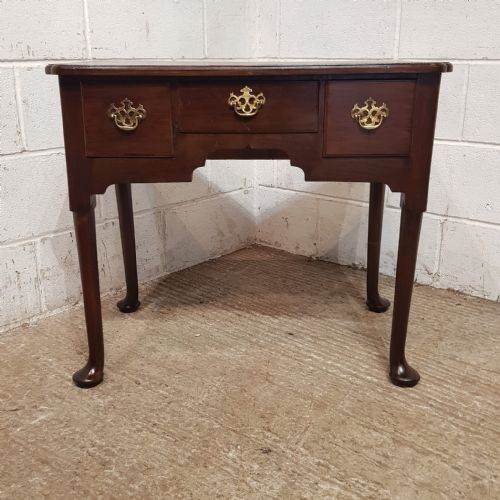
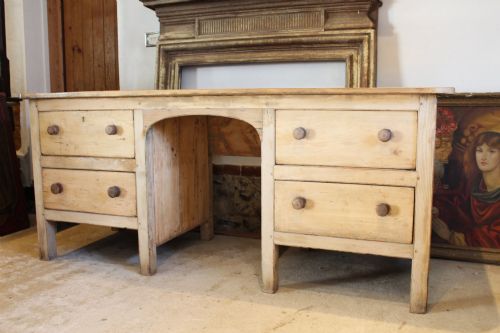
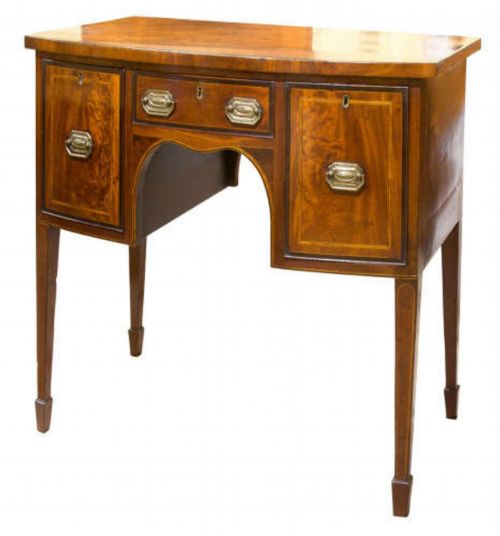
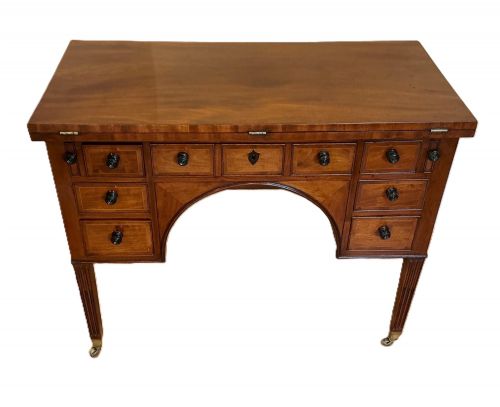


George III Kneehole Table
A george iii kneehole table provides a refined writing or dressing surface with compact pedestal storage underneath, prized for its classic proportions and clever internal layout.
George III Kneehole Table
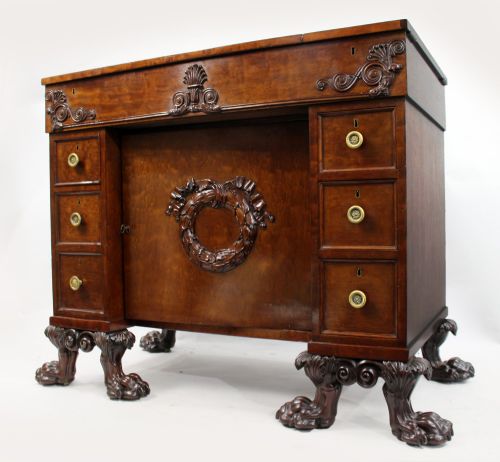
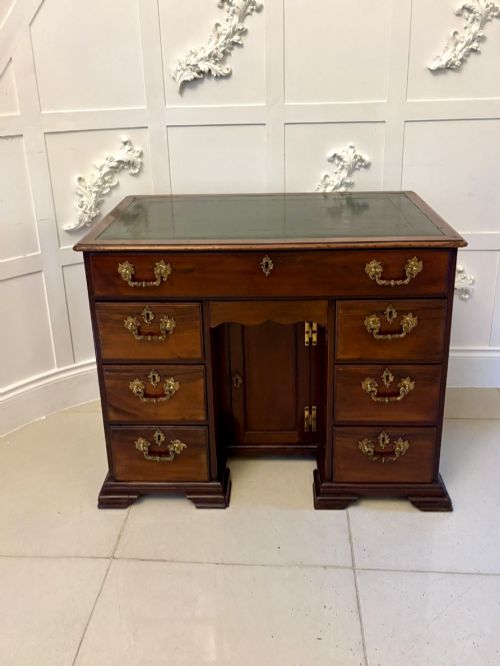
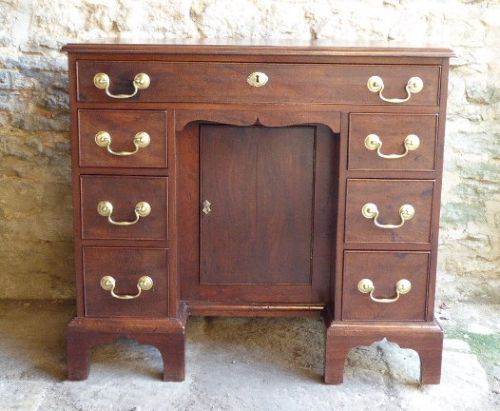
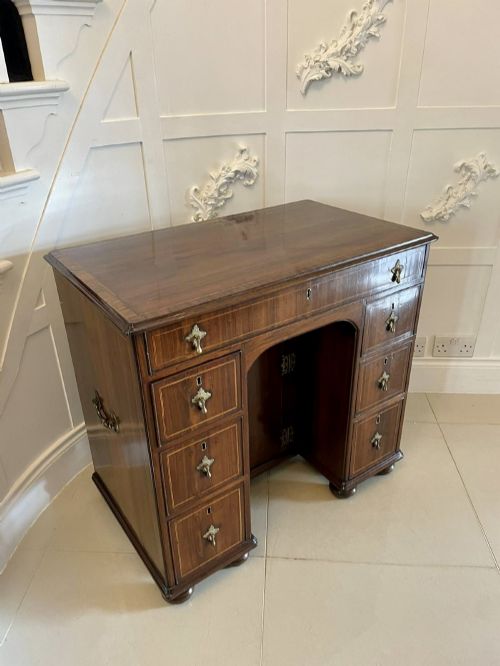
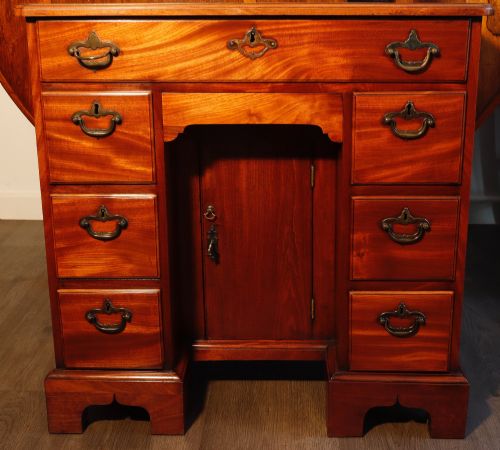
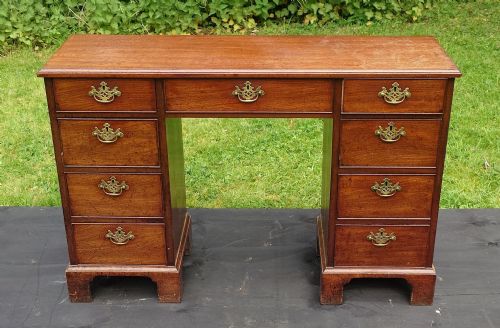
A george iii kneehole table is a distinctive form originating in the eighteenth century, combining a central recessed kneehole flanked by pedestals of small drawers. You will frequently encounter mahogany examples alongside variants in walnut, oak, and pine.
The evidence shows these pieces functioning interchangeably as desks, writing tables, and dressing tables, occasionally featuring bow-fronts or three-quarter galleries. Makers of the period utilised timber configuration to create substantial storage within surprisingly modest footprints.
Beyond standard writing desks, the selection encompasses lowboys and side tables bearing the characteristic pedestal arrangement or simple drawer counts. Most surviving pieces date from the Georgian era, with occasional nineteenth-century reinterpretations in satinwood or Chippendale style.
Materials and construction
Cabinetmakers relied heavily on solid and veneered mahogany, frequently accented with boxwood, sycamore, or purpleheart banding to define the drawer edges and top surfaces. Structural elements often incorporate secondary timbers like oak and pine within the drawer linings and internal framing.
Brass hardware, including drop handles and escutcheons, complements the figured grain of the primary woods, while bracket feet or straightforward legs provide stable support. Surface detailing ranges from simple cockbeading to complex curl mahogany figuring and inlaid borders.
George III Kneehole Table Retail Price Guide 2026
Typical asking prices for george iii kneehole table among the pieces listed under this phrase on Sellingantiques today, from the lower quarter to the upper quarter. They describe what is for sale here now, not the wider market.
Listings feature mahogany, walnut, oak, pine, and purpleheart, reflecting the diverse timber palette utilised by eighteenth-century cabinetmakers.
Judging quality and character
Quality rests in the choice of timber figure, such as curl mahogany or figured walnut, and the crispness of any inlay or boxwood banding. Superior examples display careful timber selection where the grain matches across drawer fronts.
The integrity of the original bracket feet, brass handles, and internal drawer construction distinguishes a high-grade survivor from a heavily restored or later nineteenth-century adaptation.
The George III Kneehole Table Glossary
- Kneehole
- A recessed space beneath the central part of a desk or dressing table designed to accommodate the user's legs. This arrangement allows for banks of small drawers on either side.
- Lowboy
- A small table with one or more rows of drawers, commonly used as a dressing table or side table during the eighteenth century. They stand on four legs and often share stylistic traits with contemporary desks.
- Gallery
- A raised wooden or metal border running along the back or sides of a tabletop. It prevents items from rolling off the surface.
- Bracket foot
- A foot shape resembling a bracket, curving outward to a corner point at the base of a case piece. They provide a stable and neat architectural support for desks and sideboards.
- Cockbeading
- A narrow convex moulding applied to the edges of drawer openings. This technique protects the drawer edges and provides a neat decorative finish.
George III Kneehole Table: Frequently Asked Questions
What is a kneehole table used for?
These versatile pieces served primarily as writing desks, library tables, or dressing tables in eighteenth-century domestic spaces. The central recess allows a chair to be pulled up comfortably while the surrounding drawers keep small items close at hand.
Over time, owners adapted them to various domestic duties, utilising the flat top for reading or grooming. Their compact proportions made them suitable for smaller parlours and bedrooms.
How do I date a george iii kneehole table?
Dating relies on examining the secondary timbers, construction methods, and hardware styles characteristic of the later eighteenth century. Pieces from this era often feature hand-cut dovetails and native woods like oak or pine inside the drawers.
Later nineteenth-century revivals, such as those executed in satinwood, typically display different internal construction techniques and cleaner, machine-assisted precision. Comparing the timber grain and foot style helps confirm the period.
Are kneehole desks and dressing tables the same?
While sharing a similar pedestal footprint, dressing tables frequently incorporate galleries, compartments, or mirrors associated with personal grooming. Desks tend to focus on a flat writing surface and deep drawers for papers.
Surviving examples often blur these boundaries, with multi-functional pieces serving as both writing desks and dressing tables depending on the owner's needs.
What woods were used in these tables?
Mahogany is the predominant primary wood seen in these listings, often selected for its rich grain and stability. Cabinetmakers also utilised walnut, oak, pine, and satinwood depending on the workshop and period.
Decorative accents frequently involved contrasting timbers such as boxwood, sycamore, and purpleheart for banding and inlay work.