
Brown Wooden Dressing Table
A brown wooden dressing table brings genuine period character and practical surface space to a bedroom.
Brown Wooden Dressing Table
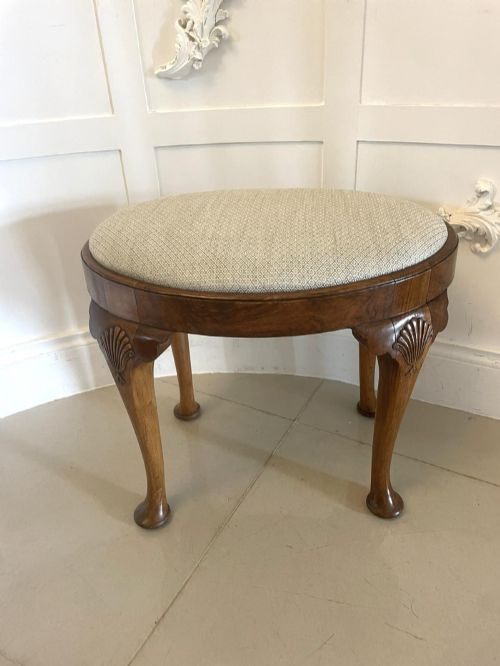
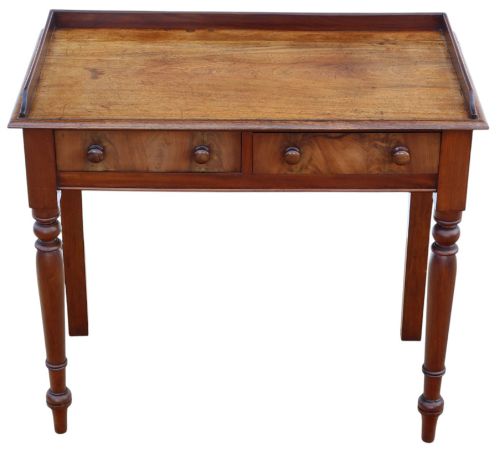
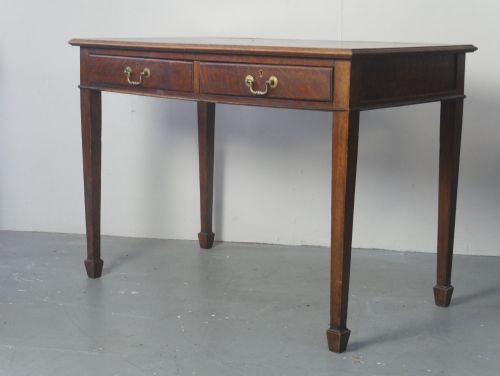
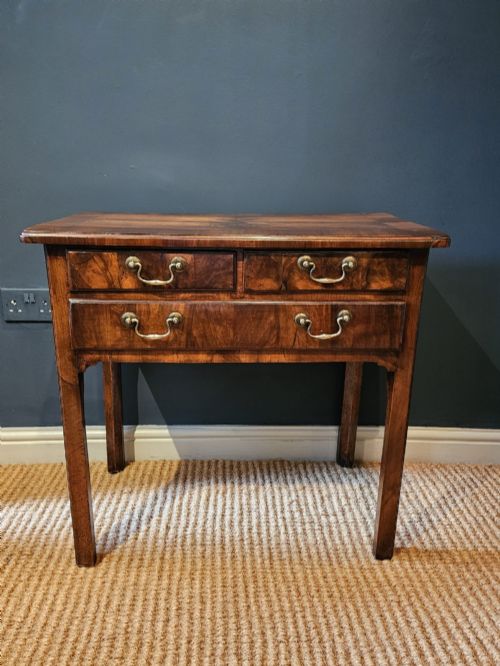
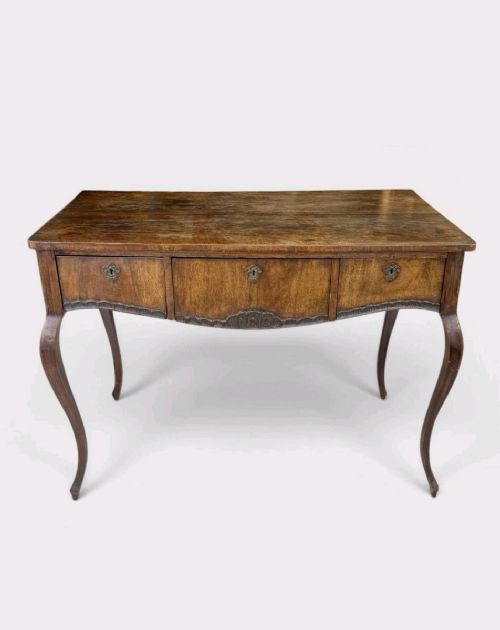
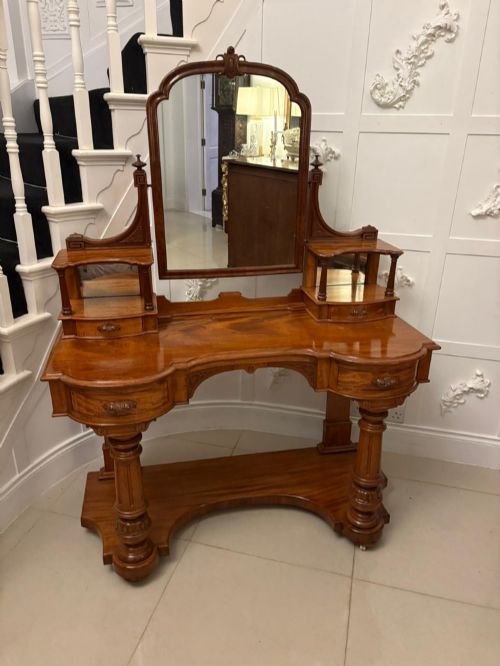
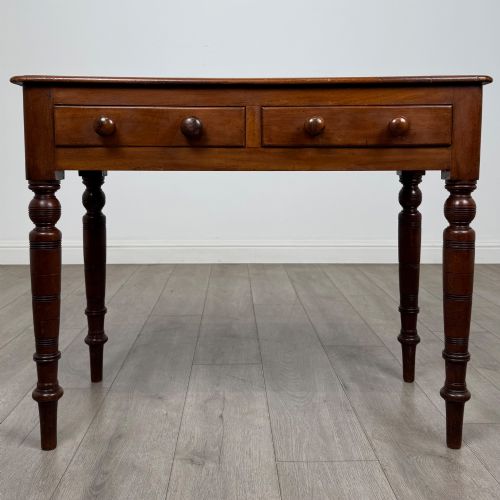
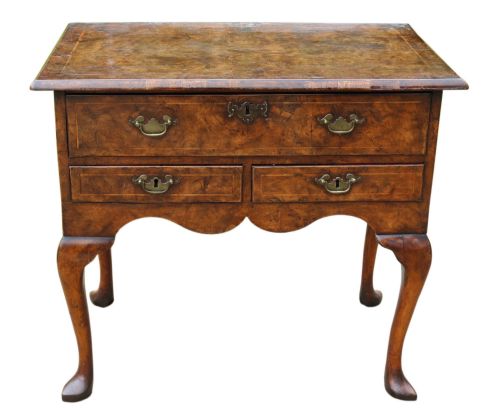
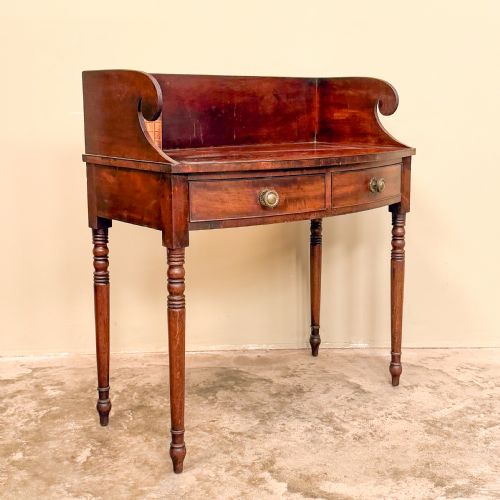
A brown wooden dressing table serves as a functional and decorative centrepiece, frequently merging the roles of a writing desk, side table, and lowboy. When searching for a brown wooden dressing table, buyers encounter pieces spanning from the 18th century through the Georgian, Regency, and Victorian eras up to Edwardian and Art Deco designs.
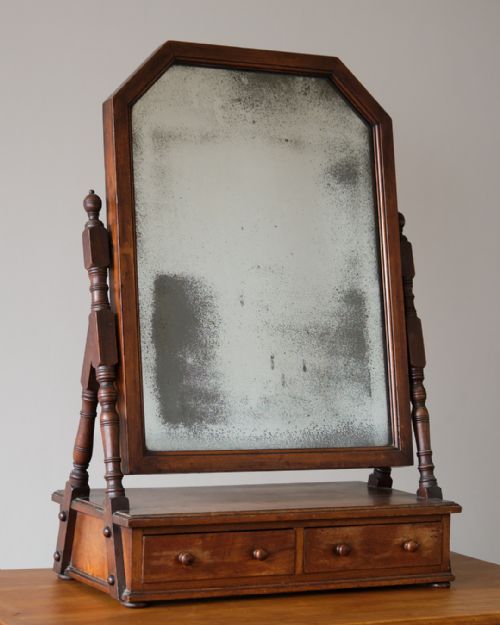
The selection on this page relies heavily on compact side tables, lowboys, and designated dressing mirrors rather than solely modern vanity units. Elm, fruit wood, oak, and various figures of mahogany and walnut dominate the forms available.
Materials and Construction
Cabinet makers utilised solid timbers and decorative veneers such as burr walnut, flame mahogany, and yew wood over sturdy secondary woods like pine or oak. Drawer linings, dovetail joints, and original brass hardware indicate the traditional joinery methods standard to each period.
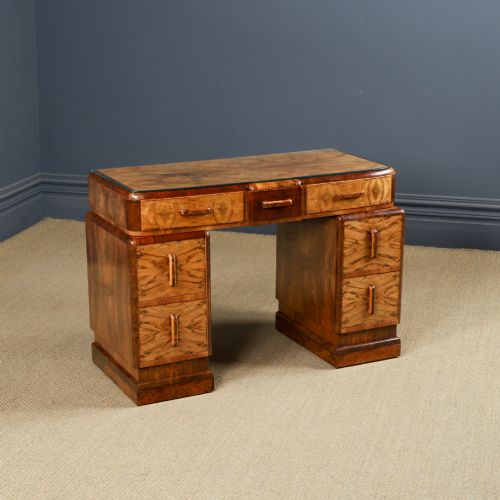
Surfaces often received hand-polished finishes that enhanced the natural grain patterns of the timber, whether on a Georgian lowboy or an Art Deco pedestal desk.
The listings here include 18th-century pieces alongside 19th-century Victorian and Edwardian works, constructed from mahogany, walnut, oak, elm, and yew.
Evaluating Quality and Craftsmanship
The distinction between standard pieces and the finest examples rests on the choice of timber and the precision of the cabinet work. Superior items display well-figured grain, such as burr elm or flame mahogany, matched carefully across drawer fronts and table tops.
Original brass handles, sound structural integrity without excessive timber replacement, and refined proportions elevate an individual table or mirror above ordinary utilitarian items.
P & MA Nicholson·Heal & Sons
The Brown Wooden Dressing Table Glossary
- Lowboy
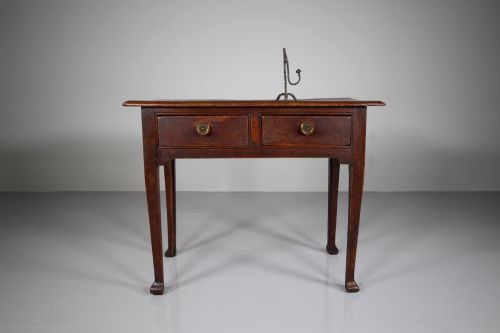
- A small oak, walnut, or mahogany table with drawers, typically produced during the 18th century and used as a dressing table or side table.
- Toilet Mirror
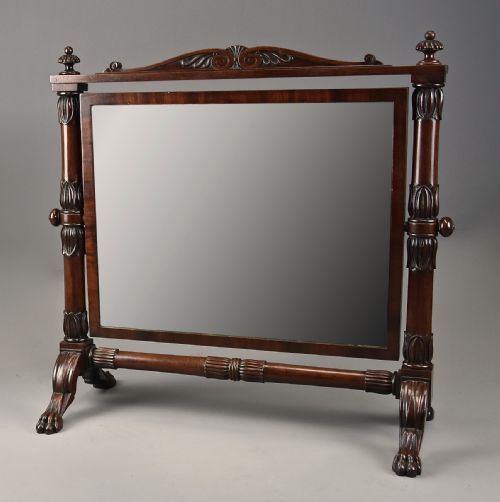
- A portable mirror mounted on a small frame with drawers, designed to sit atop a chest of drawers or a dressing table.
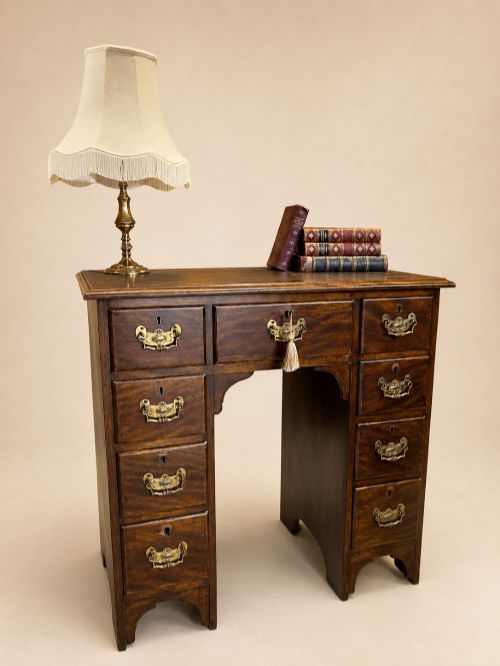
- Kneehole Desk
- A desk or dressing table featuring a central recess for the legs, flanked by pedestals containing multiple drawers.
- Side Table
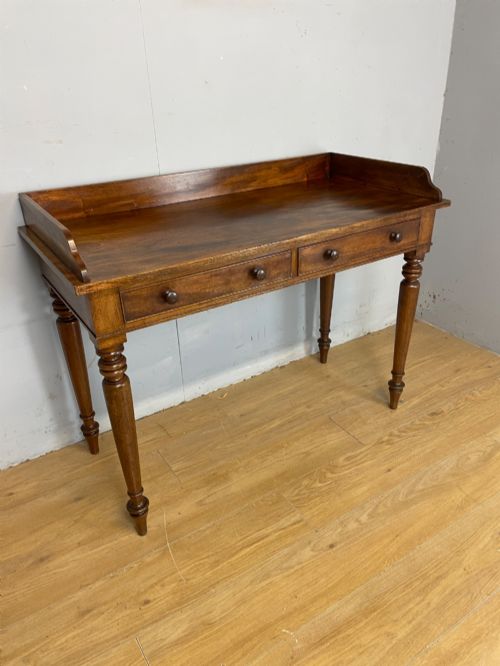
- A versatile small table designed to stand against a wall, frequently doubling as a surface for grooming or writing.
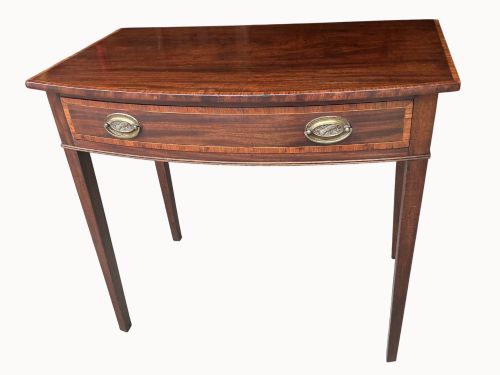
- Bow Fronted
- A convex curved cabinet front that softens the angles of a case piece or side table.
Brown Wooden Dressing Table: Frequently Asked Questions
What is a lowboy?
A lowboy is a small table with one or more tiers of drawers, commonly standing on slender cabriole or straight legs. These versatile items served historic households for grooming, writing, or general storage.
In modern rooms, a lowboy functions effectively as a compact dressing table or a hallway side table where space is at a premium.
How do I date a wooden table?
Dating relies on observing construction methods, timber choices, and hardware styles. Hand-cut dovetails, secondary woods like oak or pine, and the specific patina of the finish provide clear chronological clues.
Comparing the legs, handles, and edge moulding profiles against documented period examples helps narrow down the decade of manufacture.
Where should I place a dressing mirror?
A dressing mirror looks best placed upon a solid chest of drawers, a lowboy, or a dedicated dressing table. Positioning it near a natural light source maximises its utility for daily grooming.
Ensure the supporting surface is deep and stable enough to bear the weight of the adjustable mirror frame safely.
Are these tables suitable for daily use?
Period wooden tables and dressing furniture are built with robust traditional joinery designed to withstand everyday tasks. Using coasters and appropriate wax polishes protects the historic timber surfaces from accidental moisture.
Gentle daily care allows these functional antiques to serve reliably in contemporary bedrooms and studies.