
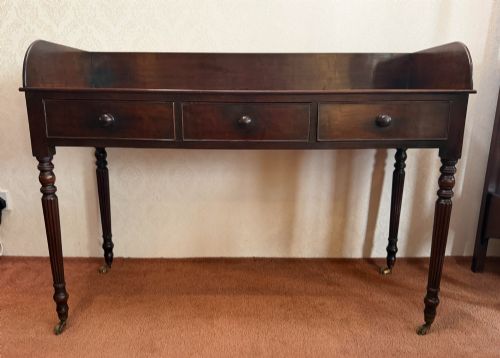
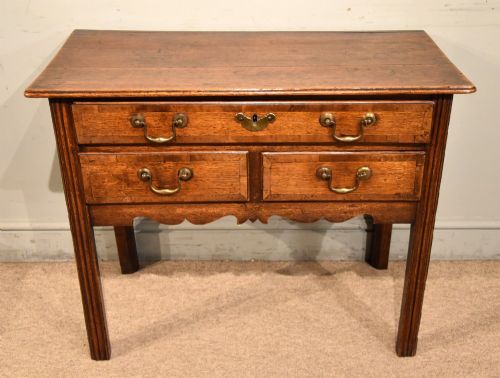
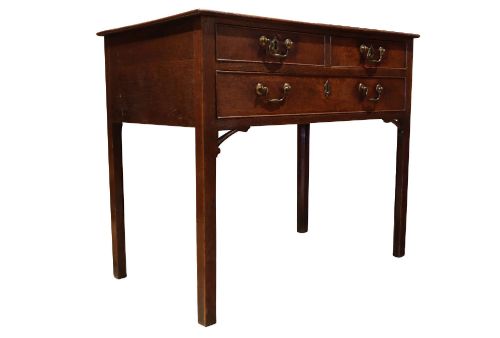
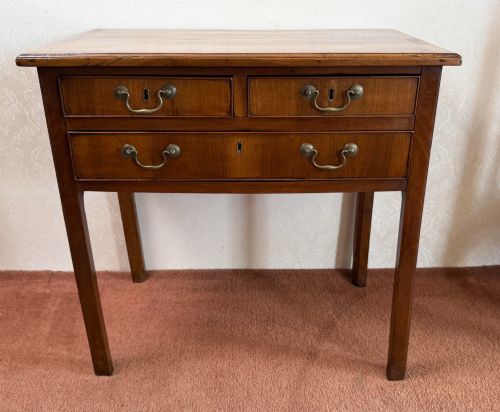
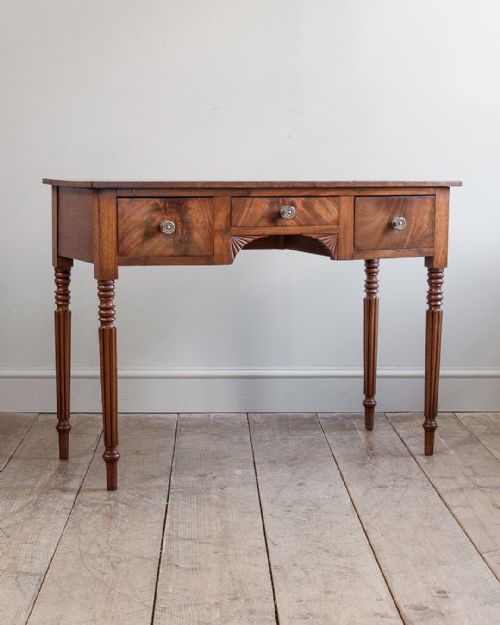
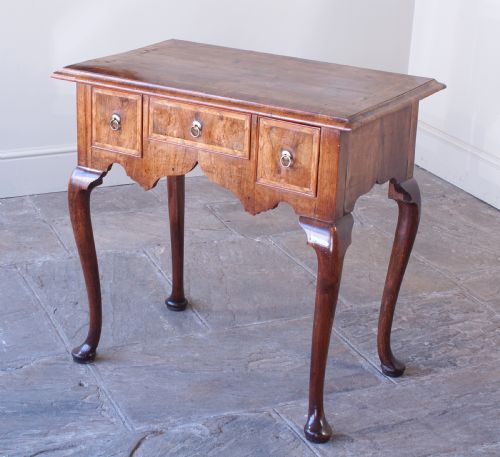
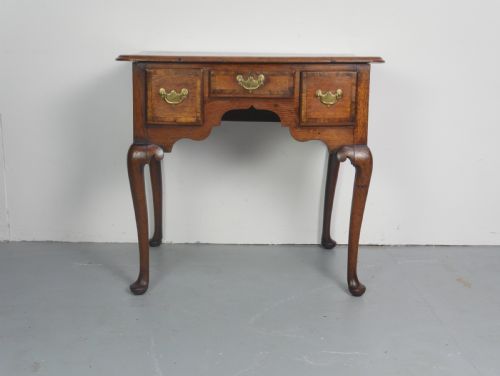

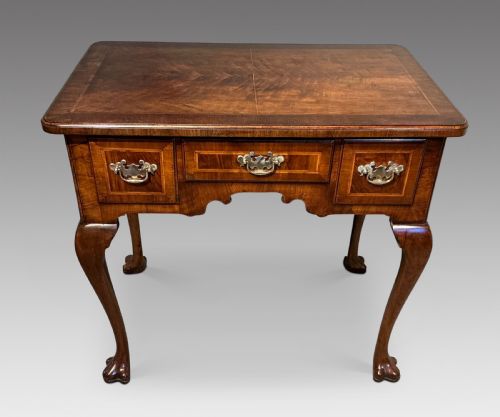


Georgian Three Drawer Desk
A georgian three drawer desk brings genuine eighteenth-century character to a study, combining practical drawers with compact proportions.
Georgian Three Drawer Desk
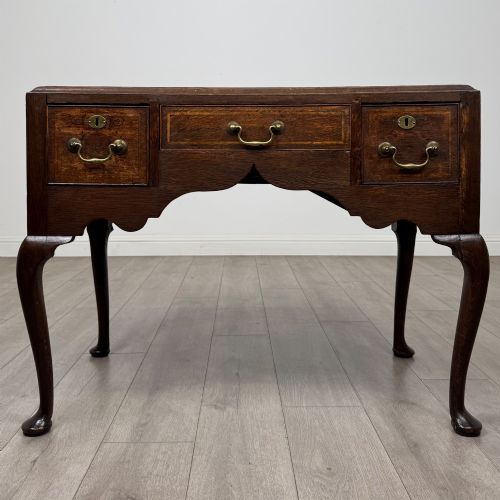
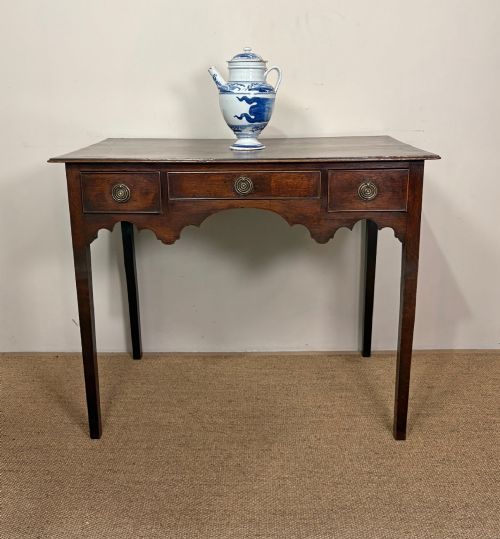
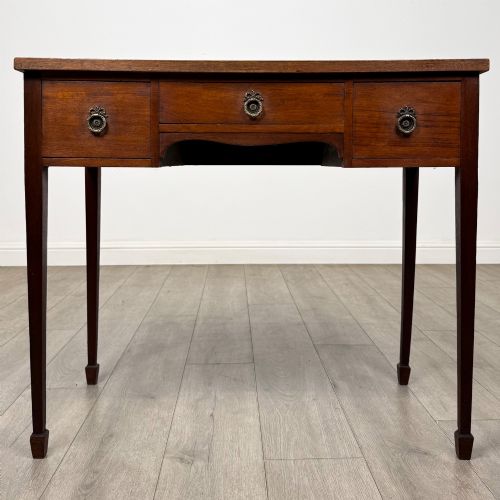
When searching for a georgian three drawer desk, you encounter pieces that historically functioned as lowboys, writing tables, side tables, and dressing tables. These items typically feature three drawers arranged beneath a rectangular work surface, often standing on slender cabriole or straight legs.
The pieces appearing on this page span the eighteenth century and the Regency period, alongside later revival interpretations from the Edwardian era and the twentieth century. Oak and mahogany dominate the offerings, frequently accompanied by walnut and burr walnut veneer.
Regional variations emerge across the selection, including Welsh examples and country house pieces built from local timbers like fruitwood and softwood. Many items bridge multiple categories, serving simultaneously as desks, lowboys, and dressing surfaces.
Materials and Construction
Cabinetmakers constructed these tables using native and imported timbers, selecting oak for robust country pieces and rich mahogany or walnut for formal town furniture. Finer examples utilise burr walnut veneer to create decorative figured surfaces across drawer fronts and tops.
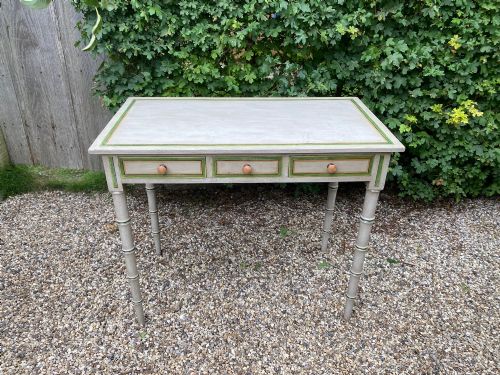
Hardware details rely on cast brass for handles and keyplates, which punctuate the timber grain. Additional decorative techniques include feather banding on walnut surfaces and painted finishes on faux bamboo variants.
Current listings feature eighteenth-century pieces alongside Edwardian revivals in oak, mahogany, and walnut.
Judging Quality and Execution
The standard of a piece rests upon the choice of timber and the precision of its construction, particularly in the hand-cut dovetails of the drawers and the turning of the legs. Superior examples display carefully matched veneers and subtle decorative flourishes like feather banding.
Proportion and the integrity of the original timber distinguish better examples from later revivals. Pieces retaining their original brass hardware and untouched patina command greater regard than those altered over generations of use.
The Georgian Three Drawer Desk Glossary
- Lowboy
- A small table with one or more rows of drawers, commonly used as a dressing table or writing desk in the eighteenth century.
- Feather Banding
- A delicate decorative inlay technique using contrasting veneers arranged in a herringbone pattern around the edges of drawer fronts.
- Cabriole Leg
- A furniture leg that curves outward at the knee and tapers inward toward the ankle, frequently ending in a pad foot.
- Burr Walnut
- Timber taken from a tree growth that produces complex, swirling grain patterns highly prized for decorative veneer work.
- Faux Bamboo
- Wood turned and painted to imitate the segmented appearance of natural bamboo, popular during the Regency period.
Georgian Three Drawer Desk: Frequently Asked Questions
What is a lowboy used for?
These tables served primarily as compact writing desks, dressing tables, or side tables in eighteenth-century interiors. Their modest proportions allowed them to fit easily into smaller chambers and private closets.
Today, they function well as hallway console tables or diminutive writing desks within a modern home.
How do I date a wooden desk?
Dating relies on examining the timber species, construction methods, and secondary woods used inside the drawer linings. Eighteenth-century pieces typically feature hand-cut dovetails and native woods like oak or walnut.
Later nineteenth-century and revival pieces often display machine tooling and different construction signatures that separate them from period originals.
Are these desks comfortable for writing?
Most period examples were built for lighter correspondence rather than daily computer work, meaning knee clearance can be lower than modern standards. The shallow drawers beneath the top restrict the height available for your legs.
Checking the specific height dimensions ensures the desk suits your chair and stature before placement.
How should I care for walnut veneer?
Walnut surfaces require protection from direct sunlight and excessive humidity to prevent the fine veneers from lifting or fading. Regular dusting with a dry, soft cloth maintains the finish without moisture damage.
Applying a traditional beeswax polish occasionally helps nourish the timber and preserve the historic patina.