
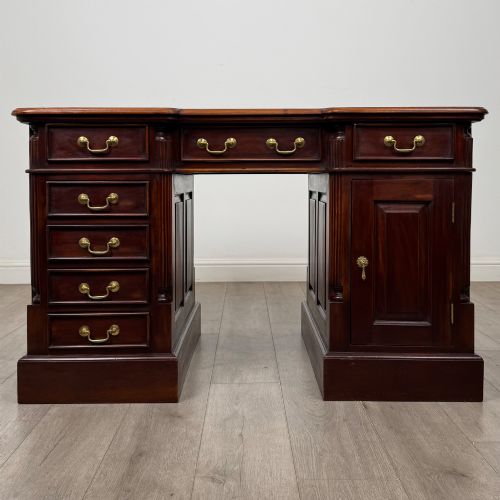


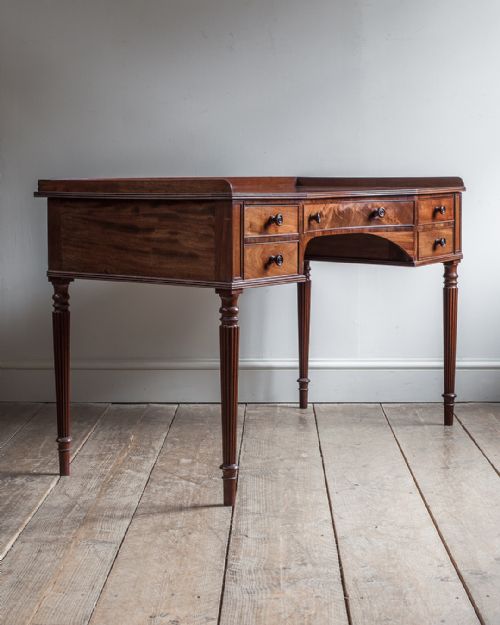
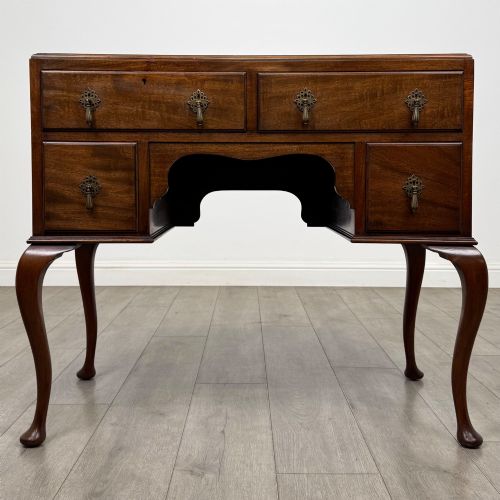
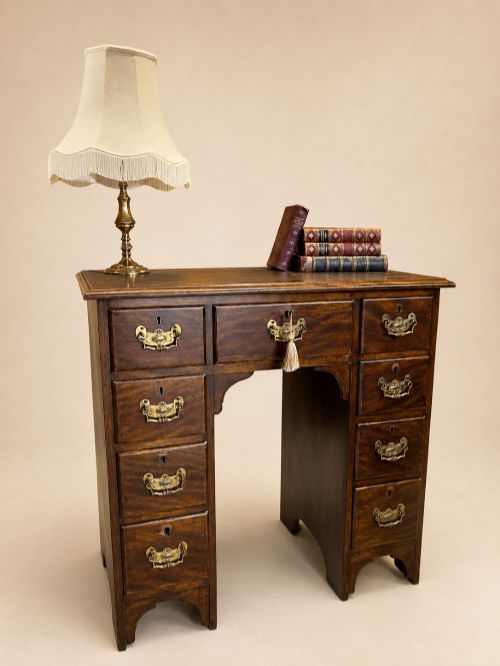
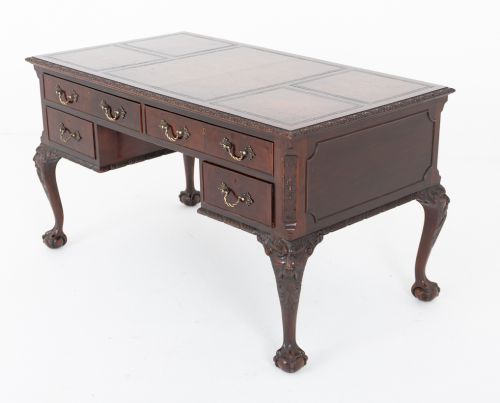
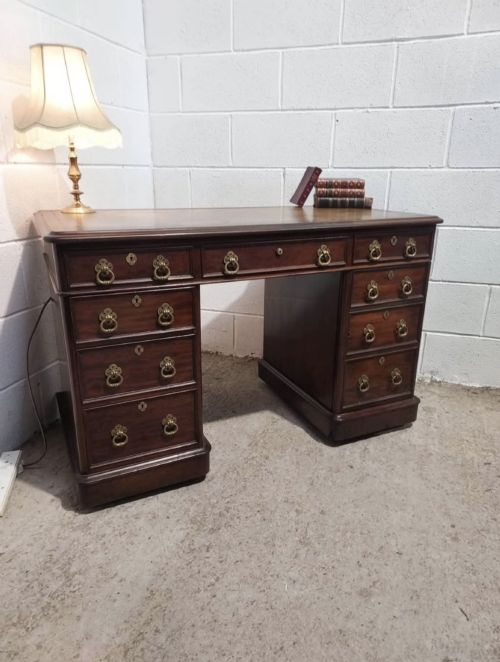
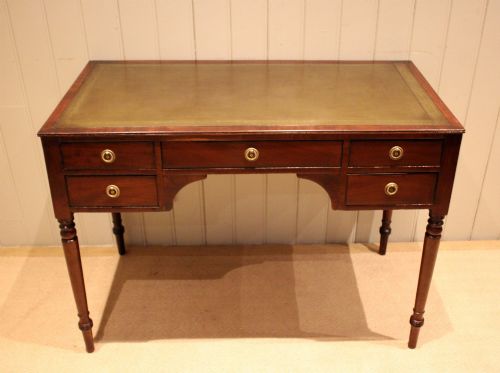
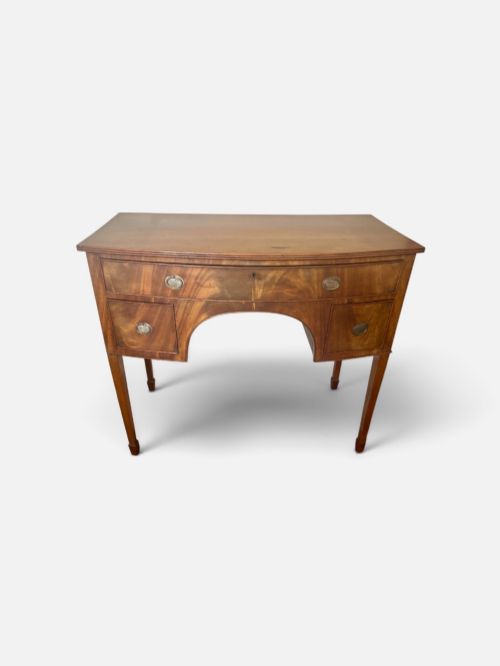
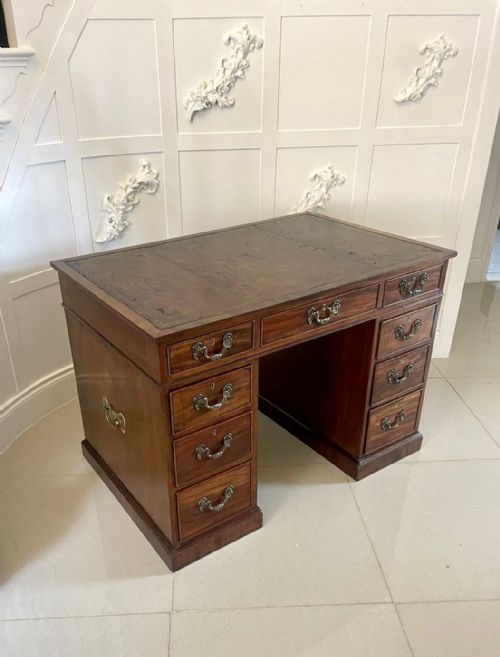
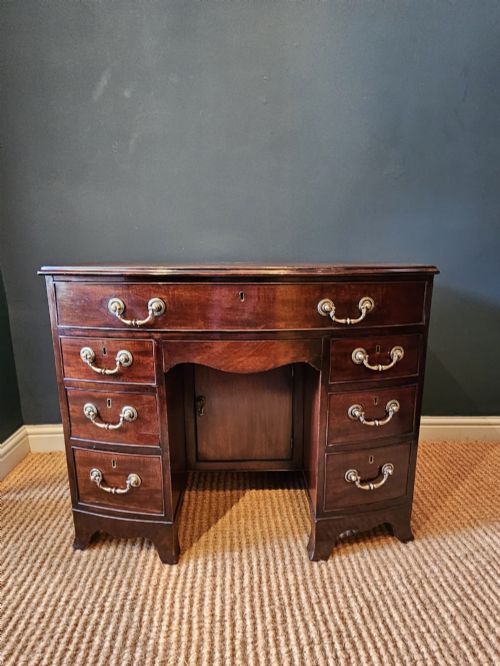
Vintage Mahogany Kneehole Desk
A vintage mahogany kneehole desk brings structured workspace and rich timber character into a study, drawing on Georgian, Victorian and Edwardian traditions.
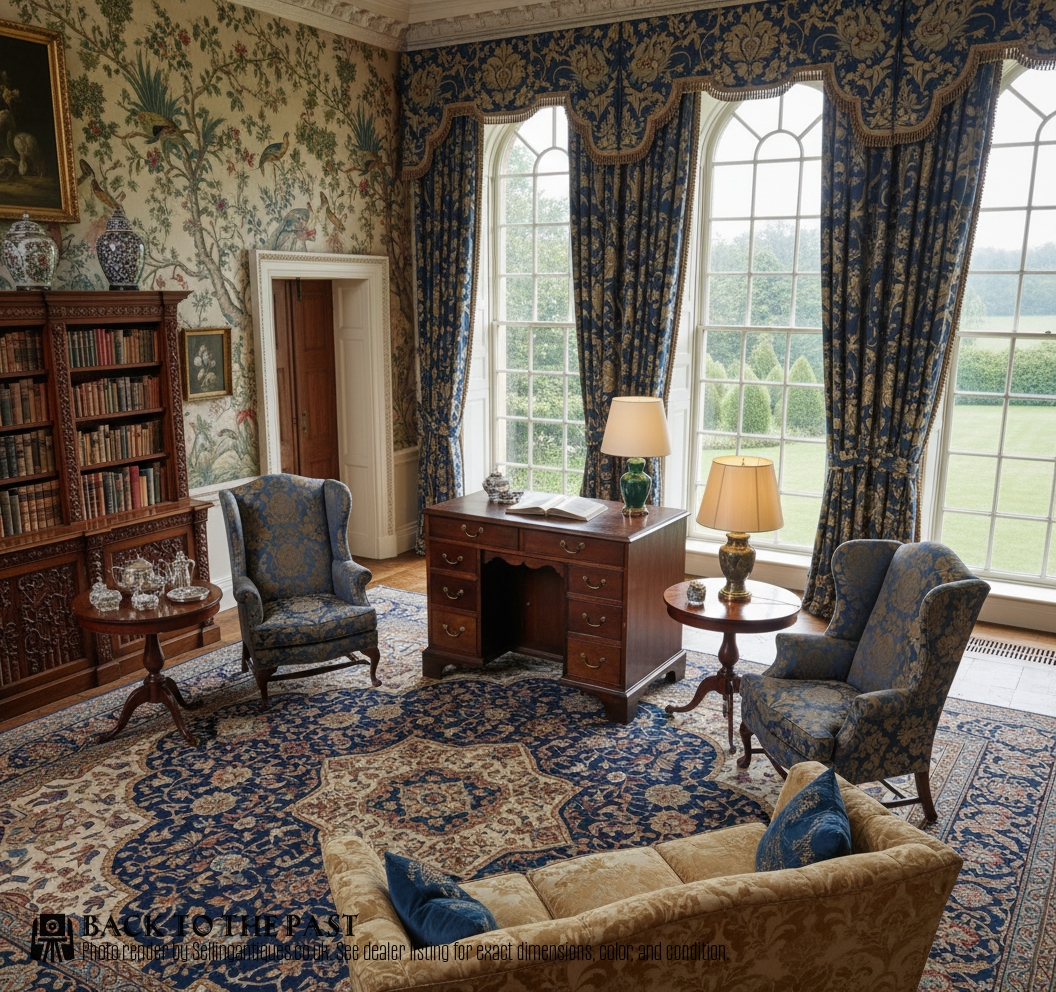
Vintage Mahogany Kneehole Desk
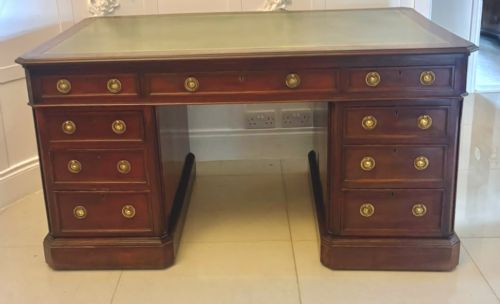
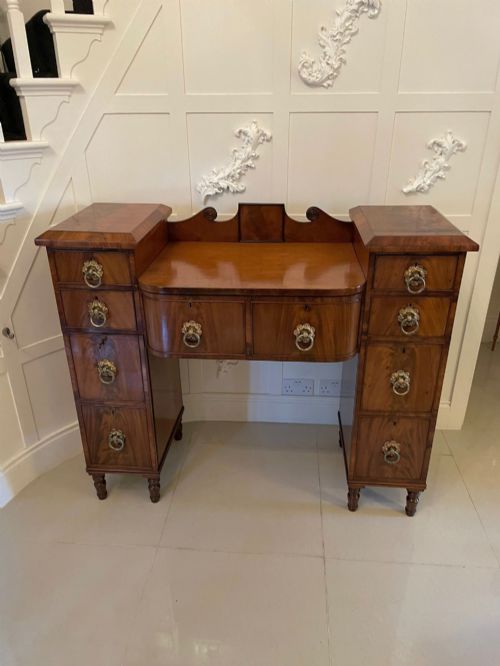
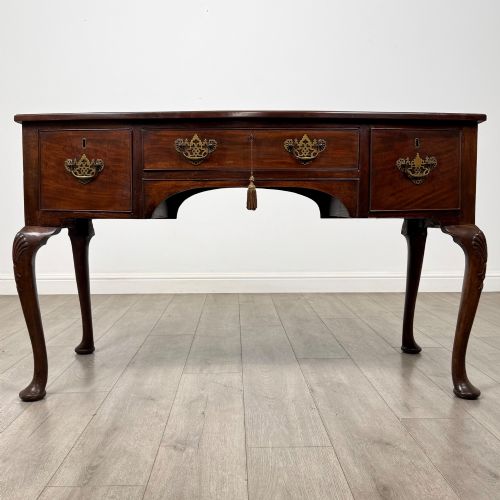
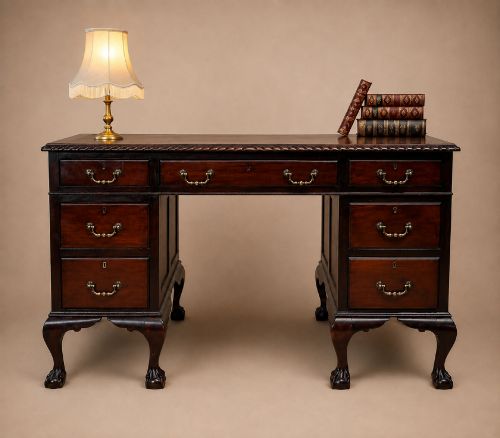
A vintage mahogany kneehole desk offers a compact writing station featuring a recessed central recess flanked by pedestals of stacked drawers. These pieces date from the Georgian era through to the early twentieth century, spanning periods such as the Victorian and Edwardian years.
The form appears in various iterations on this page, including freestanding pedestal desks, writing tables and dressing tables with kneehole configurations. Makers construct these pieces in solid timber or apply decorative veneers over secondary woods.
Buyers encounter revival styles alongside genuine period examples, incorporating design idioms from Chippendale, Regency and Sheraton eras. The interior layout often includes fitted stationery drawers and sliding writing surfaces.
How they were made
Cabinetmakers constructed the carcase and drawers using solid mahogany, frequently embellishing primary surfaces with flame mahogany veneer to create dramatic figuring. Workshops integrated secondary timbers such as oak for drawer linings and internal framing.
Craftsmen applied brass hardware, including drop handles and escutcheons, alongside inset leather writing surfaces often tooled with gold leaf. Inlaid details in satinwood provide contrasting borders on specific Edwardian and Georgian revival examples.
The listings span from the eighteenth century to the 1930s, featuring materials such as mahogany, flame mahogany veneer, brass, leather, satinwood, glass and oak.
What varies in quality
The grade of mahogany timber and the symmetry of flame veneer figuring determine visual distinction across examples. Superior pieces display carefully matched grain patterns across drawer fronts and pedestals.
Construction methods signal workshop standards, particularly the presence of hand-cut dovetails on drawer boxes and the retention of original brass hardware. Fully finished backs allow freestanding placement in a room, distinguishing higher specification pieces.
Trollope & sons·Holland & Sons·Betty Joel
The Vintage Mahogany Kneehole Desk Glossary
- Kneehole
- A central recessed space beneath a desk top, designed to accommodate the user's legs while seated. This architectural arrangement allows banks of drawers to sit on either side.
- Flame mahogany
- A veneer cut from the branch junction of the mahogany tree, displaying a distinctive feather-like or flame pattern. Cabinetmakers reserved this striking timber for primary visual surfaces.
- Pedestal desk
- A heavy writing desk supported by two vertical columns of drawers resting on the floor. These forms provide substantial storage capacity alongside a central work surface.
- Writing slide
- A pull-out board positioned above the drawers to provide extra surface area for paperwork. Users push these boards flush with the carcase when not in use.
Vintage Mahogany Kneehole Desk: Frequently Asked Questions
Where should I place a kneehole desk?
These desks suit studies, home offices and libraries where wall space allows the pedestal form to sit comfortably. Freestanding versions with finished backs also function effectively in the centre of a room.
Ensure adequate clearance for the central kneehole and chair placement before positioning the furniture. The depth of the pedestals requires sufficient floor space behind the user.
How do I care for the leather top?
Leather writing surfaces require gentle cleaning with a dry or barely damp cloth to preserve the finish and gold tooling. Avoid abrasive cleaners and excess moisture.
Applying occasional leather dressing helps maintain flexibility and prevents drying out over time. Protect the surface from direct sunlight to minimise fading.
How do I identify a Georgian revival desk?
Georgian revival pieces date from later periods, such as the Edwardian era or the early twentieth century, but emulate eighteenth-century design proportions. They frequently display characteristic bracket feet, brass swan-neck handles and mahogany veneers.
Examination of the secondary woods, internal construction marks and screw types helps distinguish these later interpretations from eighteenth-century originals.