
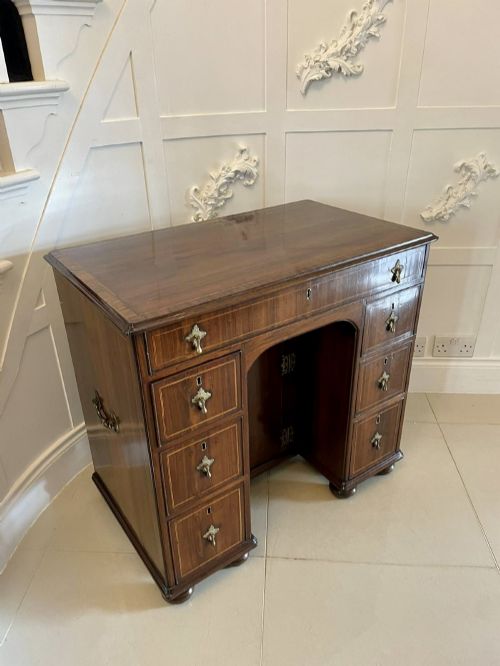
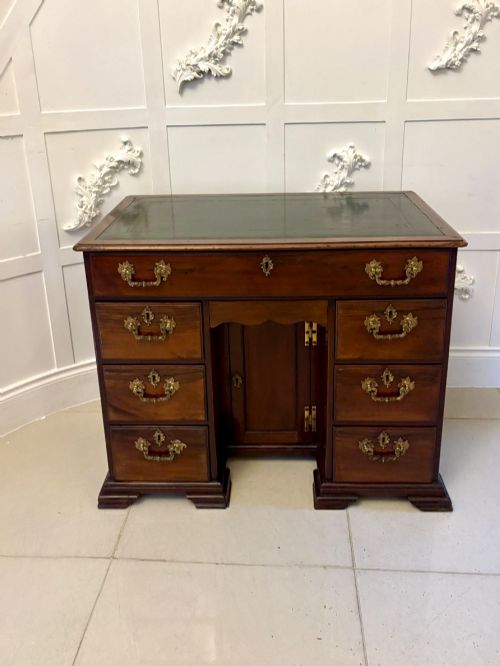
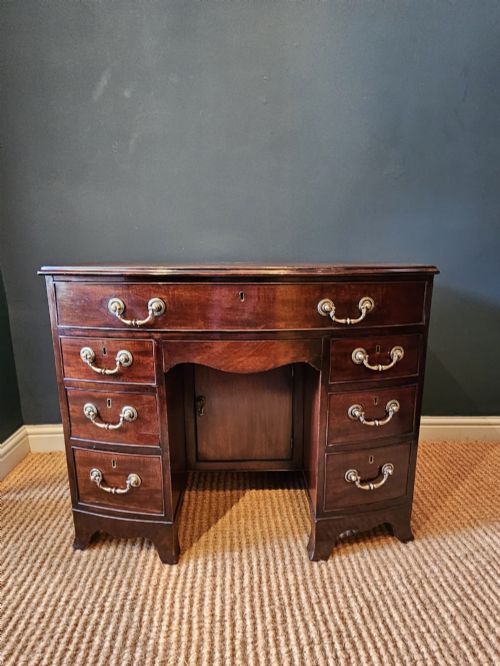

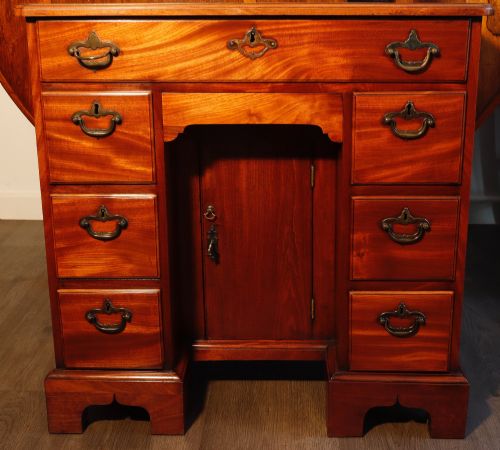


George III Kneehole Desk
A george iii kneehole desk brings handsome 18th-century proportions and concealed storage to a study.

What a George III Kneehole Desk Is
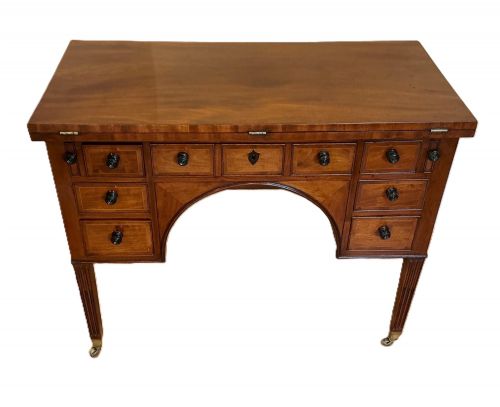
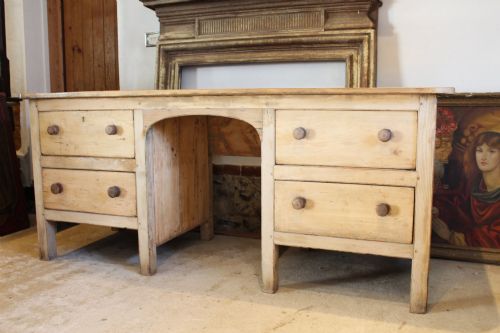
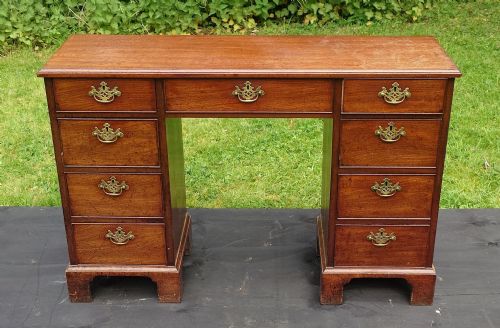
The george iii kneehole desk is a compact writing table designed during the Georgian period, typically featuring a central recess flanked by banks of drawers. These pieces generally date from the 18th century and range from modest six-drawer examples to larger eight-drawer variants.
Mahogany and walnut form the predominant timbers for these desks, whilst oak appears in secondary elements and early pieces. Buyers encounter both simple brass-fitted designs and more elaborate variations incorporating marquetry or secretaire drawers.
The layout includes distinctive configurations, such as desks equipped with a pull-out writing slide above the kneehole recess. These structural forms suit domestic interiors needing a dedicated writing surface with a small footprint.
How They Were Made
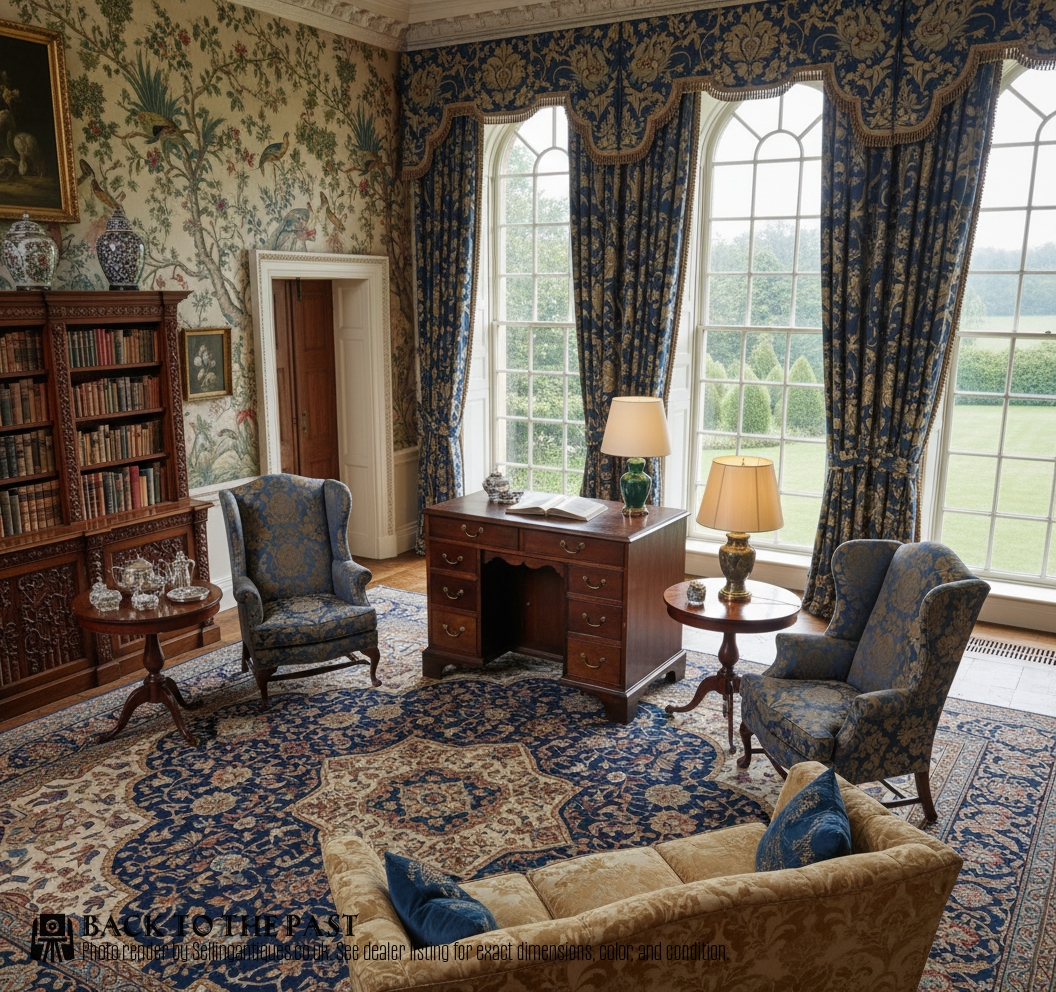
Cabinetmakers constructed these desks using dense hardwoods like mahogany and walnut over sturdy oak framing. Surfaces often display rich figuring in the timber grain, selected carefully for the top and drawer fronts.
Retail Price Guide 2026
Typical UK retail prices for george iii kneehole desk, calculated from the Sellingantiques database of over a million retail prices indexed since 2003. This retail price guide relies exclusively on Sellingantiques data; no external sources or auction records are used, so the figures do not describe the wider market.
Several of these neat little writing tables come equipped with a hidden kneehole cupboard door that swings open to reveal secret shelving.
What Varies in Quality
The selection of timber grain on the primary surfaces distinguishes finer examples, with highly figured walnut or Cuban mahogany denoting superior workshops. Cabinetmaking finesse shows in the flush fit of the drawers and the crisp execution of details like bracket feet.
Original hardware adds to the integrity of a piece, whereas replaced brasses alter the historical state. The presence of maker stamps or specialised fittings like a secretaire compartment elevates the standing of an individual desk.
Gillows of Lancaster
The George III Kneehole Desk Glossary
- Kneehole desk
- A small pedestal desk with a central recess for the legs, flanked by columns of drawers.
- Bracket foot
- A foot shape resembling a bracket, often shaped with a mitred corner and found supporting case furniture of the 18th century.
- Secretaire
- A desk form incorporating a fitted drop-front drawer that serves as a writing surface.
- Marquetry
- Decorative veneer work arranged in patterns or pictures using various coloured woods.
- Writing slide
- A pull-out board positioned above the drawers to provide extra surface area for paperwork.
Frequently Asked Questions
How do I use a kneehole desk?
A george iii kneehole desk serves as a functional writing table or small dressing station within a study or bedroom.
The central recess allows you to sit comfortably while the surrounding drawers keep stationery and documents organised.
What woods were used for these desks?
Makers constructed george iii kneehole desks primarily in mahogany and walnut, with occasional examples in oak.
Secondary woods like oak frequently appear in the drawer linings and internal framing.
Are all kneehole desks the same size?
These desks vary in scale, with some versions described as small six-drawer formats and others featuring eight drawers.
The compact footprint remains consistent across the period, designed to fit neatly against a wall or within a smaller parlour.
How do I spot a George III desk?
Look for 18th-century proportions, Georgian construction methods, and characteristic timber choices like figured mahogany or walnut.
Details such as brass bracket feet, original hardware, and pull-out writing slides help identify the period.