


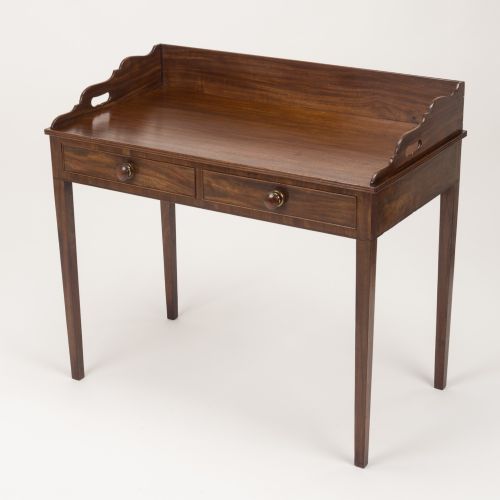
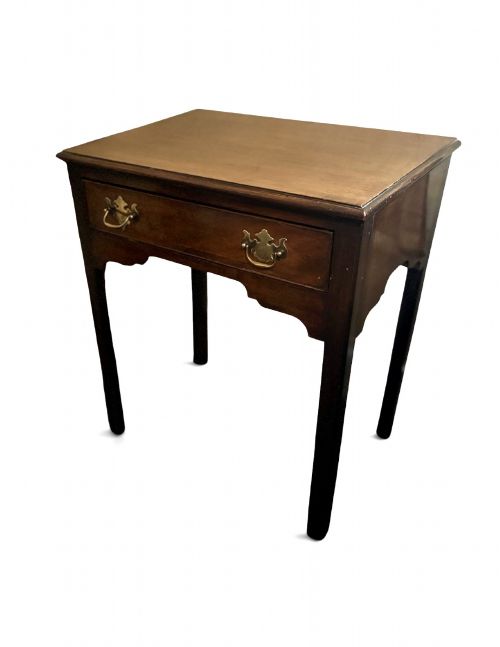
Small Mahogany Writing Table
A small mahogany writing table is a compact surface for correspondence, prized for rich timber and restrained proportions.
Understanding the small mahogany writing table
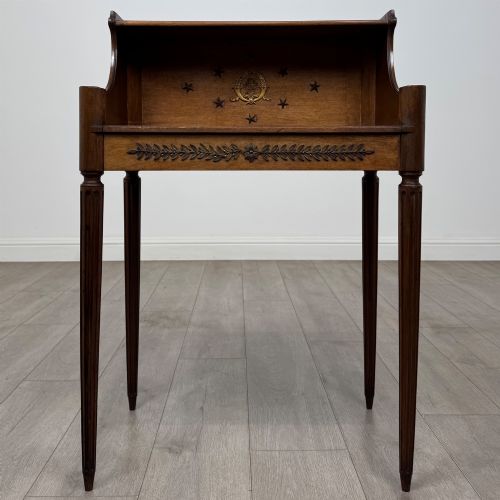
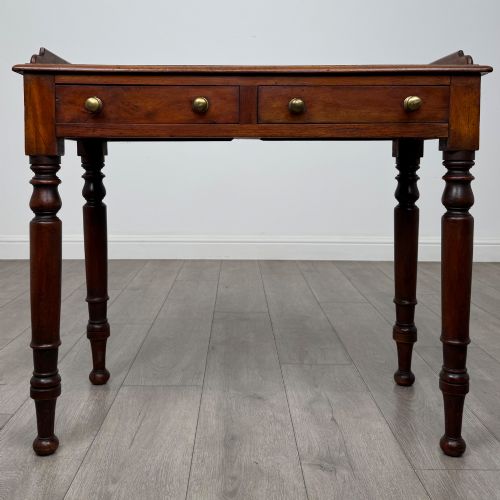
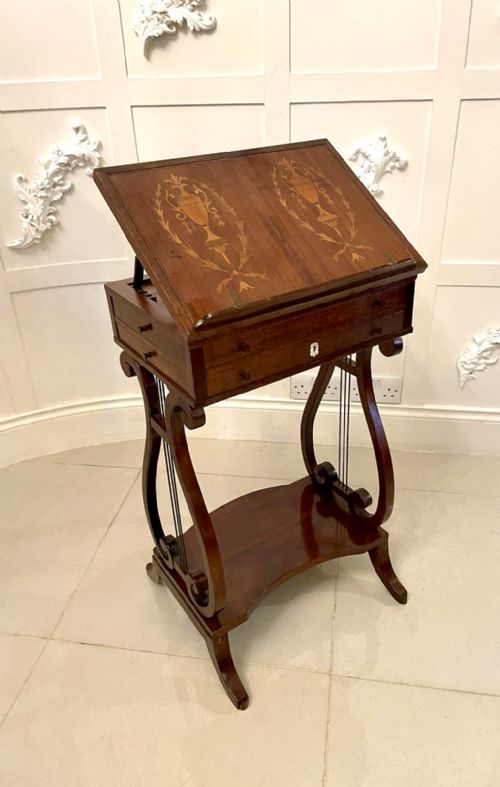
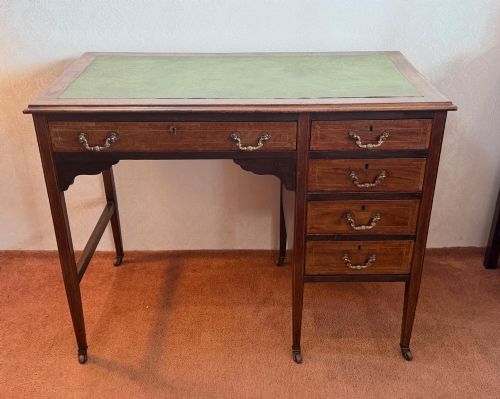
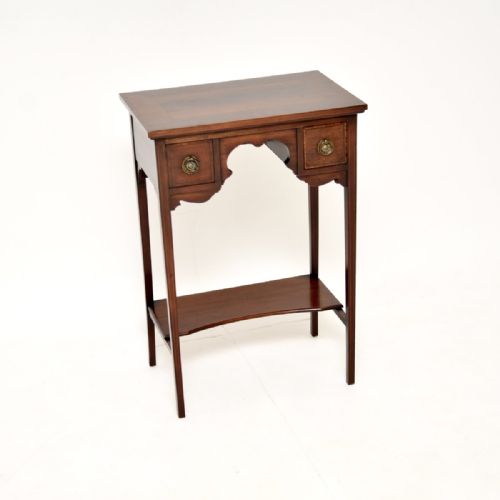
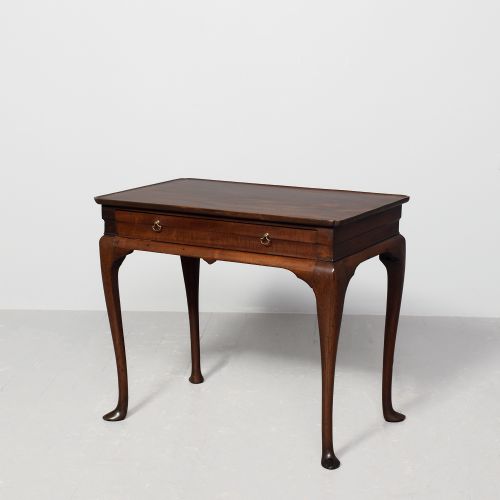
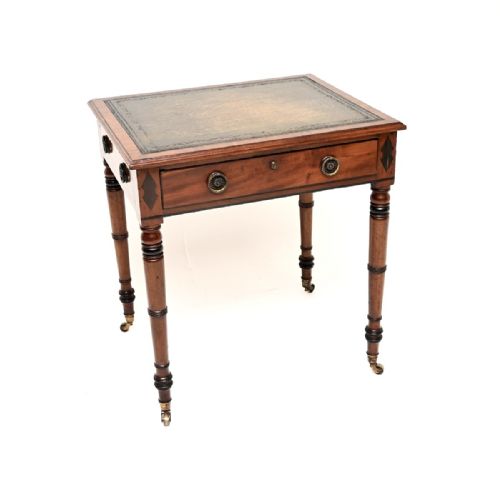
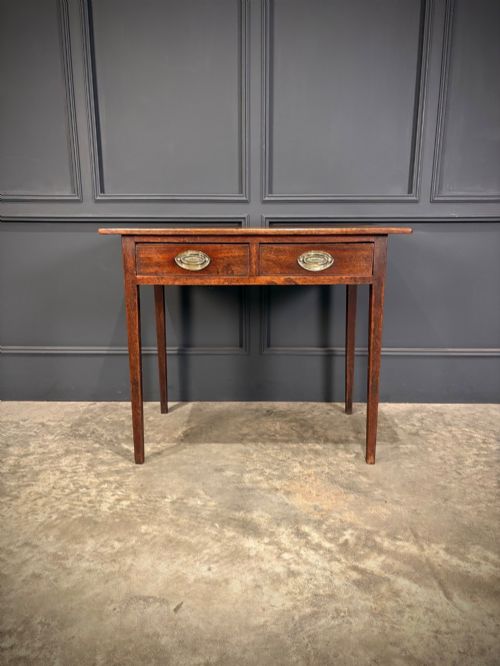
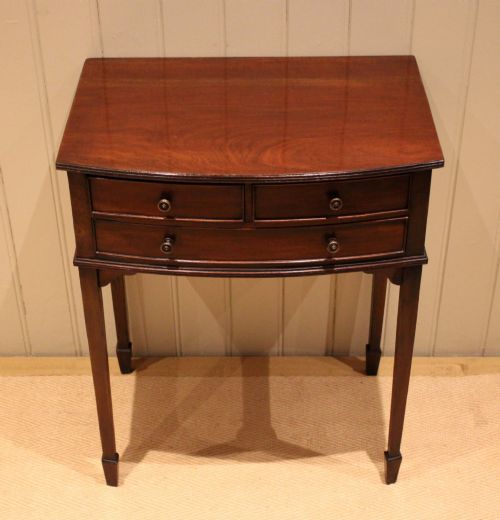
A small mahogany writing table provides a functional workspace without dominating a room, appearing in forms such as side tables, desks, and work tables. The listings show these pieces emerging across several distinct periods, including the Georgian era, the Regency period, the Victorian age, and the Edwardian years.
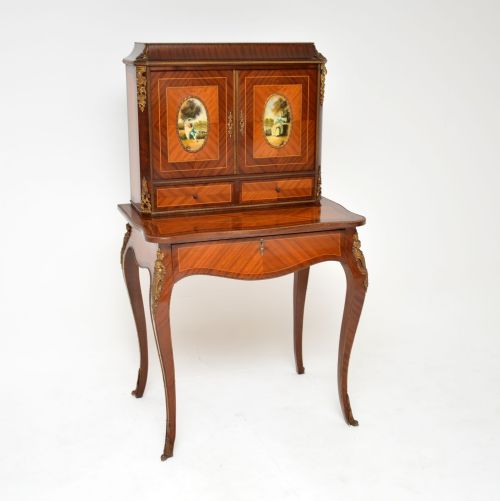
The dominant material is mahogany, frequently paired with brass and leather, and occasionally accented with satinwood or ebony inlay. Pieces range from straightforward George III and Victorian designs to French Neoclassical interpretations and specific regional makes like Scottish pieces.
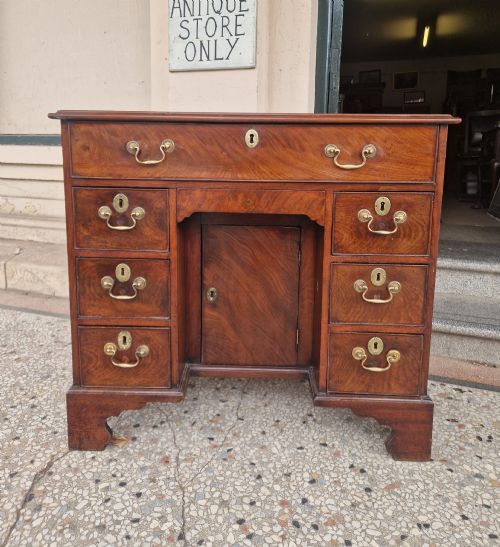
Buyers encounter formats that double as side tables, hall tables, or compact secretaire chests. The proportions remain consistently small, accommodating domestic interiors where floor space is limited.
Materials and construction
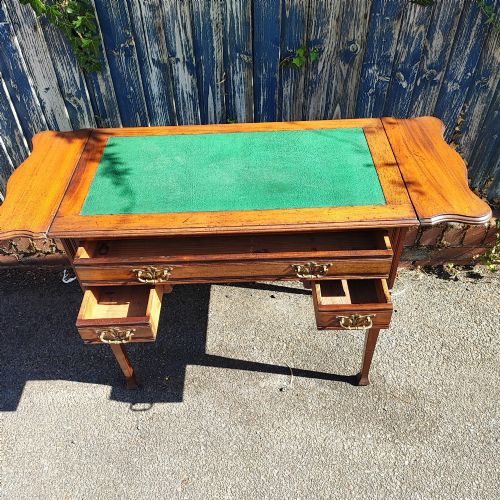
Cabinetmakers utilised solid mahogany and mahogany veneers over secondary timbers such as oak, building sturdy carcases designed for daily correspondence. Tops frequently incorporate inset leather writing surfaces, sometimes bordered with crossbanding or fine inlay work.
Hardware consists of brass handles, escutcheons, and occasional castors to aid movement across floorboards. Inlaid details involve contrasting timbers like satinwood and ebony, set flush into the mahogany ground.
Retail Price Guide 2026
Typical UK retail prices for small mahogany writing table, calculated from the Sellingantiques database of over a million retail prices indexed since 2003. This retail price guide relies exclusively on Sellingantiques data; no external sources or auction records are used, so the figures do not describe the wider market.
Listings demonstrate materials spanning mahogany, brass, leather, and satinwood across side tables and writing desks.
Markers of execution
Quality rests in the selection of the mahogany timber, where depth of grain and rich natural colour elevate a piece above standard domestic output. Finer examples display meticulous joinery, precise inlay work, and well-chosen secondary woods within drawer linings.
Proportion and restraint separate superior workshop production from simpler utilitarian items. The integration of quality brass fittings and carefully tooled leather inserts further distinguishes the upper tier of surviving examples.
Gillows
The Small Mahogany Writing Table Glossary
- Mahogany
- A durable tropical hardwood imported for British cabinetmaking, valued for its deep reddish-brown colour and stable grain. It forms the primary structural and visual material for these tables.
- Crossbanding
- A decorative border of veneer laid around the perimeter of a tabletop so the grain runs perpendicular to the centre. This technique frames the primary surface.
- Secretaire
- A piece of furniture incorporating a writing drawer or drop-front desk compartment. It combines storage with a pull-out writing surface.
- Escutcheon
- A protective brass plate surrounding a keyhole. It prevents the surrounding timber from sustaining damage through repeated use of the key.
- Pad foot
- A rounded, undissected foot resting flat on the floor, common on Georgian furniture forms. It provides a simple terminus to the table leg.
Frequently Asked Questions
What periods do these writing tables date from?
The available pieces span the Georgian, Regency, Victorian, and Edwardian eras, stretching from the eighteenth century into the early twentieth century.
Each period brings distinct stylistic traits, from George III proportions to later revival pieces produced around nineteen twenty.
Were these tables used exclusively for writing?
While designed primarily for correspondence and accounts, many functioned flexibly as side tables, hall tables, or occasional lamp tables.
Their compact size allowed them to move between reception rooms, bedrooms, and studies according to domestic needs.
What timber is used besides mahogany?
Mahogany forms the main body of the furniture, but makers incorporated secondary timbers like oak for drawer linings and internal framing.
Inlay and decorative accents frequently utilise satinwood, ebony, and brass fittings to complement the dark mahogany surface.
How do I identify a Georgian piece?
Georgian tables typically display simpler, robust proportions, often featuring specific foot forms such as pad feet or straight legs.
Cabinetmaking from this eighteenth-century era prioritises structural honesty and select timber grain over heavy applied decoration.