


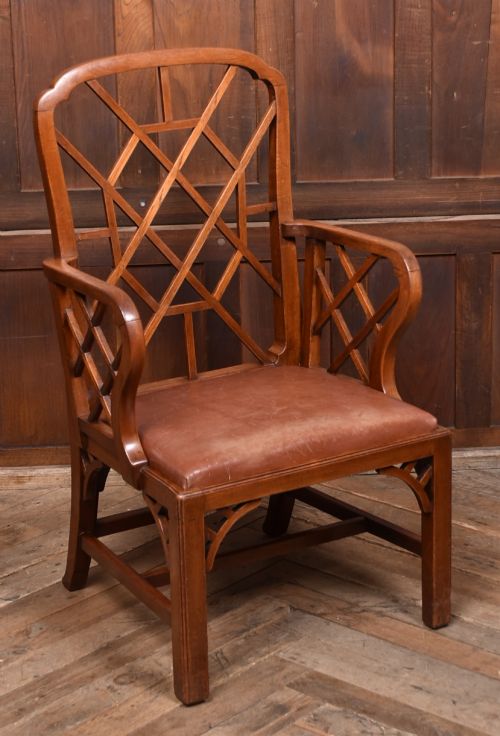


Carved Fretwork Desk
A carved fretwork desk provides an architectural workspace, bringing intricate pierced lattice patterns into a study with unmistakable Georgian pedigree.
Carved Fretwork Desk
A carved fretwork desk unites sturdy writing surfaces with delicate openwork wooden galleries and friezes, drawing heavily on Chinese Chippendale and revival aesthetics.
Buyers seeking this form often encounter nineteenth century interpretations alongside earlier Georgian iterations, all featuring distinctive fret-cut woodwork.
Assessing craftsmanship and construction
Quality rests upon the crispness of the pierced fretwork and the depth of the hand-carved decorative motifs gracing the framework.
Superior examples demonstrate meticulous joinery in the execution of delicate lattice patterns, maintaining structural stability without sacrificing visual lightness.
Carved Fretwork Desk Retail Price Guide 2026
Typical asking prices for carved fretwork desk among the pieces listed under this phrase on Sellingantiques today, from the lower quarter to the upper quarter. They describe what is for sale here now, not the wider market.
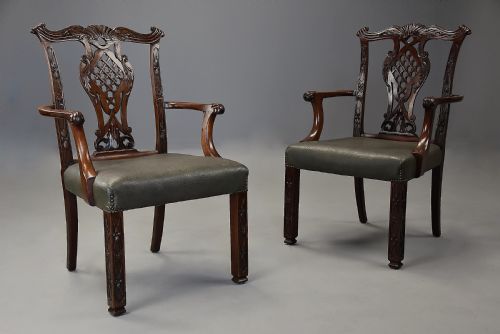
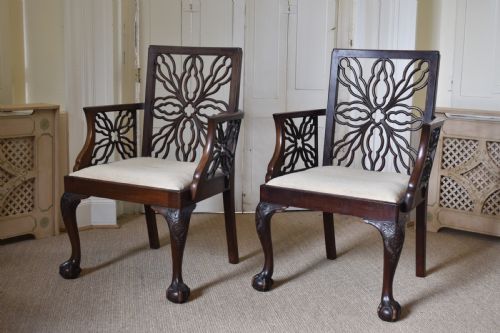
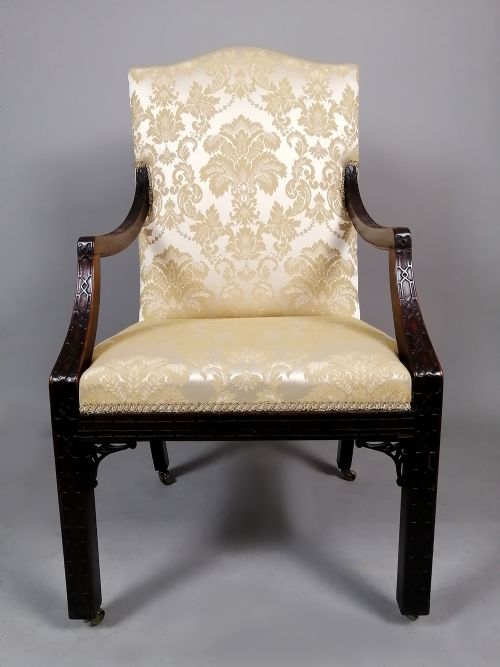
Several pieces feature intricate fretwork so delicate it looks like frozen lace carved straight out of solid mahogany.
Waugh & Son·Edwards and Roberts·Robert Manwaring
The Carved Fretwork Desk Glossary
- Fretwork
- Ornamental perforated or pierced woodwork arranged in geometric or interlaced patterns. It is carved or cut from solid timber to decorate aprons and galleries.
- Chippendale Revival
- A late nineteenth and early twentieth century return to the ornate eighteenth century aesthetic of Thomas Chippendale. Pieces feature characteristic pierced fretwork and blind fret designs.
- Cockpen
- A specific style of lattice chair or furniture featuring gridded openwork fret patterns. The design originates from eighteenth century Chinese influences adapted by British makers.
- Lowboy
- A small seventeenth or eighteenth century dressing table or side table featuring one or more rows of drawers beneath a flat top. They typically stand on slender cabriole or straight legs.
Carved Fretwork Desk: Frequently Asked Questions
What defines a carved fretwork desk?
These desks feature pierced wooden lattice patterns applied to friezes, legs, or galleries, borrowing heavily from eighteenth century Chinese Chippendale traditions.
The intricate fretwork creates an open, architectural appearance that distinguishes standard writing tables from more utilitarian nineteenth century office furniture.
How do I care for mahogany fretwork?
Maintain the timber by applying natural beeswax occasionally and dusting the intricate pierced channels gently with a soft brush.
Keep these tables away from direct heat sources and strong sunlight to prevent the timber and delicate glued joints from drying out.
Are these desks suitable for daily writing?
Most examples function effectively as occasional writing spaces or display surfaces, provided the leather inserts and joints remain stable.
Heavier modern equipment should be avoided to protect the slender legs and intricate decorative woodwork from undue stress.
How do I distinguish eighteenth century pieces from revivals?
Early pieces display authentic hand-cut tool marks, stable timber shrinkage patterns, and period-appropriate secondary woods beneath the primary mahogany.
Revival pieces from the Victorian and Edwardian periods often show machine assistance in the fretwork and cleaner interior drawer construction.