



French Empire Nightstand
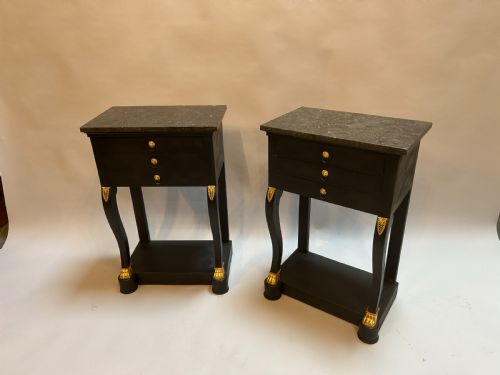
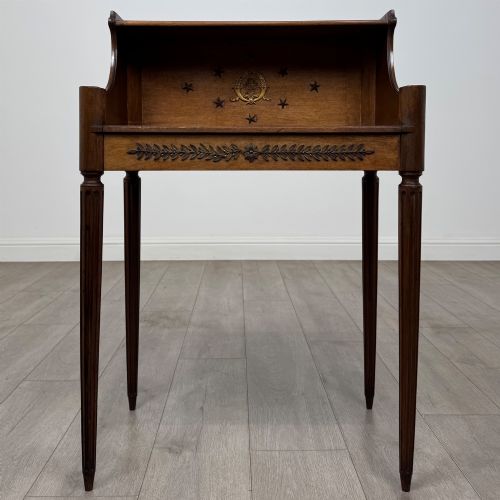
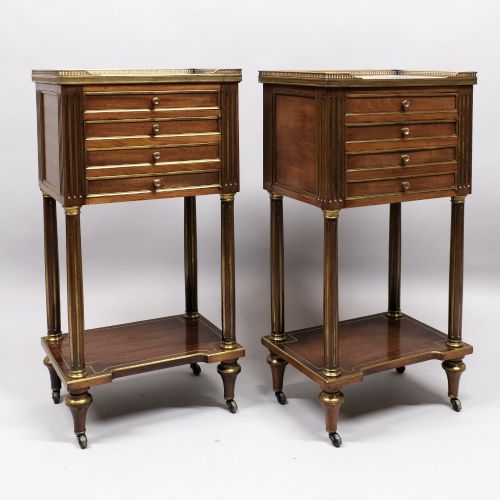
These French Empire nightstand pieces bring classic continental form and rich timber to the bedroom, offering practical surface space alongside architectural presence.

French Empire Nightstand
A french empire nightstand brings distinct continental proportion to the bedside, appearing in forms such as cylindrical pedestals, hexagonal stands, and cabinet chests. You will frequently encounter examples from the nineteenth century alongside later revival periods, built to serve beside the bed or as compact side tables.
The selection ranges from early nineteenth-century originals to later Edwardian and revival interpretations. These pieces function as practical bedroom furniture while displaying the characteristic classical restraint and structural clarity of the style.
How they were made
Cabinetmakers utilised dense timbers like mahogany and rosewood, often applied as fine veneer over solid wood carcases. Surfaces are frequently finished with inset marble tops that provide a cool, durable working area.
Metal enrichment plays a defining role in the construction, utilising cast brass and ormolu mounts to accent corners, columns, and door hardware. These cast elements highlight structural transitions and add metallic contrast to the dark wood.
French Empire Nightstand Retail Price Guide 2026
Typical asking prices for french empire nightstand among the pieces listed under this phrase on Sellingantiques today, from the lower quarter to the upper quarter. They describe what is for sale here now, not the wider market.
A few selected pieces double as miniature vide-poches, specifically designed to catch your loose pocket change before sleep.
What varies in quality
Quality rests in the precision of the timber selection and the crispness of the brass or ormolu mounts. Finer pieces display seamless veneer matching and heavy, well-chased metalwork that integrates cleanly into the wood structure.
The integrity of the marble top and the smoothness of drawer or door operation separate standard production from superior examples. Structural harmony between the classical proportions and the supporting feet dictates the overall success of the piece.
The French Empire Nightstand Glossary
- Ormolu
- Gilded bronze used for decorative mounts on furniture. It provides a bright golden contrast against dark timbers like mahogany.
- Veneer
- A thin layer of choice wood applied over a secondary timber base. This technique allows cabinetmakers to display striking grain patterns.
- Vide-poche
- A small container or surface designed for emptying pockets at the end of the day. In nightstands, this often takes the form of a small recessed tray or open compartment.
- Pedestal
- A cylindrical or columnar support structure beneath a cabinet or tabletop. It elevates the main body while maintaining a compact footprint.
French Empire Nightstand: Frequently Asked Questions
Are these nightstands sturdy enough for daily use?
These pieces are built from dense timbers like mahogany and incorporate stone surfaces, making them durable for holding lamps and bedside items.
Their solid construction ensures they remain stable under everyday domestic conditions.
How do I clean the marble tops?
Wipe the stone surface using a soft cloth dampened with warm water and mild, neutral soap. Avoid acidic cleaners that can etch the polished finish.
Dry the marble thoroughly afterwards to prevent water spots.
Do these pieces come in pairs?
Many listings feature matched pairs of bedside cabinets or stands, which suits symmetrical bedroom layouts. Single pieces also appear frequently for standalone placement.
Check individual descriptions to confirm whether items are offered as a set.
What is the difference between original and revival pieces?
Original pieces date from the early nineteenth century during the height of the Empire period. Revival examples were produced later, such as around nineteen hundred, echoing those earlier classical motifs.
Both categories utilise similar forms and materials like mahogany and marble.