
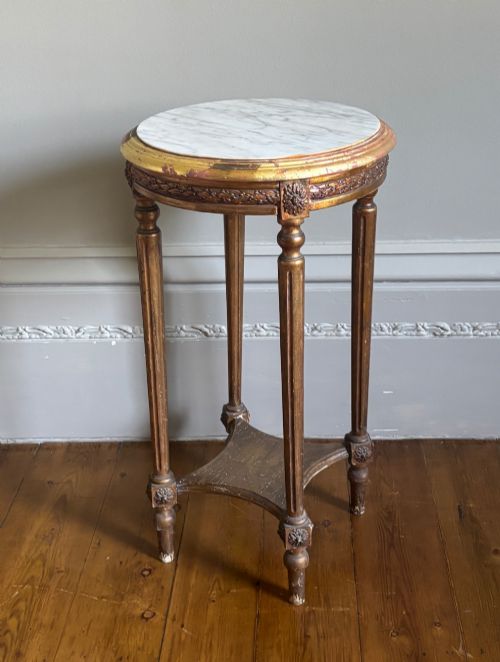

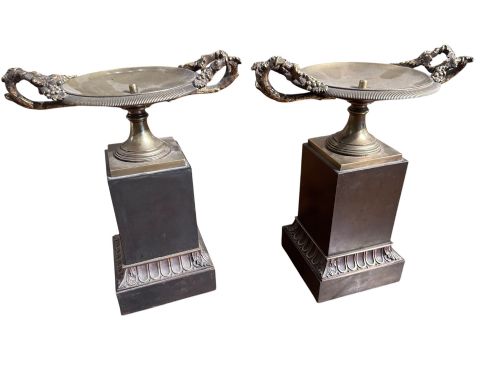
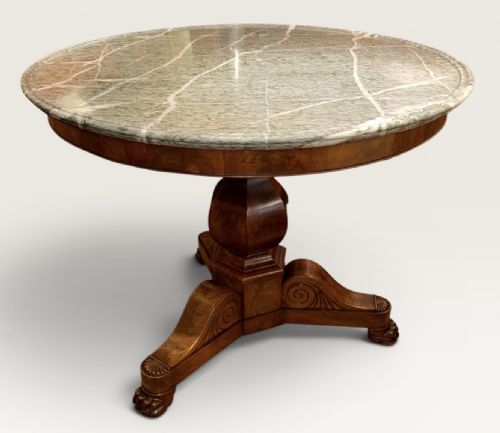


French Empire Pedestal Table
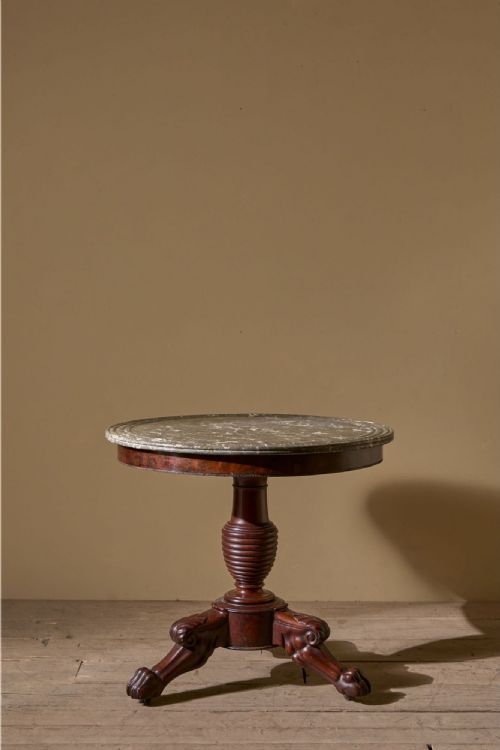
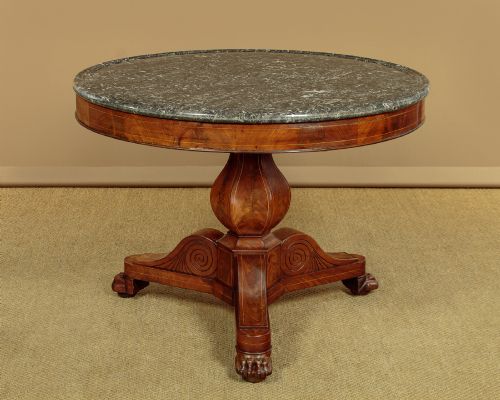
A french empire pedestal table brings sculptural mahogany and marble into a room, offering a heavy classical silhouette that grounds a classical interior.
What They Are
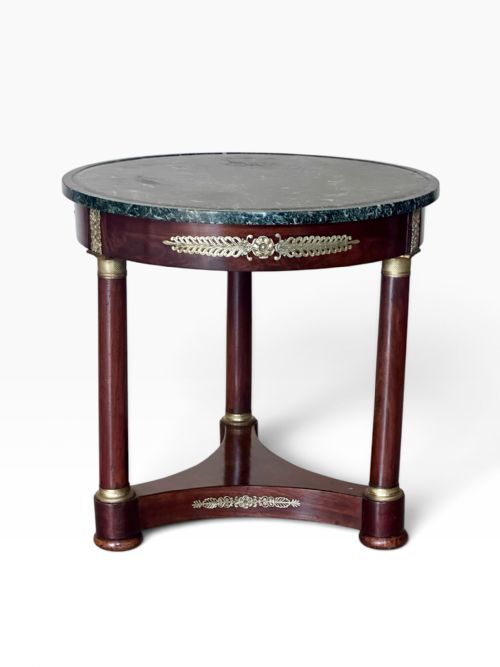
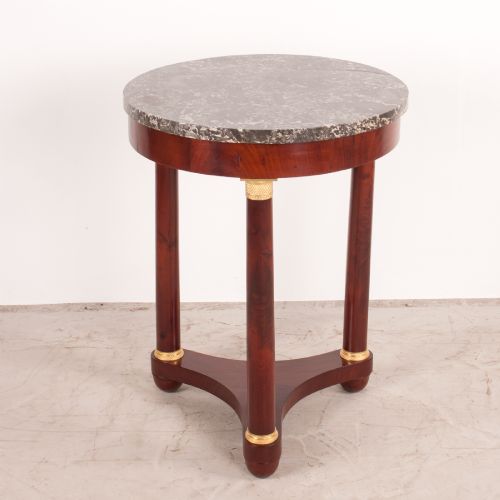
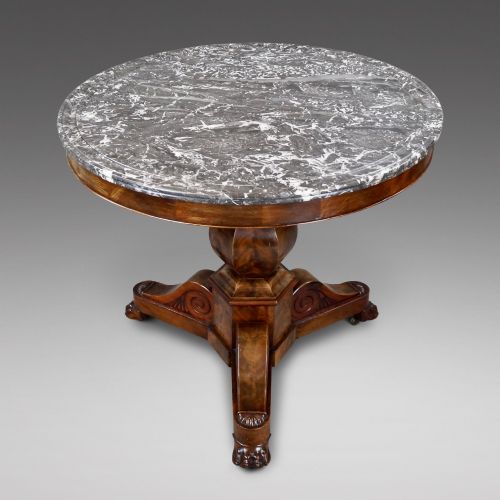
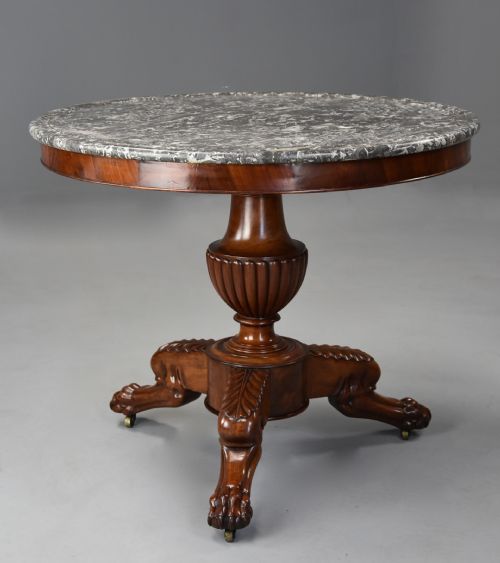
When you search for a french empire pedestal table, you encounter round guéridon forms and octagonal occasional tables that rest on a central column. These pieces emerge primarily from the nineteenth century, carrying the heavy classical geometry characteristic of the French Empire style.
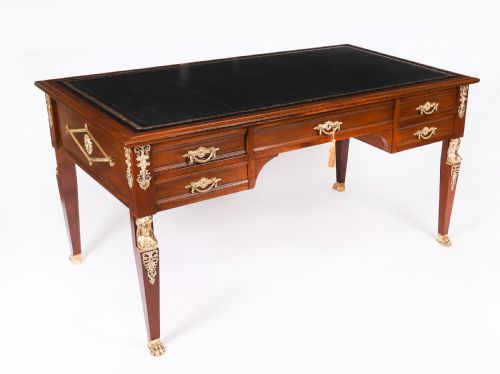
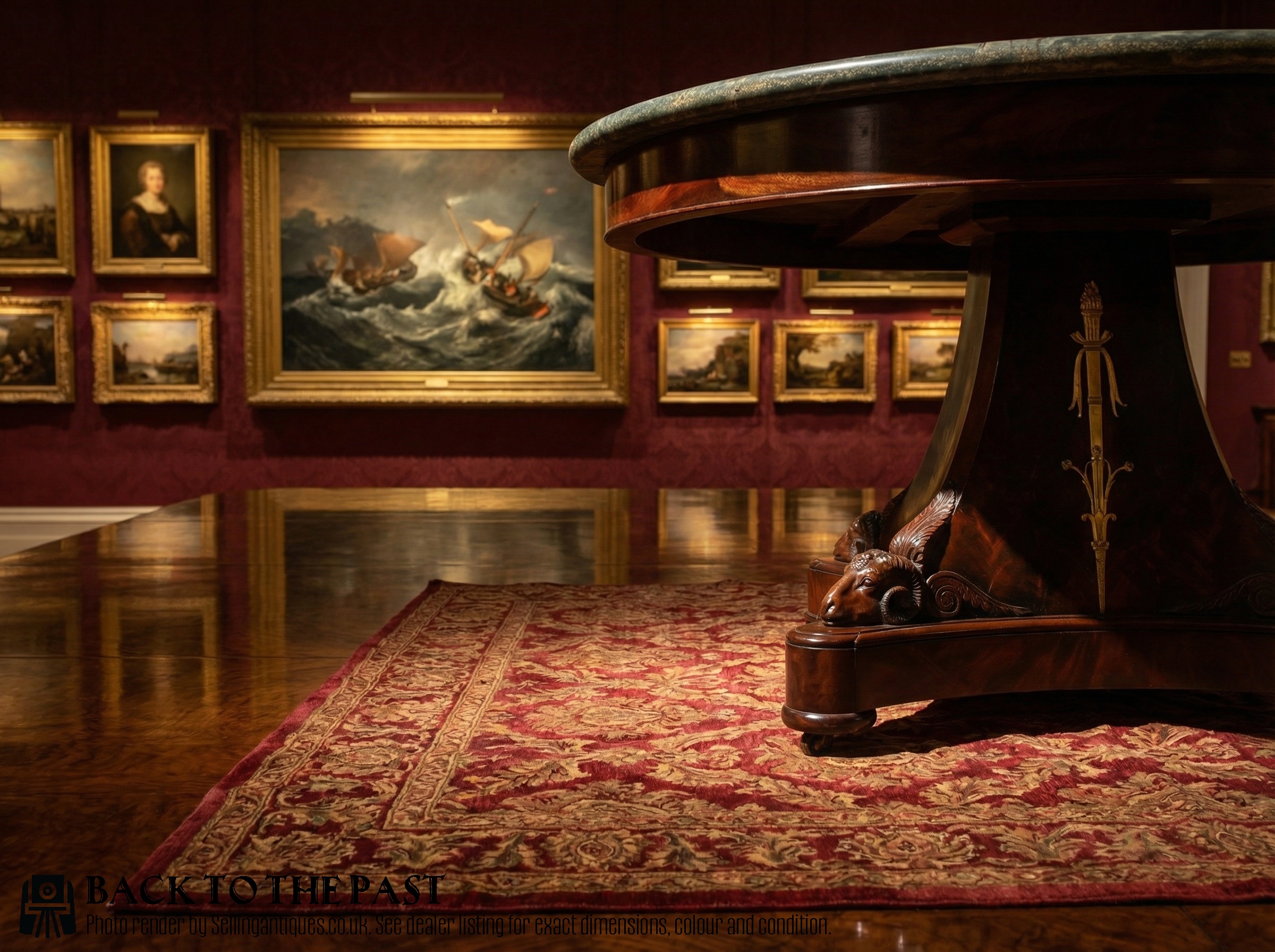
The selections available here showcase centre tables and side tables featuring distinct architectural details like ram heads and swan mounts. These functional surfaces combine display utility with the commanding presence of the period, serving as focal points in reception rooms and hallways.
How They Were Made
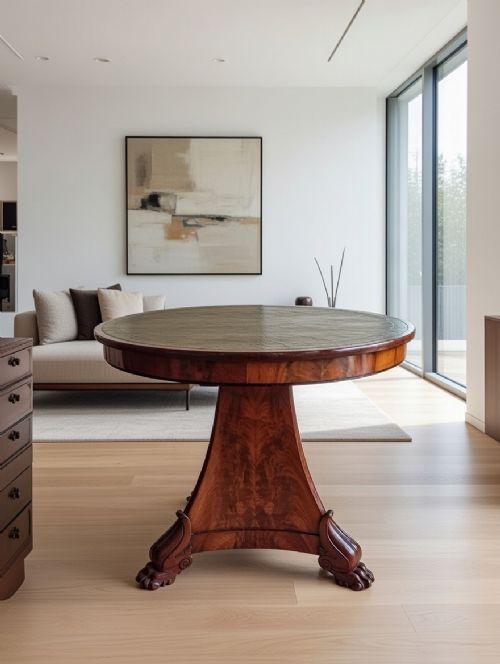
Maker construction relies on solid mahogany and walnut timber, frequently enhanced with rich flame mahogany veneer to create striking grain patterns across the circular tops. Cabinet makers built these robust wooden carcasses around substantial central pillars designed to support heavy stone work.
Surface ornamentation integrates polished marble tops with cast brass and ormolu mounts. Artisans applied these metallic details to highlight structural joints and decorative motifs, pairing cold stone with warm timber.
Retail Price Guide 2026
Typical UK retail prices for french empire pedestal table, calculated from the Sellingantiques database of over a million retail prices indexed since 2003. This retail price guide relies exclusively on Sellingantiques data; no external sources or auction records are used, so the figures do not describe the wider market.
Several tables stare back at you through cast brass ram heads and swans.
What Varies in Quality
The hierarchy among these tables rests on the sculptural ambition of the mounts and the selection of timber veneers. Masterworks feature finely chiselled ormolu and detailed figural elements like swans and rams, whereas simpler pieces rely on plain timber and minimal brass trim.
Structural integrity of the central pedestal and the matching of flame mahogany grain define the standard of execution. Superior examples demonstrate seamless integration between the heavy stone top and the timber base without excessive bulk.
The French Empire Pedestal Table Glossary
- Guéridon
- A small French table supported by a central pillar or columns. This form dominates the nineteenth-century selections.
- Ormolu
- Gilt bronze applied to furniture as decorative mounts. It provides bright golden highlights against dark mahogany surfaces.
- Flame mahogany
- Timber sliced to reveal a rippling flame-like grain pattern. Cabinet makers used this veneer on prominent table tops.
- Centre table
- A freestanding table finished on all sides for placement in the middle of a room. These pieces function independently of walls.
Frequently Asked Questions
What is a french empire pedestal table used for?
These tables function primarily as centre tables or occasional surfaces in principal rooms. They provide a sturdy platform for lamps, decorative objects or books.
Historically, guéridon forms occupied the middle of reception spaces to display decorative arts. Their central pillar construction allowed people to walk around them easily.
How do I identify a nineteenth-century piece?
Nineteenth-century construction utilises dense mahogany timber and traditional joinery methods beneath the veneers. The presence of heavy marble tops and cast brass ormolu mounts points directly to this era.
Stylistic markers such as ram head carvings and swan details align with the classical revival aesthetics of the period. Examining the underside reveals period-appropriate timber preparation.
Are marble tops original to these tables?
Many tables from this era incorporate fitted marble slabs designed to handle heavy daily use and provide a cool, smooth surface. The weight of the stone requires a robust pedestal base for proper support.
Inspect the seating of the stone within the wooden frame to understand how the top integrates with the base. The thickness and type of marble correspond to nineteenth-century practices.
How do I care for flame mahogany and ormolu?
Protect mahogany surfaces from direct sunlight and excessive dryness to preserve the stability of the veneer. Dust regularly with a soft, dry cloth without applying modern silicone polishes.
Keep ormolu mounts free of moisture and abrasive cleaners to maintain the gilded finish. Gentle cleaning preserves the historic contrast between the dark timber and the metal.