

Circular Marble Top Table
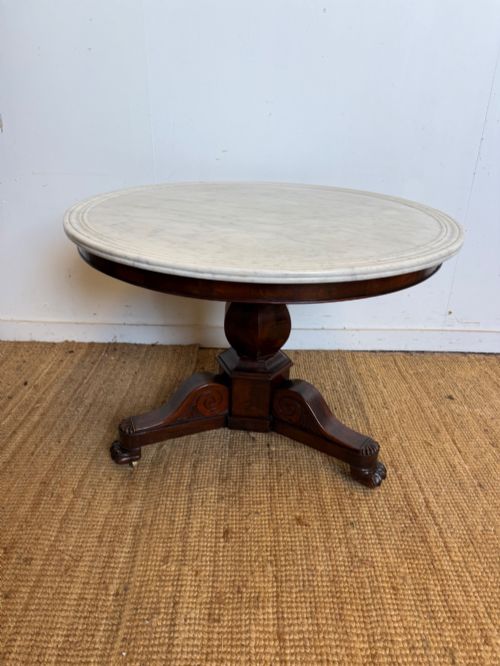
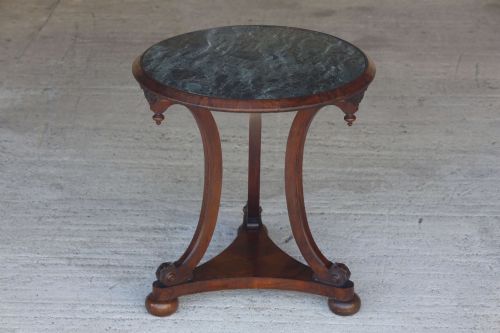
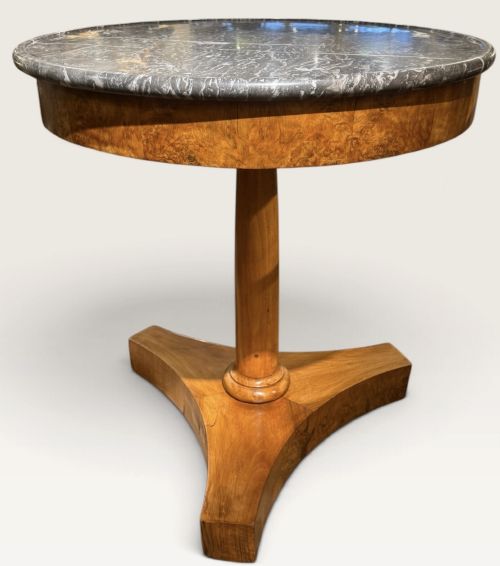
A circular marble top table brings solid stone and warm timber together in a centrepiece designed to anchor a room.
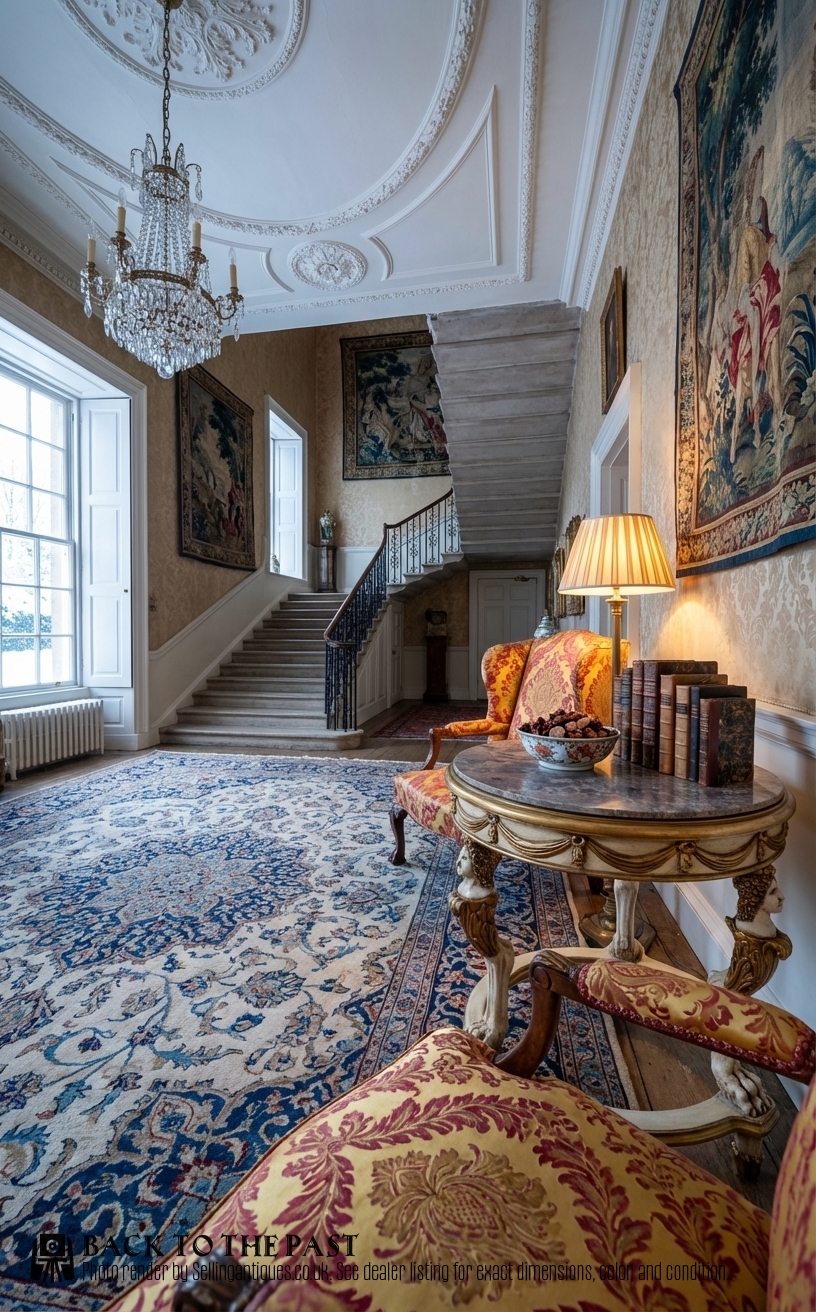
Circular Marble Top Table
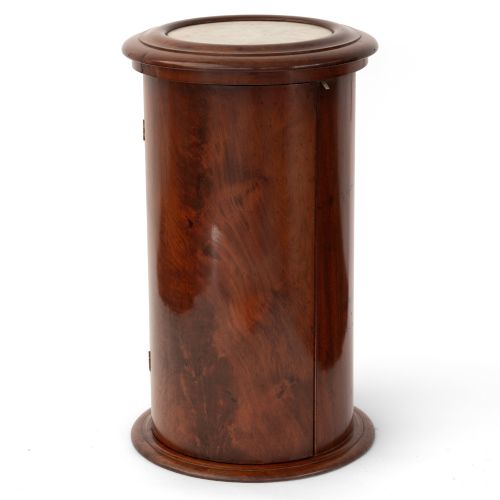
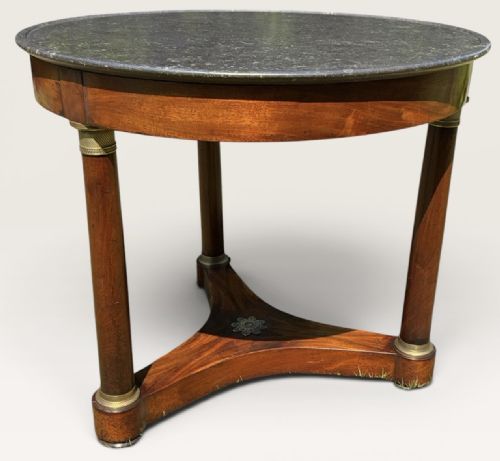
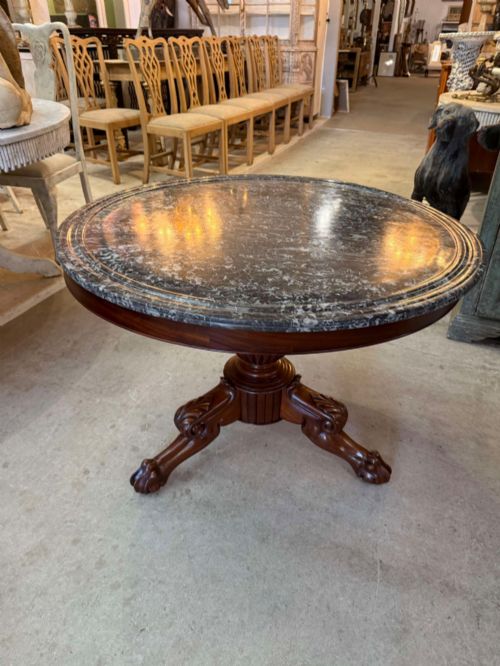
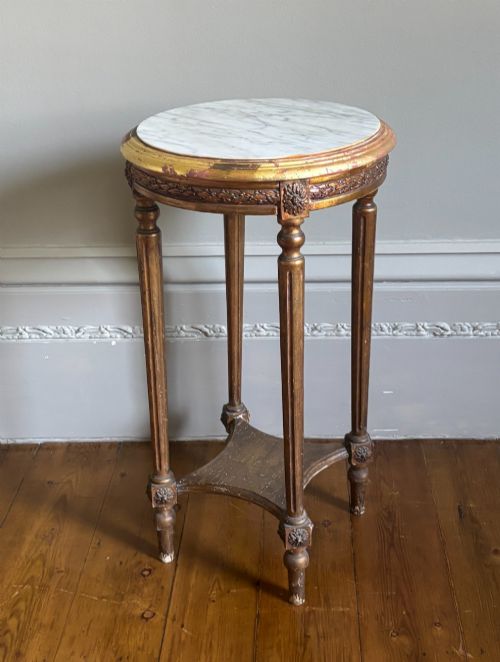
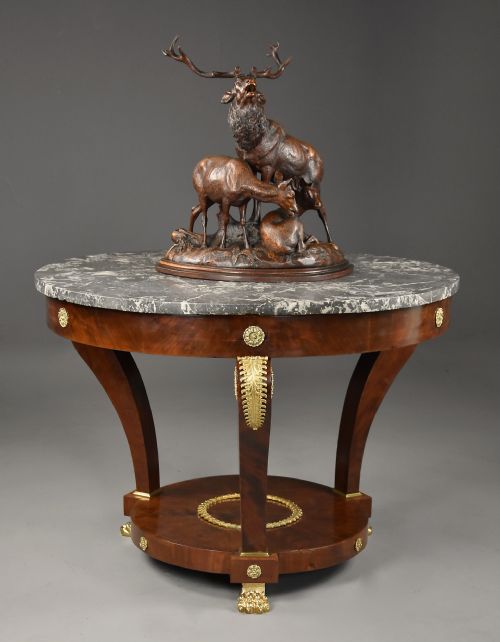
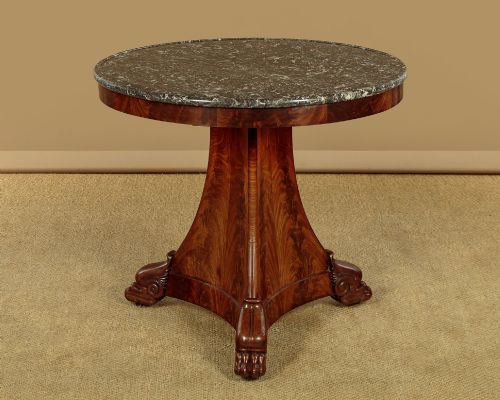
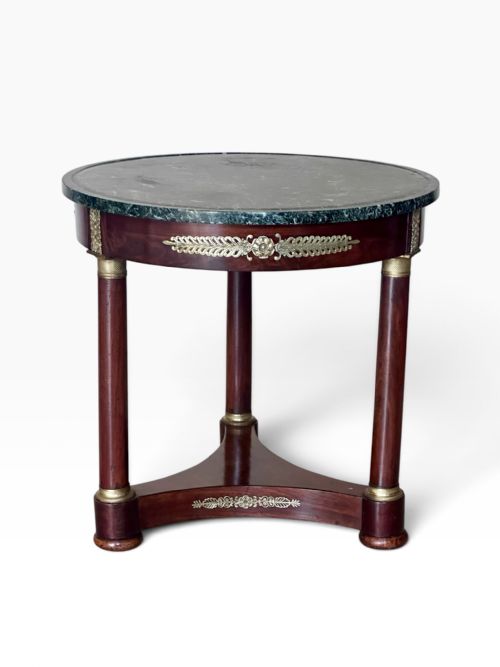
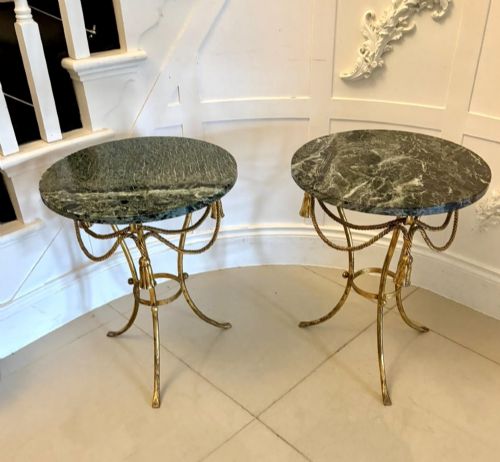
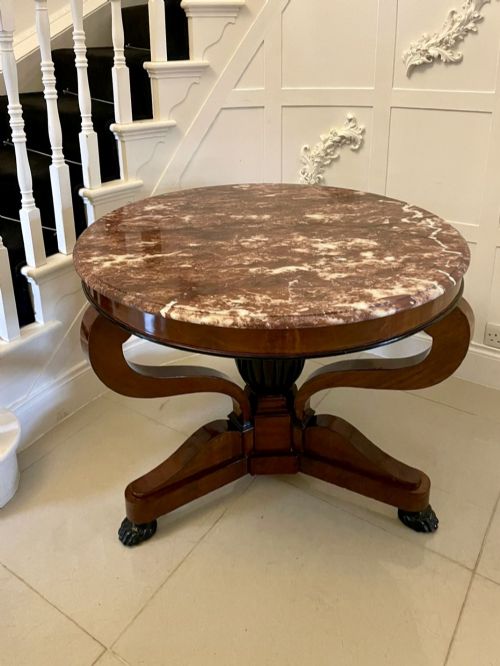
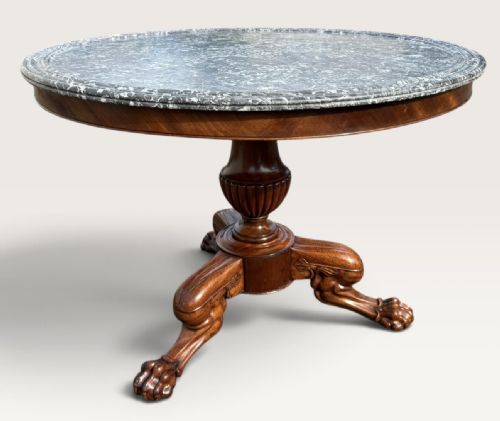
When searching for a circular marble top table, collectors encounter pedestal forms like the French guéridon, alongside occasional, lamp, and centre tables spanning the nineteenth and early twentieth centuries. These pieces function as display surfaces or central room tables, originating primarily from French and English workshops in styles ranging from Empire and Regency to Victorian.
The format relies on a sturdy central pedestal or tripod base supporting a heavy stone disc, frequently framed by timber aprons and sometimes fitted with brass galleries. While many items operate as freestanding centre tables, smaller variants serve beside seating as lamp or occasional tables.
Materials and construction
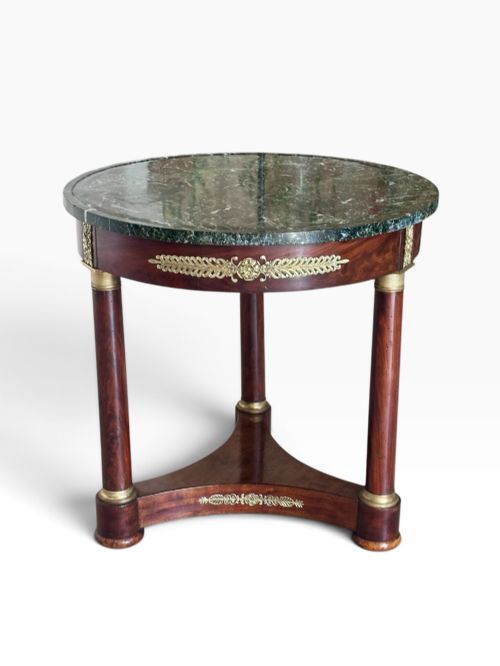
Cabinetmakers constructed the frames using native and exotic hardwoods such as mahogany, walnut, flame mahogany, and rosewood, often building up the pedestal bases with robust internal framing to bear the weight of the stone. Ormolu, gilt bronze, and brass mounts provide decorative contrast to the dark timber grains.
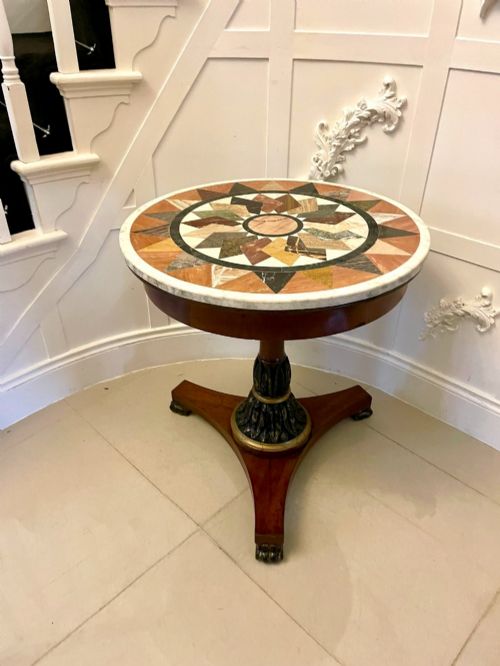
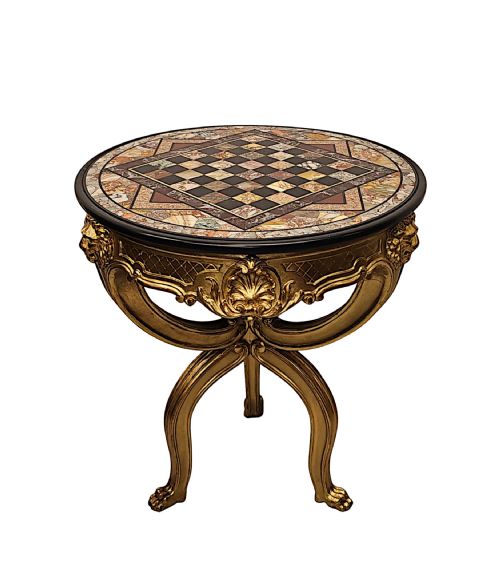
The tabletops feature either plain white, grey, and rouge marble or intricate specimen marble work, where small geometric sections of coloured stone are pieced together in patterns. Craftsmen fitted these heavy tops carefully into timber rebates to ensure stability without risking the brittle edges of the stone.
Circular Marble Top Table Retail Price Guide 2026
Typical asking prices for circular marble top table among the pieces listed under this phrase on Sellingantiques today, from the lower quarter to the upper quarter. They describe what is for sale here now, not the wider market.
Some nineteenth century card tables arrived with brass galleries specifically designed to stop rolling dice and erratic counters from hitting the floor.
Judgments of quality
The standard of a circular marble top table rests on the depth of figure in the timber veneers and the precision of the stone cutting. Finer examples display matched flame mahogany or meticulously assembled specimen marble panels rather than uniform plain stone.
Construction methods also dictate grade, where solid brass galleries, fire-gilt ormolu mounts, and substantial carved wooden pedestals distinguish superior workshop output from simpler utilitarian tables.
James Shoolbred·Weisweiler
The Circular Marble Top Table Glossary
- Guéridon
- A small French table on a single central pillar, commonly topped with marble and utilised as a centre or occasional piece.
- Specimen marble
- A decorative tabletop surface composed of various coloured marbles arranged in geometric patterns or pictures.
- Ormolu
- Gilt bronze mounts applied to furniture woodwork to provide bright metallic ornamentation.
- Bouillotte table
- A small French circular card or occasional table featuring a raised brass gallery around the marble top to prevent counters from rolling off.
Circular Marble Top Table: Frequently Asked Questions
Where should I place a circular marble top table?
These pieces suit entrance halls as central display surfaces or sit comfortably beside sofas and armchairs as lamp tables. Their freestanding nature allows them to occupy the middle of a room rather than strictly hugging a wall.
Because the heavy stone top resists heat and liquid better than plain wood, they function well in reception spaces where drinks or ornaments are frequently set down.
How do I care for the marble top?
Maintenance requires simple wiping with a damp cloth and mild soap, avoiding acidic cleaning fluids that can etch the polished stone surface. Using coasters prevents staining from liquids settling into more porous marble varieties.
Polishing the timber base with appropriate wax keeps the wood nourished without affecting the stone insert.
Are these tables heavy to move?
The combined weight of the stone slab and the hardwood pedestal makes these tables surprisingly heavy, though the top is frequently loose or simply dropped into a wooden rebate. Lifting the piece requires separating the stone from the base where possible to lighten the load.
Once in position, the dead weight gives the table great stability against tipping.
What is the difference between a guéridon and a centre table?
A guéridon specifically denotes a French pedestal table supported by a single central column or tripod leg, whereas a centre table is a broader term for any table designed to stand away from walls in the middle of a room. Many guéridons double as centre tables due to their finished appearance on all sides.
Both forms frequently feature circular marble tops to provide a durable and decorative surface.