








Specimen Marble Side Table
A specimen marble side table brings together mineral precision and fine cabinet timbers, offering a tabletop of assembled geological fragments that turns utility into display.
Specimen Marble Side Table
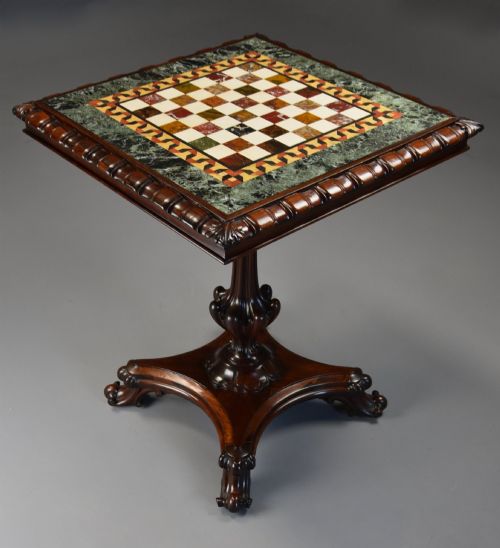
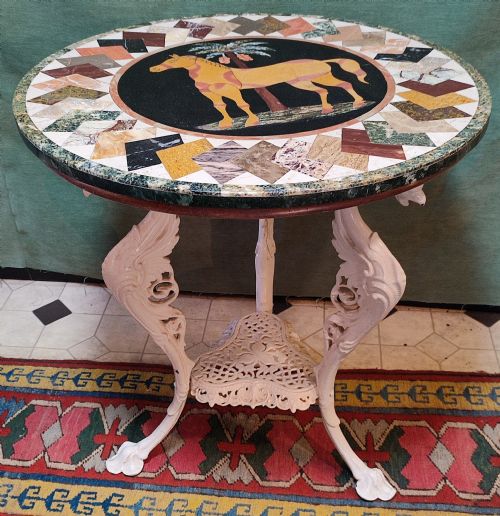
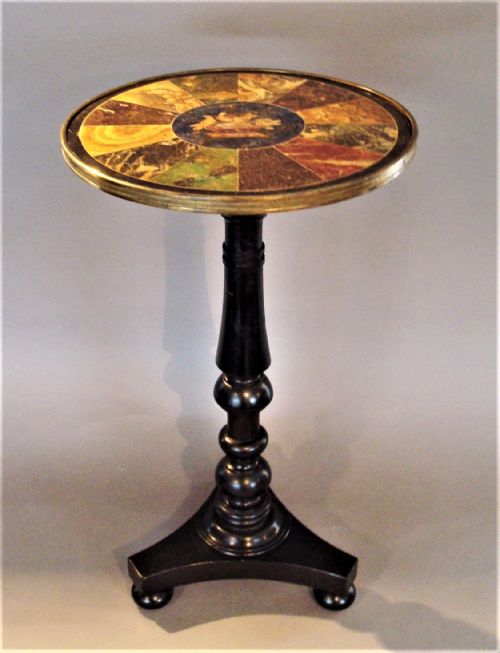
A specimen marble side table is a piece of furniture defined by a meticulously inlaid stone top composed of numerous geometric or pictorial mineral fragments. These tables appear across the 18th century, Regency, William IV, Victorian, and Edwardian periods, frequently taking the form of occasional tables, centre tables, and side tables.
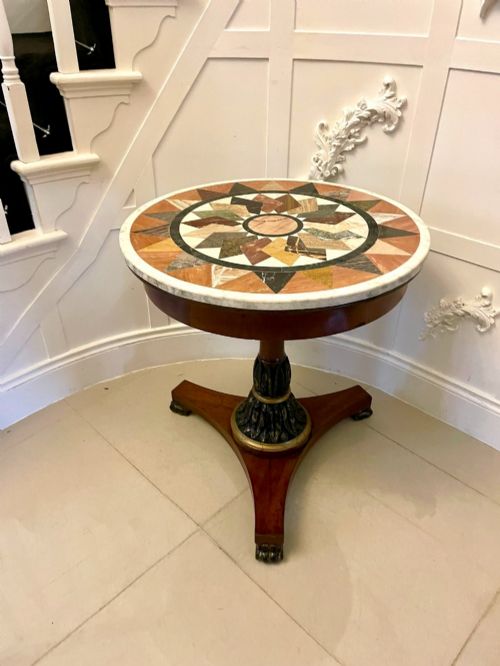
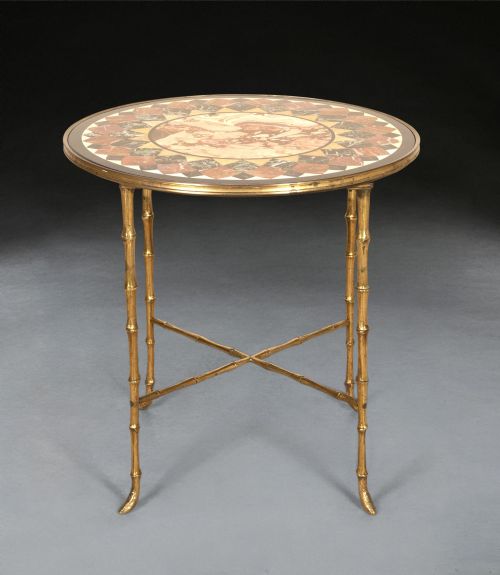
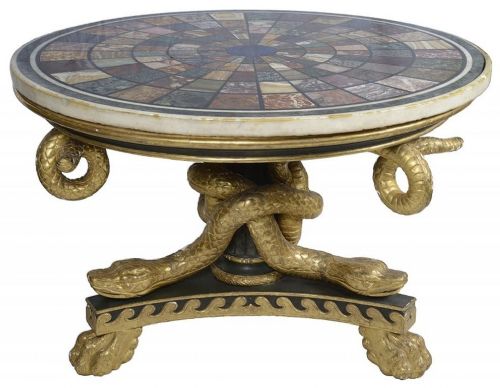
The version most commonly met on this page combines a circular or octagonal stone top with a turned or pillar support in mahogany, rosewood, walnut, or oak. Some examples incorporate brass details, giltwood, ebonised wood, or cast iron bases to support the weight of the stone.
Origins span English workshops of the Regency and Victorian eras alongside Italian ateliers producing Grand Tour pieces and Pietra Dura work. These pieces function equally as gaming surfaces, lamp tables, or architectural consoles in a room.
Materials and construction
Craftsmen built the tabletops by cutting hundreds of small marble and mineral specimens into precise shapes, fitting them together like a mosaic upon a slate or stone backing. This technique, often termed Pietra Dura when pictorial, required immense patience to ensure seamless joints between disparate stones such as malachite, jasper, and lapis.
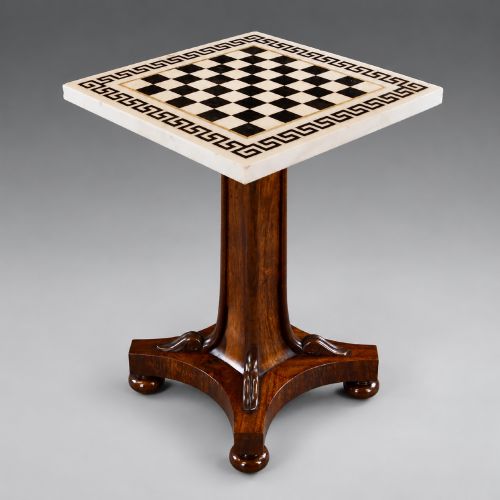
The supporting bases utilise dense cabinet timbers such as mahogany and rosewood, turned into columns or shaped into swan supports to carry the heavy stone top safely. Workshops employed traditional joinery and occasionally added giltwood carving, satin birch veneer, or ebonised details to complement the varied colours of the marble.
Specimen Marble Side Table Retail Price Guide 2026
Typical asking prices for specimen marble side table among the pieces listed under this phrase on Sellingantiques today, from the lower quarter to the upper quarter. They describe what is for sale here now, not the wider market.
Materials recorded across the inventory include specimen marble, mahogany, rosewood, walnut, oak, brass, giltwood, ebonised wood, and cast iron.
Distinctions in quality
The standard of the timber base and the harmony between the top and the stand dictate the overall execution. Tables where the mahogany or rosewood frame matches the architectural ambition of the stone top represent the highest tier of period craftsmanship.
James Shoolbred
The Specimen Marble Side Table Glossary
- Specimen marble
- A tabletop composed of multiple different varieties of marble and mineral fragments assembled in geometric or mosaic patterns. This technique showcased the maker's access to global quarries and geological specimens.
- Pietra Dura
- An Italian term for an artistic technique using cut and fitted polished coloured stones to create pictorial images. These designs often depict birds, flowers, or classical motifs set into a dark marble ground.
- Grand Tour
- A cultural journey undertaken by wealthy young Europeans through France and Italy during the 18th and 19th centuries. Travellers frequently returned with specimen marble tables and architectural fragments as souvenirs.
- Occasional table
- A small, versatile piece of furniture designed to be moved around a room as needed. In this context, they provide a sturdy surface for lamps, books, or decorative objects.
- Console table
- A table fixed to a wall or designed to stand against one, frequently supported by decorative legs or brackets. Period examples often feature giltwood or carved wood frames.
Specimen Marble Side Table: Frequently Asked Questions
How do I date a specimen marble side table?
Dating relies on the joinery, the timber species of the base, and the style of the turning or carving. Regency and William IV pieces tend to feature heavy rosewood or mahogany pillars, whereas Victorian examples often present circular tilt-tops or carved swan supports.
The character of the marble inlay also guides the period. Earlier Georgian and Regency tables frequently use broader geometric arrangements, while mid-19th-century pieces often incorporate intricate Pietra Dura work associated with Italian workshops.
Were these tables used for dining?
These tables served primarily as display furniture, occasional surfaces for lamps, or specialised games tables featuring chess boards in the marble top. Their stone surfaces were chosen for visual impact rather than heavy domestic service.
The weight of the marble top meant they remained stationary once placed in a room. They functioned as centre tables in grand reception rooms or side tables against drawing room walls.
How should I care for the marble top?
Maintenance requires gentle cleaning with a soft, damp cloth and neutral soap, avoiding acidic substances like citrus or vinegar that etch marble. Polishing the stone with a specialist wax helps protect the surface from moisture.
The timber base benefits from occasional dusting and mild beeswax nourishment to keep the grain of the mahogany or rosewood nourished without building up heavy residues.
What is the difference between specimen marble and Pietra Dura?
Specimen marble generally refers to geometric arrangements of various quarried stones assembled in patterns or sample tiles. Pietra Dura specifically denotes pictorial inlay work depicting figures, birds, or floral scenes using finely shaped hardstones.
Both techniques demand exceptional stonemasonry skills, but Pietra Dura is more painterly in its execution. Many tables combine both approaches within a single central medallion surrounded by geometric borders.