





Italian Pietra Dura Table
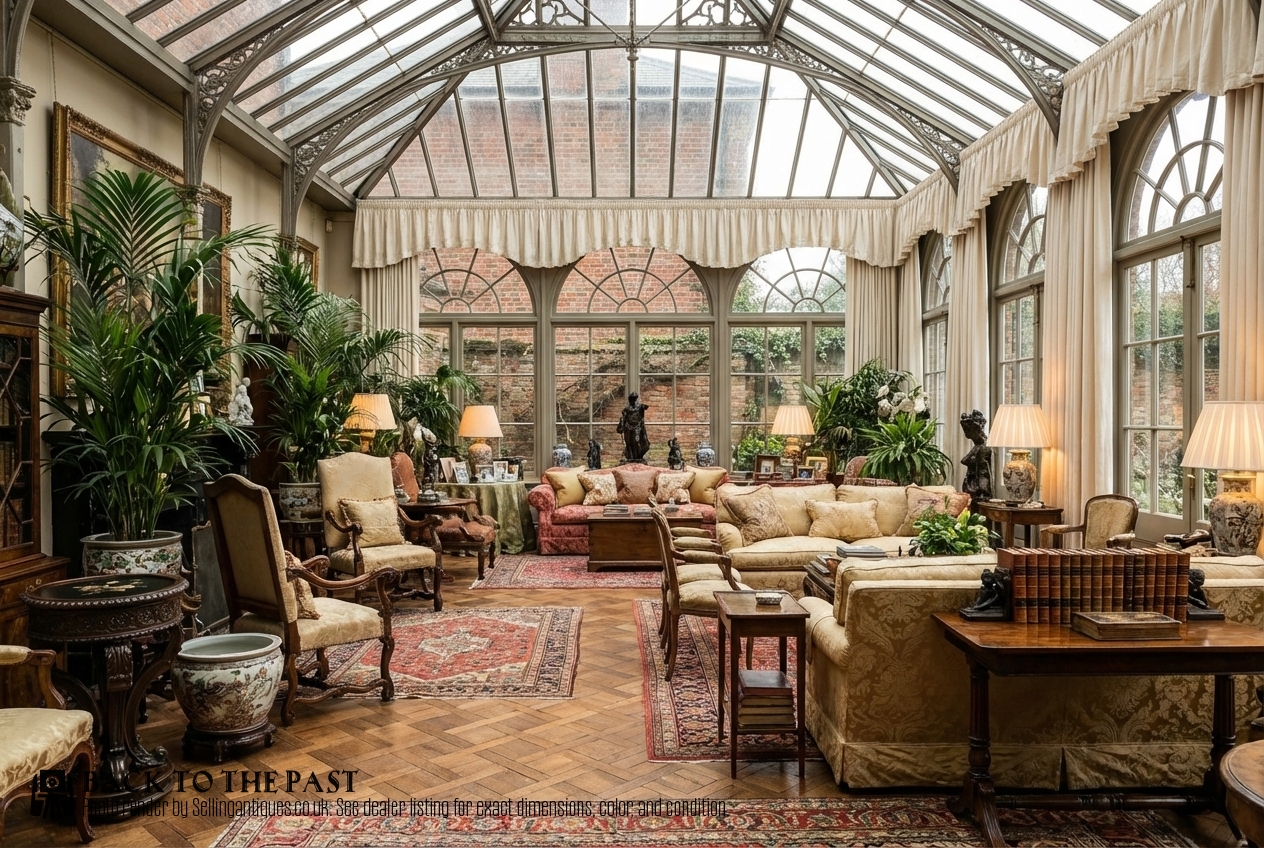
An italian pietra dura table brings heavy marble and hand-laid stone mosaic into a room, offering a piece of grand tour history that anchors any interior.
Italian Pietra Dura Table
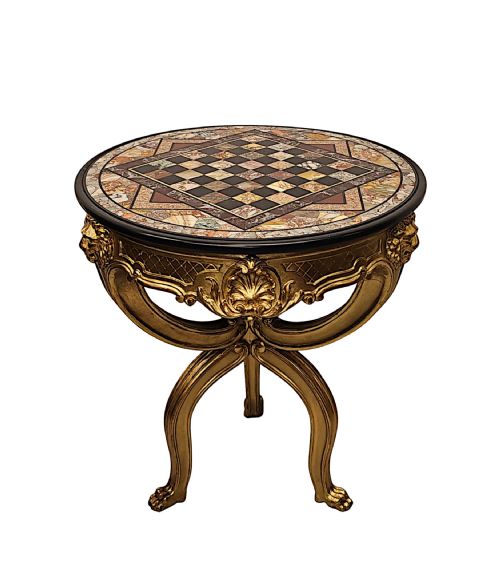
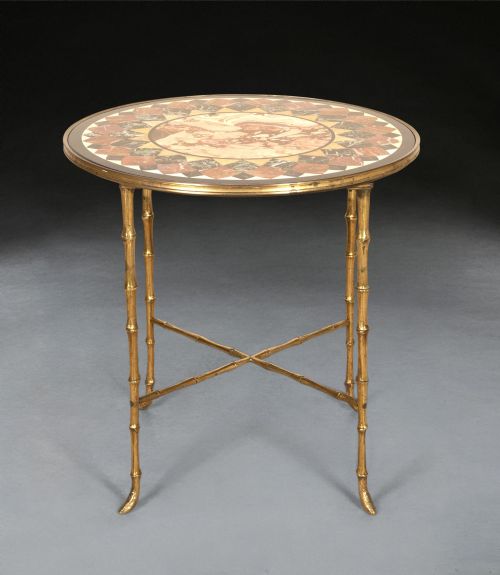
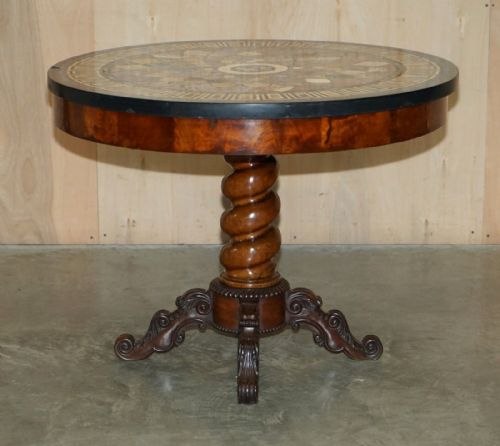
An italian pietra dura table combines a solid stone or wooden base with a flat mosaic top composed of precise hardstone sections. The examples seen here span the nineteenth century, including Victorian pieces, William IV designs, and Florentine Renaissance Revival works.
Buyers will most frequently encounter occasional tables and centre tables featuring specimen marble and detailed stone inlay. These forms range from octagonal occasional formats to substantial centre tables designed for principal reception rooms.
The aesthetic bridges domestic furniture with decorative art, drawing directly on Grand Tour traditions. Pieces often pair a stone or marble mosaic top with ebonised wood, mahogany, walnut, or brass supports.
Construction and Materials
The core technique relies on cutting and fitting hardstones into precise recesses within a marble or slate slab. Materials recorded in the construction include marble, specimen marble, hardstone, and slate, creating durable mosaic surfaces.
Bases and structural frames utilise mahogany, walnut, ebonised wood, and brass to support the heavy stone tops. Joinery reflects nineteenth-century cabinet-making standards, pairing substantial timber frames with rigid stone surfaces.
Italian Pietra Dura Table Retail Price Guide 2026
Typical asking prices for italian pietra dura table among the pieces listed under this phrase on Sellingantiques today, from the lower quarter to the upper quarter. They describe what is for sale here now, not the wider market.
Materials across the inventory span hardstone, slate, brass, and multiple varieties of specimen marble.
Quality and Execution
The precision of the stone joints dictates the standard of the mosaic work. Finer tops display microscopic gaps between individual hardstone pieces, while lesser examples rely on thicker mortar lines.
The Italian Pietra Dura Table Glossary
- Pietra dura
- Hardstone mosaic work using cut and fitted polished stones to create pictorial or geometric designs. This technique forms the decorative focus of the tabletop.
- Specimen marble
- A tabletop assembly composed of multiple different varieties of polished marble arranged in geometric or tiled patterns. Each section displays distinct natural colours and veining.
- Grand Tour
- A cultural journey through Europe undertaken by nineteenth-century travellers who acquired local crafts and antiquities. Tables brought back from these travels often featured local stone inlay.
- Ebonised wood
- Timber treated with a dark stain or finish to imitate ebony. This dark framing material provides a sharp visual contrast to brightly coloured stone mosaic tops.
- Scagliola
- A composite material made from selenite, glue, and pigments that mimics natural marble and stone inlay. It offers a smooth surface similar to genuine pietra dura.
Italian Pietra Dura Table: Frequently Asked Questions
How do I clean an italian pietra dura table?
Dust the stone top regularly with a soft, dry cloth to prevent grit accumulation.
Avoid chemical cleaners and excess water, which can damage the mortar and porous marble surfaces.
Are these tables sturdy enough for daily use?
These pieces possess heavy stone tops supported by robust timber or brass frames.
Their substantial weight keeps them stable, though placement away from high-traffic zones protects the delicate stone mosaic.
What is the difference between pietra dura and scagliola?
Pietra dura involves individually cut pieces of natural hardstone fitted together by hand.
Scagliola uses a plaster-based composite applied to resemble inlaid stone surfaces.
Where were these tables originally made?
Workshops in Florence and other Italian centres produced these decorative pieces during the nineteenth century.
Craftsmen created them largely for international travellers exploring Europe on the Grand Tour.