
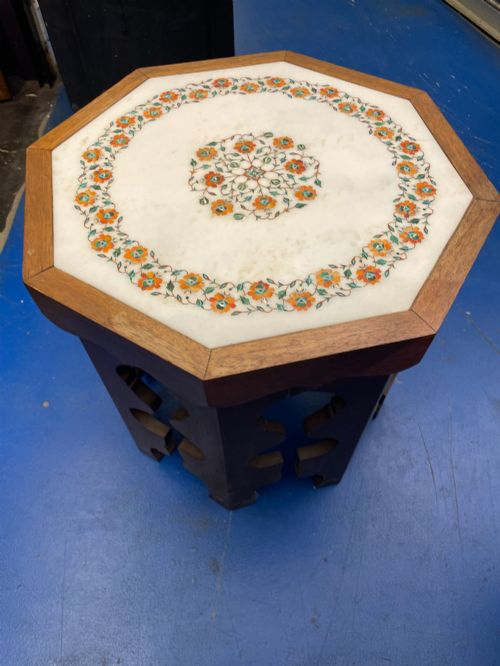


Floral Pietra Dura Table
These floral pietra dura table pieces are stone-inlaid works of functional art that bring classical Mediterranean craft straight into a modern room.
Floral Pietra Dura Table
A floral pietra dura table brings intricate stone mosaic work into domestic furniture, frequently appearing as occasional tables and centre tables. These pieces utilise hardstones and marbles arranged in elaborate floral motifs.
Buyers frequently meet Victorian and nineteenth-century examples alongside Florentine Renaissance Revival pieces. The forms range from compact octagonal occasional tables to larger centre tables.
Related objects like boxes and caskets occasionally share the same inlaid technique and aesthetic. These display the exact same stone inlay methods adapted to smaller surfaces.
How they were made
Maker workshops cut semi-precious stones and fitted them meticulously into recesses carved within marble or wood bases. This technique relies on precise hand-cutting to achieve seamless geometric and floral patterns.
Structural timbers like mahogany and ebonised wood often form the support frames for the heavy stone tops. Brass and white marble further appear as structural and decorative components across the pieces.
Object forms on this page include occasional tables, centre tables, chess tables, and various decorative boxes.
What varies in quality
The sophistication of the stone selection dictates the upper tier of these pieces. Richer semi-precious stones create deeper colour variations and more convincing botanical depictions.
The precision of the inlay work separates ordinary examples from exceptional ones. Tight joints between the cut stones and the surrounding base material show superior workshop execution.
The Floral Pietra Dura Table Glossary
- Pietra dura
- Hardstone inlay technique using cut and fitted semi-precious stones to create pictorial designs. This Italian term translates literally to hard stone.
- Occasional table
- A small, movable table designed for specific, intermittent uses within a room. These pieces provide surface space without dominating the floor plan.
- Ebonised wood
- Timber treated with a dark finish to imitate the appearance of ebony. This dark ground contrasts sharply with brightly coloured stone inlays.
- Centre table
- A freestanding table designed to be viewed from all sides in the middle of a room. Such pieces usually feature decorative tops intended as the visual focal point.
Floral Pietra Dura Table: Frequently Asked Questions
How do I care for marble and stone tops?
Marble and pietra dura surfaces require gentle cleaning with soft cloths and neutral pH cleaners. Avoid harsh acidic substances that can etch the polished stone surface.
Use coasters and protective mats to prevent scratching or staining the delicate inlaid floral motifs. Regular dusting keeps the polished hardstones looking bright.
Where were these tables made?
Many examples originate from nineteenth-century Italian workshops, particularly following Florentine Renaissance Revival traditions. English makers also produced comparable pieces during the Victorian and Aesthetic periods.
Materials and construction methods often reflect these distinct regional origins. Italian pieces frequently prioritise extensive hardstone mosaic work.
What periods do these pieces date from?
The available pieces span the nineteenth century, including specific dates from the eighteen-fifties through to nineteen-twenty. Victorian examples represent a large portion of the current selection.
Earlier nineteenth-century pieces often reflect Italian and Florentine craftsmanship styles. Later examples incorporate Aesthetic Movement and transitional twentieth-century design influences.