


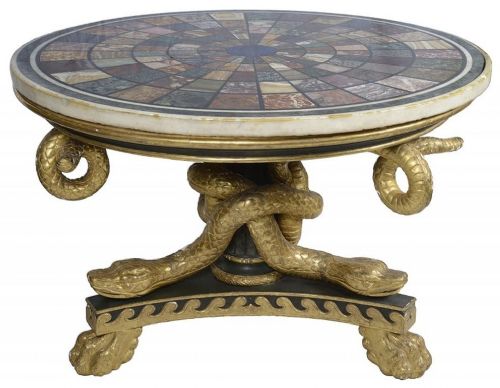


Black Marble Inlay Table
A black marble inlay table brings rich mineral surfaces and precise stonework into a room, offering both a functional surface and a striking display piece.
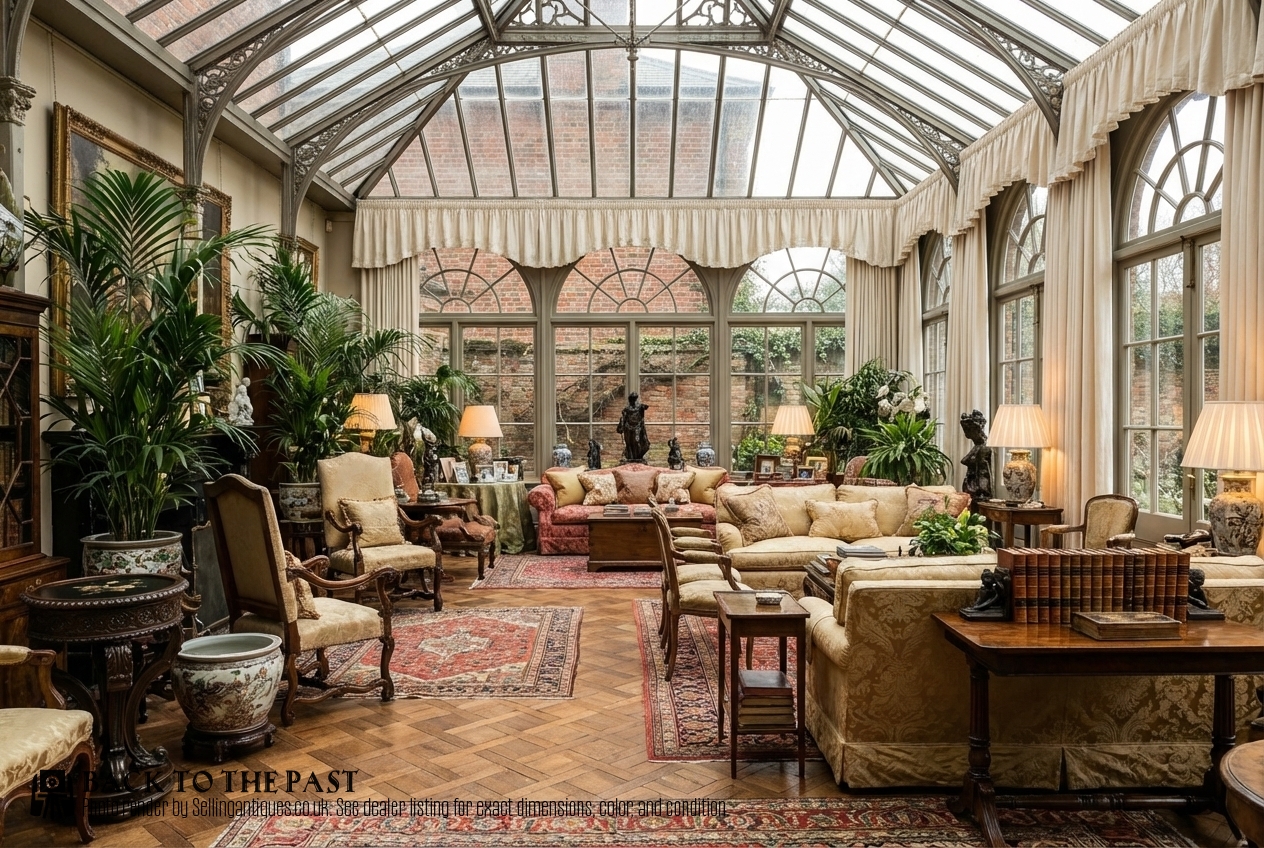
Black Marble Inlay Table
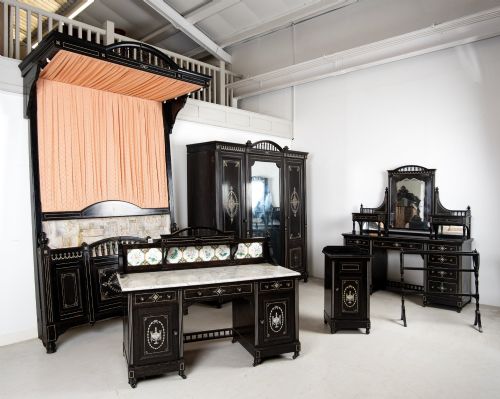
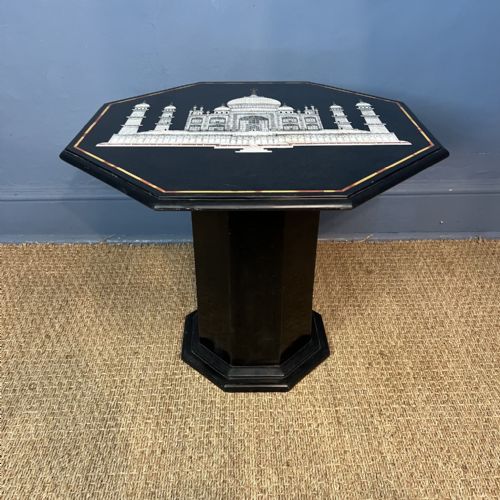
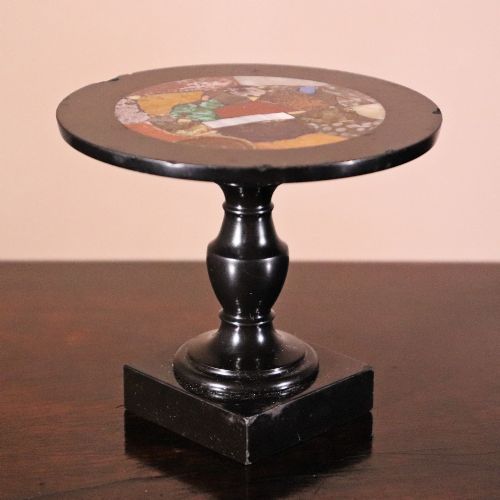
The form varies across the selection, ranging from large centre tables and occasional tables to smaller specimen pieces and console formats. Many examples pair the dark polished stone with contrasting materials like brass, glass, and satinwood to create geometric or floral patterns.
Buyers encounter regional interpretations spanning the Victorian era, Regency period, and later twentieth-century pieces like the Taj Mahal table. Each variant utilises polished stone to create enduring contrast within a room scheme.
Materials and Construction
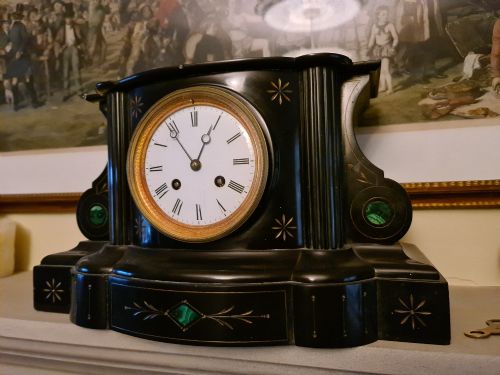
Makers constructed these pieces using dense stones such as black marble and slate, often mounting them onto ebonised wood or mahogany frames. The decorative surfaces rely on precision cutting where contrasting minerals are embedded flush into the main slab.
Techniques like pietra dura involve hand-cutting hardstones such as malachite, lapis lazuli, or jasper to form intricate floral or geometric motifs. Supporting structures frequently integrate turned wood, brass mounts, and glass elements to balance the heavy stone tops.
Listings feature black marble, slate, and brass alongside ebonised wood, representing nineteenth-century Victorian and Regency periods.
Evaluating Quality and Craftsmanship
The distinction between tiers rests upon the precision of the stonework and the tightness of the joinery between the inlaid minerals and the base slab. Superior examples feature seamless integration where individual stone pieces meet without visible gaps or excessive filling.
A higher standard also shows in the depth and clarity of the polish across both the black marble field and the decorative specimens. The overall harmony of the timber frame, whether ebonised or satinwood, further distinguishes standard production from finer workshop output.
Baby and Jannings
The Black Marble Inlay Table Glossary
- Pietra dura
- An artistic technique of using cut and fitted polished coloured stones to create images or geometric patterns. This mosaic method defines the finest ornamental stone surfaces.
- Specimen marble
- A decorative arrangement featuring various distinct types of marble collected and displayed together. These pieces showcase diverse geological colours within a single composition.
- Ebonised wood
- Timber treated with a dark stain or finish to imitate expensive ebony wood. This treatment provides a dark, uniform contrast to brightly coloured stone inlays.
- Centre table
- A freestanding table designed to be viewed from all sides rather than placed against a wall. These forms often feature elaborate inlaid tops meant for central room placement.
Black Marble Inlay Table: Frequently Asked Questions
How do I clean a black marble inlay table?
Dust the surface regularly with a soft, dry cloth to prevent abrasion from grit on the polished stone. Avoid harsh chemical cleaners and acidic substances, which can permanently etch the marble surface.
For routine care, wipe gently with a damp cloth using mild soap, drying thoroughly afterwards. Protect the stone from direct heat and moisture rings by using coasters and mats.
Are these tables sturdy enough for daily use?
Most forms are structurally robust due to dense stone tops and sturdy timber frames. However, the heavy weight requires careful placement on level flooring to prevent stress on the legs.
Occasional and centre tables handle normal decorative placement well, but excessive weight on the corners should be avoided. Periodic checks of the joinery help maintain overall stability.
What is the difference between Victorian and Regency tables?
Regency examples often feature cleaner classical lines, drawing inspiration from ancient Greek and Roman designs. They frequently utilise rich timber frames alongside specimen marble tops.
Victorian pieces tend toward more ornate detailing, incorporating ebonised finishes, heavier proportions, and complex floral pietra dura motifs. The aesthetic reflects a broader nineteenth-century revival of historic craftsmanship.
Where should I place a stone inlay table?
Centre tables work best in open spaces where the inlaid top can be viewed from all angles. Occasional tables fit comfortably beside seating areas or against panelled walls.
Position the piece away from direct sunlight to preserve the rich tones of both the black marble and the coloured inlay stones. Stable indoor environments prevent potential warping in the wooden bases.