







Pietra Dura Side Table
A pietra dura side table brings precise stone inlay into a room through marble and hardstone surfaces.
Pietra Dura Side Table
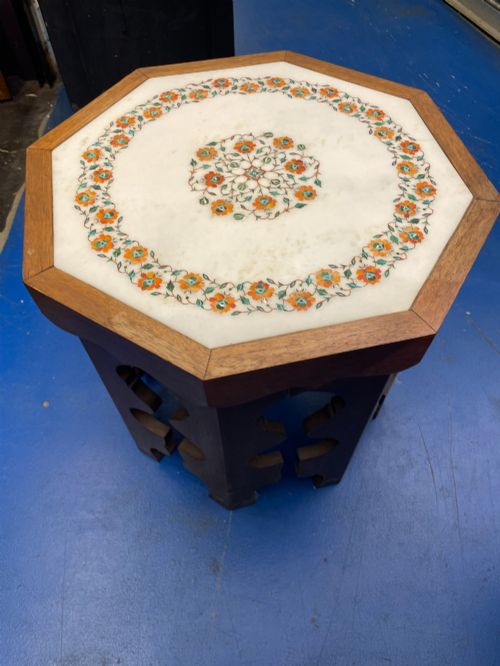
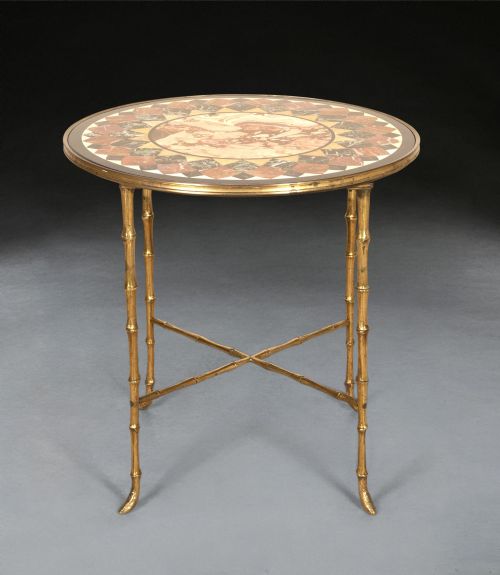
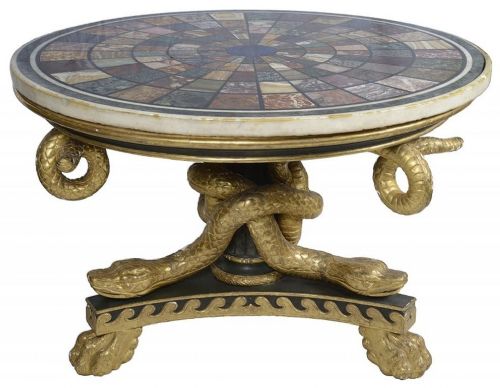
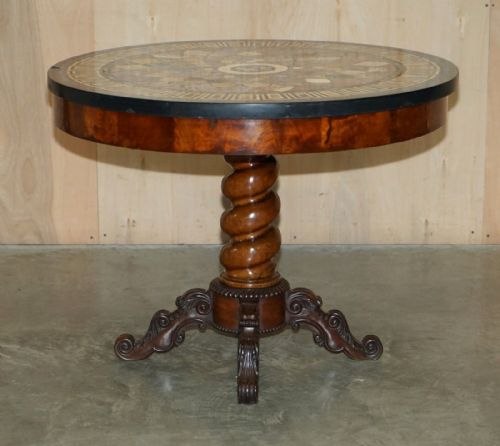
A pietra dura side table displays inlaid stone work upon a supportive timber or metal frame, appearing in forms such as occasional tables, centre tables, and games tables. These pieces date from periods including the Regency, William IV, and Victorian eras, alongside later examples from the 1920s and 1930s.
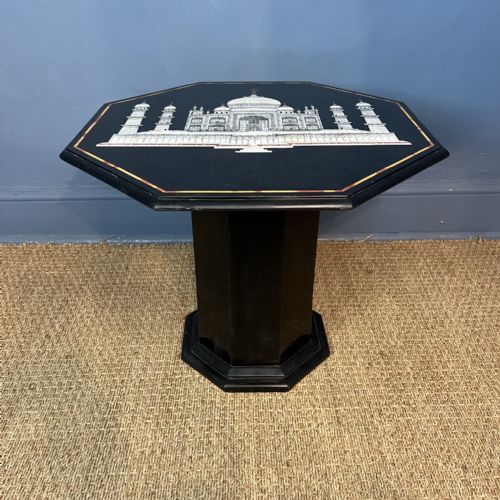
The buyer meets circular, octagonal, and rectangular formats featuring specimen marble tops or floral and avian stone inlay. Origins span English workshops using imported plaques to Italian Grand Tour pieces and Indian craftsmanship from Kashmir.
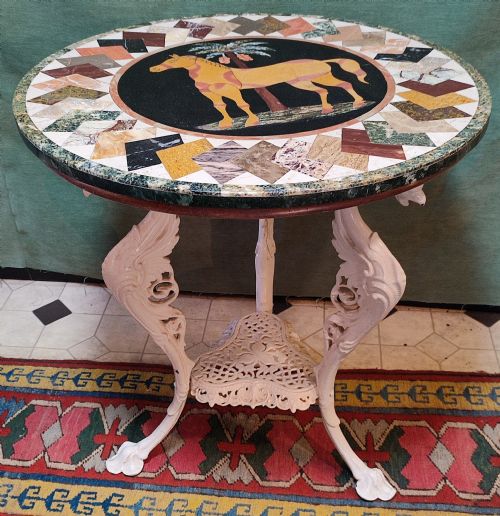
Support structures utilise mahogany, rosewood, walnut, ebonised wood, cast iron, and brass. The combination of dense stone tops and sturdy timber bases defines the practical function of these occasional tables within period interiors.
Materials and construction
Craftsmen shaped hardstones and specimen marbles into precise geometric or pictorial compositions, setting them flush into a larger marble or slate matrix. These stone panels required meticulous hand-cutting and polishing to achieve a seamless surface.
Supporting tables were built from timbers like mahogany, rosewood, and walnut, often shaped to complement the weight of the stone top. Brass mounts, cast iron bases, and ebonised finishes provided structural support and decorative contrast to the inlaid tops.
Pietra Dura Side Table Retail Price Guide 2026
Typical asking prices for pietra dura side table among the pieces listed under this phrase on Sellingantiques today, from the lower quarter to the upper quarter. They describe what is for sale here now, not the wider market.
Listings feature marble, mahogany, brass, hardstone, and walnut across Victorian, Regency, and Edwardian periods.
Judging quality in stone inlay
The execution of the timber or metal base must match the ambition of the top, with well-turned legs, secure joinery, and appropriate framing. The harmony between the inlaid surface and its supporting structure separates standard production from exceptional examples.
James Shoolbred
The Pietra Dura Side Table Glossary
- Pietra dura
- Hardstone inlay technique using cut and fitted polished coloured stones to create pictorial or geometric designs. This Italian term translates literally to hard stone.
- Specimen marble
- A table top composed of numerous varied fragments of different marbles arranged to display geological variety. These pieces often record the stones collected during European travels.
- Scagliola
- A composite material made from selenite, glue, and pigments, painted and plastered to imitate inlaid marble. This technique offered a more accessible alternative to solid stone work.
- Occasional table
- A small, movable table designed for specific, intermittent use rather than central dining. These forms include the smaller formats found within this selection.
- Grand Tour
- A cultural journey of Europe undertaken by wealthy young men in the 18th and 19th centuries, which generated demand for portable art and inlaid tables.
Pietra Dura Side Table: Frequently Asked Questions
How do I clean a marble top?
Use a soft, damp cloth with mild soap and dry immediately to protect the polished stone surface. Avoid acidic cleaners that can etch the marble or damage the stone inlay.
Keep liquids away from the joints where the stone meets the timber frame to prevent moisture damage.
Are these tables sturdy enough for daily use?
The heavy stone tops provide substantial weight that keeps the tables stable on level floors. Most examples function well as occasional surfaces for lamps and decorative objects.
Care should be taken when moving them, supporting both the heavy top and the timber or metal base simultaneously.
What is the difference between pietra dura and scagliola?
Pietra dura uses actual cut hardstones and marbles fitted together into a solid base. It relies on natural mineral colours and precise stonemasonry.
Scagliola is a plaster-based composite material manipulated to imitate the appearance of inlaid marble. It offers a smooth, painted surface that mimics stone work.
Where were these tables made?
Production locations include English workshops, Italian studios associated with the Grand Tour, and Indian centres such as Kashmir and Agra. English makers often mounted imported Italian stone plaques onto locally built rosewood or mahogany frames.
Regional variations appear in both the choice of timbers and the subjects depicted in the stone.