


Octagonal Marble Top Table
An octagonal marble top table brings geometric symmetry and cool stone surfaces into a room, offering a distinctive focal point for display or gathering.

Octagonal Marble Top Table
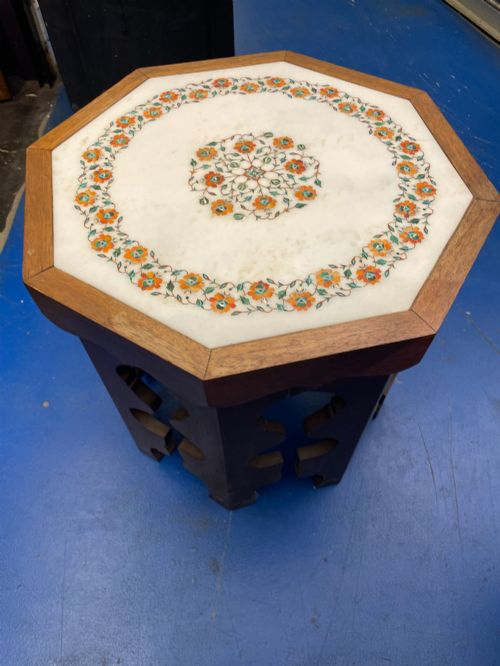
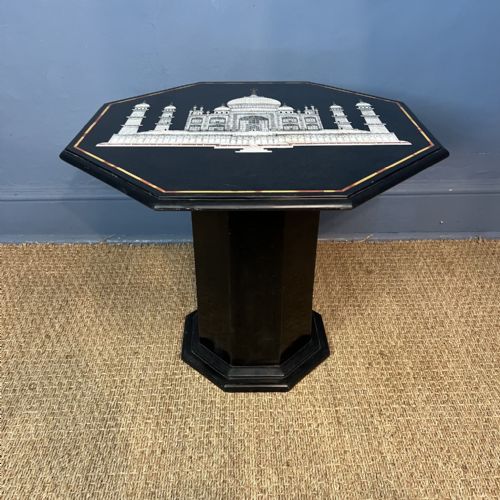
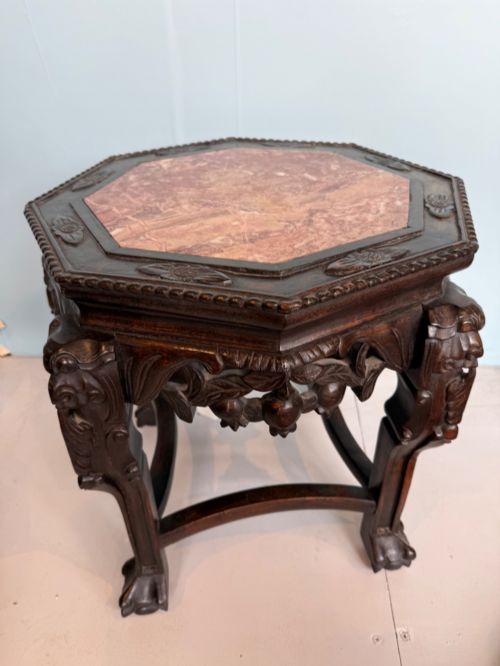
An octagonal marble top table is a versatile form appearing across multiple centuries, serving primarily as an occasional, side, centre, or plant stand. These pieces combine a distinctive eight-sided stone surface with supporting wooden frames that range from compact stands to larger proportions.
The versions most commonly met on this page span the nineteenth and early twentieth centuries, drawing on Regency, Victorian, and Chinese export traditions. Makers utilised the octagonal format to soften room corners while providing a stable, durable platform for decorative objects.

How they were made
The construction relies on combining dense natural stone with robust cabinet timbers such as mahogany, walnut, oak, and padouk. Marble slabs, including black, white, and specimen varieties, are fitted precisely into wooden rims or set upon sturdy pedestals.
Advanced decorative techniques such as pietra dura inlay, where semi-precious stones form intricate surface patterns, appear on the finest tops. Carved wooden bases utilise traditional joinery, sometimes incorporating giltwood details, brass accents, or elaborate pedestal supports.
Octagonal Marble Top Table Retail Price Guide 2026
Typical asking prices for octagonal marble top table among the pieces listed under this phrase on Sellingantiques today, from the lower quarter to the upper quarter. They describe what is for sale here now, not the wider market.
Several tables show clear evidence of past lives supporting heavy ceramic plant pots rather than morning tea.
What varies in quality
Quality rests upon the selection and treatment of the materials, particularly the depth and complexity of the marble top. Specimen marble and pietra dura inlay demonstrate superior craftsmanship compared to plain stone slabs.
The stability and carving detail of the wooden base further differentiate the pieces. Heavier timbers, refined proportions, and precise joinery indicate higher workshop standards than simpler, utilitarian frames.
The Octagonal Marble Top Table Glossary
- Pietra dura
- A pictorial inlay technique using cut and fitted high-polished coloured stones. This method creates smooth, decorative surfaces depicting floral or geometric motifs.
- Specimen marble
- A top assembled from multiple varieties of coloured marble arranged in geometric patterns. These pieces often showcase geological diversity within a single surface.
- Centre table
- A freestanding piece designed to be viewed from all sides rather than pushed against a wall. Such tables traditionally occupied the middle of principal rooms.
- Jardiniere stand
- A tall piece built specifically to support heavy plant pots or floral displays. They feature reinforced tops and stable vertical structures to manage weight.
Octagonal Marble Top Table: Frequently Asked Questions
Where should I place an octagonal marble top table?
These tables work effectively as centrepieces in smaller rooms or as corner accents where their eight-sided geometry softens straight lines. They also function as lamp or side tables beside seating.
Ensure the floor is level to maintain stability, and avoid placing heavy items near the unsupported edges of the stone.
How do I clean a marble tabletop safely?
Wipe the surface regularly with a soft, damp cloth using plain water or a mild, pH-neutral soap formulated for stone. Avoid acidic cleaners, vinegar, or abrasive sponges.
Dry the marble thoroughly afterwards to prevent water spots and protect the polished finish from dulling over time.
What is the difference between an occasional table and a centre table?
Occasional tables are smaller, lighter pieces moved easily around a home for temporary use. Centre tables are generally larger, heavier, and anchored visually to the middle of a space.
Both formats utilise marble tops, but centre tables typically feature more elaborate pedestals designed for all-round viewing.
How can I tell a nineteenth-century table from a later piece?
Nineteenth-century examples often display denser native timbers like mahogany or walnut paired with hand-cut marble slabs and traditional joinery. Tool marks and natural wear patterns provide clues to age.
Twentieth-century pieces may show different finishing techniques or machine-turned elements while still following earlier Regency or Victorian design traditions.