
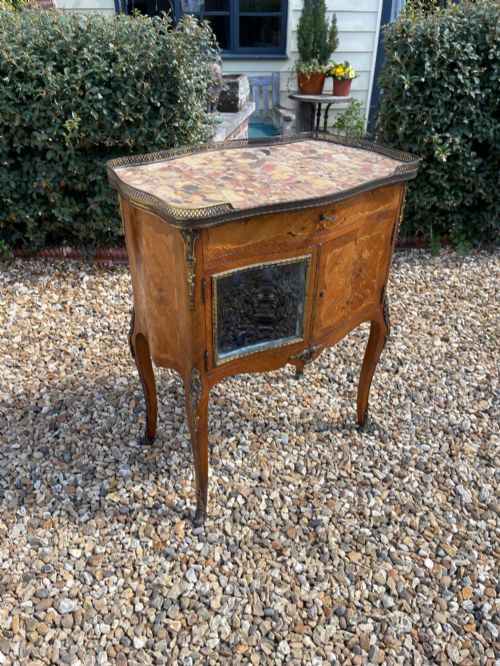


Decorative Marble Top Table
A decorative marble top table brings solid stone and timber together to anchor a room with functional surface area.

Decorative Marble Top Table
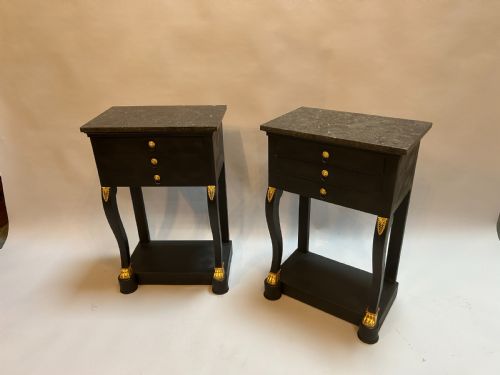
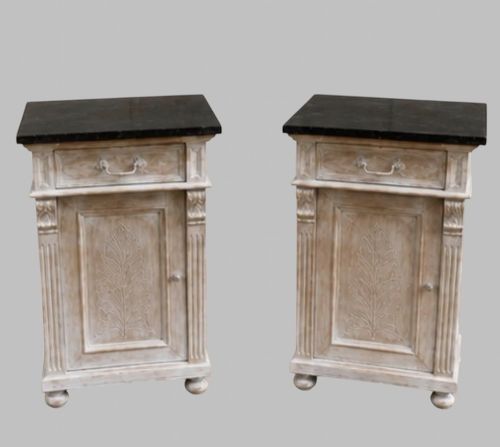
A decorative marble top table appears across domestic interiors in forms ranging from grand wall-mounted consoles and centre pieces to compact bedside cabinets and plant stands. The pieces span from the eighteenth century through the Victorian era into the early decades of the twentieth century, with French and Italian designs forming a strong presence.
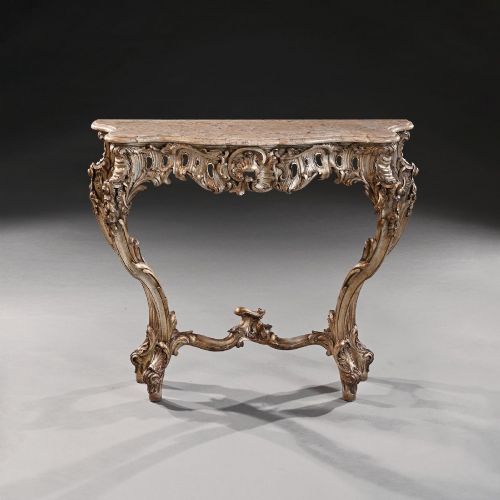
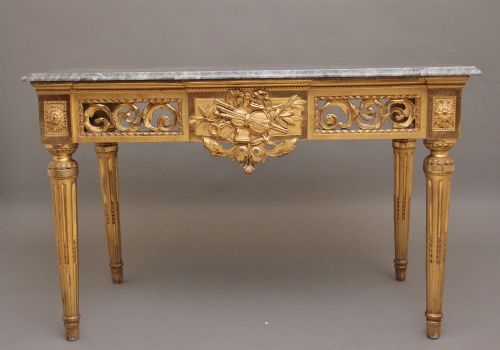
Console tables and side tables dominate the selection, often featuring shaped or rectilinear stone slabs paired with carved wooden bases. Buyers also encounter occasional tables, wine tables, and specialised pieces utilising onyx or specimen marble inlays.
The aesthetic leans heavily toward continental European tastes, drawing on Neoclassical, Rococo Revival, and French Empire idioms. Walnut, giltwood, and painted finishes provide the structural support for the heavy stone surfaces.
Materials and construction
The construction relies on combining dense stone slabs with carved, turned, or joined timber frames made from walnut, mahogany, pine, and giltwood. Metal elements such as brass and copper appear alongside paint finishes to accent the structural woodwork.
Marble and onyx provide the heavy working surfaces, occasionally set with intricate pietra dura or specimen stone patterns. Carved decoration, hand painting, and gilding are applied to the wooden bases to match the classical weight of the stone tops.
Stated origins in the inventory include French, Italian, and Indian workshops utilising brass, copper, and onyx alongside traditional timber.
Indicators of quality
Quality rests in the relationship between the stone slab and its supporting frame, where thick, well-figured marble or specialised specimen tops demand robust joinery and substantial carving to support the weight safely.
The execution of the decorative elements distinguishes standard output from finer workshops, visible in the depth of hand-carved giltwood, the precision of inlaid stone, and the finish of painted surfaces.
B Battioli Varese
The Decorative Marble Top Table Glossary
- Console table
- A table designed to stand against a wall, frequently secured to it for stability due to the weight of the stone top.
- Pietra dura
- An artistic technique using cut and fitted polished coloured stones to create geometric or pictorial images on a tabletop.
- Giltwood
- Timber that has been coated with a thin layer of gold leaf, often over a prepared gesso ground on carved decorative frames.
- Specimen marble
- A tabletop composed of various small samples of different coloured and patterned marbles arranged in decorative patterns.
- Centre table
- A freestanding piece finished on all sides, intended to sit in the middle of a room rather than against a wall.
Decorative Marble Top Table: Frequently Asked Questions
How do I clean a marble top?
Use a damp cloth with mild, pH-neutral soap to wipe the surface gently, avoiding acidic cleaners that can etch the stone.
Dry the marble thoroughly with a soft cloth to prevent water spots and maintain the polished finish.
Are these tables heavy to move?
The stone tops add considerable weight to the overall piece, meaning most tables require two people to lift and position safely.
In many historical designs, the marble slab simply rests on the base without permanent fixings, so separating them makes transport easier.
Where should I place a console table?
Console tables fit naturally in entrance halls, living rooms, or along long corridors where floor space is relatively shallow.
Because many historical examples were designed to stand against a wall, placing them accordingly ensures stability and proper visual balance.
How do I identify Italian styles?
Italian pieces often feature dramatic carved giltwood frames, elaborate floral mouldings, and intricate specimen marble or pietra dura work.
They tend to reflect classical Neoclassical or Rococo traditions with an emphasis on rich surface decoration.