



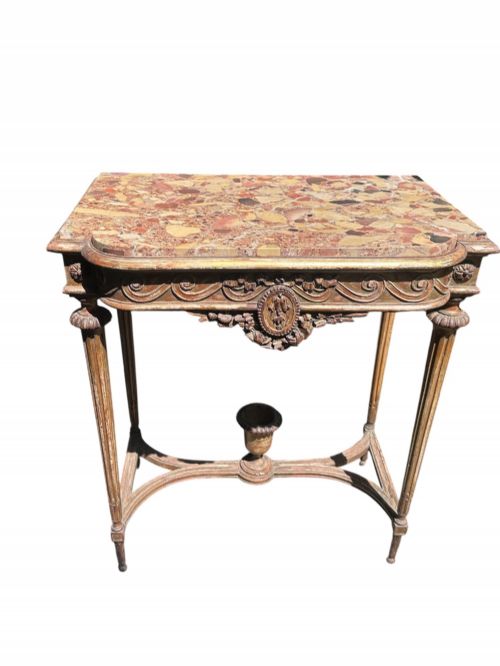


Marble Top End Table
A marble top end table brings together a solid stone slab and a sturdy wooden or metal frame, offering a durable surface for lamps or drinks.

Marble Top End Table
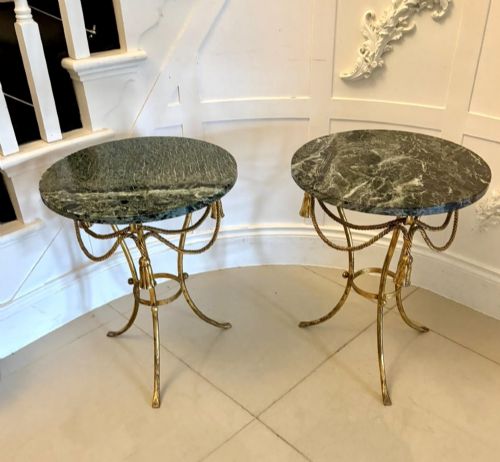
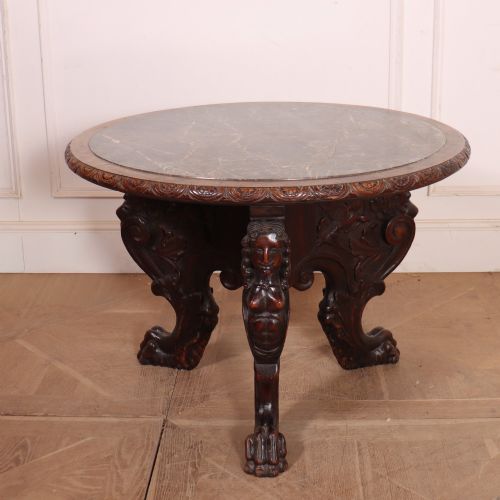
A marble top end table is a compact surface designed to sit beside seating or beds, combining a smooth stone slab with a supportive frame. The pieces gathered here span from the eighteenth century to the twentieth century, taking the form of side tables, occasional tables, bedside cabinets, and plant stands.
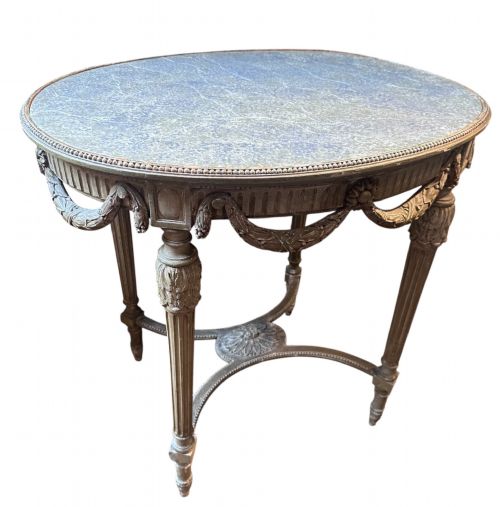
French and Italian designs dominate the selection, often rendered in Louis XVI or Baroque styles alongside Chinese Qing Dynasty hardwood stands. Buyers most frequently encounter nineteenth-century and early twentieth-century interpretations utilising mahogany, painted wood, and gilt mounts.
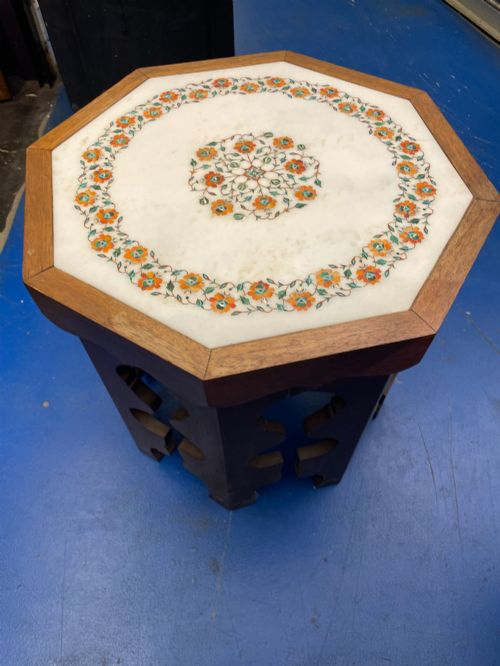
These tables serve practical domestic roles while displaying distinct regional craftsmanship, from European gueridon forms to octagonal oriental plant stands. Each variation reflects the prevailing taste of its period, whether through restrained neoclassical lines or rich floral carvings.
Materials and construction
Cabinetmakers constructed the frames of these tables using dense timbers such as mahogany, satinwood, kingwood, and rosewood, sometimes applying paint, gold leaf, or giltwood finishes. Lime wood and carved hardwoods also appear, particularly in Italian baroque and Chinese Qing Dynasty pieces where intricate decoration defines the structure.
The defining feature rests on top: slabs of white Carrara, rouge, or verde marble fitted precisely into the wooden or metal framework. Makers integrated brass, ormolu, and gilded bronze mounts to accent corners, legs, and aprons, uniting the cold stone with warm metal details.
Several tables arrived designed specifically to hold potted plants, proving that indoor jungle styling predates modern living by over a century.
Judging the work
Quality reveals itself in the harmony between the stone top and the supporting base, where precise joinery ensures the heavy marble rests securely without movement. Superior examples display crisp, hand-carved details in the wood or cast definition in the brass and ormolu mounts rather than soft, mass-produced moulding.
F. Linke·Henry Dasson·Waring and Gillow
The Marble Top End Table Glossary
- Gueridon
- A small French round table, often supported by a central column or three legs. These versatile tables frequently feature inset marble tops and decorative mounts.
- Ormolu
- Gilded bronze used extensively for decorative mounts on fine furniture. This technique adds metallic brilliance to the corners and legs of tables.
- Parquetry
- Geometric wood inlay work forming intricate patterns across the tabletop or apron. Craftsmen utilise contrasting timbers to create this decorative surface effect.
- Baroque
- An ornate style characterised by dramatic carving, flowing lines, and rich ornamentation. Pieces from this tradition emphasise dynamic movement and sculptural presence.
- Verde marble
- A distinctive green decorative stone utilised for tabletops. Its varied shades provide a dramatic contrast to gilt metal and polished wood frames.
Marble Top End Table: Frequently Asked Questions
What is a gueridon table?
A gueridon is a small circular table originating in seventeenth-century France, typically designed for holding candles or small decorative objects. Over time, the form evolved to serve as a convenient side or lamp table.
In these listings, gueridon tables frequently pair a round marble top with a slender wooden or metal base, maintaining a compact footprint suited to modern interiors.
How do I clean a marble top?
Cleaning antique marble requires gentle care to protect the polished stone surface from etching and staining. Mild soap and warm water applied with a soft cloth suffice for routine maintenance.
Avoid acidic cleaners, vinegar, or harsh abrasives, as these substances damage the natural calcium carbonate structure of the stone.
Are these tables sturdy enough for daily use?
These tables were built to support lamps, books, and decorative items as part of everyday domestic life. The combination of dense timber frames and heavy stone tops provides a low centre of gravity.
While robust, they benefit from careful placement away from high-traffic areas to protect delicate gilt mounts and carved wooden legs from accidental knocks.
How do I date a marble top table?
Dating relies on examining the construction methods, timber species, and stylistic vocabulary of the base. Neoclassical motifs point towards the late eighteenth or nineteenth century, while specific revival styles indicate Victorian or Edwardian production.
The edge profile of the marble and the type of fixings underneath also offer clues to the period of manufacture.