

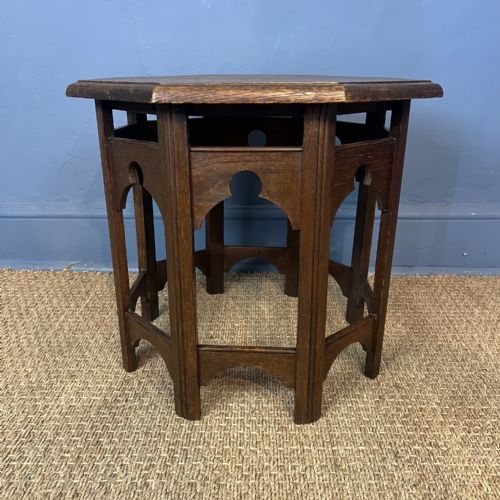
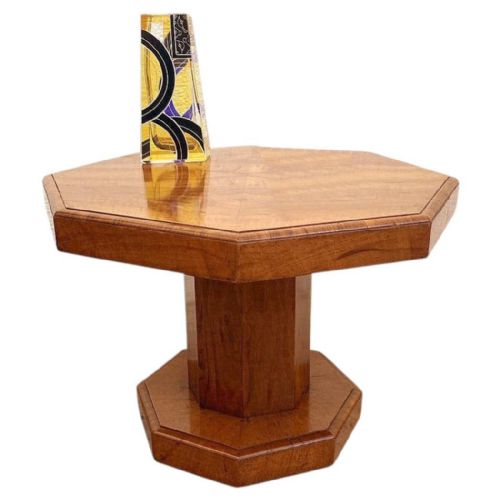
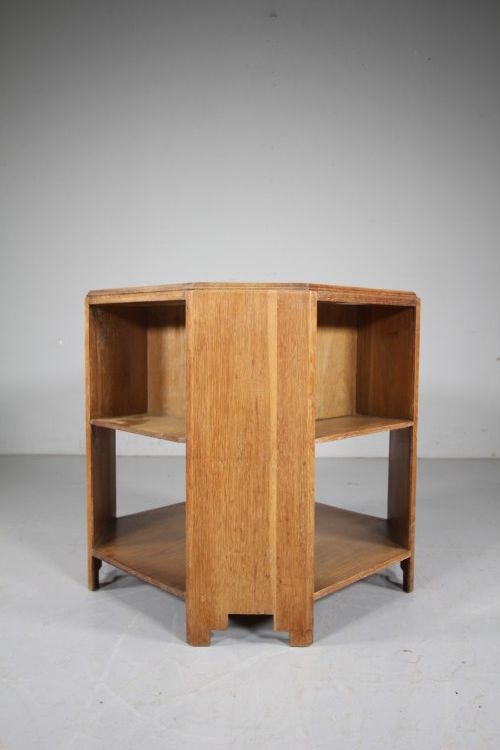
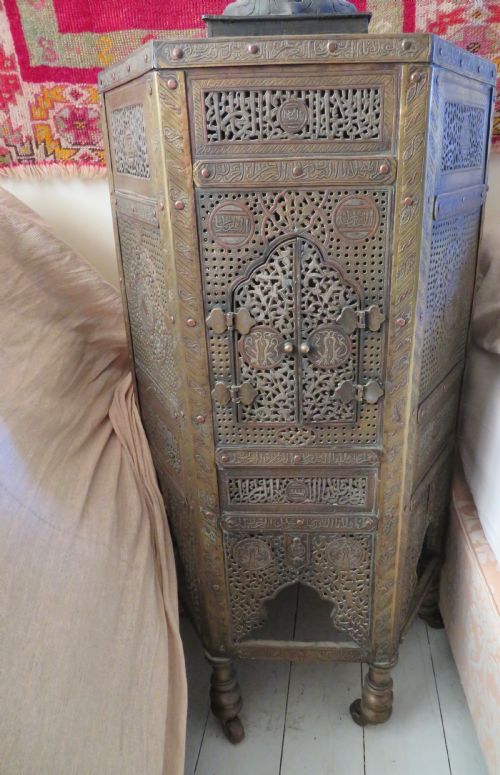


Hexagonal Occasional Table
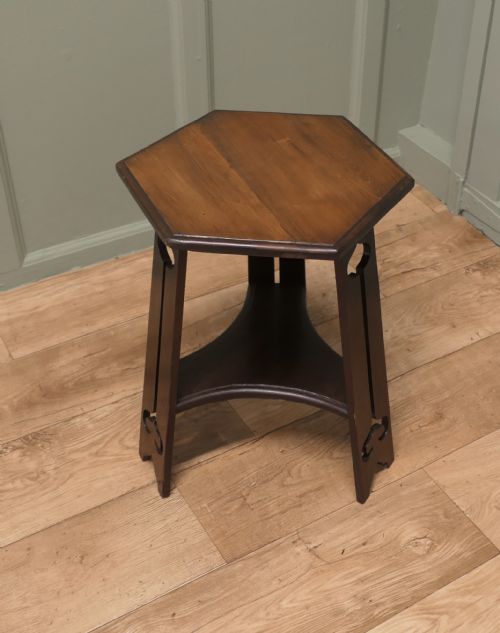
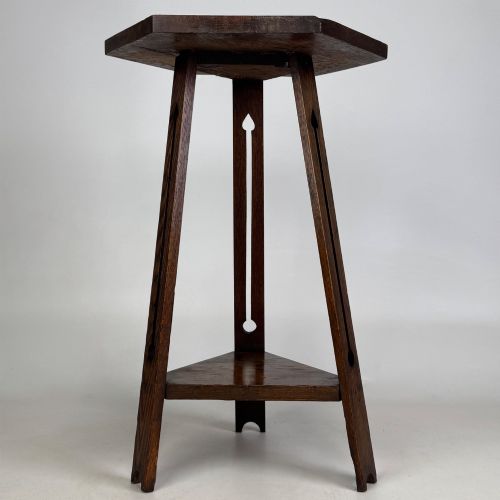
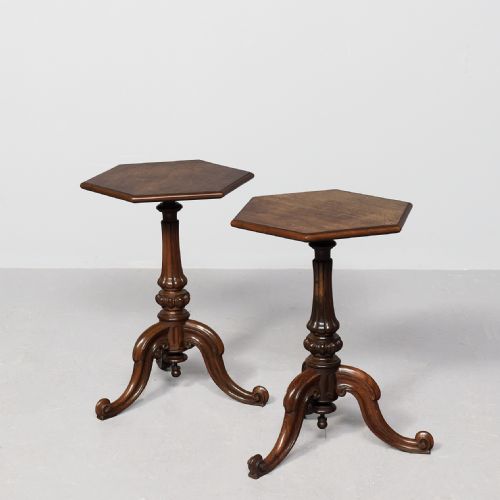
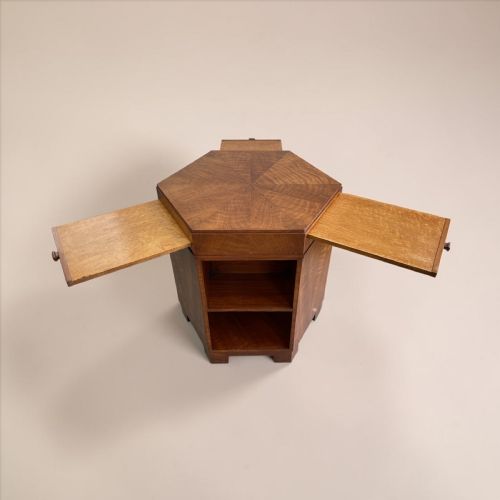
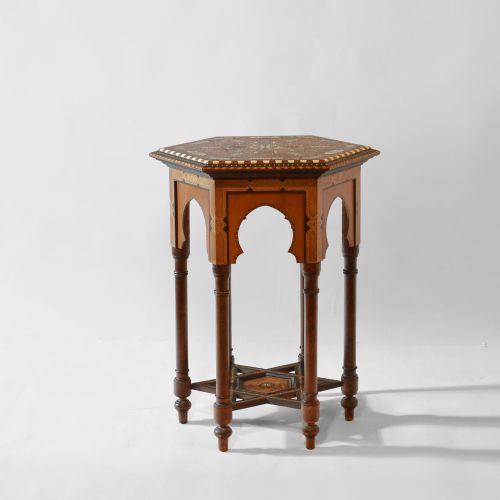
These hexagonal occasional tables bring rich geometric forms and intricate inlaid surfaces into a room.
What They Are
A hexagonal occasional table offers a distinctive six-sided silhouette that breaks up the predictable rectangles of standard room layouts. When searching for a hexagonal occasional table, buyers encounter a diverse array of global influences, from Moorish revival designs to European marquetry pieces.
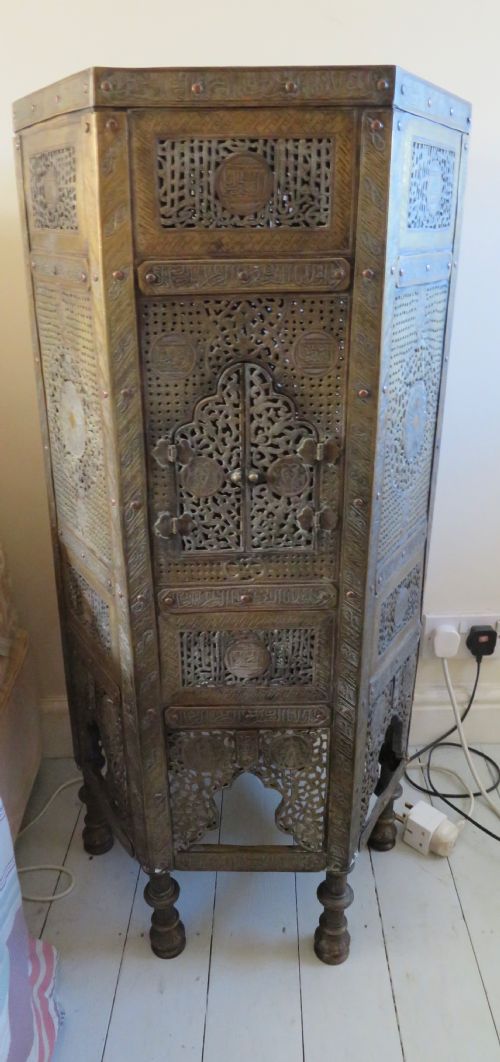
The material palette spans walnut, mahogany, oak, and hardwood, frequently paired with exotic decorative elements like bone, copper, brass, and marble. Forms range from compact side tables and coffee tables to elaborate Syrian kursi and Indian peacock tables.
Originating across different eras including the nineteenth century, the Edwardian period, and the 1930s Art Deco movement, these tables serve as versatile surface areas for lamps and display. They suit various interior schemes, functioning equally well as centre tables, window tables, or compact bedside supports.
How They Were Made
Cabinetmakers constructed these frames using solid hardwoods like walnut, mahogany, and oak, often applying decorative veneers and marquetry patterns across the six-sided tops. French styles and Edwardian examples demonstrate traditional joinery techniques combined with gallery rails and tiered structures.
Moorish and Islamic revival pieces utilise intricate openwork frames overlaid with brass, copper, and white metal, inlaid meticulously with bone and mother-of-pearl. Anglo-Indian workshops employed similar metal-inlay methods on native hardwoods to create striking geometric surface decoration.
Retail Price Guide 2026
Typical UK retail prices for hexagonal occasional table, calculated from the Sellingantiques database of over a million retail prices indexed since 2003. This retail price guide relies exclusively on Sellingantiques data; no external sources or auction records are used, so the figures do not describe the wider market.
Some tables even double as wine cooler units, proving past generations took their refreshments very seriously indeed.
What Varies in Quality
The distinction between standard examples and finer pieces lies in the precision of the geometric inlay and the choice of primary timber. Dense burr walnut veneers, flawless marble tops, and heavily detailed bone and brass work indicate superior workshop production.
Structural integrity of the six-sided frame and the tightness of the joinery determine longevity, particularly in pieces featuring complex openwork or multi-tiered construction. The complexity of the metal wirework and the depth of the hand-carved detailing separate ordinary output from exceptional craftsmanship.
The Hexagonal Occasional Table Glossary
- Marquetry
- Decorative veneer work arranged in intricate patterns across a wooden surface. Craftsmen cut contrasting pieces of timber to form pictorial or geometric designs.
- Kursi
- A traditional low hexagonal table originating from Cairo, typically featuring intricate brass and copper inlay over a wooden core. These pieces are often associated with cairoware production.
- Galleried
- A small raised rail surrounding the perimeter of a table top to prevent items from sliding off. This feature is common on French style occasional tables.
- Thuya burr
- A highly figured timber prized for its swirling grain patterns and warm reddish-brown tone. It was frequently utilised on Victorian centre tables for decorative impact.
- Moorish Revival
- An architectural and decorative style popular in the nineteenth century that incorporated Islamic design motifs. Tables in this style often display complex geometric lattice and bone inlay.
Frequently Asked Questions
Where should I place a hexagonal table?
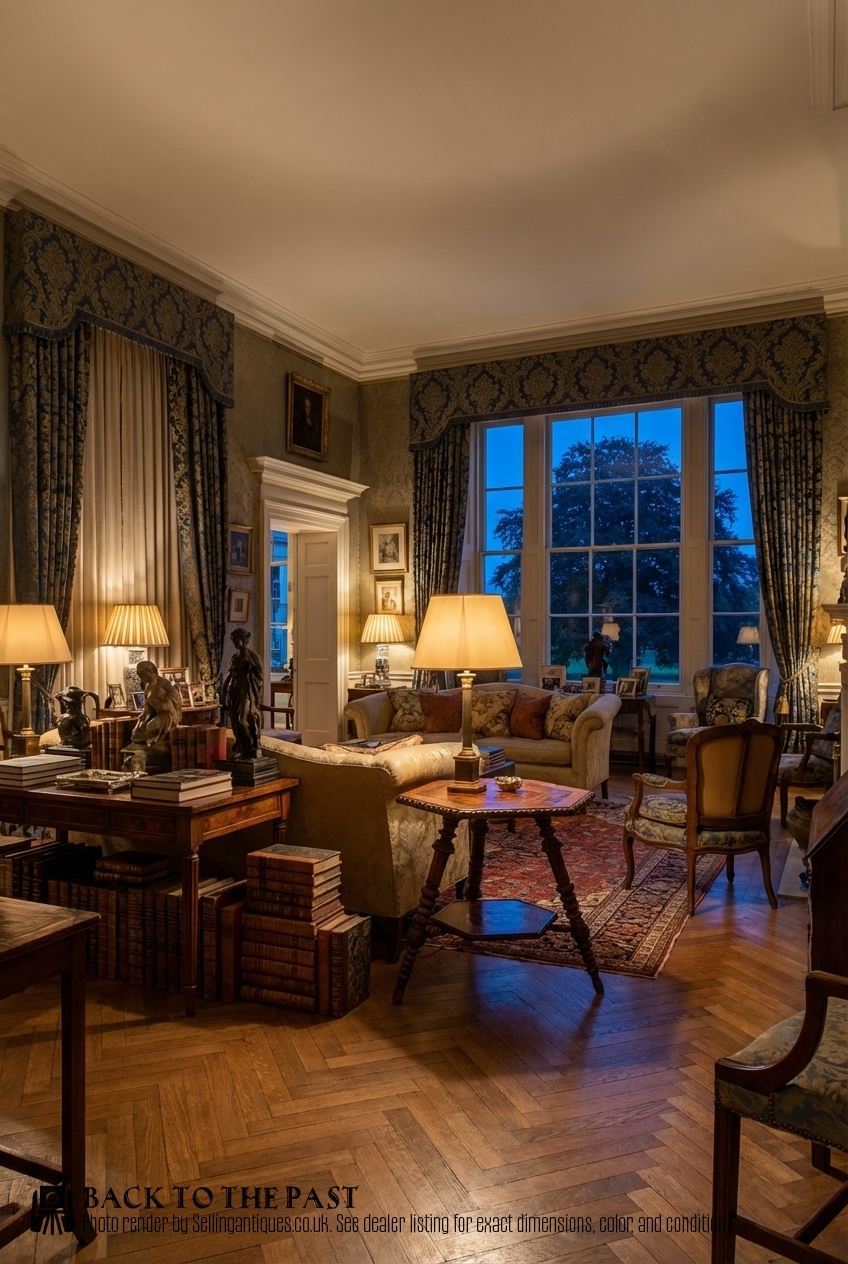
These six-sided pieces fit naturally into awkward corners or beside armchairs where standard square tables feel too bulky. Their geometry allows them to anchor a seating arrangement without blocking sightlines.
They also function effectively as freestanding centre tables in smaller rooms, providing a focal point that draws the eye across the varied inlaid surfaces.
How do I care for inlaid wood?
Keep inlaid surfaces away from direct sunlight and extreme temperature fluctuations to prevent the wood and delicate bone or metal elements from drying out. Dust regularly with a soft, dry cloth.
A light application of quality beeswax helps nourish the timber grain, but avoid harsh chemical polishes that can dislodge intricate wirework.
What periods do these tables represent?
The selection spans from nineteenth-century Victorian and Moorish revival works to Edwardian walnut designs and 1930s Art Deco pieces. Each era brought distinct materials and construction methods to the six-sided format.
Earlier nineteenth-century examples often lean towards heavy timber marquetry or Islamic inlay, while later twentieth-century iterations embrace streamlined Art Deco veneers.
Are marble top tables heavy?
Tables featuring inset marble tops carry significantly more weight than their all-wood counterparts. This extra mass provides excellent stability when used as lamp tables or display surfaces.
When moving these pieces, it is advisable to lift from the wooden frame rather than relying on the top alone to ensure the joints remain secure.