




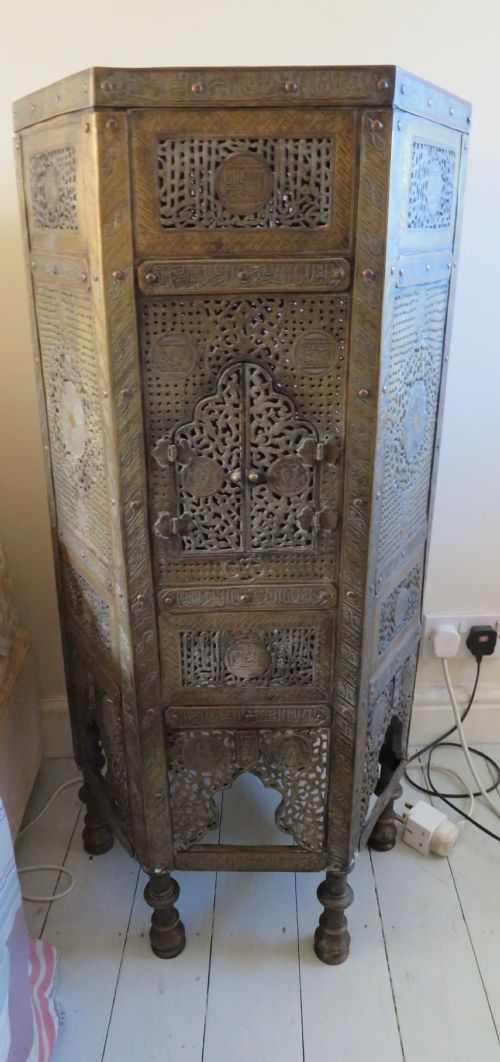
Syrian Inlaid Table
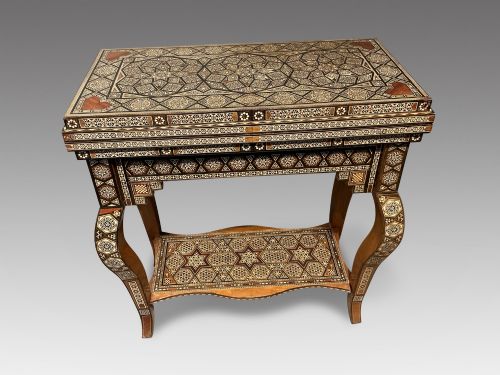
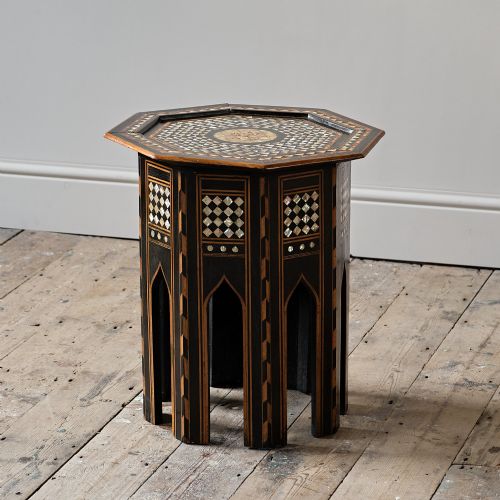
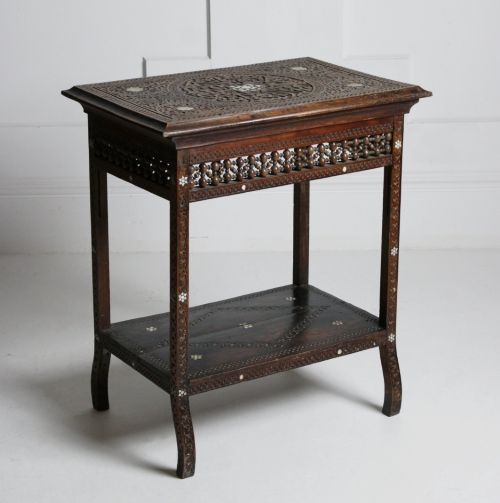
A syrian inlaid table brings geometric intricacy to a room through dense mother-of-pearl and bone mosaic work set into rich woods.
Syrian Inlaid Table
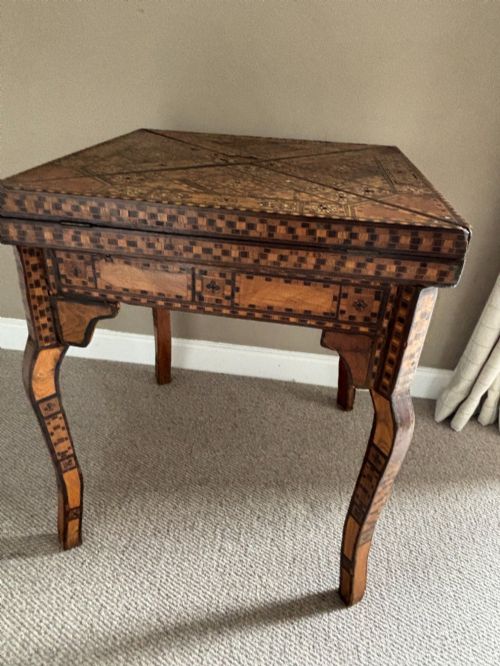
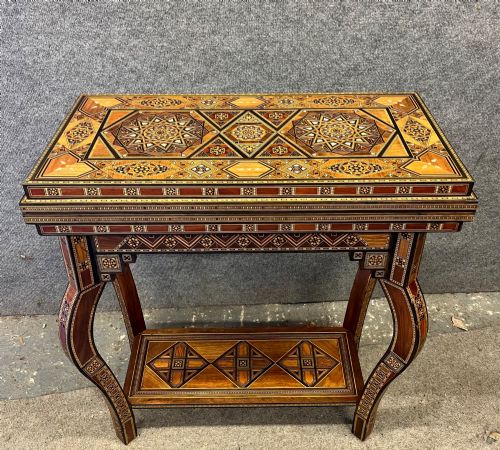
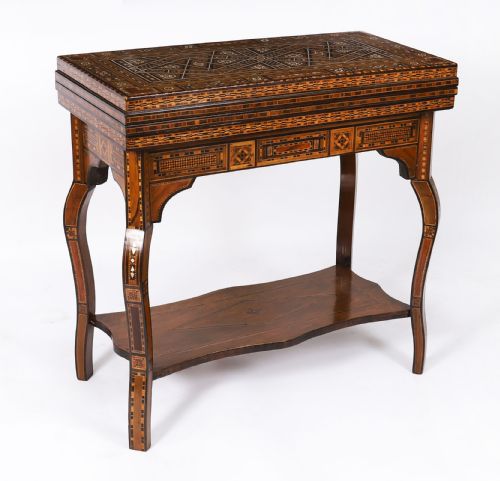
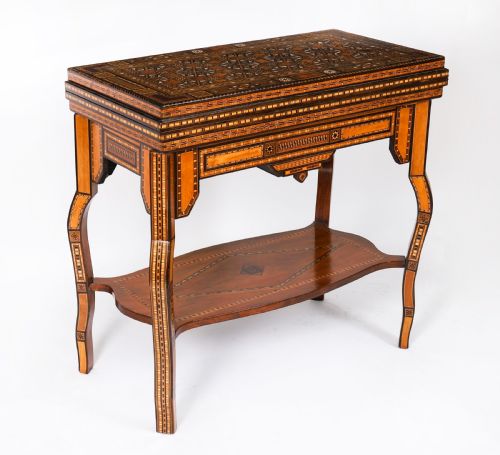
A syrian inlaid table covers a range of domestic forms designed for versatility, including folding occasional tables, multi-tiered stands, and complex games tables fitted for chess and backgammon.
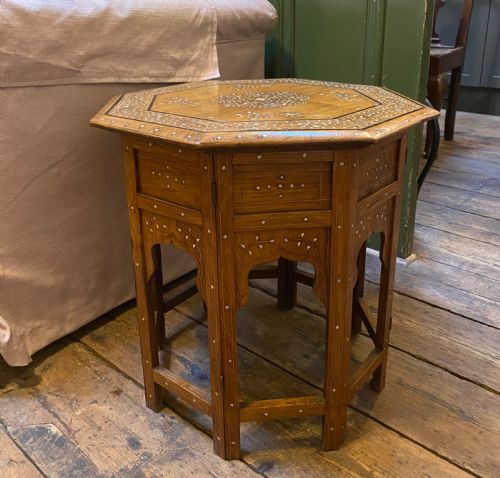
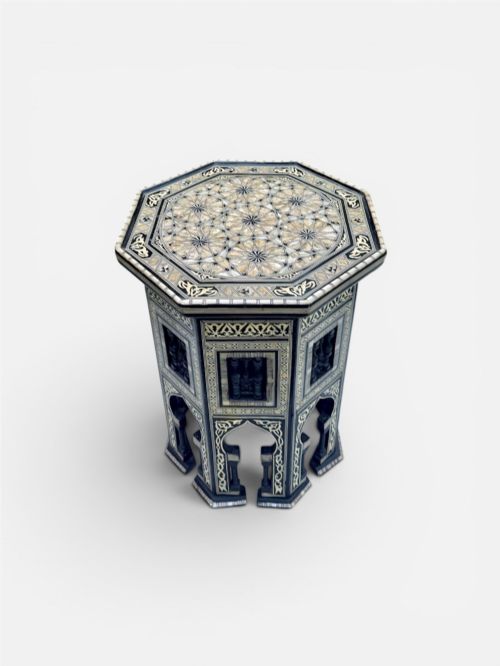
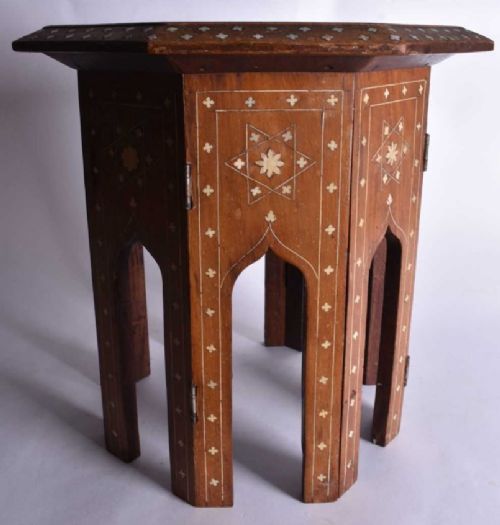
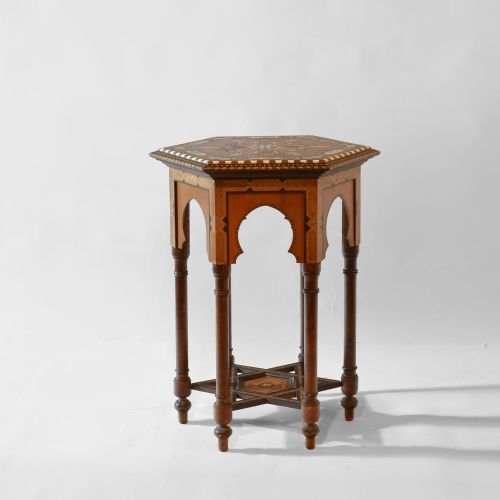
Octagonal and hexagonal shapes dominate the selection, alongside square tops and occasional round centre tables originating from workshops in Damascus and wider Levantine regions.
Most examples date from the nineteenth century through the early twentieth century, spanning periods influenced by Moorish Revival and Ottoman design aesthetics.
Materials and Construction
Craftsmen built the foundational frames using hardwoods, walnut, fruitwood, and ebonised wood, frequently applying intricate marquetry and specimen wood banding.
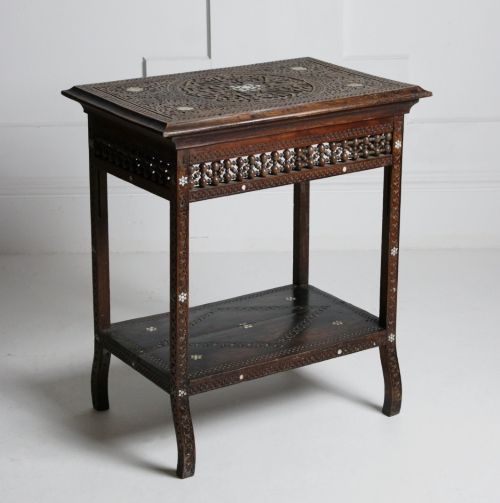
Geometric surface patterns rely on precise inlays of iridescent mother-of-pearl, bone, and contrasting woods, secured carefully into hand-carved recesses.
Some variants incorporate metal elements, combining white-metal and copper-inlaid brass into hexagonal frames reminiscent of traditional Cairo ware production.
Syrian Inlaid Table Retail Price Guide 2026
Typical asking prices for syrian inlaid table among the pieces listed under this phrase on Sellingantiques today, from the lower quarter to the upper quarter. They describe what is for sale here now, not the wider market.
Surviving games tables integrate concealed boards for chess, backgammon, and card playing.
Assessing Craftsmanship
Quality rests on the density and precision of the tessellation, where tighter geometric arrays and minimal filler material distinguish finer pieces from simpler items.
The choice of inlay materials creates a hierarchy, with deep iridescent nacre-shell and well-matched bone accents elevating the visual depth above plain wood surfaces.
Structural integrity of the complex joints, particularly on folding frames and multi-tier supports, dictates the durability of the piece over decades of use.
Liberty and Co
The Syrian Inlaid Table Glossary
- Marquetry
- The art of applying small pieces of veneer to a structure to form decorative geometric patterns and pictorial designs.
- Mother-of-pearl
- An iridescent nacre-shell layer harvested from mollusc shells, utilised extensively for bright tonal contrast in mosaic inlays.
- Octagonal
- Having eight sides and eight angles, forming the characteristic multi-faceted geometric footprint seen on many regional occasional tables.
- Tabouret
- A low, freestanding stool or small side table lacking arms or backs, frequently sharing forms with hexagonal and octagonal Levantine pieces.
- Moorish Revival
- An architectural and decorative style popular in the nineteenth century that reinterpreted traditional Islamic design motifs for Western interiors.
Syrian Inlaid Table: Frequently Asked Questions
How were these tables used?
These pieces served multiple functions in nineteenth-century interiors, acting as portable coffee stands, smoking tables, or decorative display surfaces for lamps and ornaments.
Many examples feature specialised folding bases or compartments designed specifically to hold gaming pieces for chess, cards, and backgammon.
How do I clean the inlay?
Maintenance requires gentle dusting with a soft, dry cloth to prevent dirt from settling into the narrow grooves between the mosaic tiles.
Avoid liquid cleaners and harsh polishes, as moisture can loosen the delicate bone, wood, and mother-of-pearl components from their adhesive beds.
Are folding tables stable?
Traditional folding bases rely on intricate interlocking wooden hinges that expand outward to support the heavy octagonal or hexagonal tops securely.
When placed on level flooring, these clever structures offer reliable everyday stability despite their intricate and seemingly fragile construction.
How to tell periods apart?
Earlier nineteenth-century examples often display heavier hardwood carcases and denser, hand-cut mother-of-pearl arrangements with subtle natural variations.
Pieces from the early twentieth century sometimes incorporate standardised veneering techniques and lighter fruitwoods influenced by European retail demand.