


Syrian Side Table
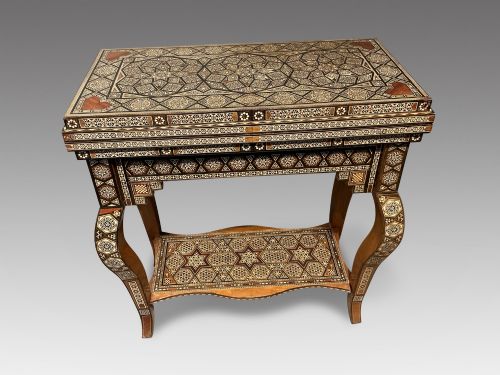
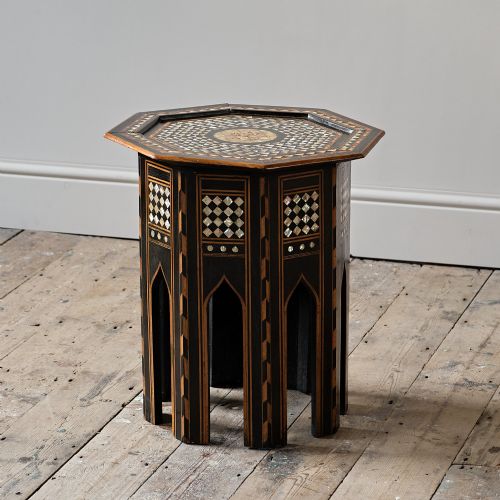
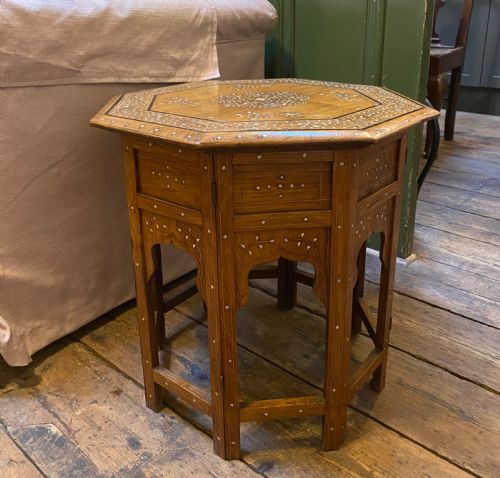
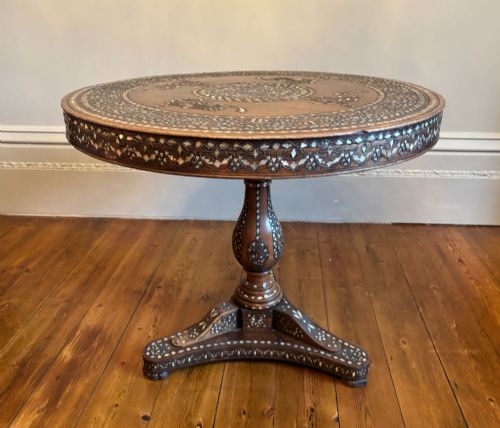
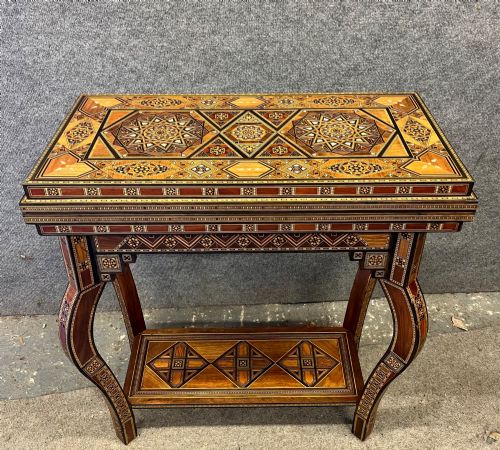
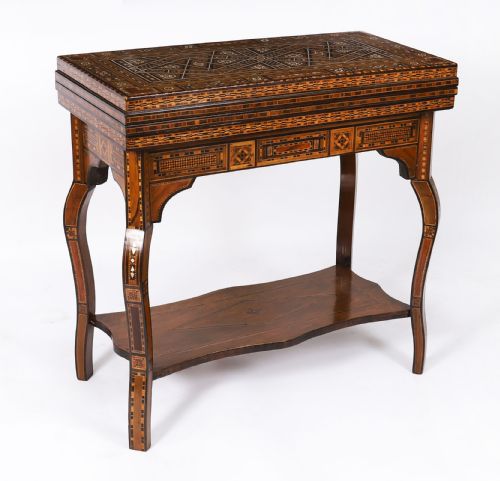
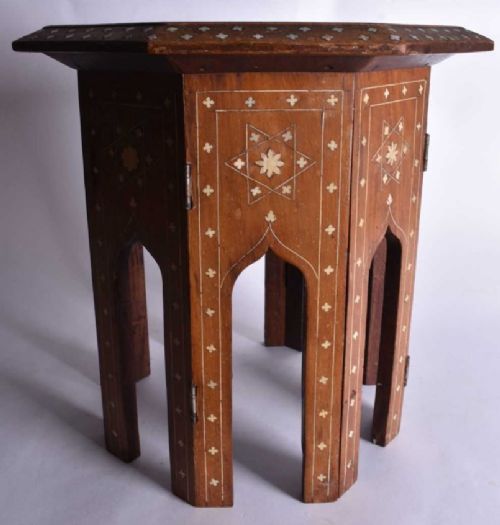
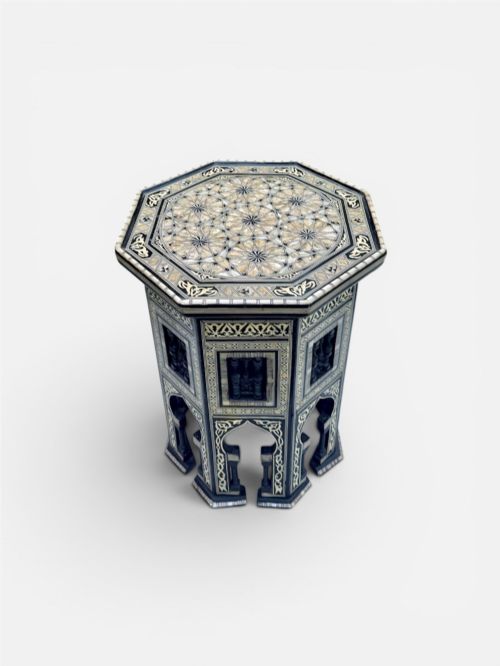
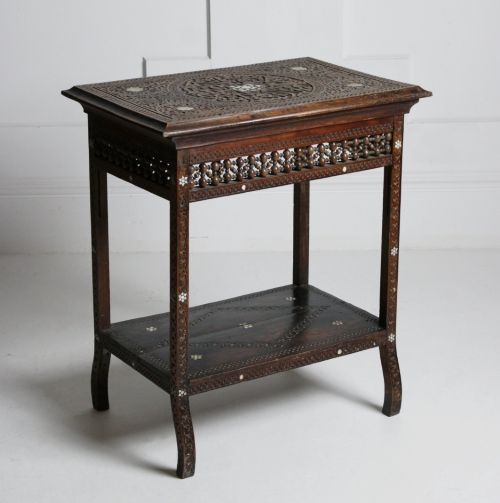
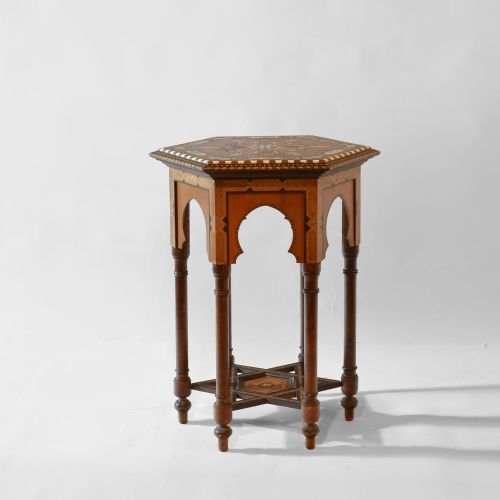
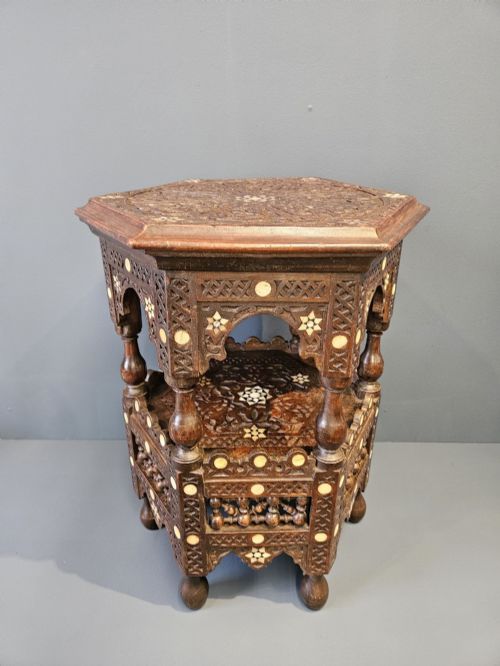
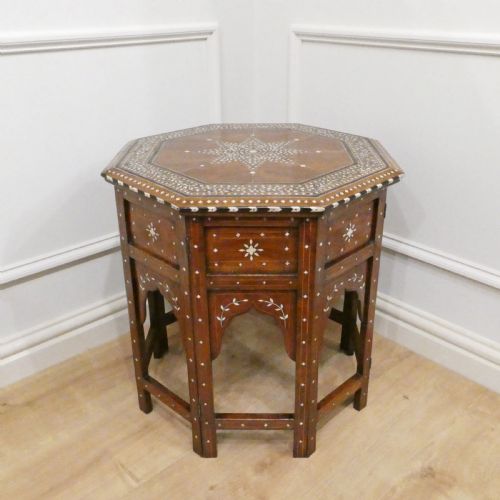
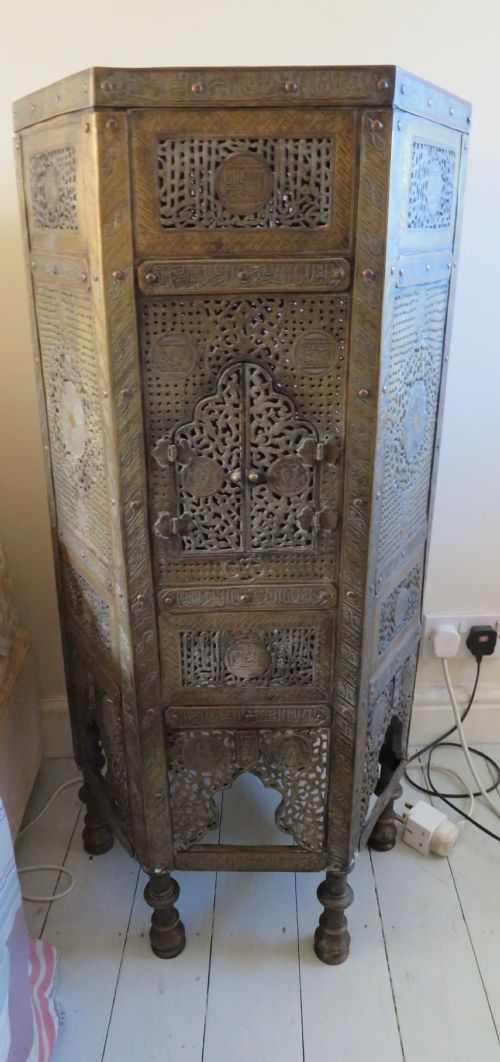
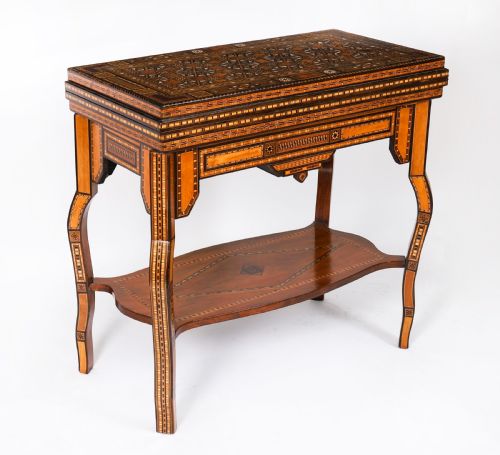
These pieces are a syrian side table, offering intricate inlaid surfaces and geometric forms that bring distinctive warmth to an interior.
Syrian Side Table
A syrian side table is a decorative occasional piece defined by geometric shapes, most commonly seen as octagonal or hexagonal forms that function easily beside seating. You will frequently encounter folding frames, two-tier structures, and occasional tables dating from the nineteenth century into the early twentieth century.
The aesthetic bridges several related traditions, appearing under descriptors such as Moorish Revival, Ottoman, Levantine, and Damascan. Many examples incorporate specialised formats like games tables fitted for chess and backgammon, alongside lamp tables and compact tabourets.
Makers and retailers in Britain such as Liberty and Co. retailed these imported wares to satisfy Victorian and Edwardian tastes for exotic furnishings. Consequently, surviving examples often reflect a fusion of Middle Eastern craftsmanship and Western domestic requirements.
How they were made
Artisans built the structural framework using foundational timbers such as walnut, hardwood, ebonised wood, and fruitwood. These woods provided a stable base for the complex geometric joinery required for folding bases and multi-sided tops.
Surface decoration relies heavily on detailed intarsia, utilising pieces of mother-of-pearl and bone set into the timber to form elaborate star and polygon motifs. Certain variants also integrate white-metal and copper inlay into brass or wooden fields to achieve a contrasting tonal effect.
Syrian Side Table Retail Price Guide 2026
Typical asking prices for syrian side table among the pieces listed under this phrase on Sellingantiques today, from the lower quarter to the upper quarter. They describe what is for sale here now, not the wider market.
Listings demonstrate that walnut, hardwood, and fruitwood serve as the primary timbers, enriched with mother-of-pearl and bone inlay.
What varies in quality
Quality rests primarily on the density and precision of the inlay work, where tightly fitted geometric tessellation separates superior examples from simpler production. The crispness of the hand-carved openwork and the completeness of the delicate shell and bone sections dictate the overall visual impact.
Structural integrity also separates the grades, as folding mechanisms and multi-tiered joints require precise engineering to remain stable over time. Pieces retaining their original harmonious surface patination without extensive modern timber replacements command greater regard.
Liberty and Co
The Syrian Side Table Glossary
- Tabouret
- A low stool or small side table without arms or back, frequently utilised as a coffee table or lamp stand.
- Intarsia
- A woodworking technique using wood-cutting and inlaying of geometric patterns onto a solid wooden matrix.
- Moorish Revival
- An architectural and decorative style incorporating elements of Islamic design, popular in Europe during the nineteenth century.
- Mother-of-pearl
- The iridescent inner layer of certain mollusc shells, shaped into tiny geometric tiles for surface ornamentation.
- Hexagonal
- Having six sides and six angles, forming a common geometric footprint for these occasional tables.
Syrian Side Table: Frequently Asked Questions
What is a syrian side table?
A syrian side table is a low, intricately decorated occasional piece featuring geometric woodwork and detailed surface inlay. They were imported or inspired by Middle Eastern designs during the nineteenth and early twentieth centuries.
These tables typically take octagonal or hexagonal forms, and many are designed with clever folding bases for easy storage. They served as decorative accents in Victorian and Edwardian drawing rooms.
How do I identify a period piece?
Period pieces from the nineteenth and early twentieth centuries display genuine hand-cut bone or mother-of-pearl secured into solid hardwood foundations like walnut. Look closely at the joinery and the natural ageing of the materials.
Later reproductions often use synthetic substitutes or machine-cut veneers rather than individual tesserae. Examine the underside and interior joints for traditional construction methods appropriate to the era.
Were these tables used for games?
Many surviving examples double as specialised games tables featuring integrated boards for chess, backgammon, and card playing. The folding or reversible tops allowed owners to transform an ordinary occasional table into a gaming surface.
These multifunctional pieces demonstrate the practical versatility demanded by Victorian households. The interior compartments often stored playing pieces safely when not in use.
How do I care for inlaid wood?
Inlaid surfaces require a stable indoor environment away from direct heat sources and excessive moisture fluctuations to prevent timber movement. Gentle dusting with a soft, dry cloth is sufficient for routine maintenance.
Avoid using modern liquid polishes or silicone-based cleaners, which can seep beneath the delicate bone and shell sections. Specialist wax may be applied sparingly by an expert to nourish the dry wood.