

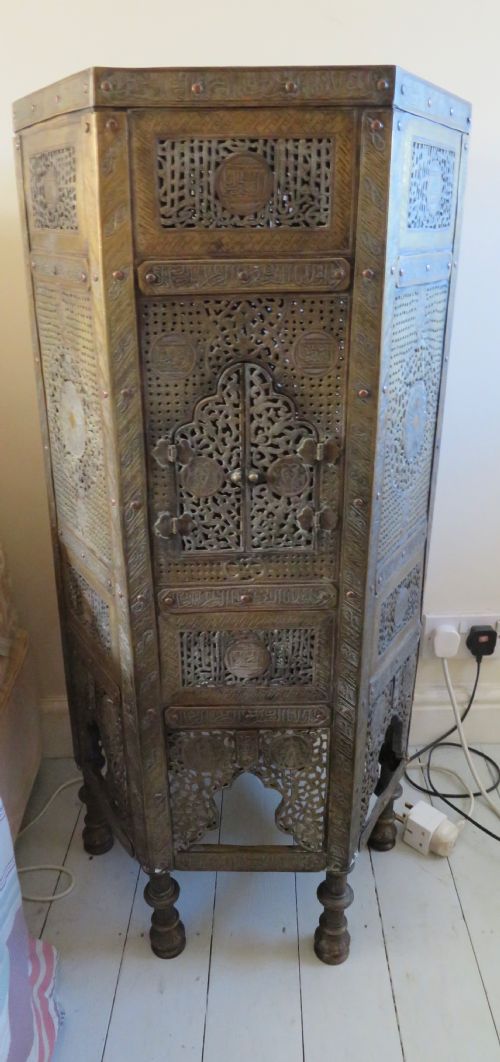


Syrian Occasional Table
A Syrian occasional table brings intricate geometric marquetry and mother-of-pearl inlay into a room, offering a striking focal point for any interior.
Syrian Occasional Table
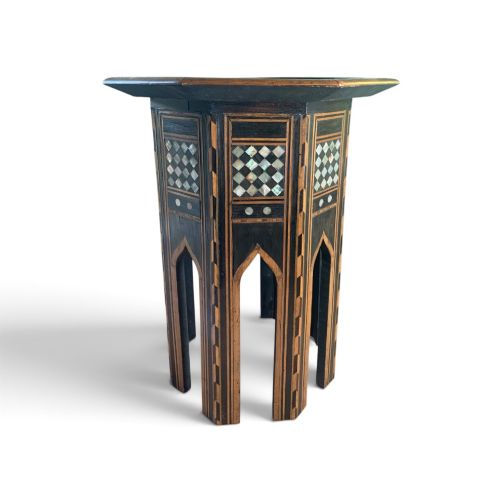
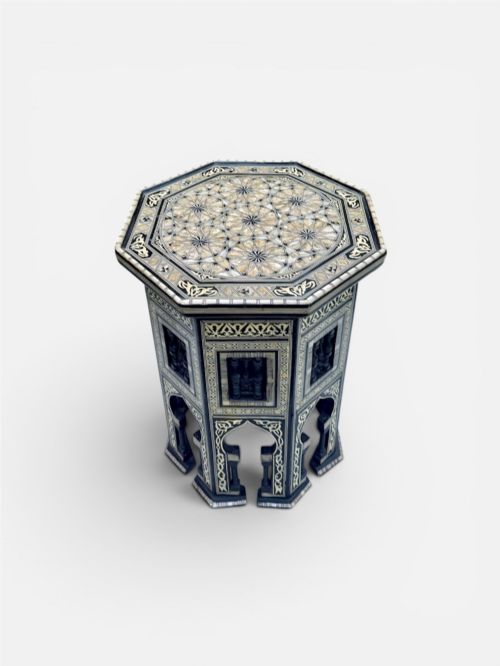
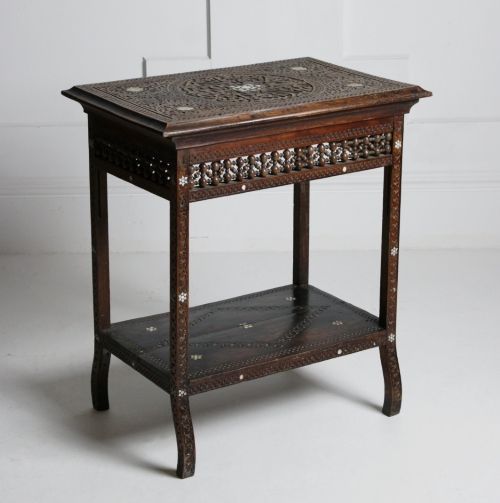
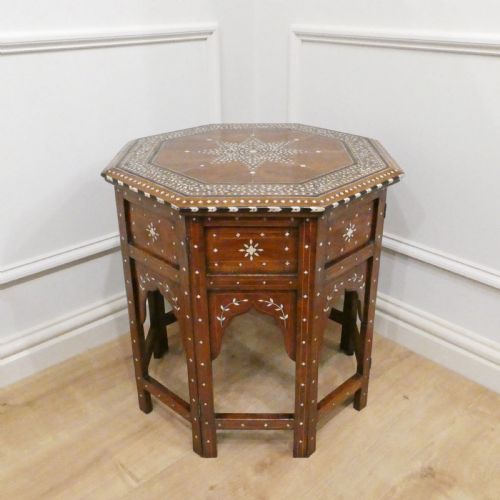
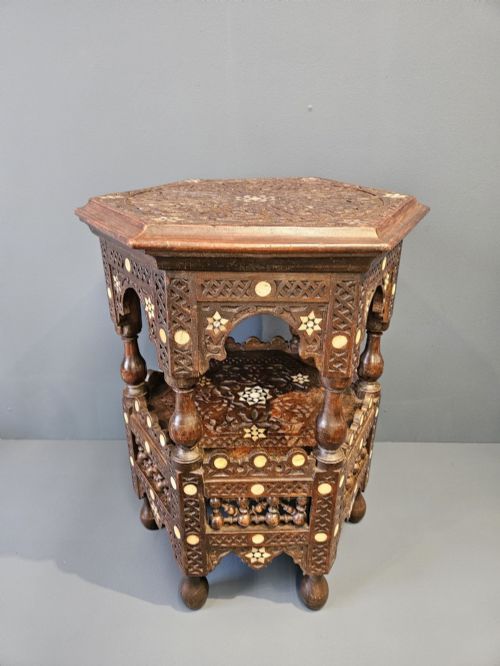
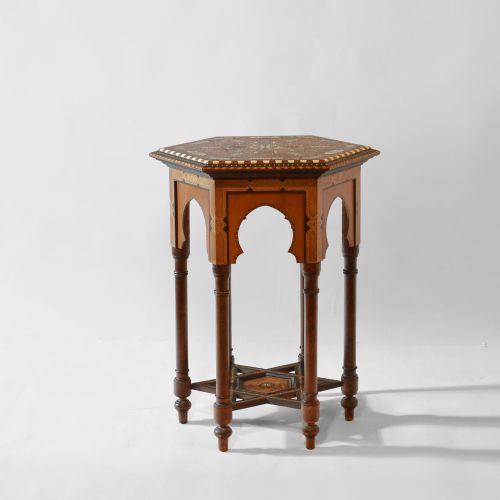
A Syrian occasional table is typically a compact, low or side-standing surface built with an octagonal or hexagonal top. These pieces serve practical uses as lamp tables, side tables or coffee tables while displaying elaborate inlaid decoration.
Most examples found here date from the nineteenth century into the early twentieth century, spanning periods of intense European interest in Middle Eastern design. Alongside authentic Syrian workshop pieces, buyers frequently encounter related Moorish Revival and Anglo-Indian items sharing similar geometric construction.
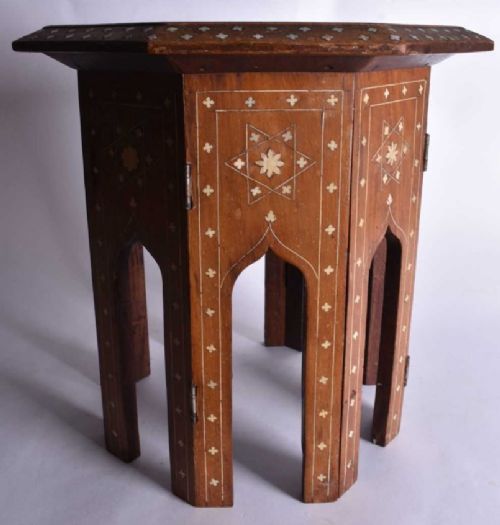
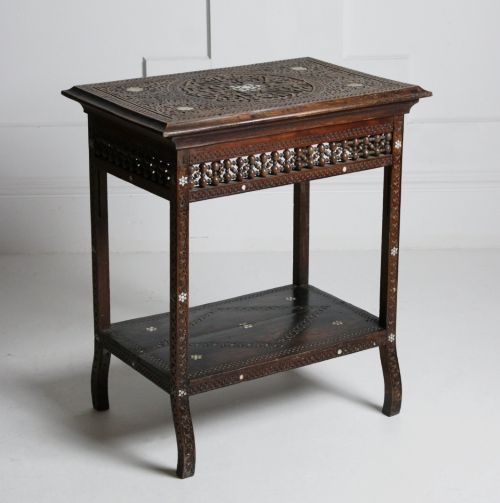
Forms range from simple folding Damascus tables to more substantial two-tier side tables and pieces featuring small cupboards. The underlying woodwork supports dense surface ornamentation designed to catch the light and anchor a seating area.
What Varies in Quality
The density and precision of the mosaic inlay mark the primary distinction between standard production and exceptional craftsmanship. Superior tables feature tightly fitted tesserae with minimal filler, maintaining crisp geometric lines across complex multi-sided surfaces.
Material selection also dictates overall grade, with genuine mother-of-pearl and finely selected bone panels creating deeper luminescence than simpler wood-only marquetry. The structural integrity of the folding mechanisms and the crispness of the hand carving further separate everyday items from workshop masterpieces.
Periods represented span from the late nineteenth century through the 1930s, encompassing various Revival styles.
Liberty and Co
The Syrian Occasional Table Glossary
- Mother-of-Pearl
- An iridescent inner shell layer used by artisans to create luminous geometric inlays across table tops. It catches ambient light from various angles.
- Marquetry
- The art of applying small pieces of veneer to a structure to form decorative patterns. In these tables, it creates complex multi-pointed star motifs.
- Moorish Revival
- An architectural and decorative style popular in the nineteenth century. It drew heavily on traditional Islamic design motifs.
- Hexagonal
- A six-sided geometric form frequently utilised for table tops and support structures. This shape allows for repeating symmetrical patterns.
- Octagonal
- An eight-sided configuration common among these tables. It provides a balanced surface area well suited to intricate border inlays.
Syrian Occasional Table: Frequently Asked Questions
Where should I place a Syrian occasional table?
These compact tables suit living rooms as lamp stands or beside armchairs where their detailed surfaces can be appreciated up close.
Their distinct geometry also works effectively in hallways or studies as decorative display surfaces.
How do I clean mother-of-pearl inlay?
Dust the surface regularly with a soft, dry cloth to prevent particles from lodging in the intricate joints.
Avoid liquid polishes and harsh cleaning agents that can degrade the organic materials and adhesives.
Are these tables sturdy enough for daily use?
Most examples are structurally sound for holding lamps, books or drinks during normal daily activities.
Folding variants require careful handling when moving to ensure the wooden hinges remain aligned.
How do I distinguish nineteenth-century pieces from later ones?
Nineteenth-century examples often exhibit hand-cut tesserae with subtle irregularities in the mother-of-pearl and bone elements.
Later twentieth-century versions tend towards more uniform machine-cut components and simpler secondary woods.