


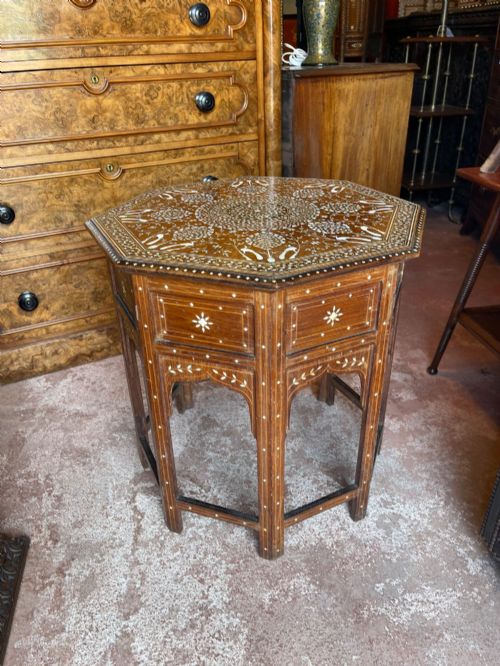

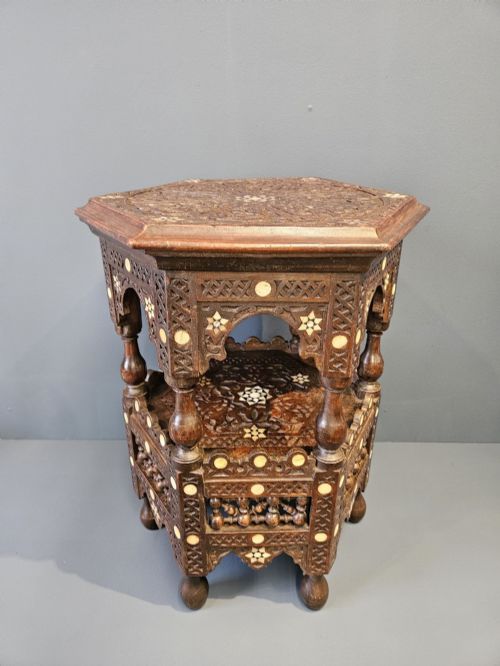


Bone Inlay Accent Table
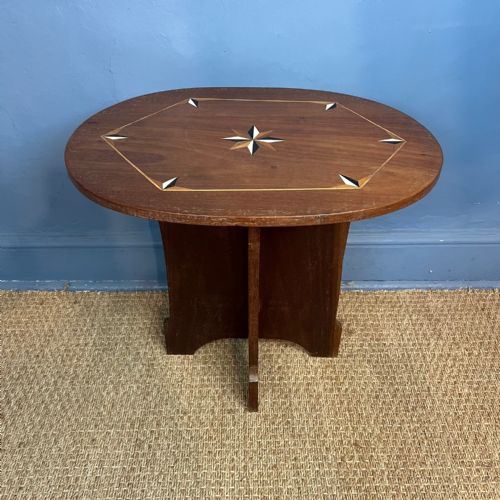
A bone inlay accent table brings intricate geometric surface pattern and dense carving to a room through traditional regional craftsmanship.
Bone Inlay Accent Table
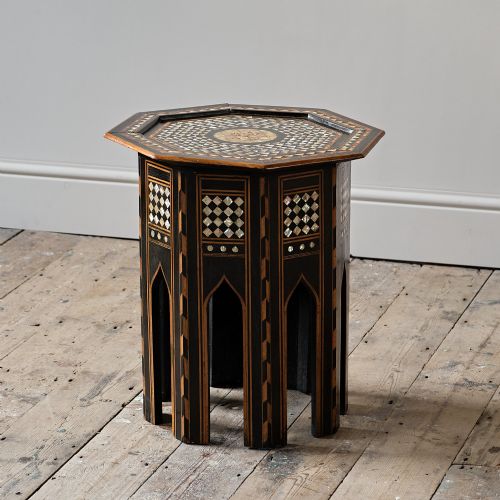
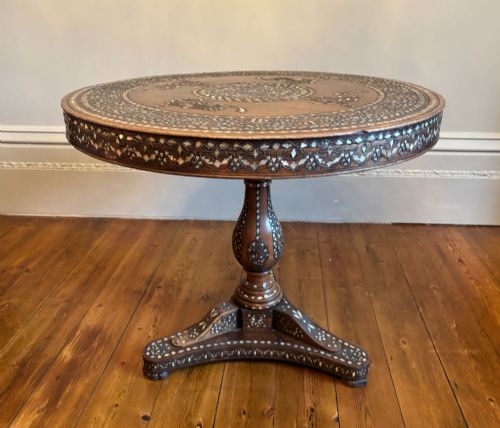
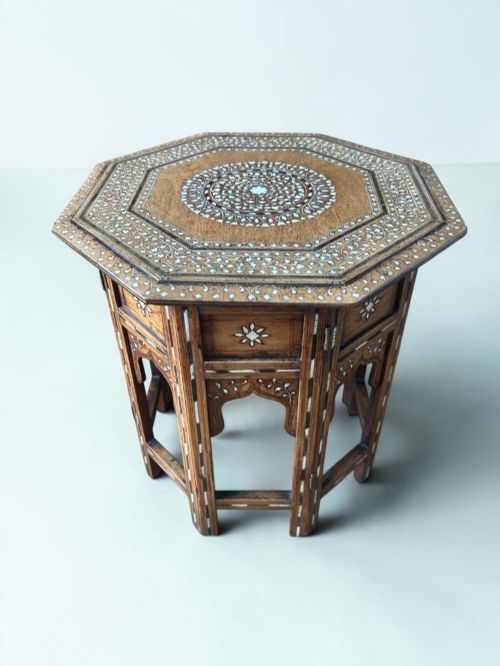
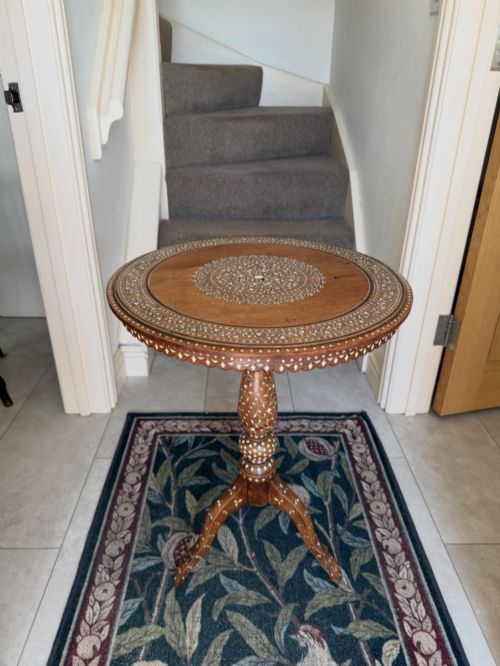
A bone inlay accent table provides a distinct surface pattern constructed from organic materials set into wooden frames. These pieces appear in forms such as octagonal side tables, folding stands, and pedestal coffee tables.
The objects seen here originate largely from Anglo-Indian workshops, Moorish revival studios, and Ottoman or Syrian production centres. Buyers frequently encounter octagonal occasional tables associated with Hoshiarpur or attributed to retailers like Liberty and Co.
Dated examples span from the Victorian period through the early decades of the twentieth century, maintaining traditional carved structures. The category also includes occasional items like cutlery, though small tables form the primary visual focus.
Materials and construction
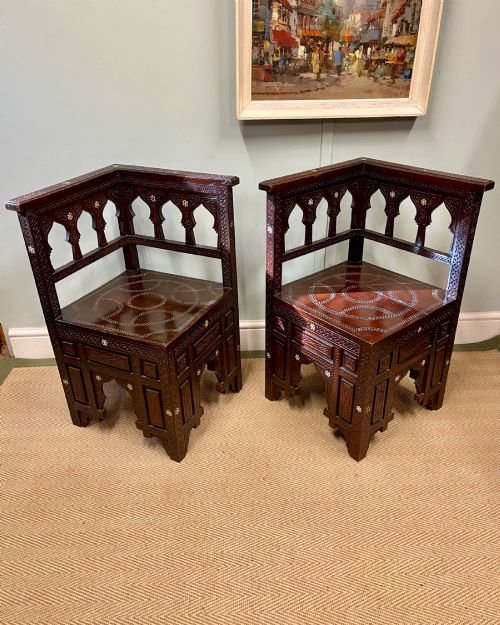
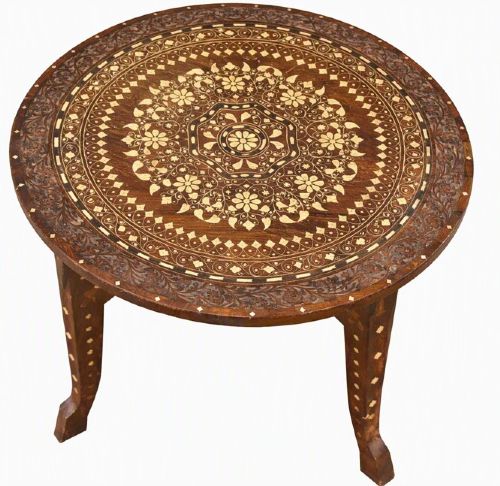
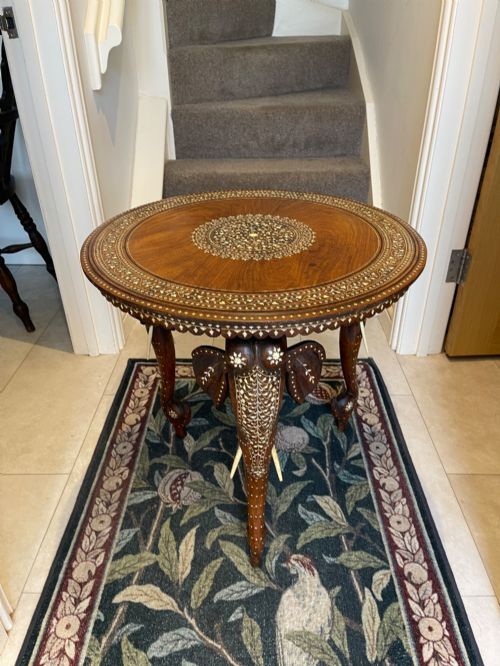
Makers set individually shaped pieces of bone and mother-of-pearl into carved recesses within dense wooden foundations. Rosewood, teak, sandalwood, sheesham, walnut, and ebonised wood provide the dark contrasting background for the pale inlay.
Intricate floral and geometric motifs are worked into the wood alongside the inlaid sections, creating deep relief across table tops and aprons. Some variants utilise folding frames connected by intricate pierced wooden hinges rather than fixed pillar supports.
Bone Inlay Accent Table Retail Price Guide 2026
Typical asking prices for bone inlay accent table among the pieces listed under this phrase on Sellingantiques today, from the lower quarter to the upper quarter. They describe what is for sale here now, not the wider market.
Listings feature woods including rosewood, teak, walnut, sandalwood, and ebonised hardwood combined with bone and mother-of-pearl.
Evaluating workmanship
Quality rests on the density and precision of the individual bone segments and the crispness of the surrounding wood carving. Superior examples maintain tight geometric alignment without gaps between the organic inlay and the timber base.
The complexity of the structural form also dictates standard, ranging from simple occasional tables to multi-tiered stands with integrated cupboards and figural supports. Maker attribution, such as stamps or documented retail origin, further distinguishes specific pieces.
Liberty and Co
The Bone Inlay Accent Table Glossary
- Hoshiarpur
- A centre of wood carving and inlay work in the Punjab region of India known for producing dense floral tables. Pieces from this tradition often utilise sheesham or sandalwood.
- Moorish Revival
- A nineteenth-century western architectural and decorative style drawing on Islamic design elements. It popularised octagonal tables and intricate geometric surface patterns in European homes.
- Ebonised Wood
- Timber treated with a dark finish to imitate ebony. This treatment creates high visual contrast against pale bone and mother-of-pearl inlay.
- Mother-of-Pearl
- The iridescent inner layer of mollusc shells used alongside bone in regional inlay work. It catches the light differently from plain white bone.
- Octagonal
- Having eight sides. This geometric plan defines many traditional occasional and side tables found in this category.
Bone Inlay Accent Table: Frequently Asked Questions
How do I date a bone inlay table?
Dating relies on timber choice, construction methods, and stylistic markers recorded across the Victorian era up to the nineteen-thirties. Retailer stamps or documented exhibition origins can also help narrow down the production period.
Examining the wear on the wooden base and the patination of the bone provides further context for the age of an individual piece.
Where were these tables made?
The pieces originate from diverse workshops spanning Anglo-Indian centres like Hoshiarpur, Moorish revival hubs, and Syrian or Ottoman craft traditions. British retailers frequently imported and retailed these items during the late nineteenth and early twentieth centuries.
Regional preferences determined whether the wooden foundation was constructed from teak, rosewood, sandalwood, or ebonised hardwood.
Are folding tables sturdy?
Many traditional occasional tables use clever hinged wooden lattice construction designed to fold flat for transport while maintaining structural integrity. When fully opened, the interlocking panels support surface weight reliably.
Care should be taken when moving these items to avoid placing undue stress on the carved wooden hinges.
How do I care for bone inlay?
Maintenance involves gentle dusting with a soft, dry cloth to protect the delicate intersections between the bone segments and the timber. Avoid using chemical polishes or excessive moisture that could loosen the historic adhesive.
Keeping the table away from direct heat sources prevents the wood from shrinking and causing the inlay to lift.