



Syrian Mother of Pearl Table
These syrian mother of pearl table examples bring intricate geometric marquetry and shimmering shell inlay into domestic interiors from nineteenth and twentieth century workshops.
Syrian Mother of Pearl Table
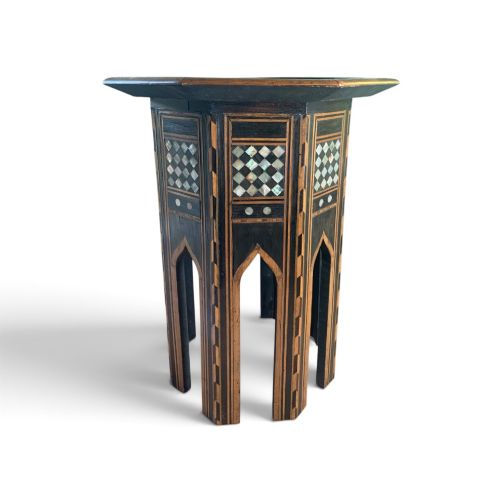
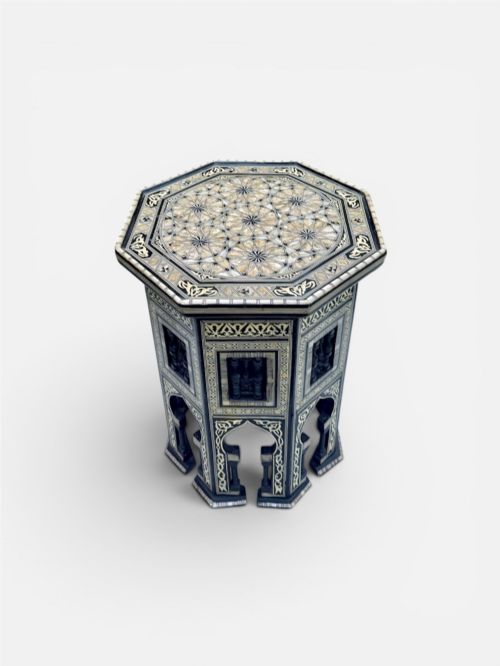
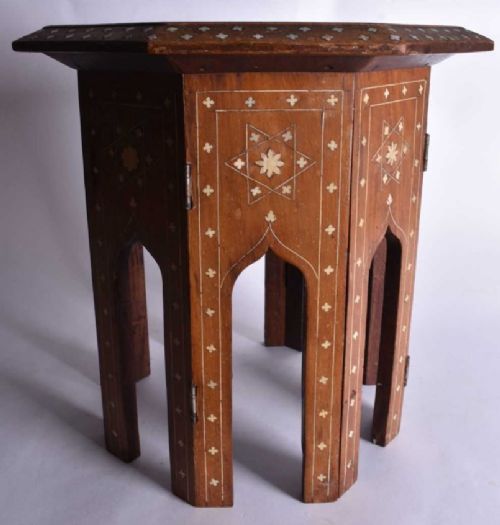
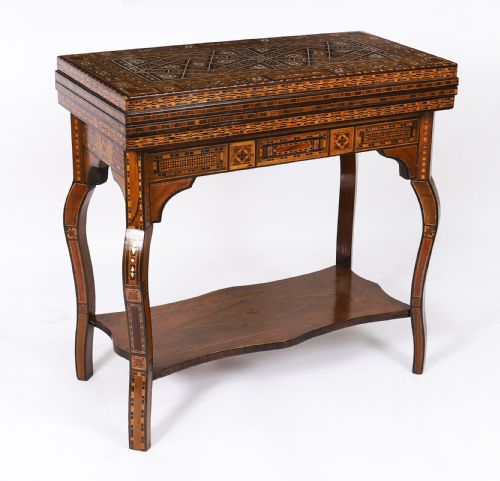
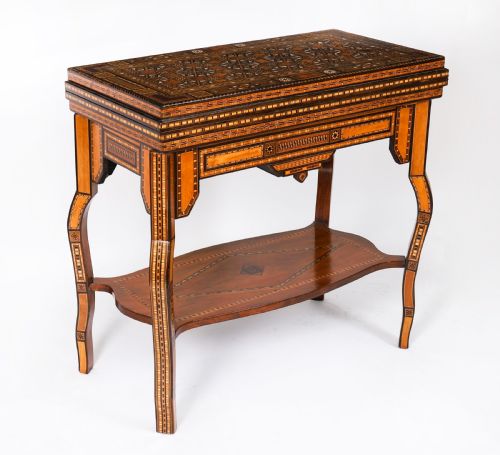
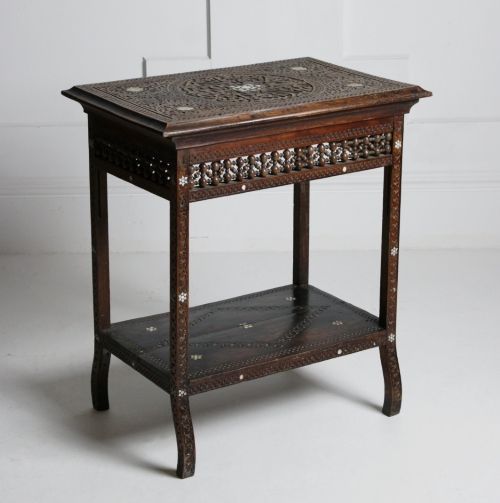
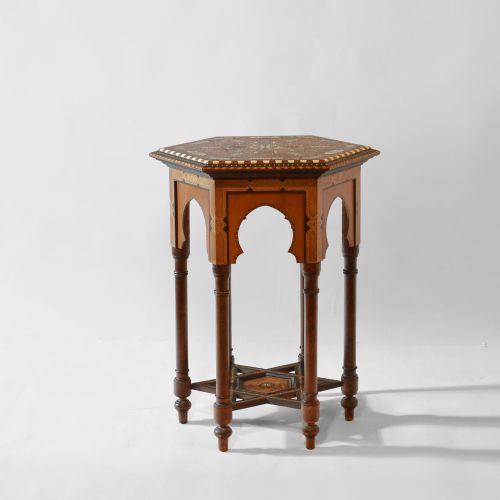
A syrian mother of pearl table combines regional woodworking traditions with geometric ornamentation originating from Damascus and surrounding Levantine centres. These pieces appear primarily as hexagonal or octagonal side tables, occasional tables, and multi-functional games tables designed for cards, chess, and backgammon.
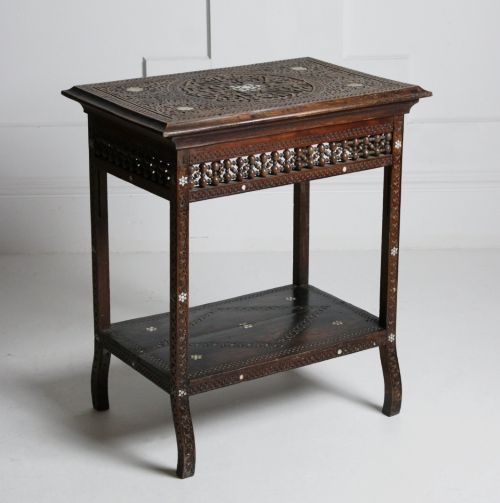
The selection ranges from folding Damascus tables and two tier structures to metamorphic writing desks and robust centre tables. Most pieces date from the nineteenth century through the early twentieth century, reflecting Ottoman and Moorish revival influences popular across Europe and the Middle East.
How they were made
Craftsmen construct these tables using various foundational woods including walnut, hardwood, fruitwood, and ebonised wood. Surfaces receive intricate marquetry patterns formed from meticulously cut pieces of boxwood and bone.
Shimmering nacre shell and mother of pearl elements are embedded by hand into the wooden matrix to create detailed geometric and floral mosaics. Joinery techniques such as folding frameworks and pegged joints allow structural stability within complex multi-sided geometries.
Listings feature pieces spanning from the nineteenth century to the nineteen-thirties, utilising walnut, fruitwood, ebony, and ebonised wood alongside bone and shell.
What varies in quality
The density and precision of the inlaid mosaic separate standard production from finer examples. Finer tables exhibit tighter geometric alignment with minimal gaps between the wood, bone, and mother of pearl components.
The choice of secondary timbers and the complexity of the internal construction also influence the standard of the piece. Tables featuring specialised mechanisms, such as metamorphic writing surfaces or multi-game boards, demonstrate advanced cabinetmaking skills.
Liberty and Co·Alberto Pinto
The Syrian Mother of Pearl Table Glossary
- Marquetry
- The art of applying small pieces of veneer to a structure to form decorative patterns. This technique creates the intricate geometric designs seen across the surfaces of these tables.
- Nacre
- The iridescent internal layer of certain mollusc shells, commonly referred to as mother of pearl. Craftsmen shape this material into thin plates for inlay work.
- Metamorphic
- Describing furniture designed to transform from one form or function to another, such as a table shifting into a desk or games surface.
- Octagonal
- Having eight sides and eight angles. This geometric shape forms the footprint of numerous side and occasional tables in this category.
- Ebonised
- Wood treated with a finish to imitate ebony. This dark staining provides high visual contrast against bright mother of pearl and bone inlay.
Syrian Mother of Pearl Table: Frequently Asked Questions
Where were these tables made?
Many originate from workshops in Damascus, while others reflect broader Levantine, Ottoman, and Moorish revival production centres active during the nineteenth and twentieth centuries. European retailers also imported and retailed these designs.
Makers utilised local fruitwoods and hardwoods alongside imported materials to supply both domestic markets and international admirers of Middle Eastern craftsmanship.
How do I care for the mother of pearl inlay?
Maintain a stable indoor humidity to prevent the wood foundation from expanding or contracting, which can loosen the delicate mosaic pieces. Dust gently with a dry, soft cloth.
Avoid placing these tables in direct sunlight or near heat sources that might dry out the wood and weaken the historic adhesives securing the shell and bone.
What were games tables used for?
These specialised tables served as social furniture for parlor entertainment, featuring reversible or folding tops configured for chess, checkers, and backgammon. Wealthy households utilised them during social gatherings.
When not in use for gaming, the decorative tops functioned as standard occasional surfaces for display.
How do I date a syrian table?
Dating relies on stylistic markers, construction methods, and materials, with most surviving examples spanning the nineteenth century up to the nineteen-thirties. Earlier pieces often incorporate heavier hardwood frames and denser bone or shell work.
Reference to specific design movements, such as the Moorish revival or European retailer attributions from the late nineteenth century, provides further chronological context.