



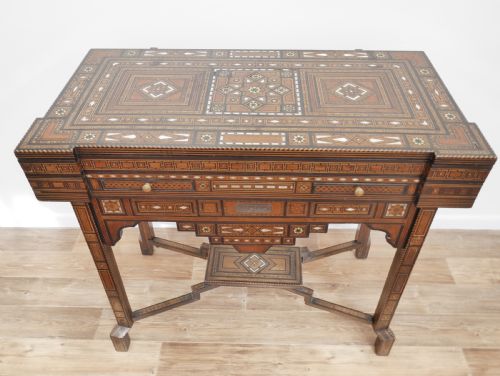

Ottoman Inlaid Furniture
Ottoman inlaid furniture brings intricate geometric patterns and shimmering pearl surfaces into a room.
Ottoman Inlaid Furniture
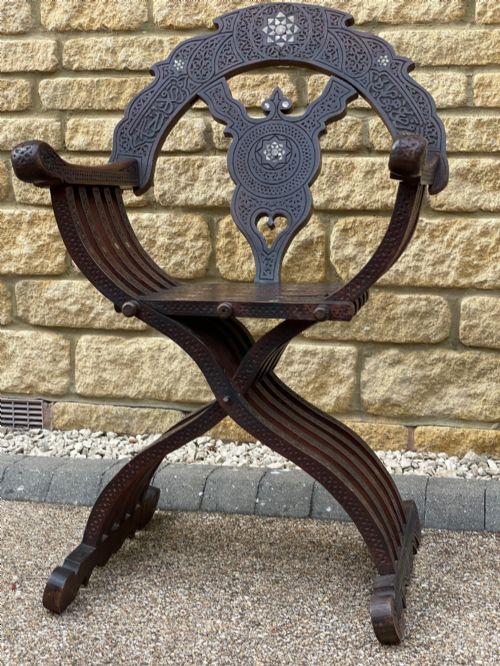
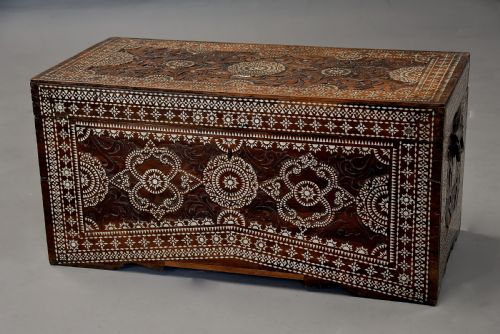
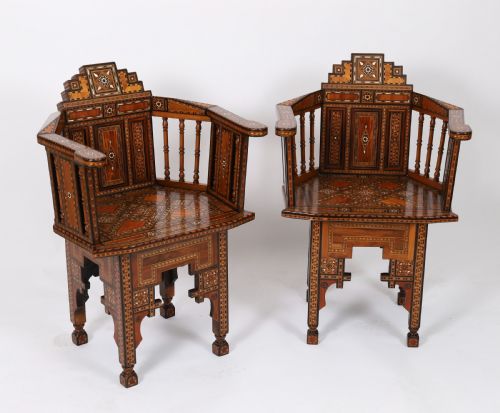
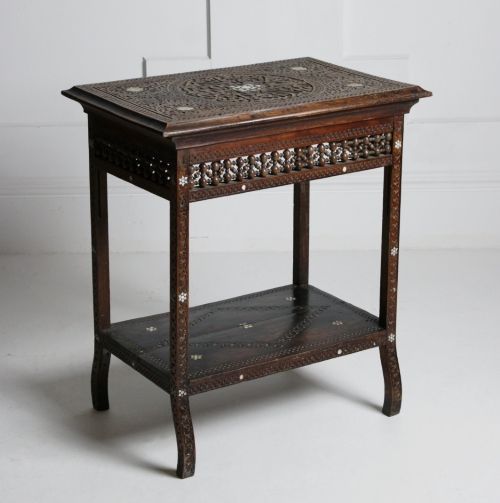
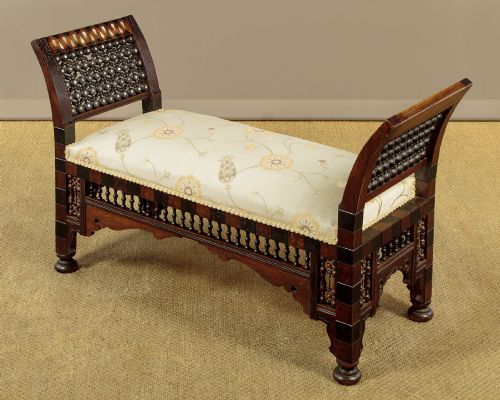
Ottoman inlaid furniture encompasses striking tables, chairs, chests, and cabinets created across the nineteenth and early twentieth centuries in styles such as Moorish Revival, Syrian, and Levantine.
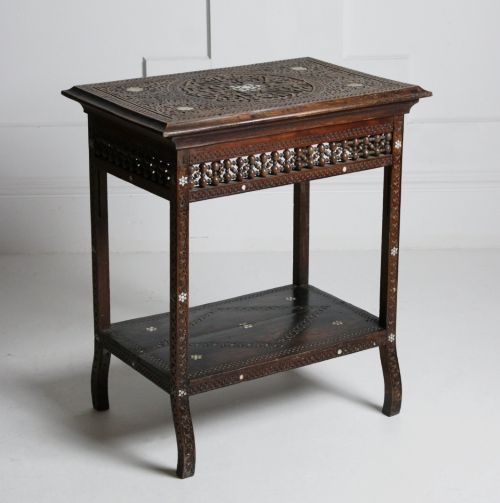
The side tables, armchairs, and trunks encountered here display dense surface enrichment that transforms functional wooden forms into decorative focal points.
Makers utilised regional design traditions to produce distinctive seating, games tables, and window seats that suit diverse interior schemes.
How they were made
Craftsmen built these pieces from hardwoods including walnut, ebony, and ebonised wood to provide a dark, stable foundation for complex surface decoration.
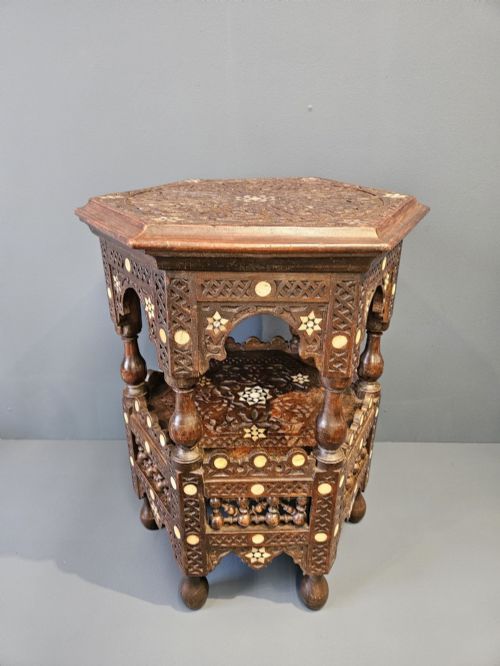
Artisans applied intricate geometric parquetry alongside contrasting inserts of bone, mother-of-pearl, abalone, and metal to create luminous patterns.
Structural elements incorporated carved woodwork alongside specialised joinery to support heavy surface mosaic panels.
Listings feature items from the nineteenth century through the early twentieth century, including the Victorian era and the nineteen-twenties.
What varies in quality
The sophistication of the geometric parquetry and the density of the pearl or bone work set finer examples apart from simpler productions.
The stability of the underlying hardwood and the precision with which delicate inlay materials sit flush within the wooden matrix determine durability.
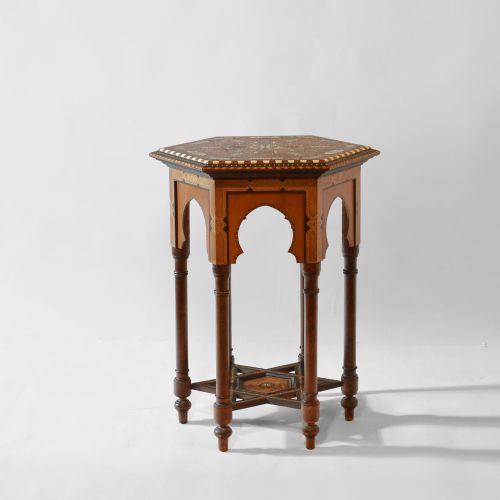
Form dictates distinction, ranging from straightforward hexagonal lamp tables to metamorphic writing desks and multi-tiered side tables.
Liberty and Co
The Ottoman Inlaid Furniture Glossary
- Parquetry
- Geometric woodwork formed by fitting small pieces of wood together to create patterned surfaces. This technique underpins the intricate panels seen on many tables and cabinets.
- Moorish Revival
- A nineteenth-century architectural and decorative style drawing on Islamic design traditions. Pieces in this manner utilise horseshoe arches, intricate carving, and dense surface patterns.
- Mother-of-Pearl
- The iridescent inner layer of certain mollusc shells used extensively for decorative inlay. It reflects light to create shimmering contrast against dark woods.
- Hexagonal
- Having six sides and six angles. This geometry defines the frequent octagonal and six-sided table forms found in Syrian and Moorish furniture.
- Metamorphic
- Furniture designed to transform from one function to another, such as a writing table that conceals additional compartments or surfaces.
Ottoman Inlaid Furniture: Frequently Asked Questions
What is Ottoman inlaid furniture?
Ottoman inlaid furniture comprises decorative items like tables, chairs, and chests produced during the nineteenth and early twentieth centuries. These works draw on Syrian, Levantine, and Moorish traditions.
Craftsmen combined dense wooden structures with elaborate geometric parquetry and contrasting shell or bone details to achieve rich surface decoration.
How do I style an inlaid side table?
An inlaid side table works well as a focal point in a hallway, drawing room, or study where its intricate geometric patterns can be appreciated. Its reflective pearl and bone surfaces contrast effectively against plain walls.
Keep surrounding accessories simple to let the detailed parquetry and carved woodwork remain the primary visual element in the space.
What materials are used in these pieces?
These pieces rely on solid hardwoods such as walnut, ebony, and ebonised wood to form stable frames. Artisans then decorated these foundations using bone, mother-of-pearl, abalone, and iron.
The interplay between dark timber and luminous shell creates the distinctive aesthetic seen across Syrian and Moorish Revival examples.
How do I date an inlaid cabinet?
Dating relies on examining the construction methods, wood types, and specific decorative idioms present in the piece. Nineteenth-century examples often display hand-cut parquetry and traditional Syrian joinery.
Reference markers such as attribution labels or stylistic shifts towards early twentieth-century Moorish Revival designs help narrow the timeline further.