
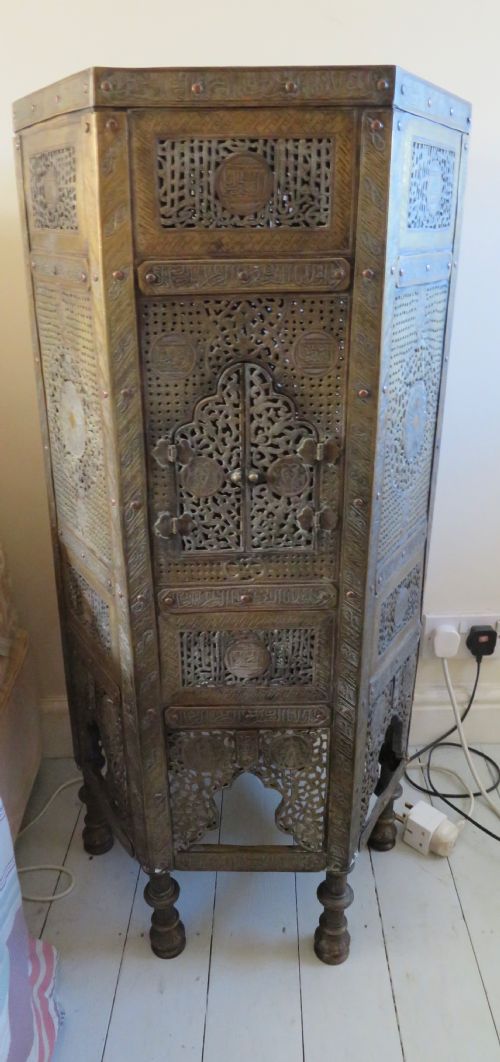


Middle Eastern Table
These middle eastern table examples bring intricate brass work and patterned wood inlay into domestic spaces through folding bases and octagonal forms.
Middle Eastern Table
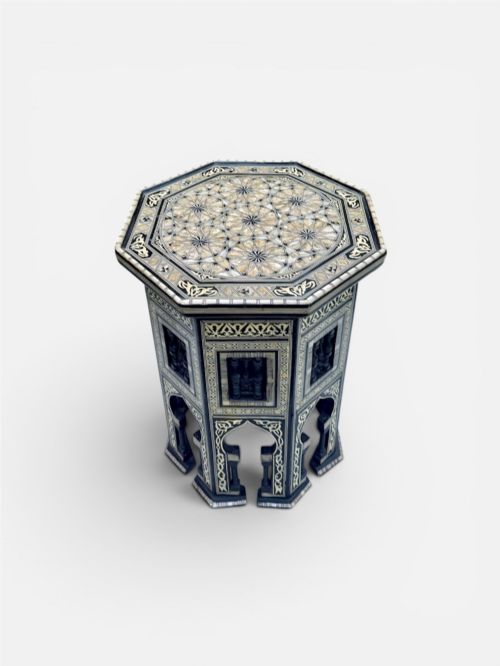
A middle eastern table typically appears as an occasional piece, side table, or folding coffee table designed with an octagonal or circular top. These items emerge from various regional traditions including Syrian, Persian, and Egyptian workshops spanning the late nineteenth and early twentieth centuries.
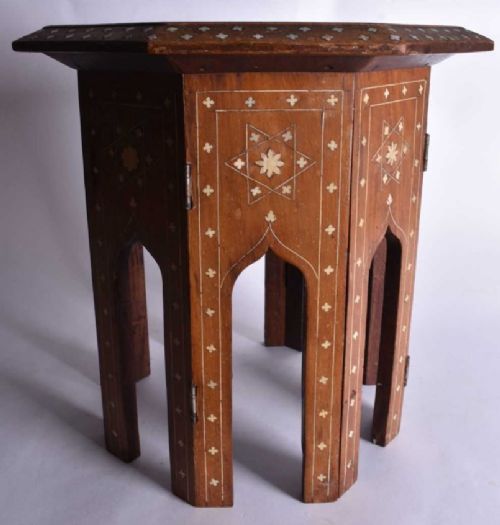
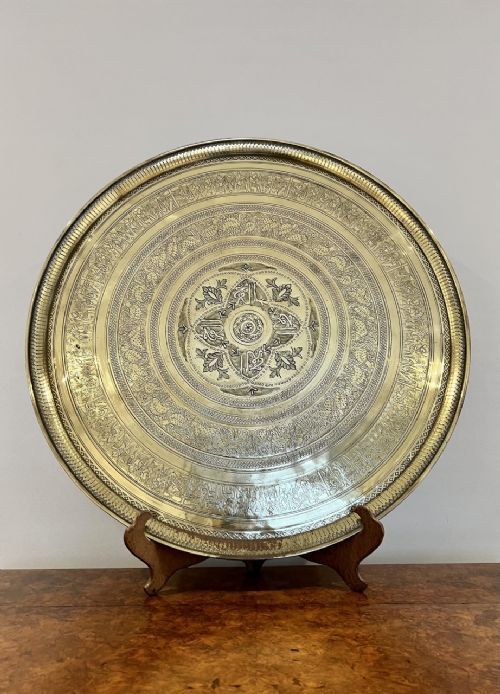
Octagonal folding tables featuring mother-of-pearl inlay and brass tray tops dominate the selection. Buyers encounter both low stool heights and standard occasional heights suited for lamps and display.
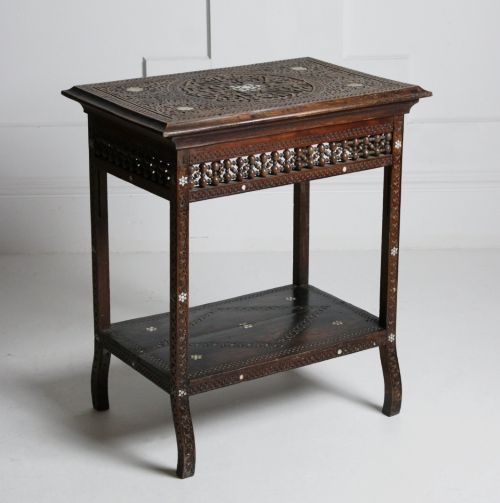
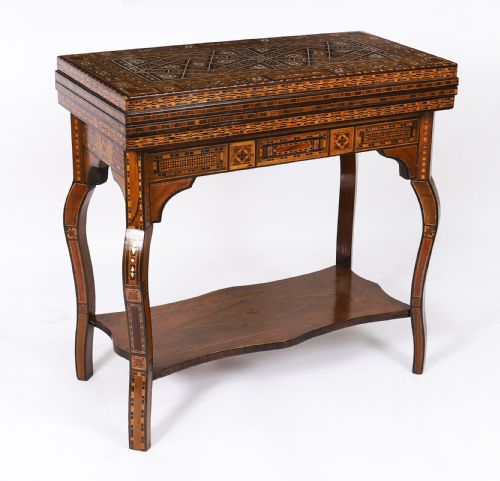
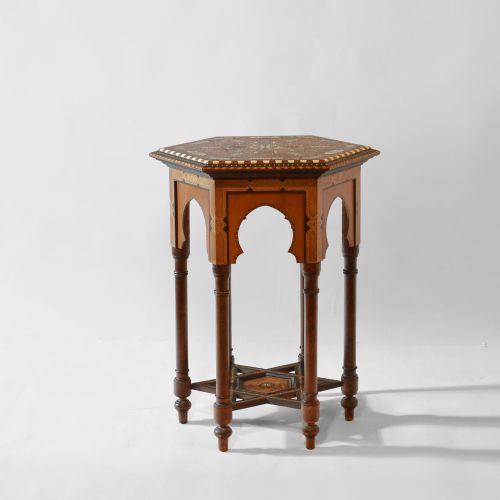
Specialised variations also include games tables fitted for chess or backgammon alongside hexagonal kursi stands and two-tier side tables.
Materials and Construction
Carpenters build the wooden folding bases and frames using walnut, mahogany, hardwood, and general timber, often applying intricate hand carving. These wooden structures support removable circular or folding octagonal surfaces.
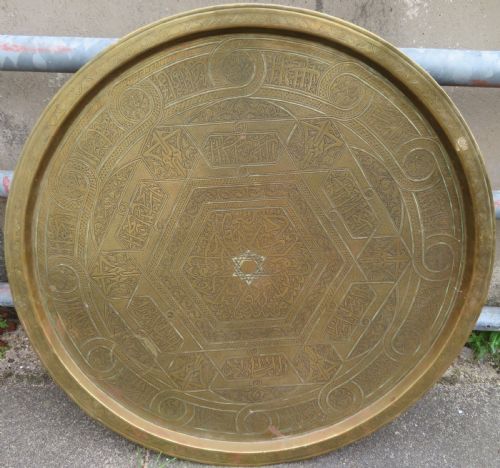
Surface decoration relies heavily on metalwork, utilising brass, copper, and mixed metals that receive fine engraving or openwork white-metal and copper inlay. Artisans combine these metals with bone and mother-of-pearl tesserae to create geometric mosaics on wood.
Several examples double as gaming surfaces with integrated boards for chess and backgammon hidden beneath the folding trays.
Craftsmanship and Execution
Quality separates pieces through the precision of the inlay work and the depth of the metal engraving. Superior examples display tightly fitted mother-of-pearl and bone sections without gaps in the geometric lattices.
The complexity of the carved wooden folding mechanisms and the thickness of the brass or copper tray tops also distinguish finer production from simpler utilitarian items.
The Middle Eastern Table Glossary
- Damascus table
- A folding table featuring dense geometric mother-of-pearl and bone inlay originating from Syrian workshops. These pieces utilise octagonal wooden frames that collapse flat when removed from the top.
- Cairoware
- Metalwork originating from Cairo featuring brass vessels and trays inlaid with silver, copper, and white metal. Applied to tables, this technique creates high-contrast decorative surfaces.
- Kursi
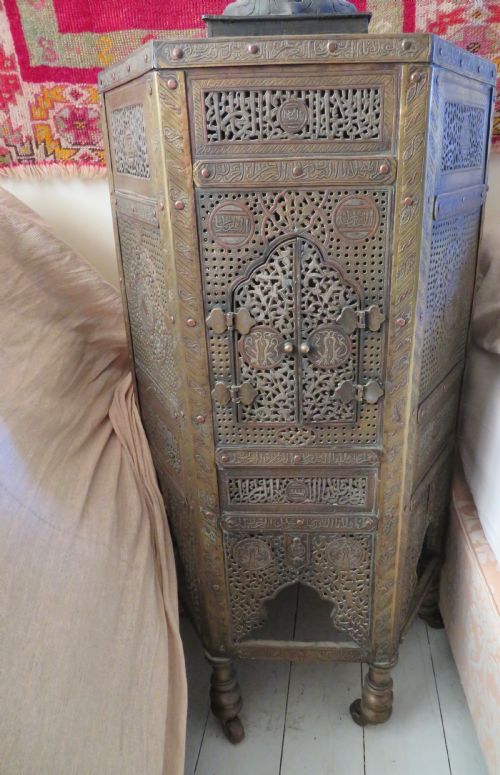
- A traditional low hexagonal stand or table used for reading or serving. These wooden frames often feature openwork panels and support metal trays.
- Mamluk Revival
- A design style inspired by medieval Islamic metalwork and architecture of the Mamluk Sultanate. Pieces in this style display complex geometric patterns and Arabic inscriptions.
Middle Eastern Table: Frequently Asked Questions
How do you fold these tables?
The wooden bases consist of intricate slatted lattices or hinged panels that collapse into a flat panel once the top is removed. The circular or octagonal metal tray then lifts off independently from the support.
This clever collapsible design allowed merchants and travellers to pack the furniture away easily when not in use.
What were they used for?
These pieces served multiple domestic functions including serving tea, holding lanterns, and playing board games such as chess and backgammon. Many doubled as portable surfaces for dining or social gatherings.
Lower models functioned as coffee tables or seating accessories within traditional interiors.
How do you clean the brass tops?
Dust the engraved brass and copper surfaces gently with a soft dry cloth to prevent dirt accumulation within the recessed lines. Avoid harsh chemical polishes that strip the darkened patina from the engraved details.
Preserving the natural age of the metal maintains the character of the piece.
How do you date a piece?
Dating relies on examining the construction methods of the wooden frame, the style of metal engraving, and the type of inlay materials used. Pieces from the late nineteenth century often show heavier hand-carved walnut and deep copper engraving.
Early twentieth-century examples frequently incorporate standardised brass trays and machine-cut mother-of-pearl elements.