


Embossed Brass Table
An embossed brass table brings warmth and texture to a room, catching the light across hand-worked patterns.
Embossed Brass Table
An embossed brass table draws the eye through detailed surface work, often taking the form of low coffee tables or occasional pieces rather than large dining furniture. The selection includes striking examples from the nineteenth and early twentieth centuries, featuring folding frames and decorative tops.
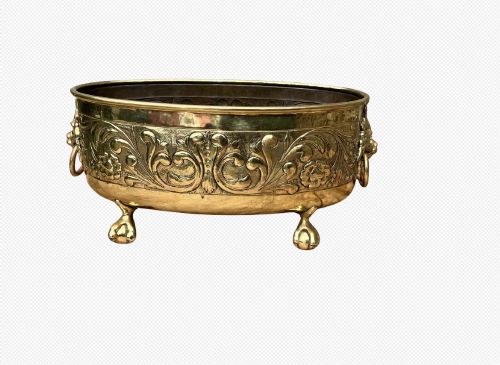
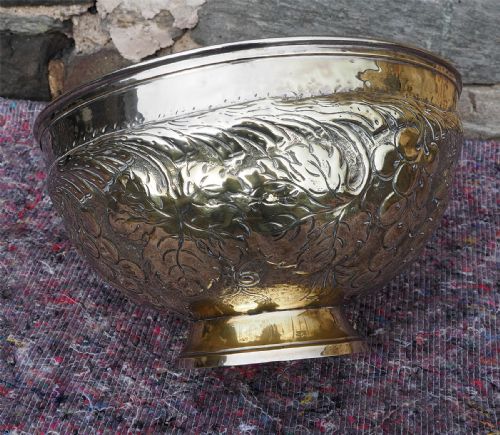
Makers drew on diverse design vocabularies, producing pieces with Anglo-Indian, Middle Eastern, and Western influences. The surface metal is typically worked by hand, creating raised patterns of foliage, figures, or geometric motifs that catch the light from different angles.
Materials and construction
The primary material is sheet brass, chosen for its malleability and warm metallic tone. Artisans utilised repoussé and embossing techniques, hammering the metal from behind to push the design forward before refining the details from the front.
Support structures often utilise timber or folding wooden stands, allowing the heavy metal tops to be portable. Some pieces incorporate additional elements like glass, bronze, or gilt highlights to enhance the decorative effect.
Listings span the nineteenth and early twentieth centuries, featuring styles from Victorian to Anglo-Indian and Arts and Crafts.
Judging quality and craftsmanship
Quality rests principally on the depth and crispness of the hand-worked detail. Superior pieces show precise control in the hammering, where patterns remain sharp and well-defined rather than shallow or smoothed out by excessive polishing.
The construction of the underlying frame matters just as much as the metal top. Solid timber joints and stable folding mechanisms distinguish a piece made for daily use from lighter decorative wares.
The Embossed Brass Table Glossary
- Repoussé
- A metalworking technique where the artisan hammers the design from the reverse side to form a raised pattern in relief.
- Embossed
- A surface shaped with raised designs, pressed or hammered into the material to create tactile contrast.
- Anglo-Indian
- A style reflecting the aesthetic exchange between British design preferences and Indian craftsmanship during the colonial period.
- Jardiniere
- An ornamental pot or stand designed to hold plants or flowers, often executed in matching brass or ceramic.
Embossed Brass Table: Frequently Asked Questions
How do I clean an embossed brass table?
Dust the surface regularly with a soft, dry cloth to prevent dirt settling in the recessed areas of the metalwork.
Avoid harsh chemical dips or abrasive metal polishes, which can strip away the natural patina accumulated over the decades.
Are folding coffee tables sturdy?
Most folding bases utilise interlocking wooden frames designed to support the weight of the metal top securely when fully opened.
Check that the hinges or slot joints fit together tightly to ensure the table remains level during everyday use.
What is the difference between repoussé and casting?
Repoussé involves hammering sheet metal from the reverse side to push the design outward into relief.
Casting involves pouring molten metal into a mould, which generally produces heavier forms with less hand-worked nuance.
How do I date an older brass table?
Examine the construction methods of the wooden frame and the fastening elements, such as hand-cut screws or modern fixings.
The style of the engraved motifs and the specific colour of the brass alloy also offer strong clues to the period of manufacture.