



Antique Anglo Indian Table
An antique anglo indian table brings distinctive colonial craftsmanship and rich timber into a room.
Antique Anglo Indian Table
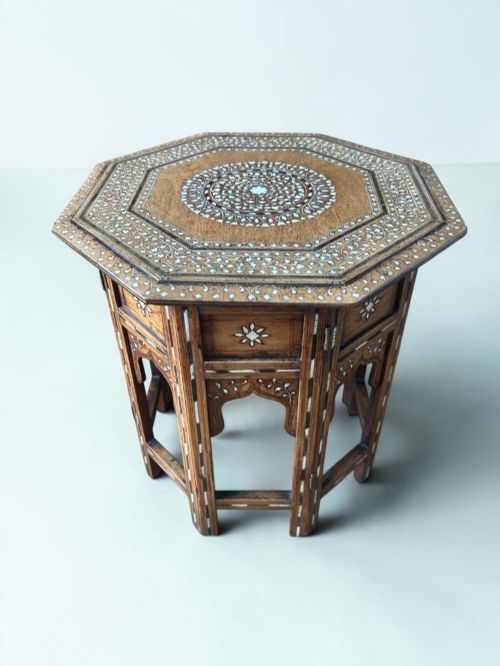
An antique anglo indian table merges British furniture forms with traditional Indian decorative carving, spanning the nineteenth century through the early twentieth century. These pieces appear as coffee tables, centre tables, occasional tables, and side tables.
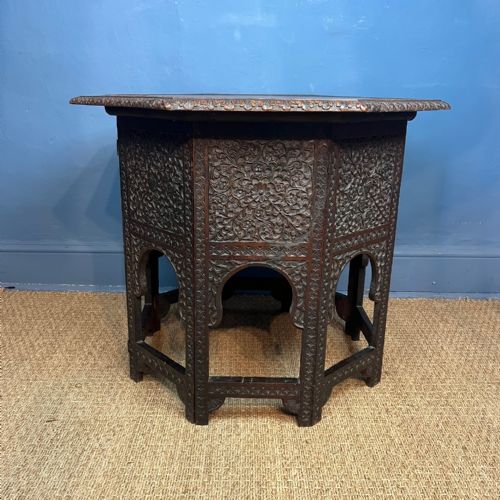
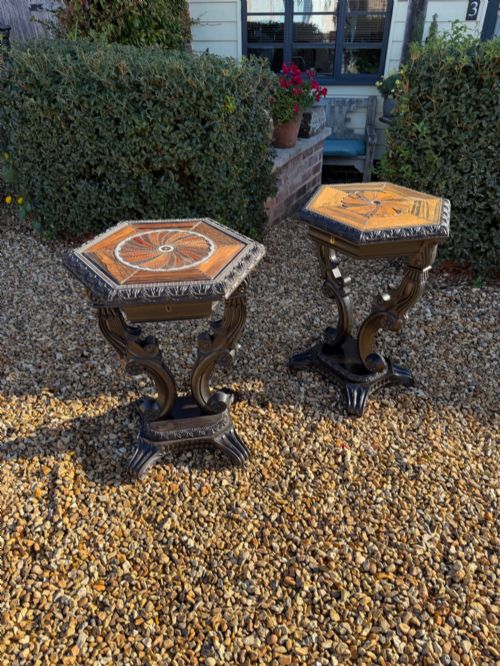
Buyers frequently encounter varieties such as elephant carved tables, octagonal occasional pieces, and campaign tea tables. The selection also includes folding tables and dressing tables originating from colonial workshops.
Materials range from dense tropical timbers to intricate inlaid surfaces, reflecting the distinct aesthetic of British India. These tables served both administrative and domestic functions in colonial homes.
Materials and Technique
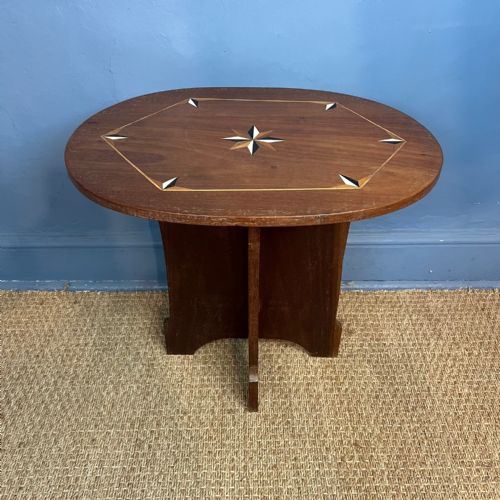
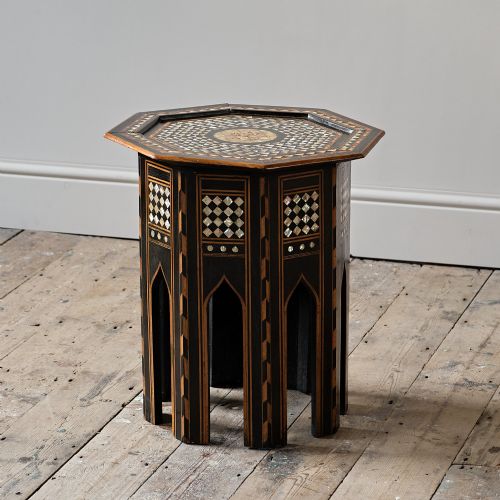
Maker workshops utilised dense regional timbers including teak, padouk, rosewood, sandalwood, and general hardwoods. Surfaces often incorporate bone, ivory, ebony, and brass details through complex inlay techniques.
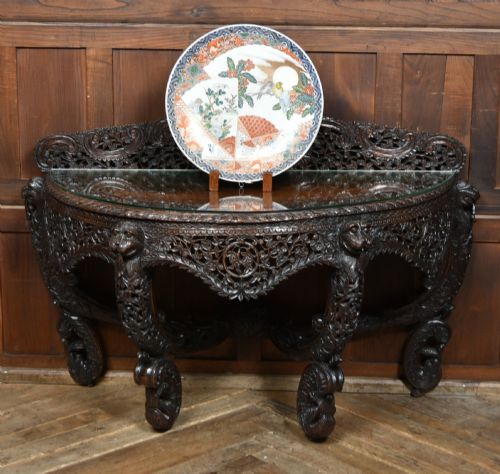
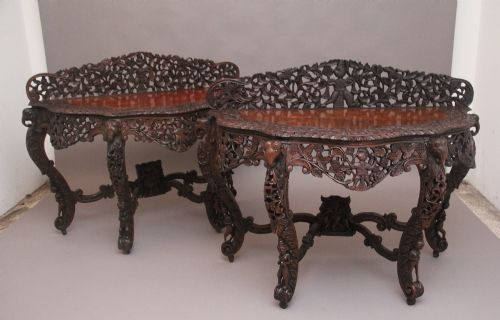
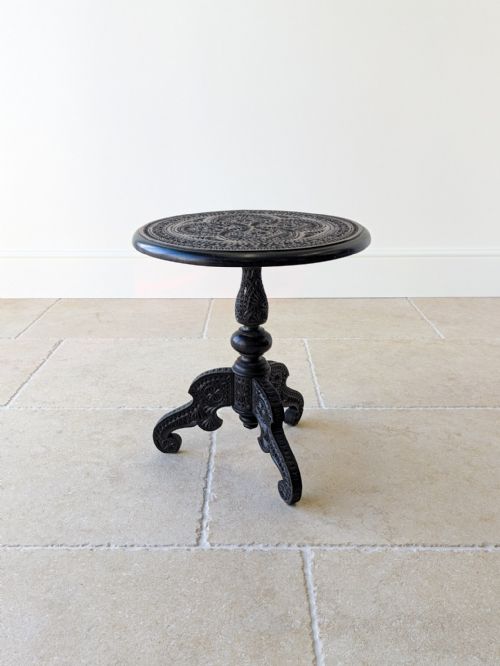
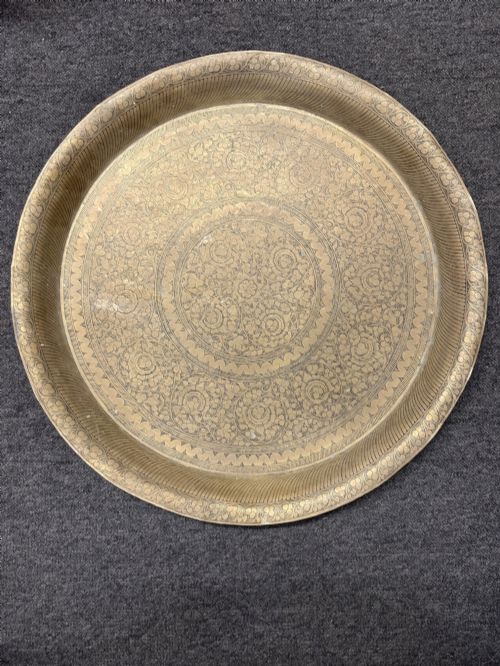
Carving methods involve deep relief work, pierce carving, and fretwork executed on solid wood bases. Lacquered wood and pigmented finishes appear alongside metal tops in copper or brass.
Antique Anglo Indian Table Retail Price Guide 2026
Typical asking prices for anglo indian table among the pieces listed under this phrase on Sellingantiques today, from the lower quarter to the upper quarter. They describe what is for sale here now, not the wider market.
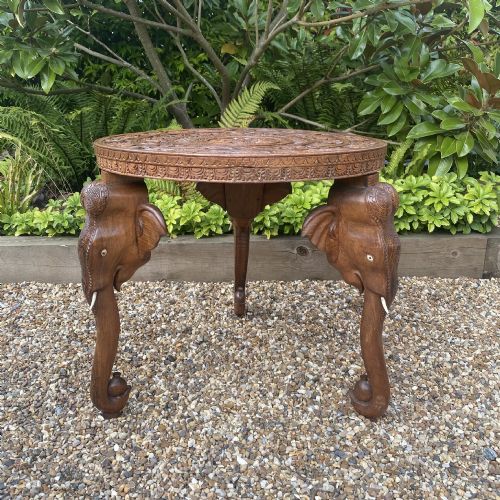
Several elephants hold up table tops with their trunks, serving as sturdy pedestals for afternoon tea.
Gradations in Execution
The refinement of the hand carving dictates the visual strength of the piece, separating standard production from exceptional artistry. Crisp undercutting in floral and animal motifs shows superior skill.
The integrity of the timber and the precision of bone or metal inlay determine the structural and decorative standard. Complete, tightly fitted inlay work elevates a table above examples with missing elements or loose joints.
The Antique Anglo Indian Table Glossary
- Campaign table
- A folding or dismantlable piece designed for easy transport by military officers. These tables often feature brass corners and collapsible bases.
- Hoshiarpur
- A region in Punjab renowned for intricate woodwork. Tables from this area feature dense bone or ivory inlay set into shisham or other hardwoods.
- Sadeli
- A mosaic micro-mosaic technique using geometric slivers of horn, bone, ivory, and wood. This painstaking method decorates boxes and small table surfaces.
- Pierce carving
- A technique where the timber is cut completely through to create openwork fretwork patterns. It creates lace-like screens across aprons and table tops.
- Padouk
- A heavy, durable reddish-brown tropical hardwood favoured in colonial cabinetmaking. It takes a fine finish and resists warping.
Antique Anglo Indian Table: Frequently Asked Questions
How do I date an antique anglo indian table?
Dating relies on stylistic shifts, construction methods, and recorded materials from specific eras. Nineteenth-century examples often display heavier proportions and deep relief carving.
Later pieces from around nineteen hundred frequently incorporate folding mechanisms or specific regional inlays. Comparing the secondary timbers and joinery helps confirm the period of manufacture.
What woods were used for these tables?
Workshop makers selected dense tropical hardwoods suited to intricate hand carving. Teak, rosewood, padouk, and sandalwood form the primary structures of these pieces.
Inlay work frequently utilises contrasting animal bone, ivory, or ebony. Metal tops in brass or copper also appear on specific occasional forms.
How do I care for bone inlaid surfaces?
Bone and ivory inlay requires stable humidity and protection from direct sunlight to prevent drying and shrinking. Dust the surface gently with a soft, dry cloth.
Avoid liquid cleaners or polishes that might seep into the micro-gaps between the timber and the inlay. Natural wax applied sparingly helps preserve the surrounding wood.
Where were these tables originally used?
British administrators, military personnel, and merchants utilised these pieces within colonial homes and bungalows across India. They functioned as tea tables, writing desks, and centre displays.
Many examples returned to Britain with families at the close of the colonial era, entering domestic parlours and drawing rooms.