




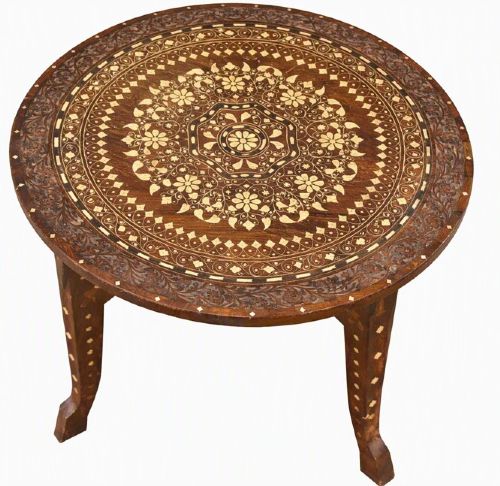
Antique Indian Tea Table
An antique indian tea table brings intricate carving and rich regional timber into a room, offering a low surface suited to relaxed seating.
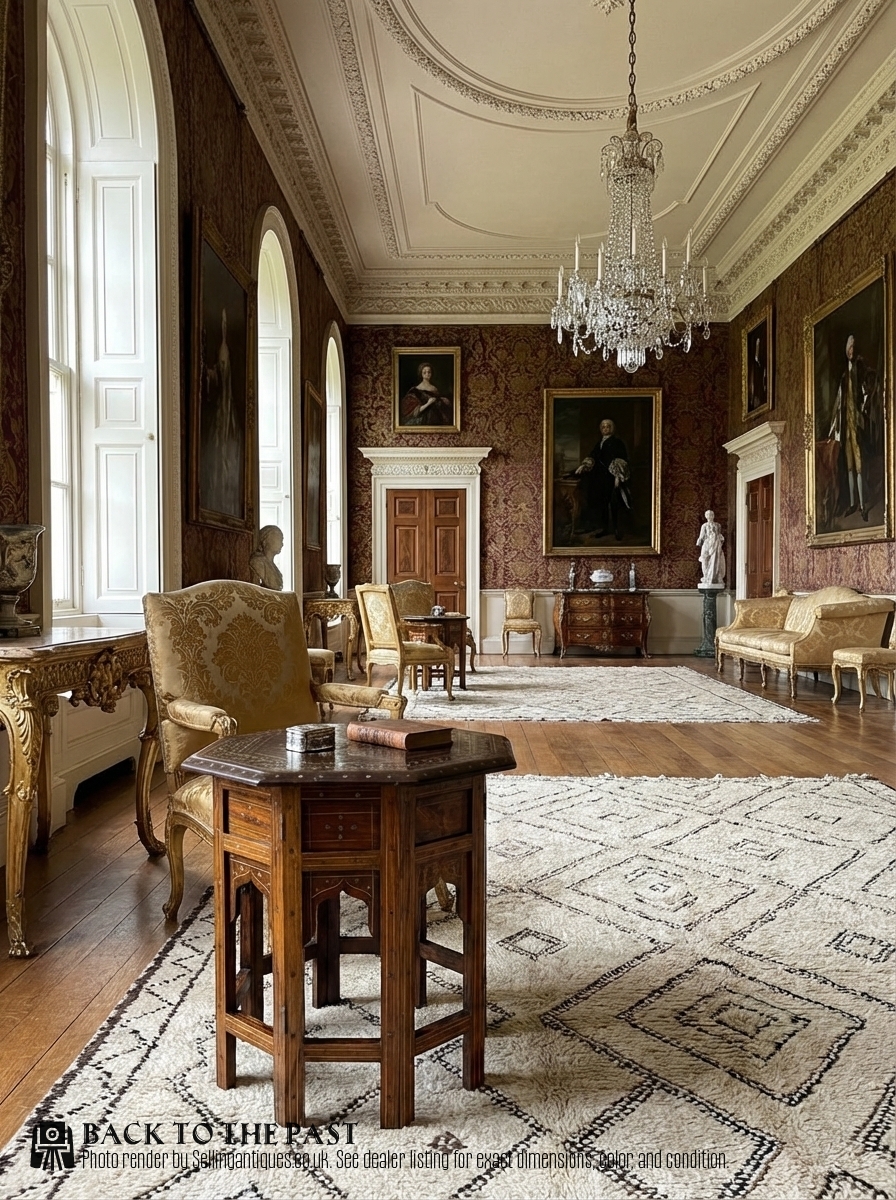
Antique Indian Tea Table
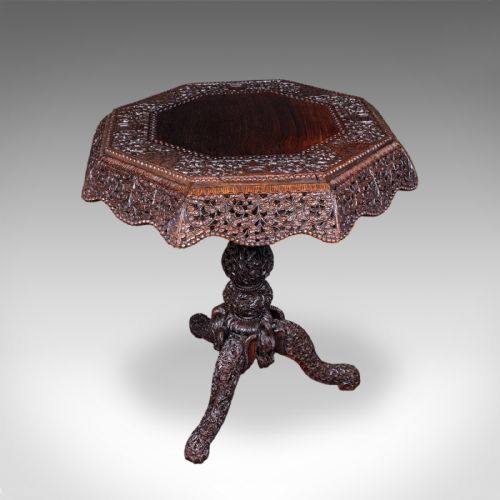
When searching for an antique indian tea table, buyers encounter low occasional surfaces designed for domestic use during the nineteenth and early twentieth centuries. These pieces emerge from distinct regional traditions, including Anglo-Indian workshops and specific centres such as Hoshiarpur and Kashmir.
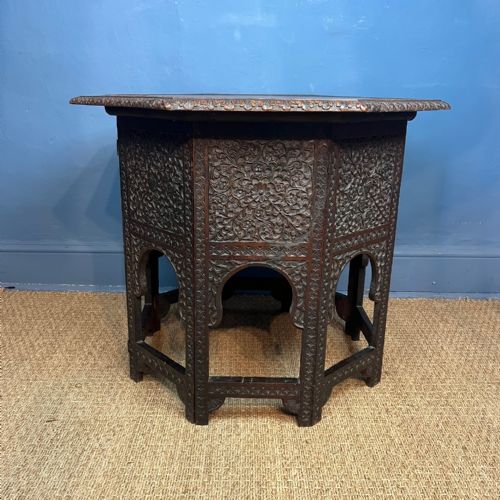
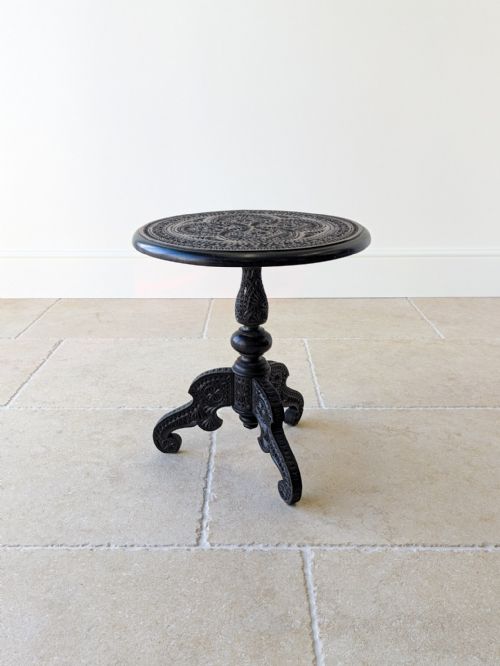
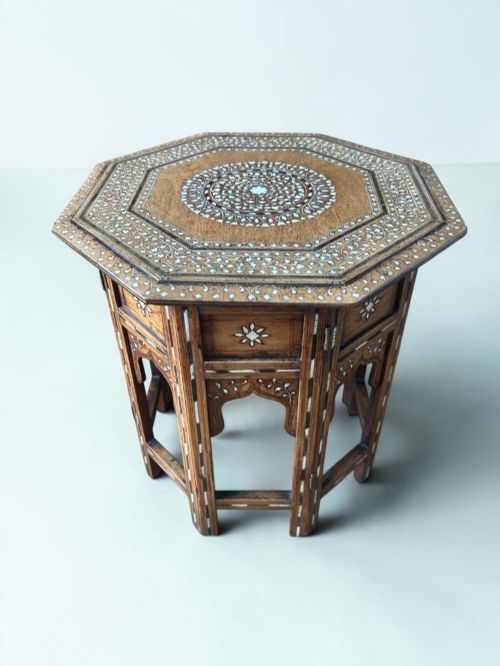
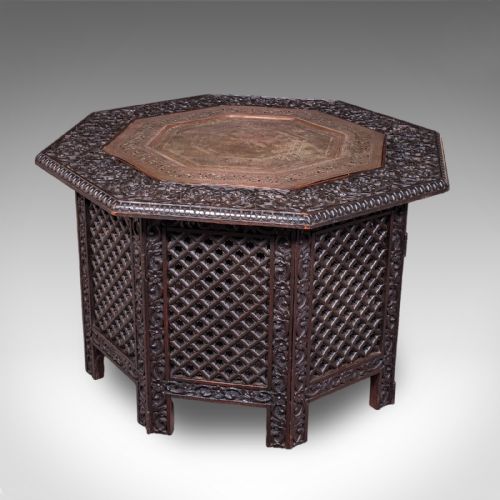
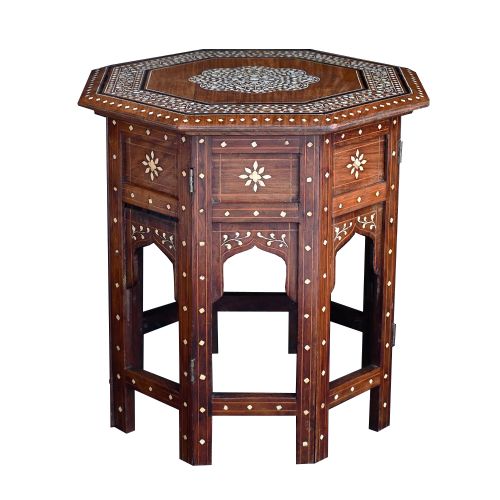
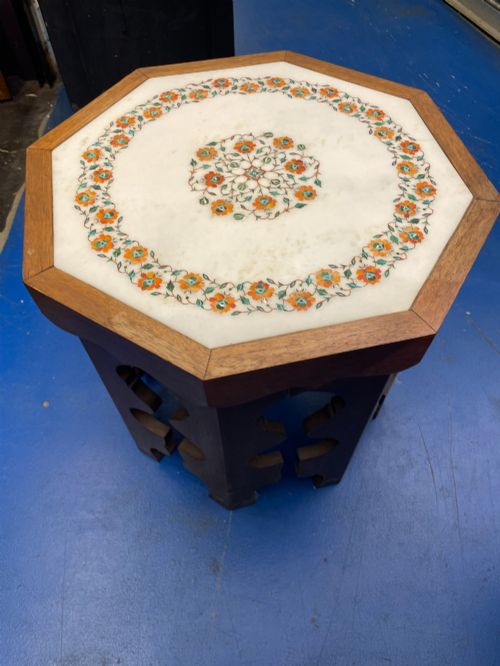
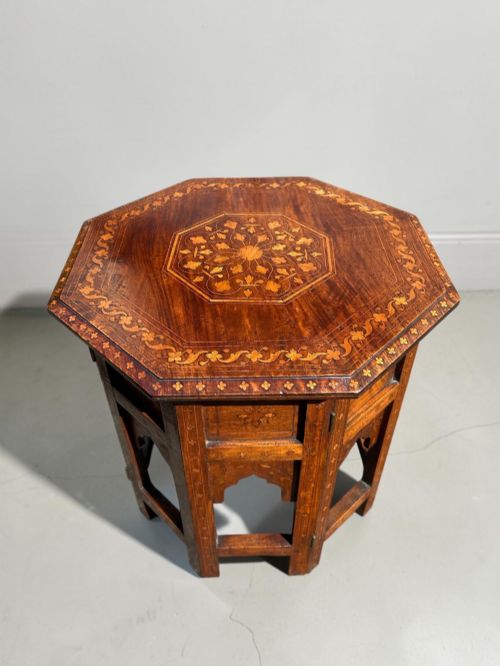
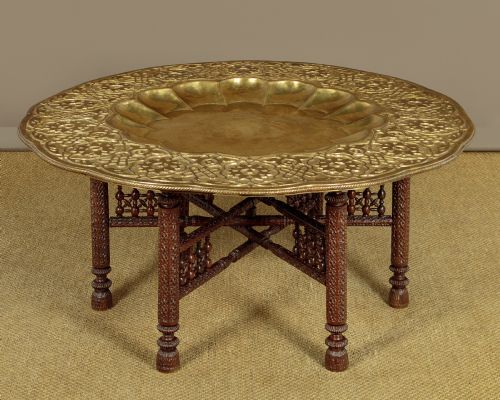
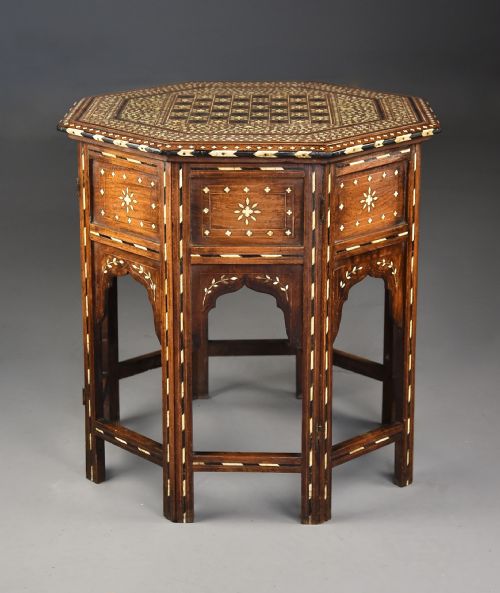
The octagonal folding table is the version most frequently met on this page, often accompanied by square and circular occasional designs. Many pieces function as tea tables, coffee tables, or tray top tables supported by folding or pedestal bases.
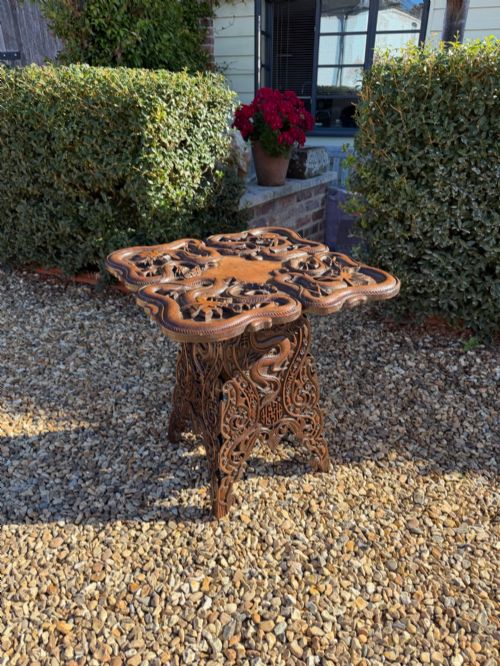
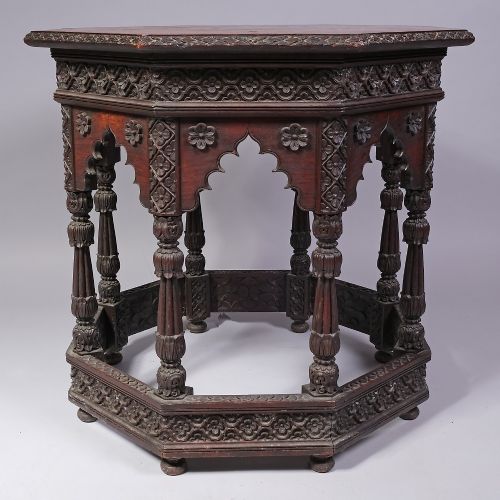
Makers utilised dense hardwoods to construct surfaces intended for portability and display, creating forms that travelled across the British Empire. Survivors range from simple campaign tables to heavily carved decorative items incorporating animal figures and floral motifs.
Materials and Technique
Artisans constructed these surfaces using dense tropical timbers such as teak, padauk, rosewood, and walnut. These woods provided a stable substrate capable of withstanding deep carving and intricate piercing without losing structural integrity.
Decoration relied heavily on intricate hand carving, relief work, and pierce work fretwork. Workshops incorporated contrasting materials into the timber surfaces, inserting brass, copper, bone, and mother of pearl to create geometric and floral patterns.
Antique Indian Tea Table Retail Price Guide 2026
Typical asking prices for indian tea table among the pieces listed under this phrase on Sellingantiques today, from the lower quarter to the upper quarter. They describe what is for sale here now, not the wider market.
Listings feature teak, rosewood, and padauk alongside brass, copper, and bone inlay across periods spanning the Victorian era and the early twentieth century.
Standards of Craftsmanship
The distinction between standard items and superior examples lies in the depth and precision of the hand carving. Finer pieces display crisp, sharply defined fretwork and secure inlay work where bone or metal sits flush with the surrounding timber.
Structural stability also separates the range, as folding mechanisms and pedestal joints require precise carpentry to remain rigid over time. Superior tables utilise well-seasoned hardwoods that resist warping, maintaining alignment in the top and base joints.
The Antique Indian Tea Table Glossary
- Anglo-Indian
- A style describing furniture made in India by local craftsmen for British residents, blending traditional Indian motifs with European forms. These pieces often incorporate elaborate carving and folding bases.
- Hoshiarpur
- A region in Punjab known for producing intricate woodwork, particularly octagonal tables and tray tops. Craftsmen from this area specialised in dense chip carving and delicate inlay.
- Teak
- A durable, oil-rich tropical hardwood commonly utilised in colonial furniture making. It resists moisture and provides a stable base for detailed carving.
- Padauk
- A heavy, reddish-brown timber utilised in high-grade colonial furniture. It holds fine detail well under the carver's chisel.
- Campaign furniture
- Portable items designed to fold or dismantle for easy transport by military officers and travellers. Many low tables served this practical function.
Antique Indian Tea Table: Frequently Asked Questions
How were these tables used originally?
These low surfaces served for serving tea, displaying ornaments, and general domestic use within colonial homes. Many folding versions were designed to be packed away when not in use.
In British households abroad and at home, they functioned as versatile occasional tables for sitting rooms and verandahs.
How do I identify Hoshiarpur work?
Hoshiarpur pieces are identified by dense, all-over chip carving and intricate inlay work using materials like brass or bone. The patterns often feature floral motifs, foliage, and geometric panels covering every visible surface.
The woodwork typically utilises seasoned teak or shisham timber to achieve sharp, precise relief.
Are the tops removable?
Many examples feature a separate tray top that lifts off a folding base designed like a spider web or gate. This construction allowed for easy transport and storage during the colonial period.
Fixed-top versions utilise a central pedestal or four solid legs joined by stretchers.
How should I care for inlaid wood?
Maintain inlaid surfaces by dusting with a soft, dry cloth and avoiding excessive moisture or direct sunlight. Natural oils in the timber benefit from occasional application of appropriate furniture wax.
Careful handling prevents the loss of small bone or metal inlay pieces set into the wood.