
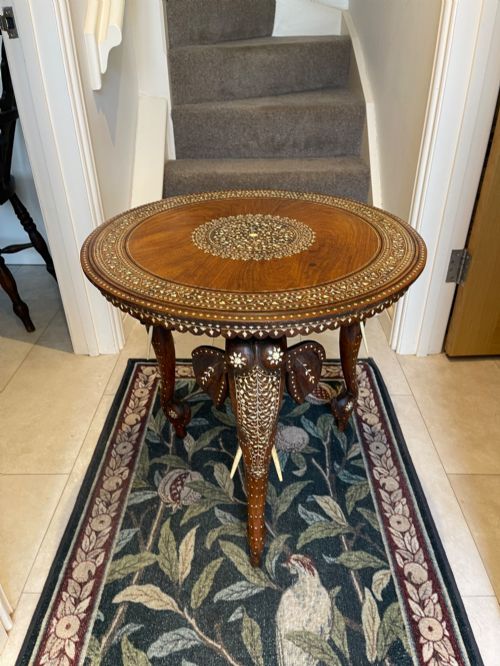


Carved Elephant Head Table
A carved elephant head table brings unmistakable Anglo-Indian character to a room, offering sturdy utility paired with intricate craftsmanship.
What these tables are
A carved elephant head table appears primarily as an occasional or side table, standing on legs formed by carved elephant heads and trunks. These pieces emerge from the Anglo-Indian style, produced across the late nineteenth and early twentieth centuries from eighteen-ninety to nineteen-twenty.
The most common formats on this page are compact tripod side tables and occasional tables. Makers constructed them from dense tropical timbers, frequently embellished with detailed surface work.
Originating largely from centres such as Hoshiarpur, these tables reflect the intersection of traditional Indian woodworking and British colonial taste. Buyers encounter variations featuring Taj Mahal motifs alongside standard figural supports.
How they were made
Artisans constructed these pieces using solid tropical hardwoods, predominantly rosewood and teak. These heavy timbers provided the structural integrity required to support the projecting carved elements and tripod bases.
Surface decoration relies heavily on intricate bone inlay and ebony inlay, creating geometric and floral patterns across the tabletops. Carvers worked by hand to shape the distinctive elephant heads and trunks that form the structural legs.
Retail Price Guide 2026
Typical UK retail prices for carved elephant head table, calculated from the Sellingantiques database of over a million retail prices indexed since 2003. This retail price guide relies exclusively on Sellingantiques data; no external sources or auction records are used, so the figures do not describe the wider market.
Every carved elephant trunk acts as a silent host, steadfastly holding your cup of tea while wearing a remarkably polite expression.
What varies in quality
Quality also shows in the intricacy of the inlay work, where dense bone and ebony patterns demonstrate superior patience and skill from the workshop. The choice of solid rosewood or teak over lesser hardwoods elevates the standing of the piece.
The Carved Elephant Head Table Glossary
- Anglo-Indian
- A design style produced during the British colonial period in India, combining local craftsmanship with European furniture forms. This aesthetic defines the hybrid character of these tables.
- Hoshiarpur
- A Punjabi city renowned for intricate woodwork and inlay techniques. Pieces attributed here often feature dense geometric patterns.
- Bone inlay
- A decorative technique where small pieces of bone are set into recesses in the wood to form patterns. This method creates striking contrast against dark rosewood and teak.
- Tripod
- A three-legged support structure common in small occasional tables. This configuration ensures stability on uneven floors.
- Occasional table
- A small, moveable table designed for light, specific uses around a room. These pieces function easily beside chairs or sofas.
Frequently Asked Questions
Where should I place an elephant head table?
These pieces suit living rooms or studies as accent side tables where the carved legs remain visible.
Keep them away from direct heat sources to protect the dense hardwoods and delicate bone inlay from drying out.
How do I clean the bone inlay?
Dust the surface regularly with a soft, dry cloth to prevent dirt settling into the intricate recesses.
Avoid using liquid cleaners or polishes that might discolour the bone or damage the surrounding wood.
Are these tables sturdy enough for daily use?
Solid rosewood and teak construction provides robust support for lamps, books, or drinks during normal daily activities.
Care should still be taken around the projecting carved trunks and tusks to prevent accidental knocks.
How do I date an antique Indian table?
Examine the timber, tool marks, and style of inlay to gauge the likely period of manufacture.
Most surviving examples date from the late nineteenth century through to the early decades of the twentieth century.