
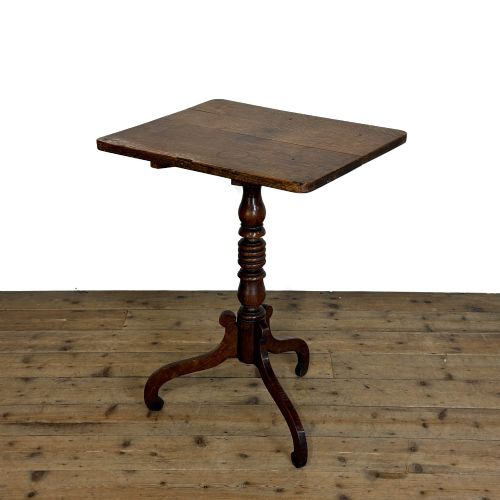
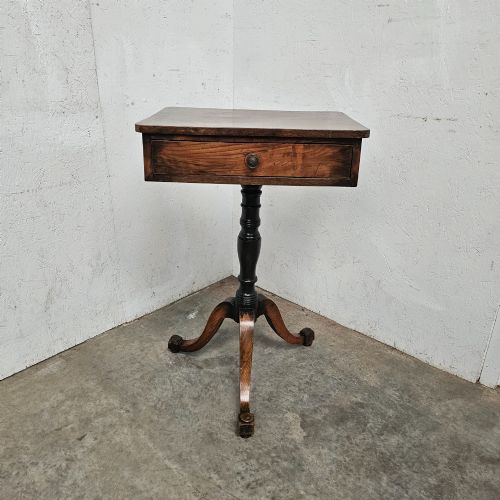
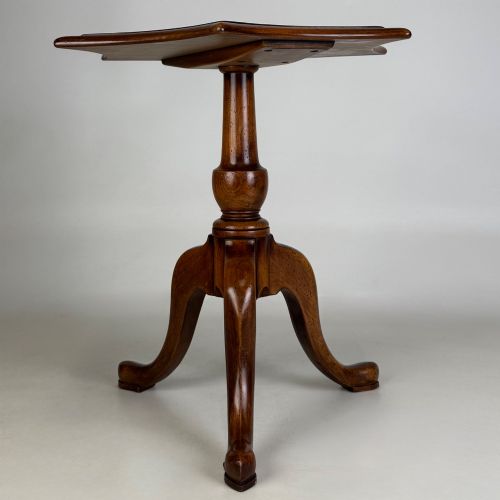
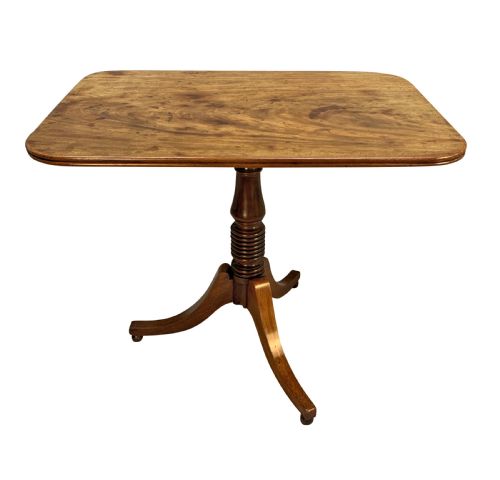
Brown Wooden Tripod Table
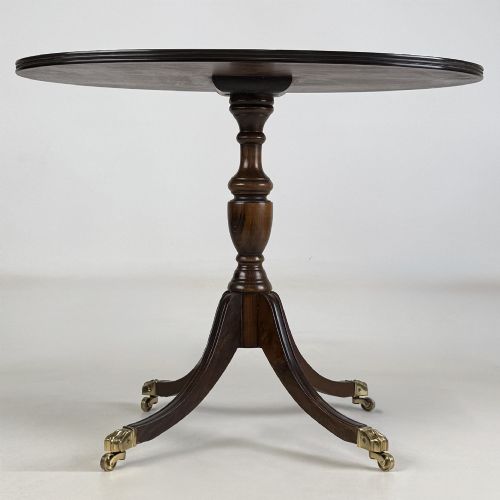
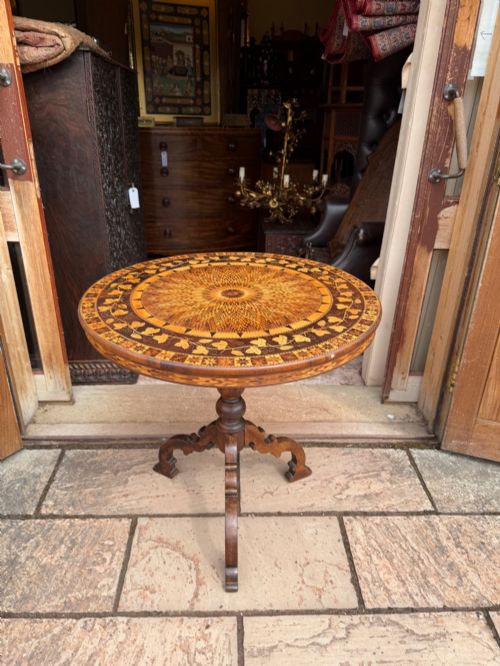
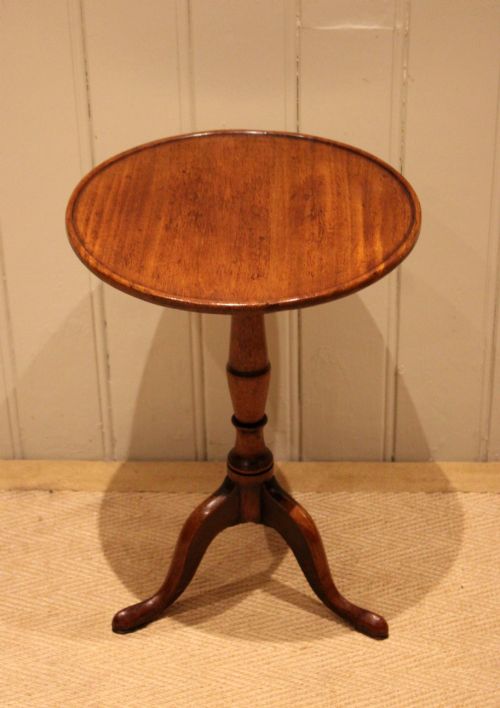
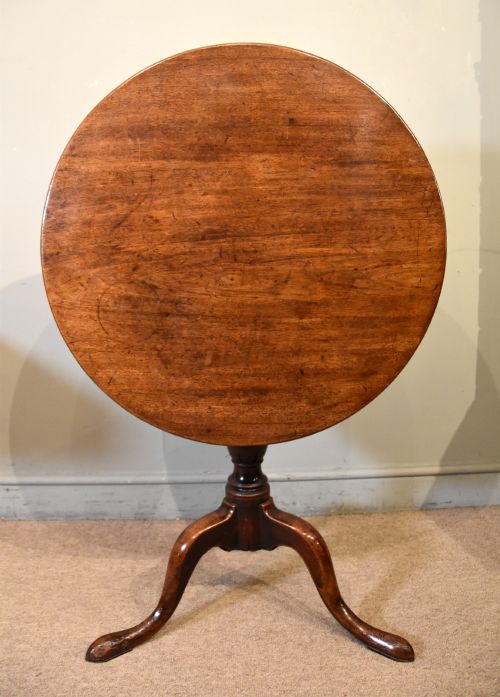
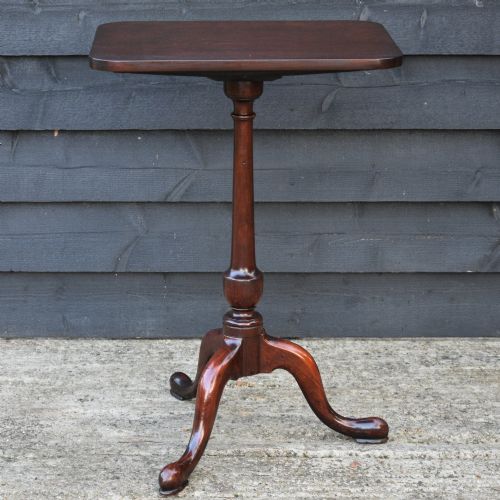
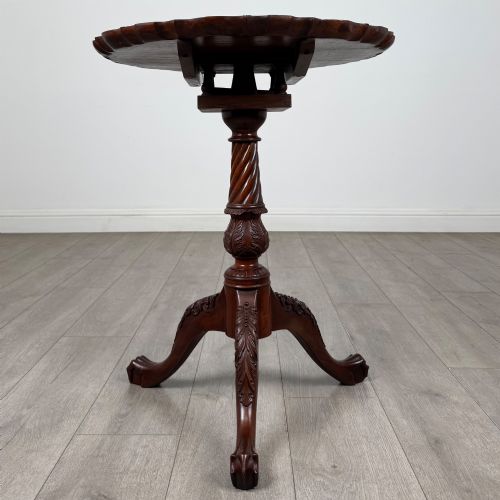
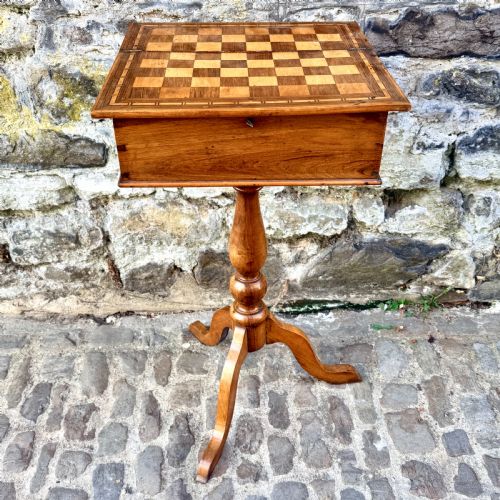
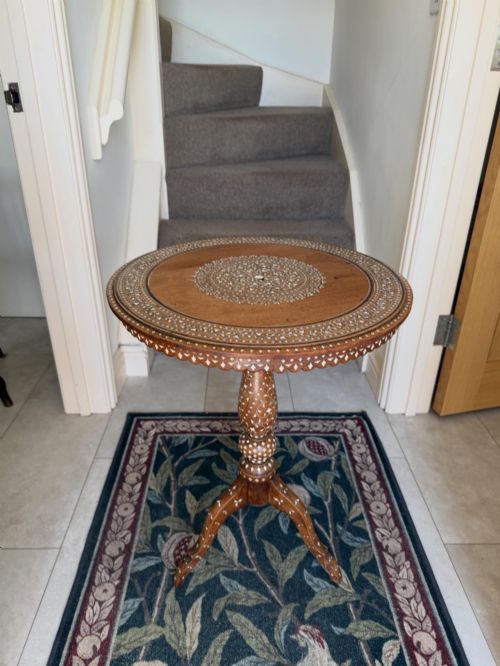
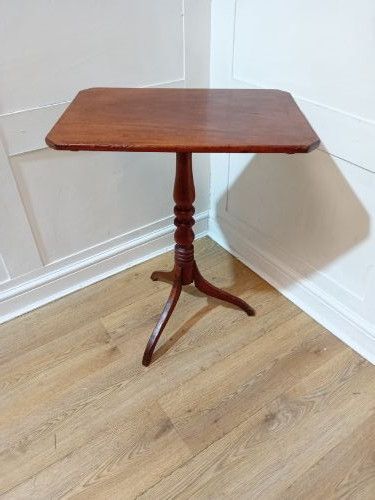
A brown wooden tripod table balances a central column on three splayed legs, offering versatile surface space with Georgian and Victorian charm.
Brown Wooden Tripod Table
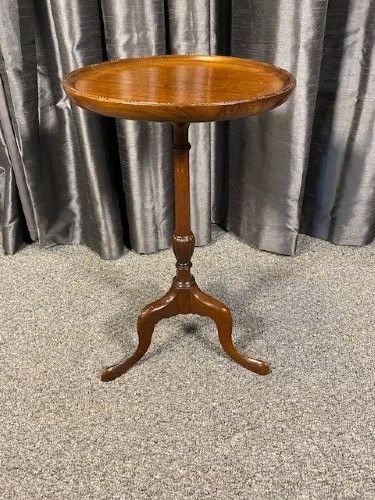
A brown wooden tripod table stands on three distinct legs connected to a central pedestal, fulfilling roles as a wine table, side table, or occasional table. These pieces emerge predominantly from the Georgian, 19th Century, and Edwardian periods, reflecting centuries of domestic utility.
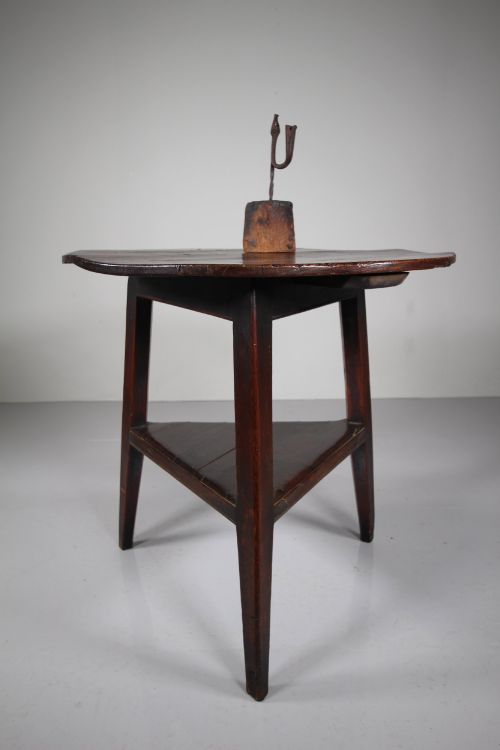
The form encompasses various functional sub-types seen in the listings, including tilt-top tables, cricket tables, and small lamp tables. Mahogany and oak dominate the selections, accompanied by walnut, fruitwood, and elm.
Buyers encounter formats ranging from formal Georgian dining pieces to vernacular rural tables and French provincial designs. Each variation provides a stable surface supported by the characteristic three-legged base.
Materials and construction methods
Cabinetmakers utilised solid timbers such as mahogany, oak, walnut, fruitwood, and elm, shaping tops and turning central pedestals on a lathe. Selected pieces incorporate inlaid wood details or brass fittings to enhance the surface appearance.
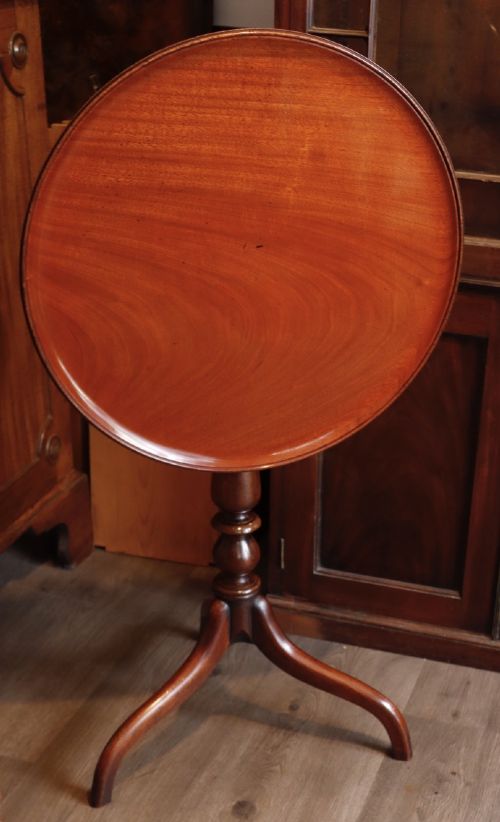
Many examples employ a tilt-top action or birdcage mechanism, allowing the table top to pivot and fold flat for storage against a wall when not in use. Joinery techniques connect the three splayed legs firmly to the central column to ensure stability.
Brown Wooden Tripod Table Retail Price Guide 2026
Typical asking prices for brown wooden tripod table among the pieces listed under this phrase on Sellingantiques today, from the lower quarter to the upper quarter. They describe what is for sale here now, not the wider market.
Several tables come equipped with birdcage mechanisms that let the top spin like a lazy Susan before tipping over.
Distinctions in quality
Quality rests in the harmony of proportions between the top, the turned column, and the splayed legs, alongside the crispness of any carved details. Superior examples display carefully chosen timber grain, such as burr oak or figured mahogany, rather than plain boards.
The integrity of the mechanism dictates the standard of tilt-top and birdcage designs, where smooth movement without looseness marks superior craftsmanship. Robust joinery at the leg junctions ensures the piece remains balanced and rigid during daily use.
The Brown Wooden Tripod Table Glossary
- Tripod base
- A table support comprising three legs radiating from a central pillar. This configuration provides reliable balance on uneven floors.
- Tilt-top
- A hinged table top that rotates to a vertical position. It allows the furniture to occupy minimal space when stored.
- Birdcage
- A timber framework beneath a table top that enables it to both tilt and rotate. This mechanism appears on finer pedestal tables.
- Cricket table
- A small three-legged wooden table originating from the 18th century, traditionally featuring a round top and pegged construction.
- Pedestal table
- Any table supported by a single central column rather than four corner legs. It provides unobstructed legroom underneath.
Brown Wooden Tripod Table: Frequently Asked Questions
How were cricket tables used?
Cricket tables served as versatile, sturdy pieces of everyday furniture in 18th and 19th century homes. Their three-legged design prevented rocking on uneven flagstone or wooden floors.
People placed them beside hearths or chairs to hold candles, drinks, or small spinning supplies. The simple construction relied on three pegged legs fitted directly into a thick wooden top.
Where should I place a wine table?
A wine table fits easily beside an armchair, sofa, or in an empty corner where a larger piece of furniture would crowd the room. Its compact surface holds a book, a cup, or a small lamp without dominating the floor space.
The slender pedestal and three splayed legs give the table a light visual footprint, making it adaptable to both traditional and contemporary interiors.
How do I identify a Georgian table?
Georgian tables generally exhibit dense, rich timbers like mahogany or oak, often paired with understated classical proportions and precise turning. Details such as pad feet, subtle cockbeading, or simple tripod bases characterise pieces from this era.
Examining the underside reveals hand-cut fixings, timber shrinkage, and tool marks consistent with 18th century workshop practices. Construction methods without modern metal screws point towards these earlier dates.