
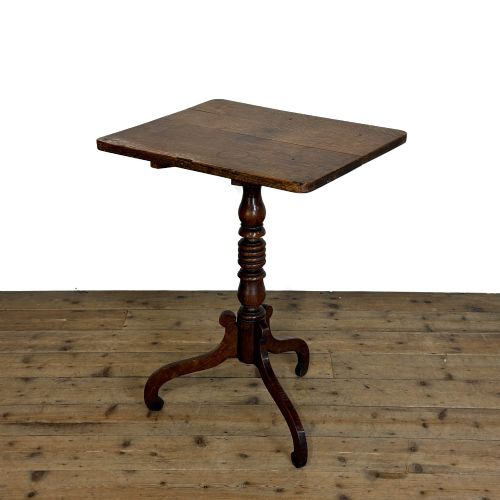
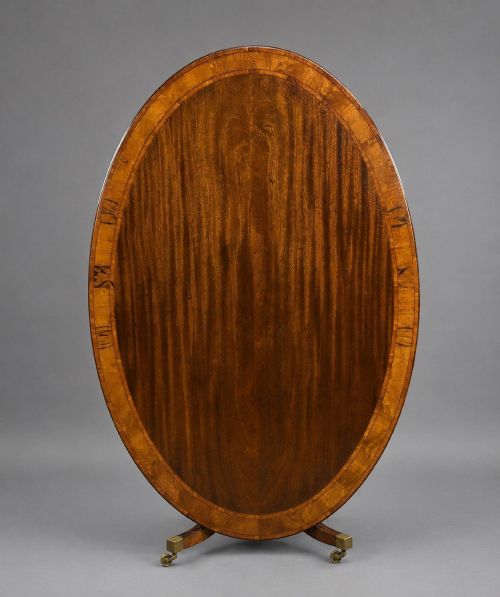
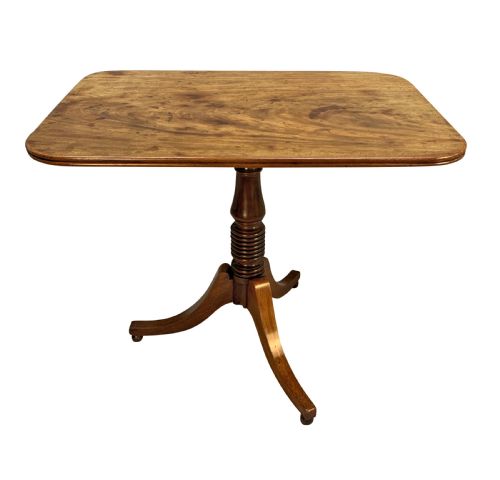
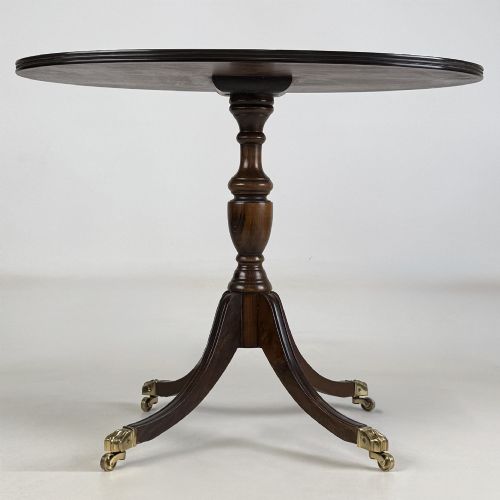
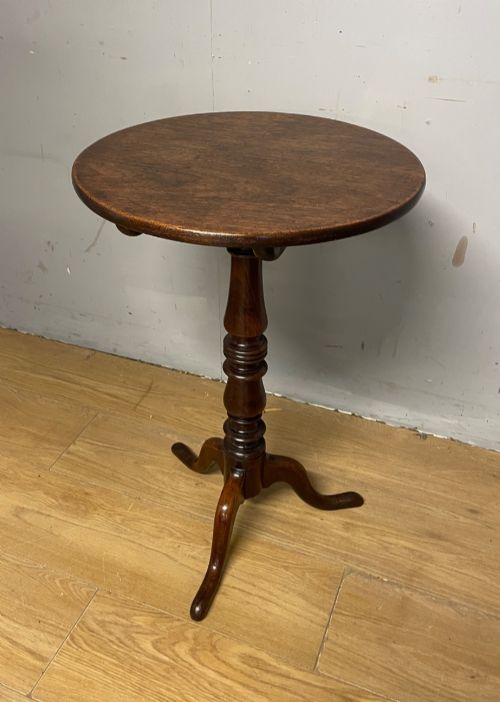
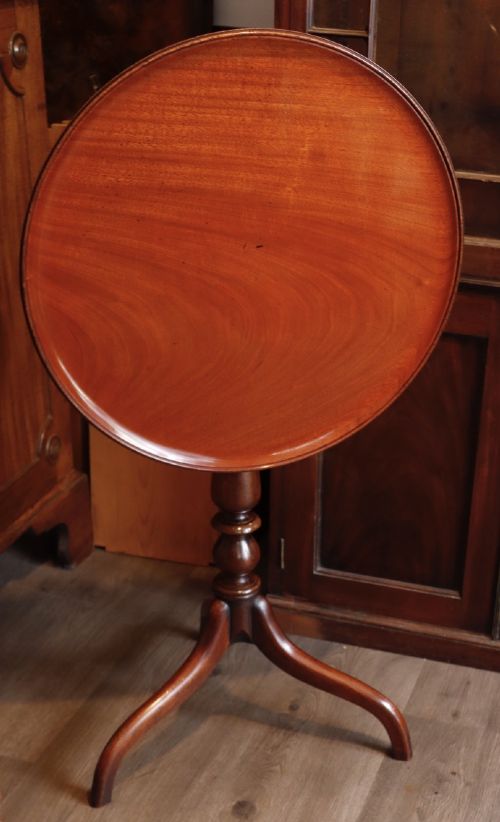
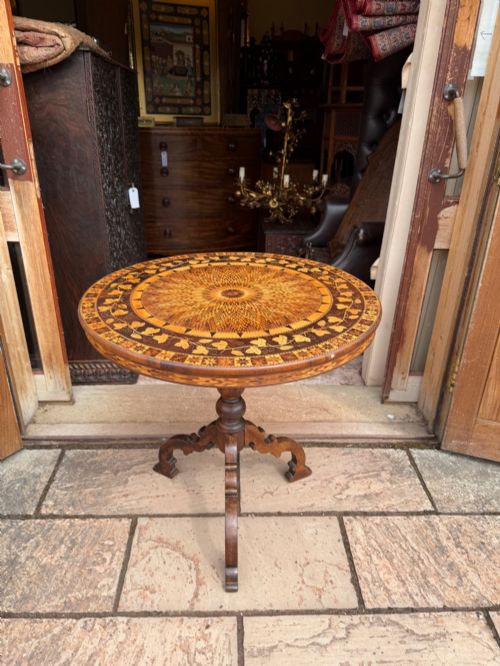
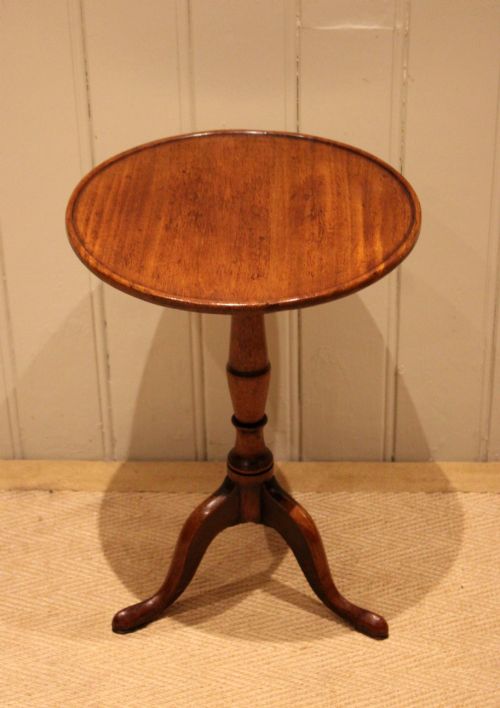
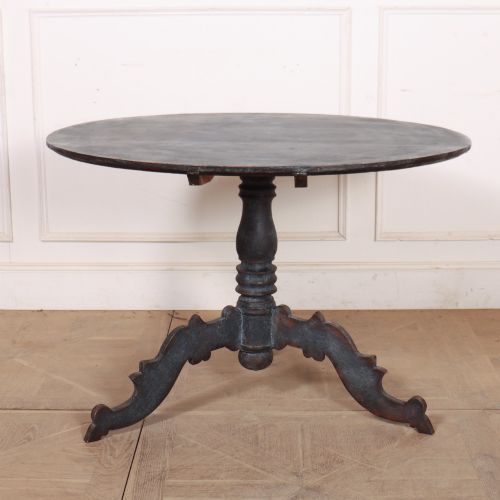
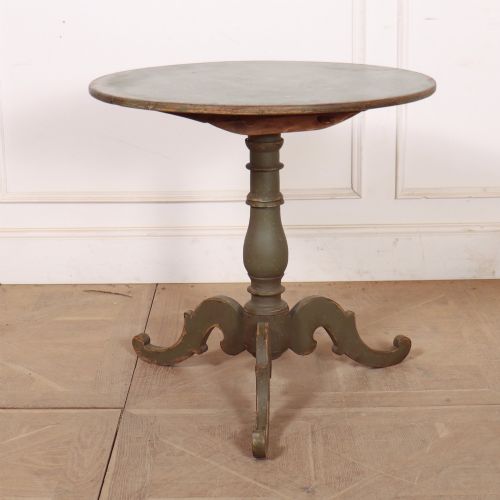
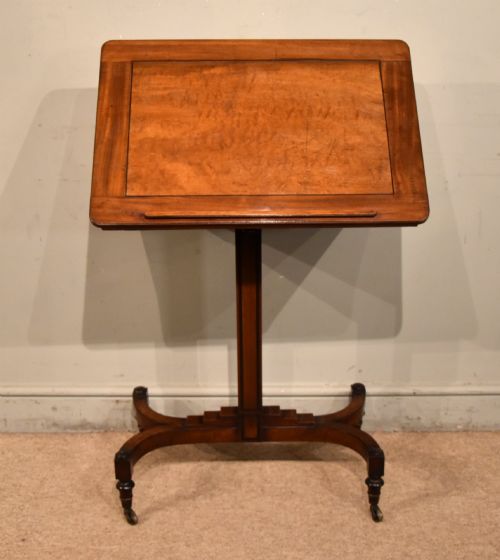
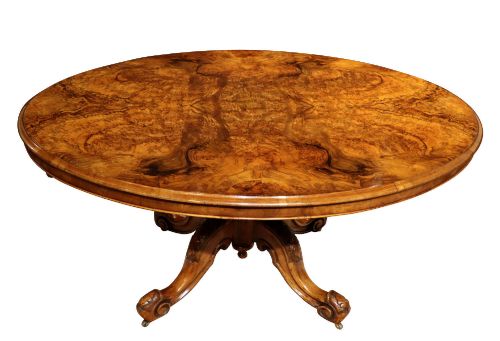
Wooden Tilt Top Table
A wooden tilt top table solves the problem of space by tipping flat against the wall when the meal or evening ends.
Wooden Tilt Top Table
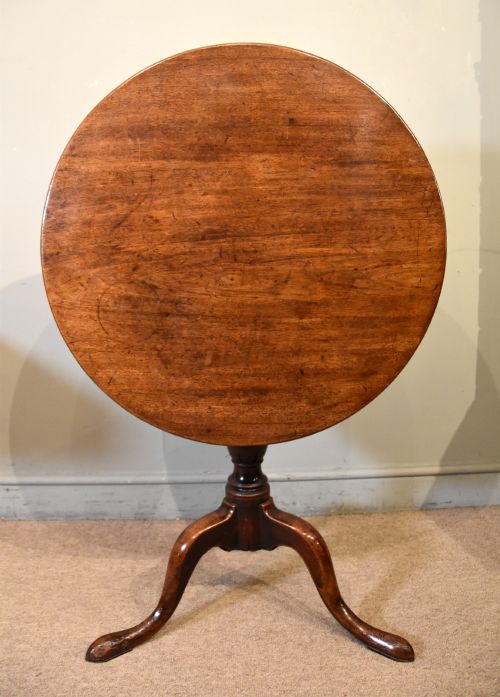
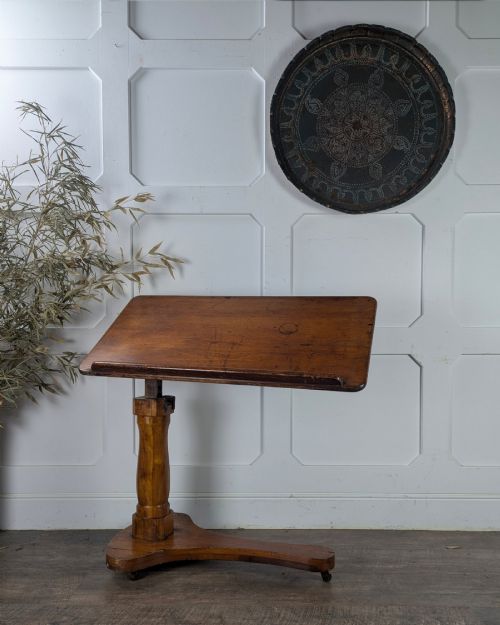
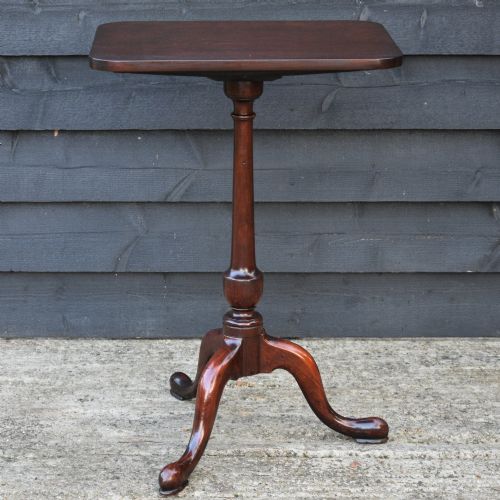
When you search for a wooden tilt top table, you encounter portable surfaces designed to pivot vertically on a pillar and tripod base. The listings here span the 18th century through the Edwardian era, taking the form of wine tables, breakfast tables, and occasional side tables.
Georgian examples appear frequently in mahogany and burr oak, often featuring circular or rectangular tops supported by three-legged pedestals. Later Victorian and Edwardian iterations bring in walnut, burr walnut, and occasional mechanisms such as birdcage catches.
Regional variations also emerge across the periods, from Scottish lamp tables and French vendange tables to Swedish painted supper tables and English tripod pieces. Smaller wine tables and larger breakfast tables form the core of what you will handle here.
Judging quality and execution
The sophistication of the timber figure defines the upper tier, particularly in burr walnut, pollard oak, and figured mahogany tops. Choice of wood grain across a single solid or veneered board marks the difference between standard production and exceptional workshop output.
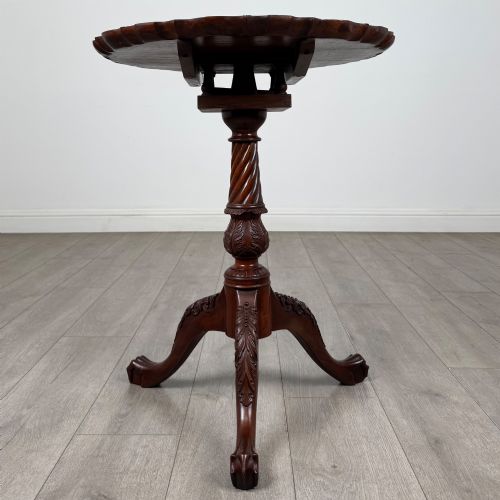
Stability in the tilting mechanism and the precision of the catch dictate how well the piece functions in daily use. Refined carving on the tripod knees, balanced proportions in the pillar, and original brass hardware elevate the standing of any example.
A treen candlestand carved precisely in the likeness of a miniature tripod table sits among the full-sized dining and wine tables.
The Wooden Tilt Top Table Glossary
- Tilt-top
- A tabletop hinged to a central pillar so it can pivot to a vertical position when not in use. This clever design allowed large tables to stand against walls to save floor space.
- Tripod base
- A pedestal support terminating in three legs. These are typically arched and carved, offering a stable footing on uneven floors.
- Birdcage
- A wooden framework beneath the tabletop that enables it to revolve as well as tilt. It consists of four small columns sandwiched between two plates.
- Crossbanding
- A border of veneer laid around the edge of a tabletop with the grain running perpendicular to the main centre panel. This provides a neat framing effect.
- Quadrapod
- A pedestal base supported by four legs rather than three, commonly found on larger breakfast and dining tables from the 19th century.
Wooden Tilt Top Table: Frequently Asked Questions
Why did they make tilt top tables?
These tables were built to be moved and stored easily in rooms that served multiple daily functions. Tipping the top vertical allowed households to reclaim floor space between meals or gatherings.
Over time, they evolved from purely utilitarian furniture into decorative occasional pieces placed beside seating or used for serving wine.
Where should I place one?
A smaller wine table or lamp table fits neatly beside a sofa, armchair, or in an empty hallway corner. Larger breakfast tables function well as centre tables in living spaces or libraries.
When floor space is tight during the day, you can tip the top flat and slide the table against a wall.
How do I date a table?
Look to the timber species, leg profiles, and construction methods to establish the period. Georgian examples often feature slender tripod legs with pad or snake feet, while Victorian pieces show heavier carved quadrapod bases and burr veneers.
Tool marks on the underside and the presence of hand-cut screws or peg joinery also offer clear clues to the decade of manufacture.