

Mahogany Piecrust Tea Table
A mahogany piecrust tea table is a tripod tea table with a raised, carved rim, offering stability and refined timber work for social rooms.
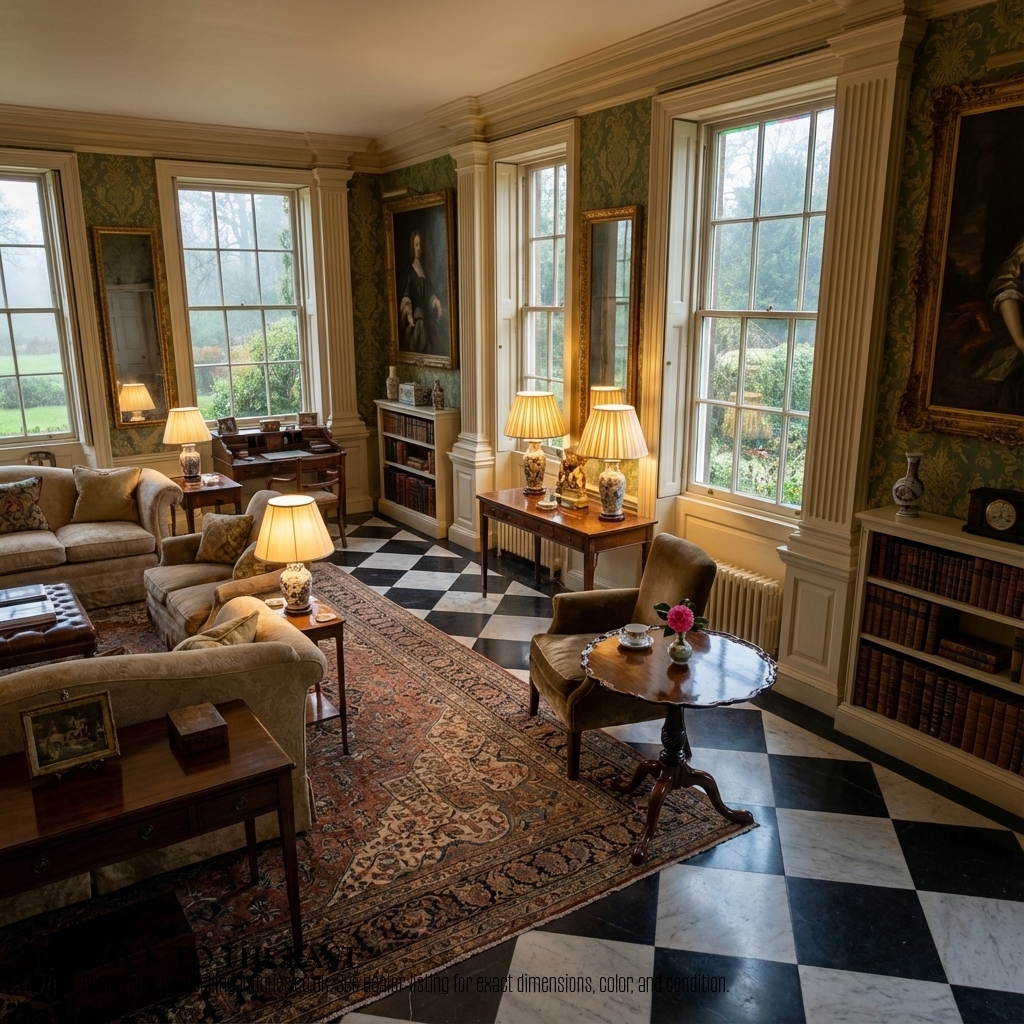
Mahogany Piecrust Tea Table
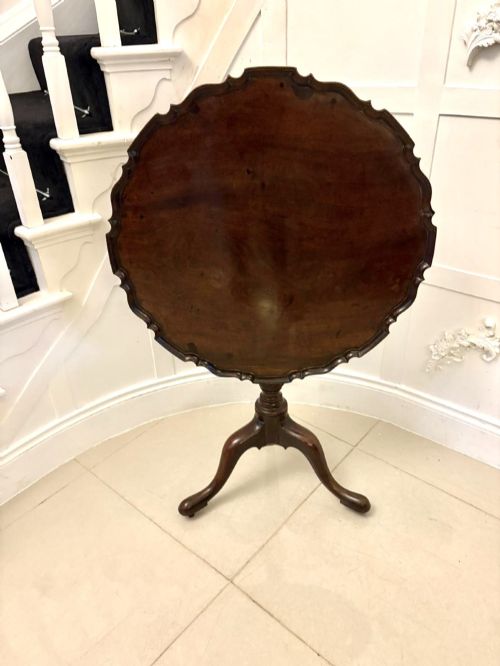
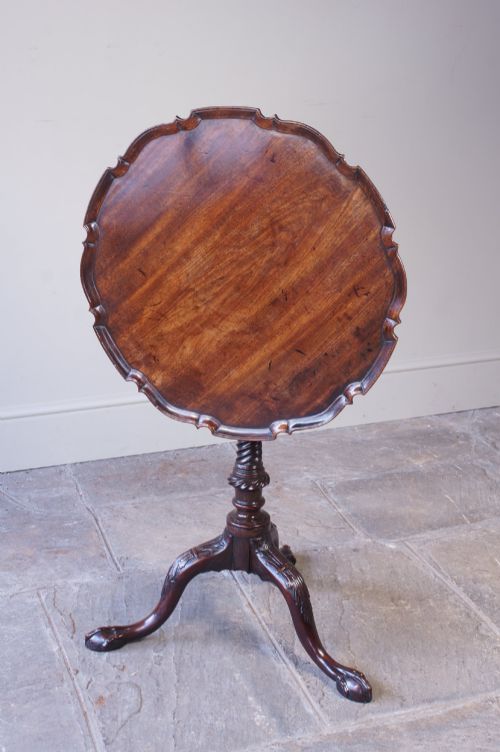
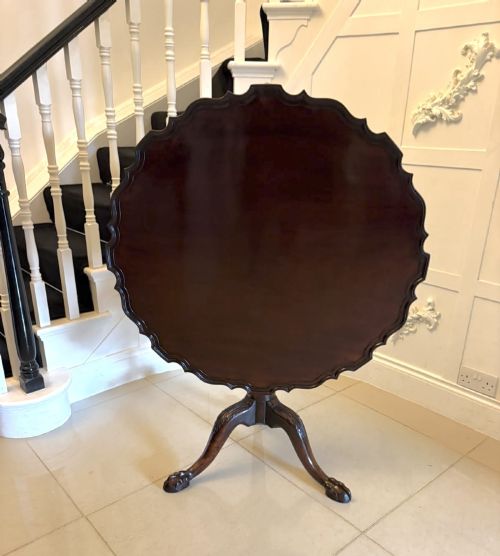
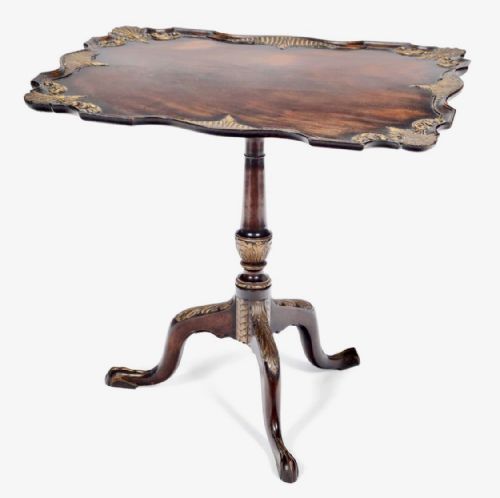
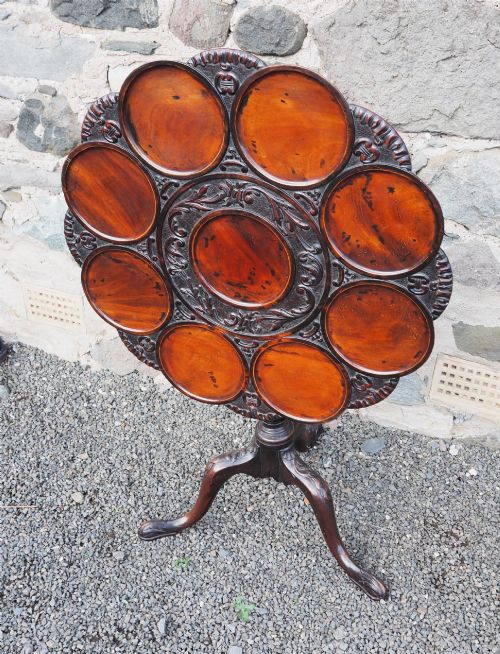
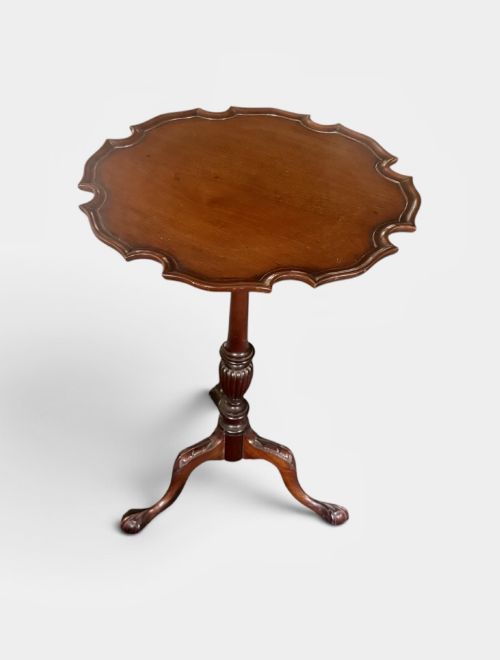
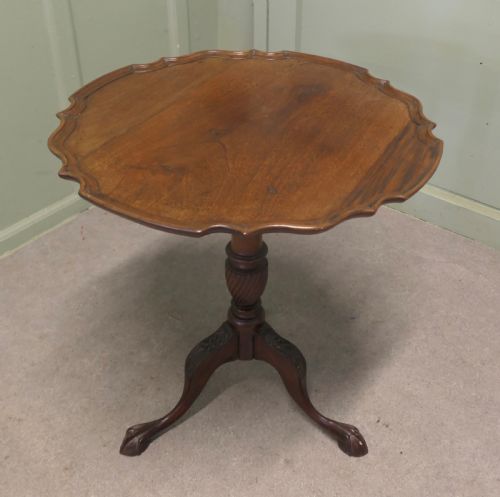
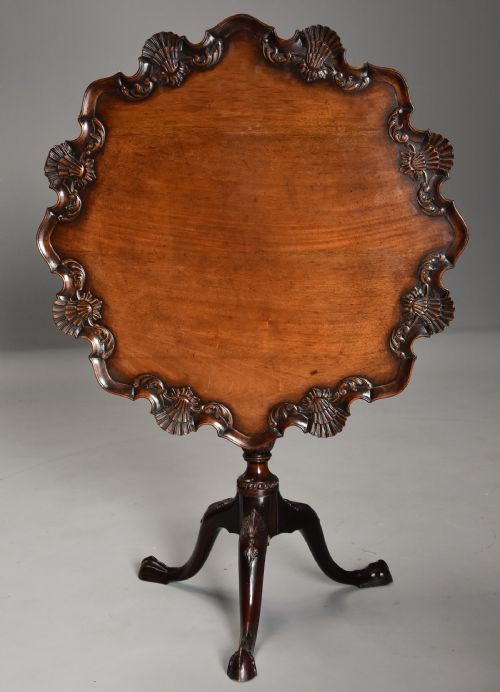
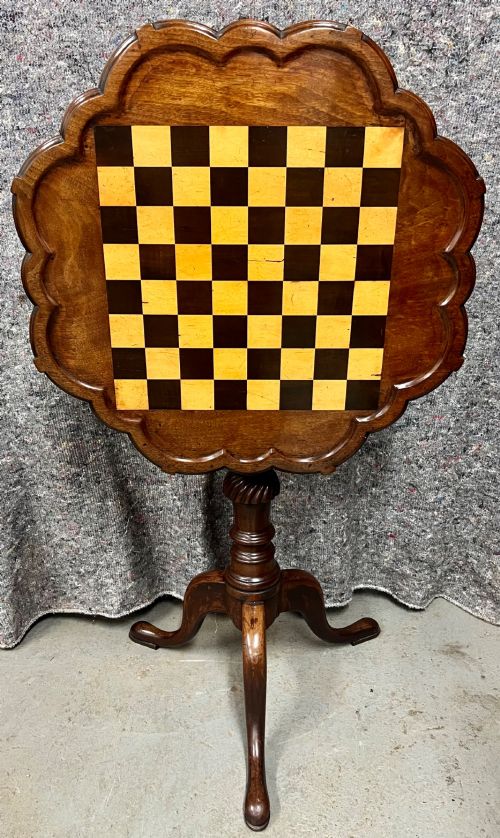
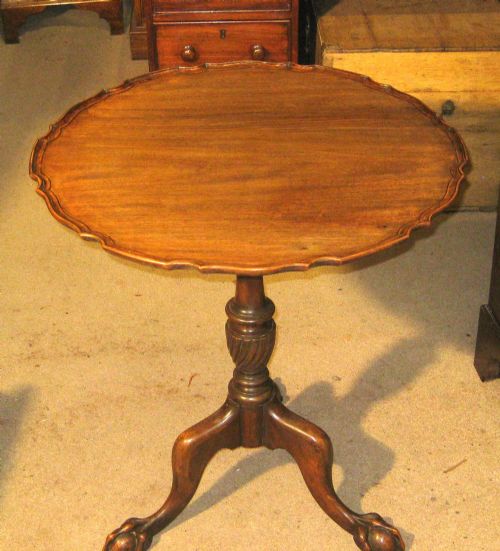
A mahogany piecrust tea table stands on a single pillar supported by three legs, topped with a circular surface featuring a raised, shaped edge reminiscent of pastry work. These surfaces often lift or tilt via a mechanism, allowing the table to rest flat against a wall when not in use during tea service. The form appears most frequently in eighteenth-century George III iterations and later Chippendale revival pieces from the nineteenth and twentieth centuries.
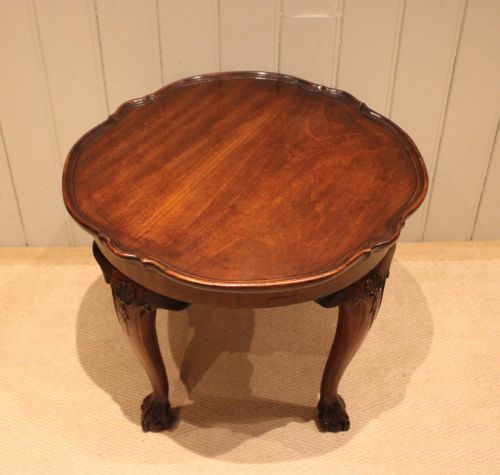
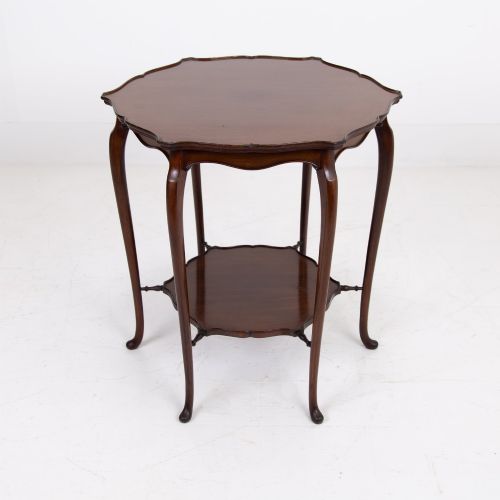
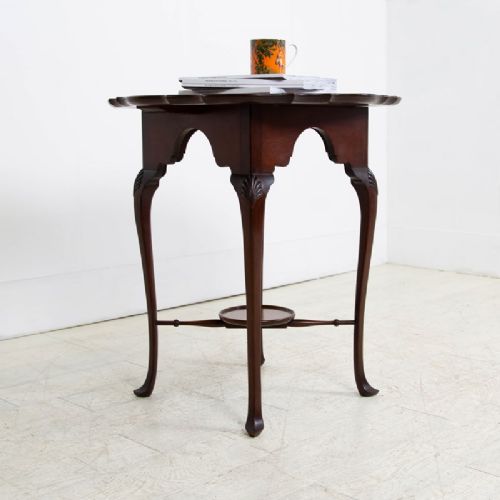
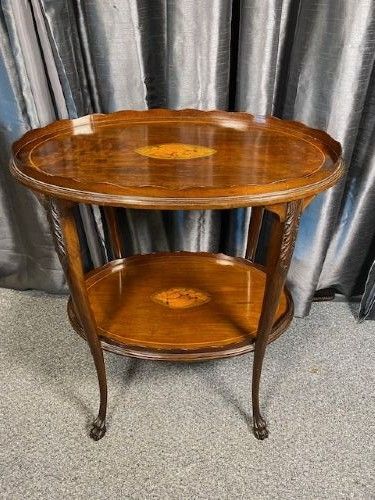
Buyers encounter examples spanning the Georgian era through Edwardian revivals, alongside occasional twentieth-century adaptations functioning as coffee or lamp tables. The construction typically integrates a birdcage mechanism beneath the top, permitting the surface to rotate as well as tilt. Proportions range from small wine tables to larger centre tables suitable for display or occasional entertaining.
How They Were Made
Cabinet makers utilised dense, durable mahogany for the tops, pillars, and legs, often selecting timber with rich grain patterns. The characteristic raised rim required carving the undulating piecrust shape directly from the solid edge of the tabletop timber rather than attaching a separate moulding, demanding considerable precision from the maker.
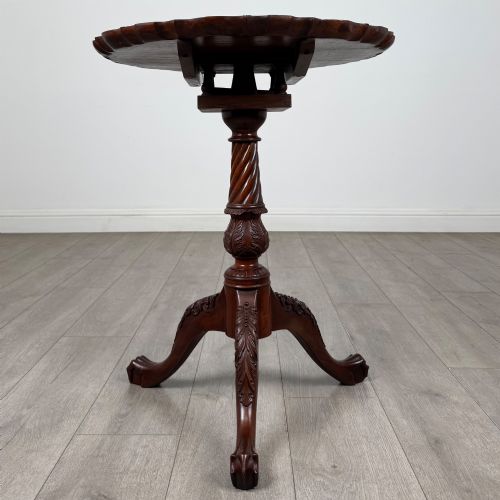
Support structures frequently employed a birdcage mechanism constructed of small wooden box frames and turning pieces, allowing the table top to pivot. The central pillar connected firmly to three outward-curving cabriole legs, occasionally finished with ball and claw feet or simple pads, joined neatly beneath the shaft.
Mahogany Piecrust Tea Table Retail Price Guide 2026
Typical asking prices for mahogany piecrust tea table among the pieces listed under this phrase on Sellingantiques today, from the lower quarter to the upper quarter. They describe what is for sale here now, not the wider market.
Some tilt-top tables include hidden birdcage rotations that occasionally spin unexpectedly if the release catch is nudged during afternoon tea.
What Varies in Quality
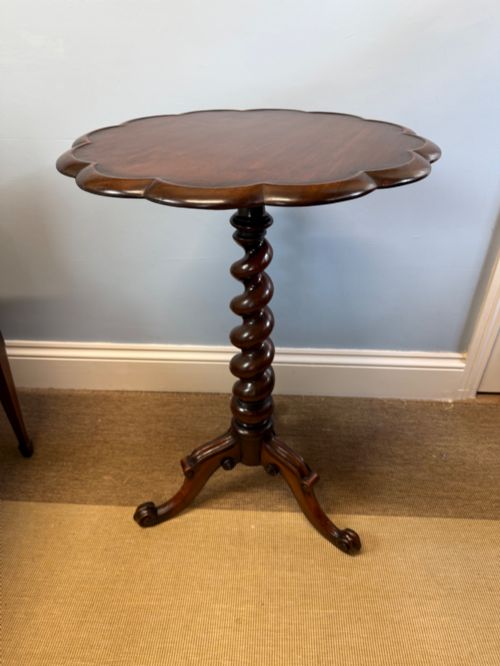
The crispness of the carved rim dictates much of the visual success, distinguishing finely shaped edges from softer, more generalized profiles. Timber selection and surface patination further separate examples, with rich, undisturbed finishes showing greater depth than later or heavily stripped surfaces.
Mechanical execution within the birdcage and tilt mechanism indicates the level of original workshop care. Tight joints, smooth pivoting action, and solid pillar construction without excessive wobble reflect superior historical joinery.
Shapland and Petter·S and H Jewell
The Mahogany Piecrust Tea Table Glossary
- Piecrust rim
- A tabletop edge carved with raised, undulating curves resembling pastry work. This decorative moulding required solid timber left thick enough at the perimeter to shape by hand.
- Tilt top
- A pivoting tabletop design mounted on a hinge mechanism. It enables the surface to lock horizontally for use or tilt vertically for compact storage.
- Birdcage
- A timber framework fitted beneath the tabletop involving two parallel discs and small spindles. This assembly allows the surface to both rotate and tilt independently of the central pillar.
- Tripod table
- A freestanding small table supported by a single central pillar resting on three legs. The three-legged arrangement maintains steady contact on uneven floorboards.
- Cabriole leg
- A furniture leg featuring a double curve, bending outward at the knee and tapering inward toward the foot. It draws inspiration from animal limbs and frequently terminates in a claw or pad.
Mahogany Piecrust Tea Table: Frequently Asked Questions
What is a piecrust table?
A piecrust table is a small occasional table featuring a circular top with a raised, carved edge shaped like pastry crust. These tables were designed primarily for serving tea.
The raised rim helped prevent cups and saucers from sliding off the surface during use in Georgian drawing rooms.
How do you use a tilt top table?
The tilting mechanism allows the circular surface to pivot ninety degrees into a vertical position. This enabled servants to tuck the furniture away against the wall when tea service ended.
In modern rooms, the mechanism still offers flexibility for positioning the table compactly in corners or beside seating.
What is a birdcage mechanism?
The birdcage is a wooden assembly fixed beneath the tabletop that combines a rotating collar with a tilting hinge. This lets the surface spin horizontally as well as tip sideways.
Craftsmen built these joints closely to ensure the table remained stable when locked in its flat working position.
How do I date a mahogany table?
Dating relies on examining the timber quality, construction methods, leg profiles, and the complexity of the carving under the top. Eighteenth-century pieces display different joinery habits compared to later revival items.
Comparing the turning style of the central pillar and the wear on the pivot pins helps confirm the period of manufacture.