

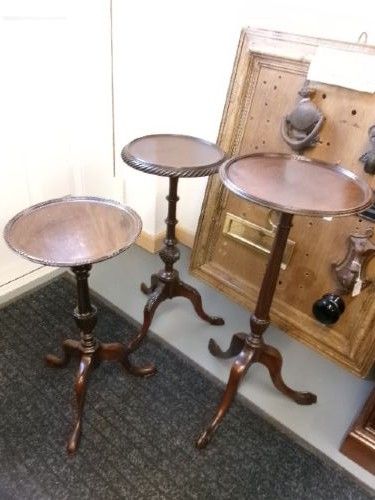
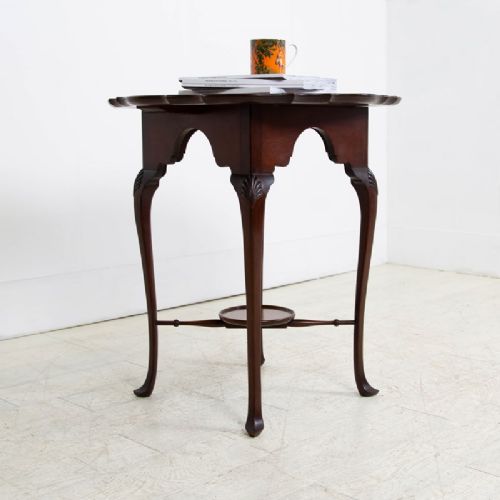

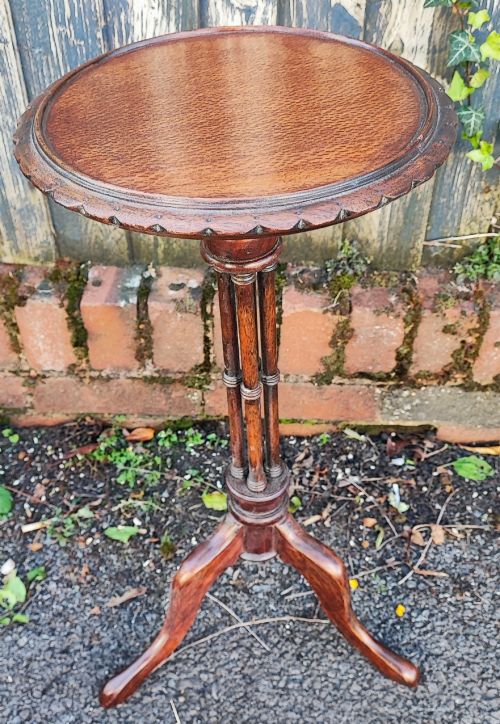
Carved Piecrust Table
A carved piecrust table combines a raised, scalloped rim with a sturdy tripod base, offering practical display space with distinctive eighteenth-century styling.
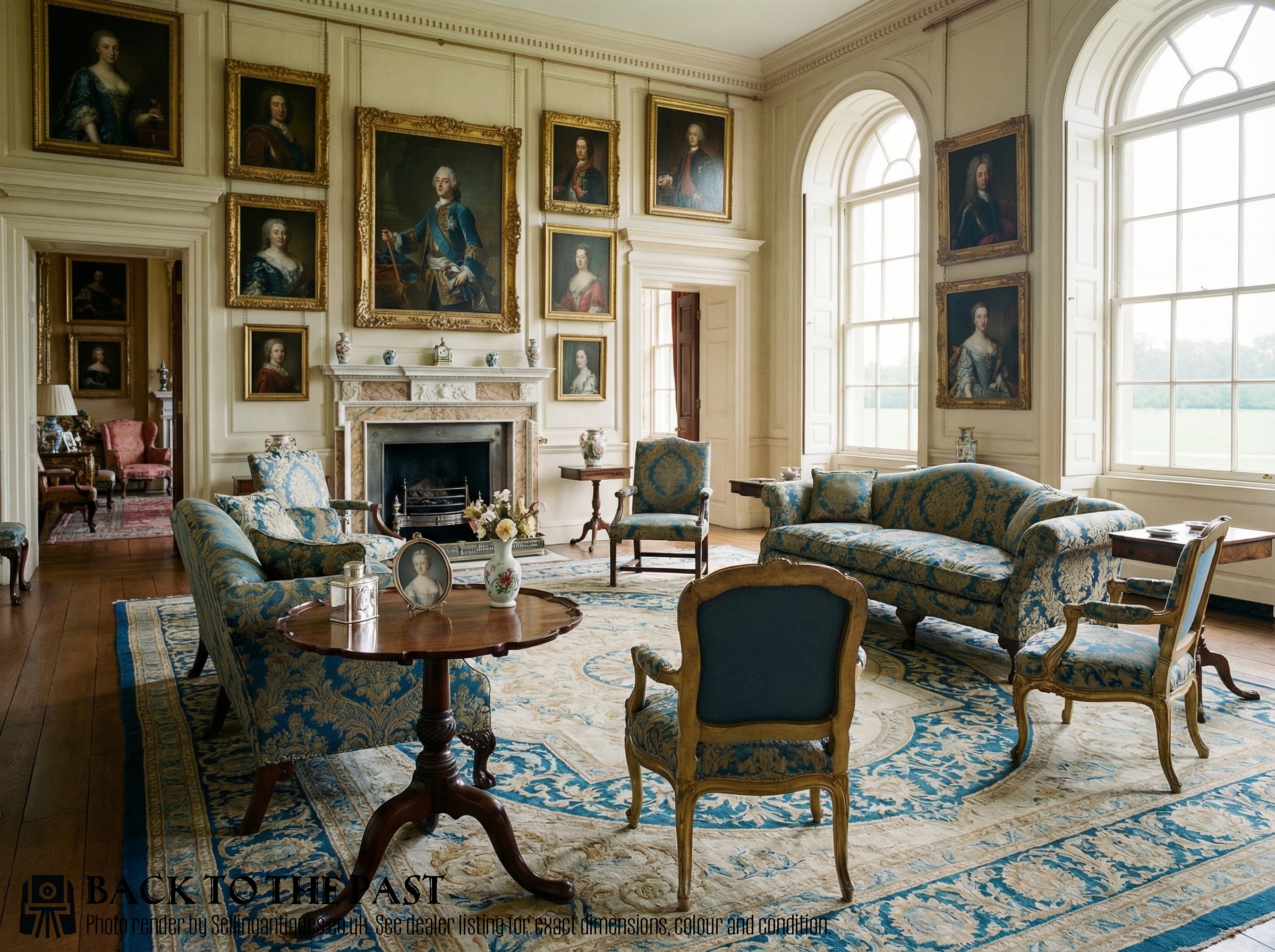
Carved Piecrust Table
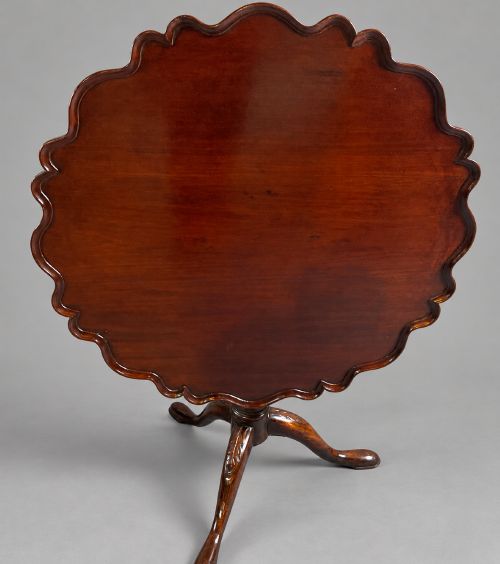
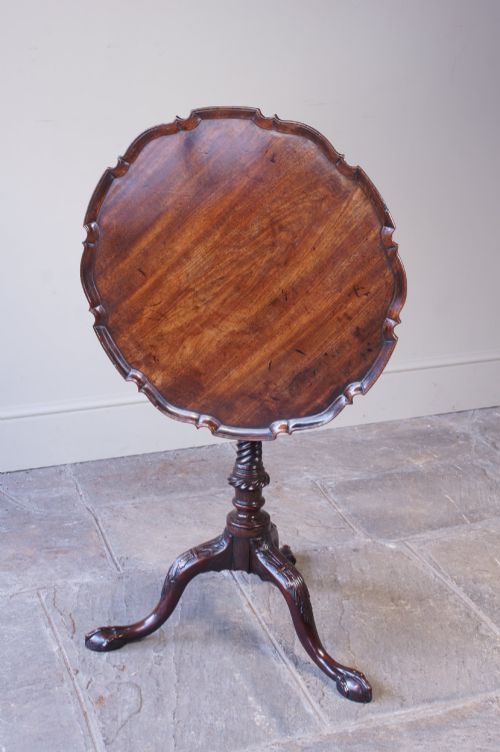
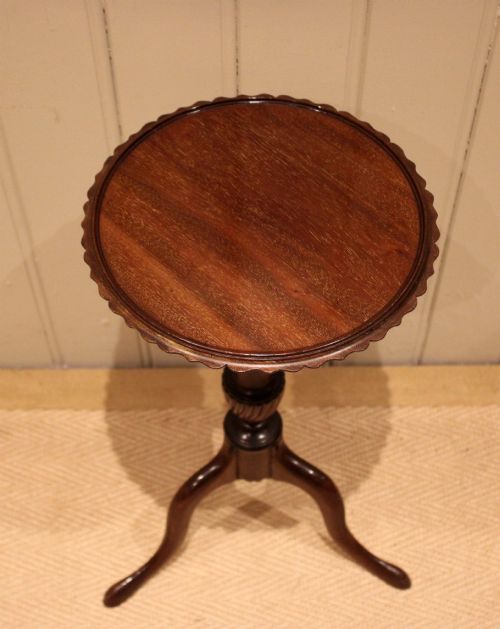
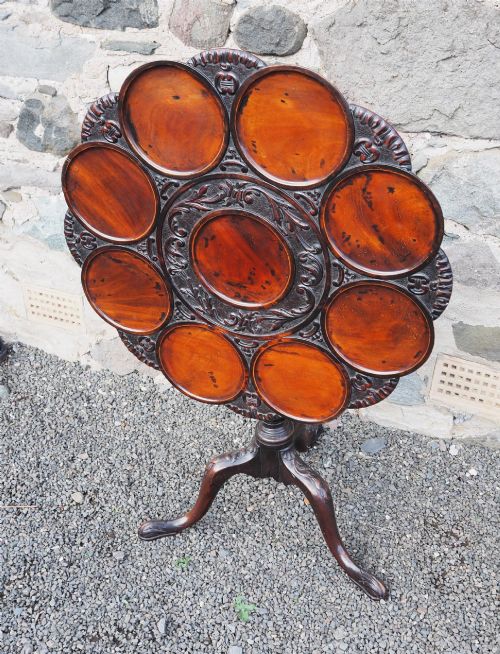
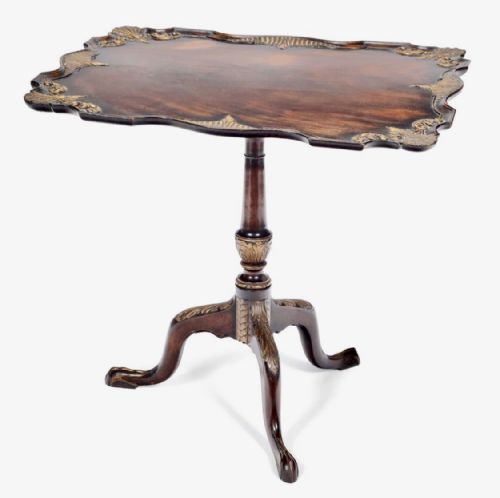
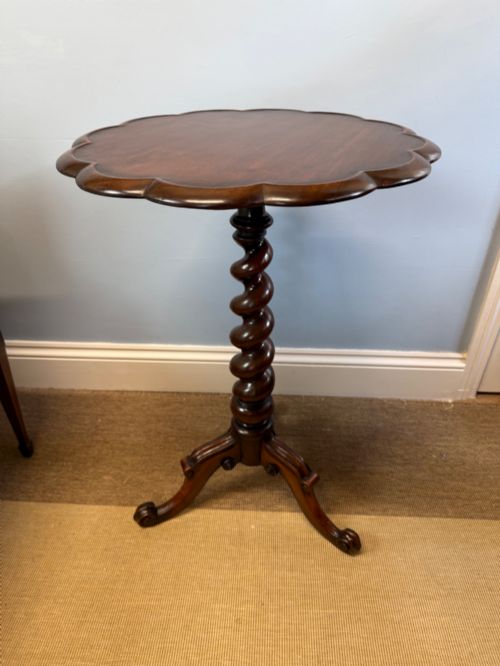
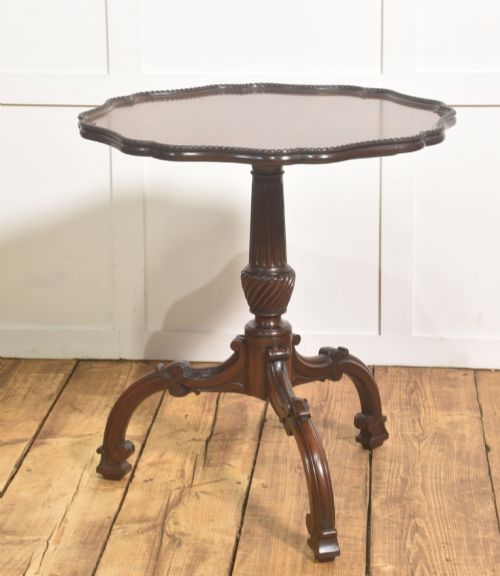
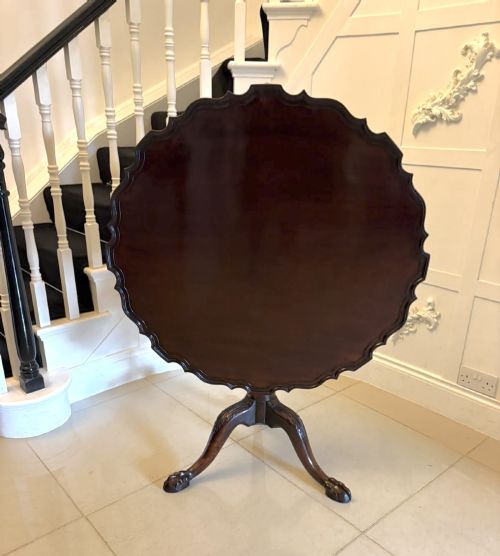
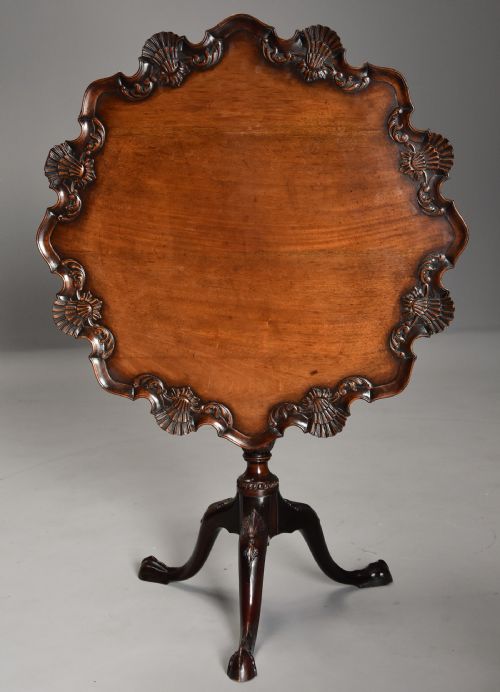
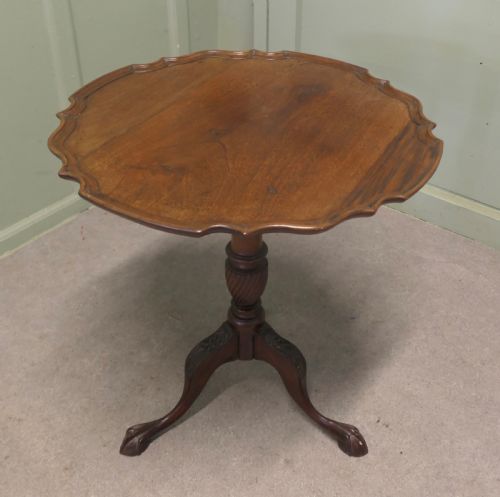
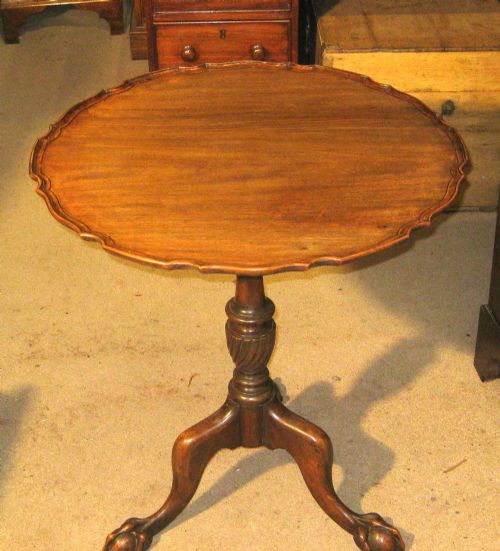
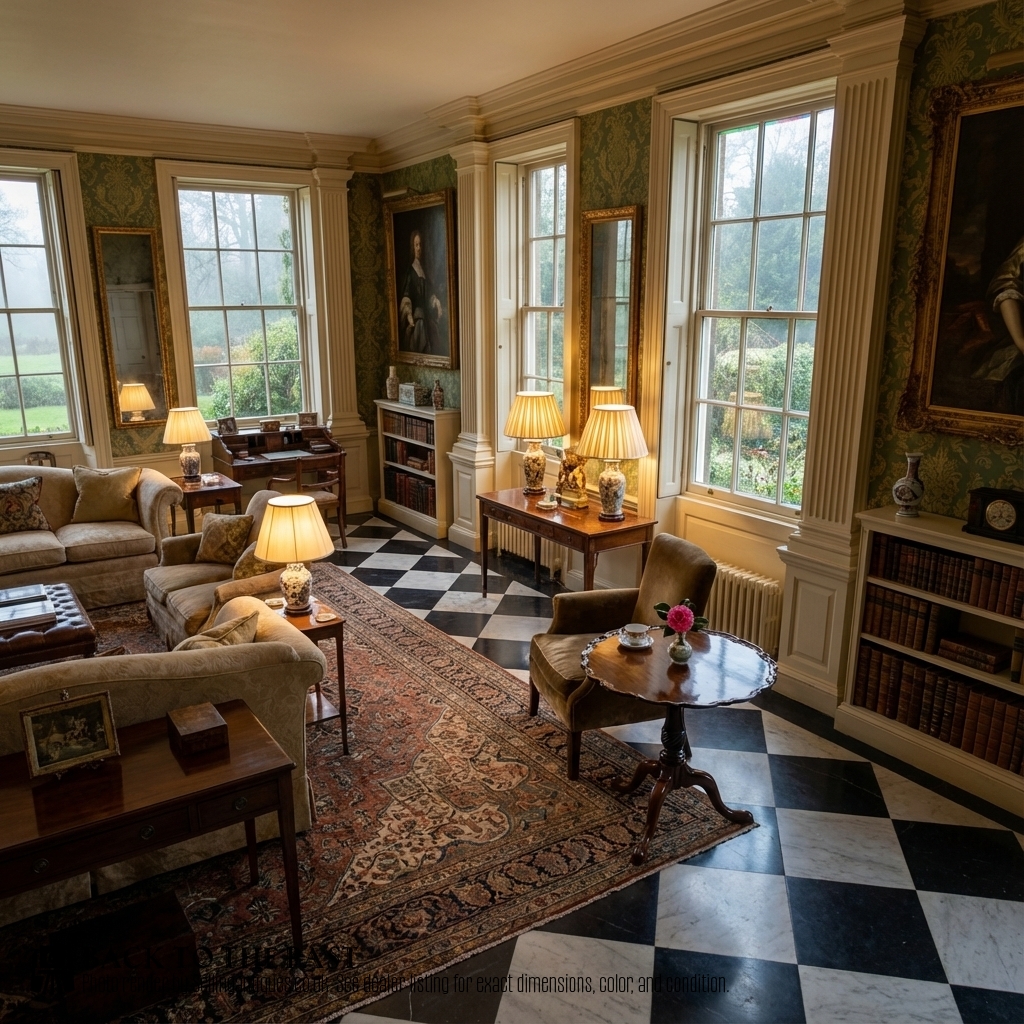
A carved piecrust table is a small occasional piece featuring a distinctively moulded, raised wooden edge that resembles pastry work. When searching for a carved piecrust table, buyers frequently encounter mahogany examples dating from the eighteenth century to the Edwardian era, often configured as tilt-top tripod tables. These items function well as wine tables, lamp tables, or central display surfaces in traditional rooms.
The form encompasses various historical revivals, notably George III and Chippendale styles produced during the nineteenth and early twentieth centuries. Alongside circular tripod formats, buyers will find occasional variations including oval tops and coffee table heights from the nineteen-thirties. The enduring appeal lies in the combination of a compact footprint and elaborate edge moulding.
How they were made
Cabinet makers traditionally carved the characteristic piecrust edge directly from a solid piece of thick timber rather than attaching a separate moulding. This required immense skill to shape the intricate curves and lobes around the perimeter without weakening the grain. Mahogany remains the dominant timber across the inventory, complemented by burr walnut, oak, and occasional parcel gilt highlights.
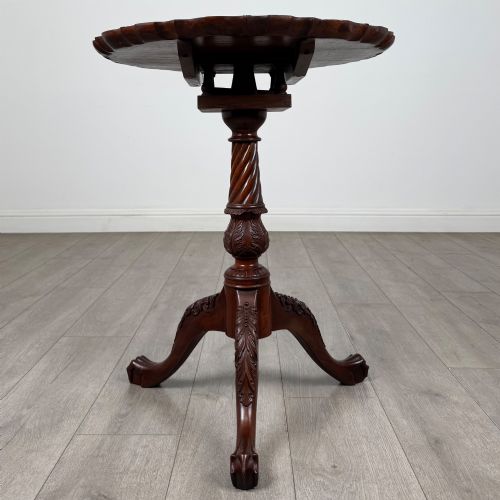
Many examples incorporate a tilt-top mechanism, sometimes featuring a revolving birdcage assembly beneath the surface that allows the top to turn and fold flat against the pedestal. The central column typically descends to three shaped legs terminating in pad, claw and ball, or spade feet. Brass hardware frequently secures the pivoting joints and catch mechanisms.
Carved Piecrust Table Retail Price Guide 2026
Typical asking prices for carved piecrust table among the pieces listed under this phrase on Sellingantiques today, from the lower quarter to the upper quarter. They describe what is for sale here now, not the wider market.
Listings span the eighteenth, nineteenth, and twentieth centuries, incorporating Georgian, Victorian, and Edwardian periods alongside revival styles.
What varies in quality
Quality rests significantly on the depth and crispness of the hand carving around the piecrust rim and the supporting cabriole legs. Superior pieces display fluid, confident chisel work where the lobes and acanthus leaves retain sharp definition. Inferior or later revival examples often exhibit softer, shallower moulding produced with mechanical assistance rather than hand tools.
The integrity of the timber and the complexity of the mechanism also determine the grade of the piece. Tables with original birdcage actions, well-figured mahogany or burr walnut veneers, and undisturbed patination command greater appreciation than plain or heavily restored equivalents.
Shapland and Petter·Gillows
The Carved Piecrust Table Glossary
- Piecrust edge
- A raised, scalloped perimeter carved from the solid timber of the table top, mimicking pastry work. This decorative edge prevents items from sliding off.
- Tilt-top
- A hinged table top that pivots to a vertical position when not in use. This design allowed furniture to be stored flat against a wall.
- Birdcage
- A revolving wooden framework beneath the table top that incorporates small turned spindles. It permits the top to both tilt and rotate.
- Tripod table
- A small freestanding table supported by a central pillar and three radiating legs. This configuration ensures stability on uneven floors.
- Patina
- The surface sheen and colour developed by wood through age, handling, and waxing. Original surfaces retain a rich lustre built up over generations.
Carved Piecrust Table: Frequently Asked Questions
What is a tilt top table used for?
A tilt top table serves as a flexible surface for holding drinks, books, or lamps during the evening. When the top is pivoted vertically, the table occupies minimal floor space against a wall.
Historically, these pieces were moved around reception rooms as needed before being parked out of the way. Today, they function effectively as decorative side or occasional tables in living spaces.
How do I identify a George III table?
George III pieces date from the second half of the eighteenth century and display characteristic proportions, hand-cut joinery, and dense mahogany timbers. Look for fine detailing on the tripod base and crisp carving along the raised edge.
Later revival pieces often imitate these Georgian characteristics but can be distinguished by twentieth-century secondary woods and machine-cut construction methods.
What is a birdcage mechanism?
A birdcage is a complex wooden assembly fitted beneath the table top that allows the surface to both rotate horizontally and tilt vertically. Small turned wooden pillars form the cage structure around the central pivot.
This sophisticated engineering feature is typically found on higher-grade eighteenth-century examples and permits greater flexibility in positioning the table.
Where should I place a wine table?
A wine table fits comfortably beside an armchair, sofa, or in an empty corner that requires a functional accent piece. Because of the compact tripod base, it occupies very little floor space.
Avoid placing antique wooden tables in direct sunlight or close to active heat sources to protect the polished surface and natural timber.