
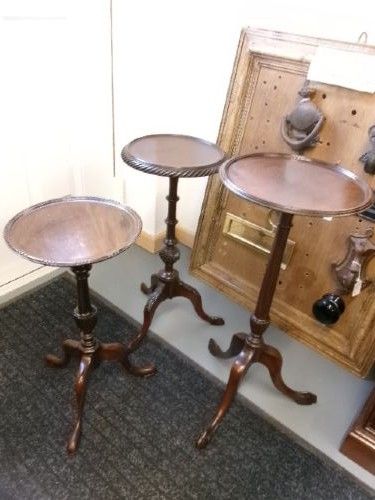

Piecrust Wine Table
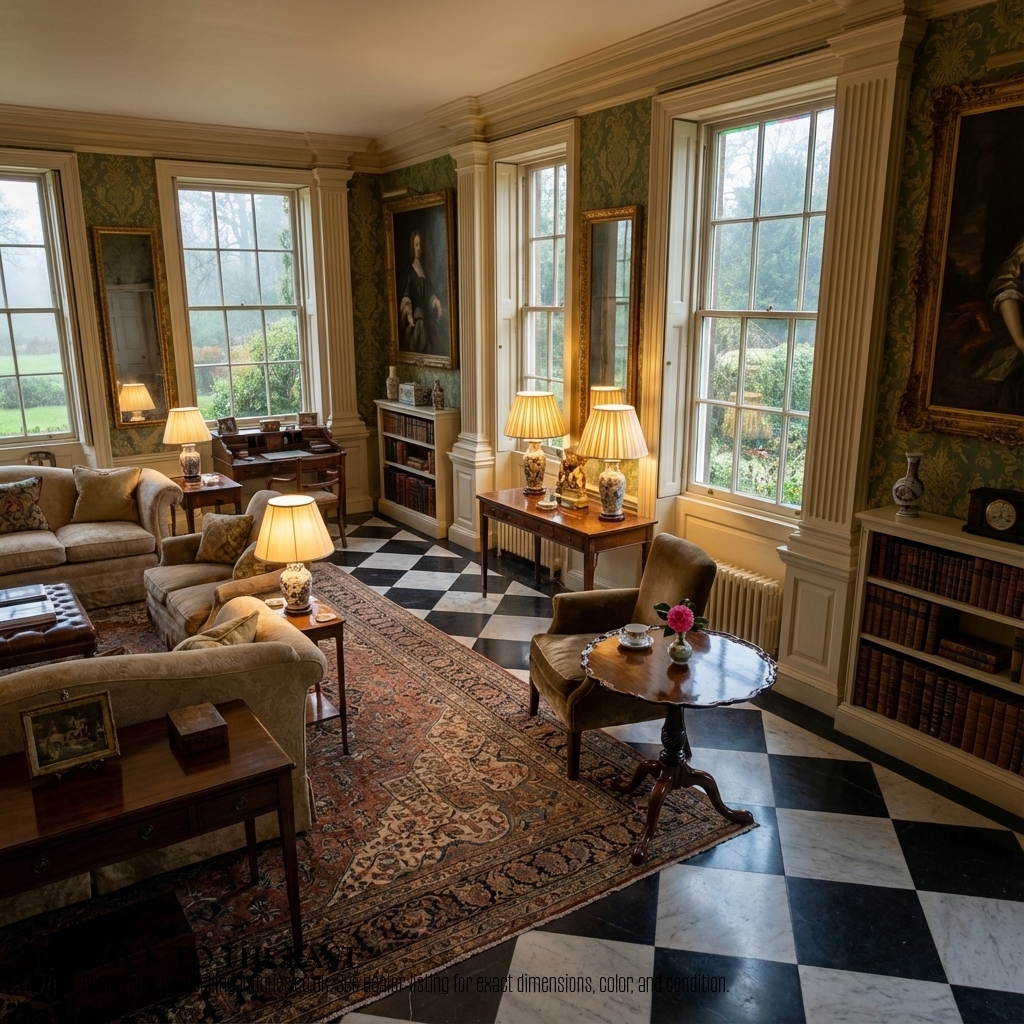
A piecrust wine table brings refined portability and carved timber detail to a period interior.
Piecrust Wine Table
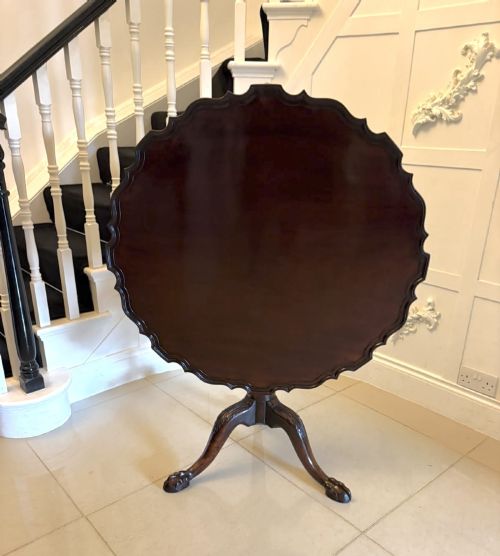
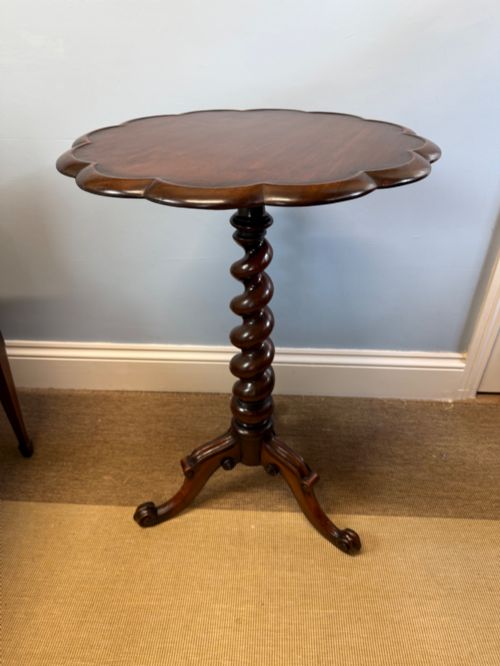
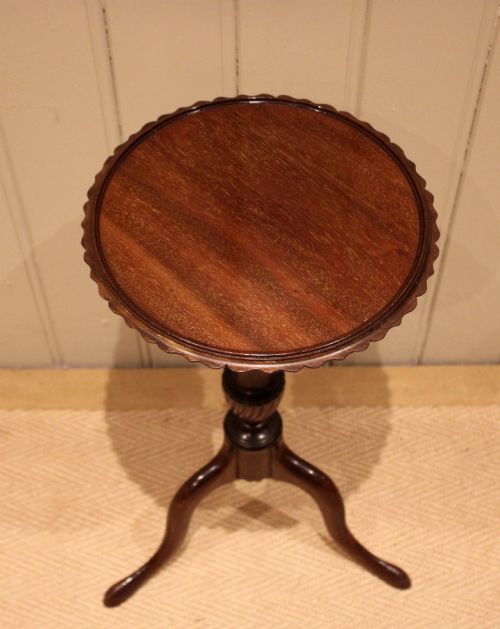
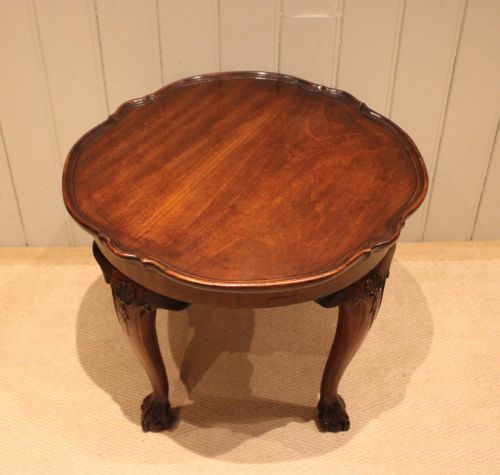
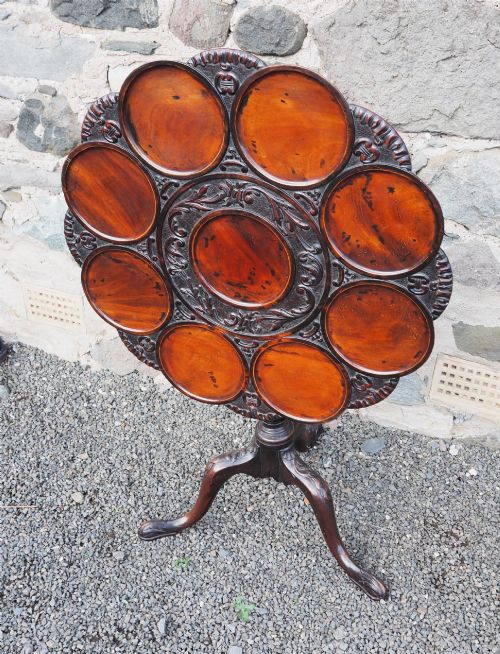
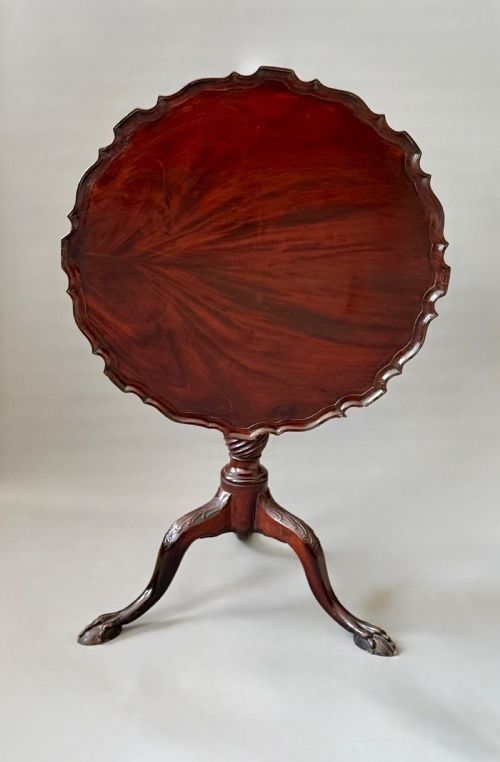
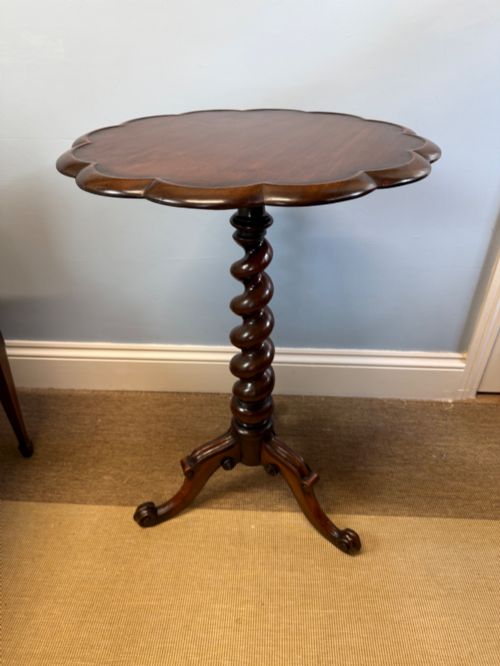
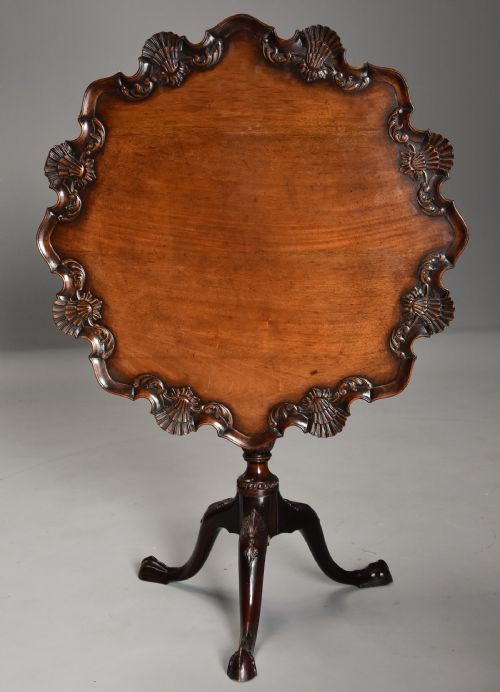
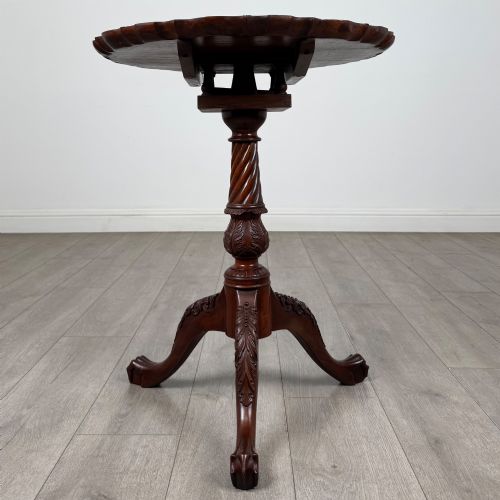
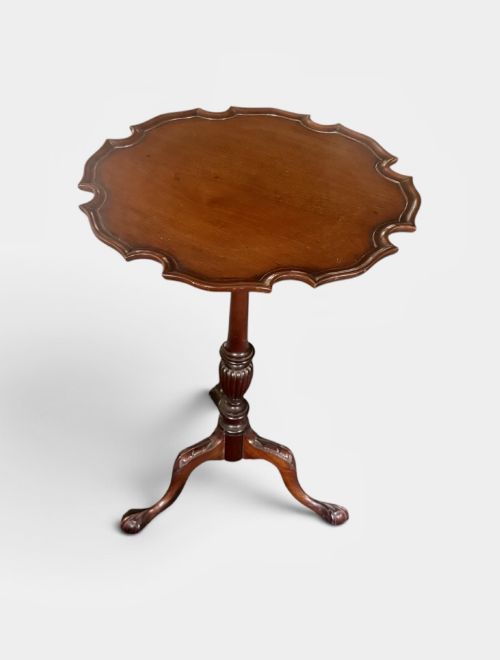
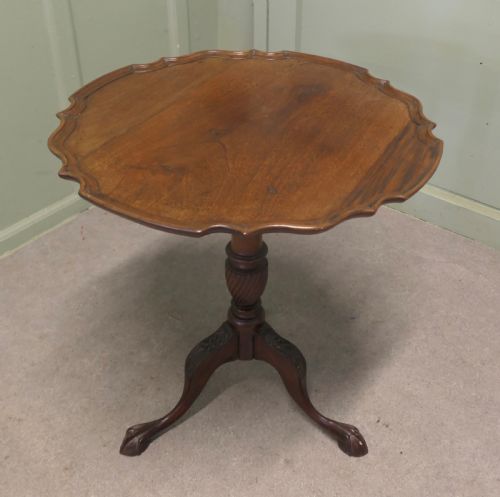
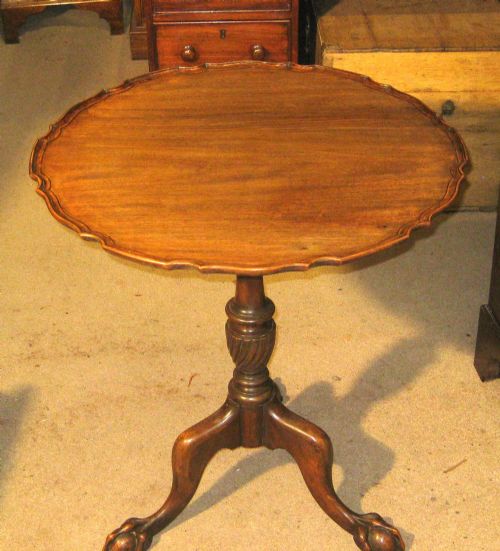
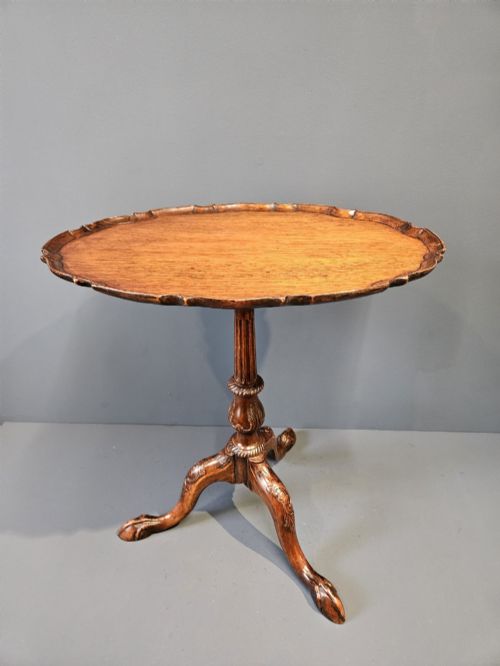
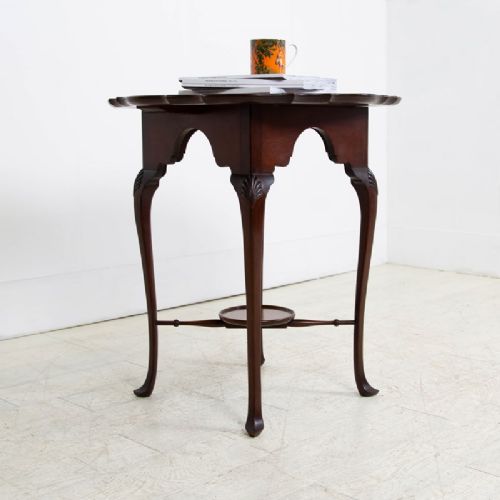
A piecrust wine table is a compact occasional piece designed with a raised, scalloped perimeter reminiscent of pastry work. These small tables most commonly appear supported by a turned pillar and three splayed legs forming a tripod base. The listings show forms ranging from eighteenth-century George III originals to later Edwardian and revival interpretations.
The format overlaps with related tripod tables, occasional tables and tilt-top supper pieces. Mahogany dominates the selection, supplemented by walnut, oak and satinwood examples. Buyers encounter both circular tops and oval variations intended for display or holding small items.
Materials and construction
Makers shaped the distinctive shaped edge directly from a solid timber blank rather than applying a separate moulding, requiring precise hand carving. Mahogany is the primary material recorded, often selected for its dense grain and stability under intricate work. Burr walnut and figured veneers also appear on select tables, bringing rich surface pattern to the top.
Many examples incorporate a tilt-top mechanism, sometimes featuring a revolving birdcage block beneath the surface to allow the table to stow flat against a wall. The central pillar typically connects to the top via a birdcage or block joint and rests on three carved cabriole legs ending in pad or claw-and-ball feet.
Piecrust Wine Table Retail Price Guide 2026
Typical asking prices for piecrust wine table among the pieces listed under this phrase on Sellingantiques today, from the lower quarter to the upper quarter. They describe what is for sale here now, not the wider market.
Listings feature mahogany, oak, burr walnut and satinwood across periods spanning the eighteenth century through the nineteen-thirties.
Assessing the craftsmanship
Quality rests in the crispness of the carved rim and the proportion of the tripod base. Superior examples display deep, sharp scalloping on the piecrust edge where lesser pieces show softer, rounded profiling from subsequent sanding or wear.
The integrity of the tilt-top mechanism and the timber's natural patina separate standard production from finer cabinet work. Original brass catches, tight joints without excessive wobble, and rich figuring in the mahogany or walnut elevate the standing of a piece.
Shapland and Petter·Gillows
The Piecrust Wine Table Glossary
- Piecrust edge
- A raised, carved perimeter with alternating curves and points imitating pastry crimping. This decorative border is characteristic of finer eighteenth-century tripod tables.
- Tilt-top
- A hinged table top that pivots to a vertical position when not in use. This mechanism allowed tables to be stored against walls in period drawing rooms.
- Birdcage
- A timber framework beneath the table top containing small spindles that allows the top both to tilt and to rotate. It represents a more complex mechanical construction than a simple fixed pivot.
- Tripod base
- A supporting underframe composed of three legs radiating from a central turned column. It provides stable footing on uneven floors compared to four-legged alternatives.
- Chippendale style
- A decorative manner drawing on the designs of Thomas Chippendale, characterised by carved cabriole legs, claw-and-ball feet and intricate edge mouldings.
Piecrust Wine Table: Frequently Asked Questions
What was a piecrust wine table used for?
These tables served primarily for holding small vessels, glasses or candles beside seating in a drawing room or parlour. Their modest proportions allowed servants to move them easily around a room as needed.
They also functioned as supper tables when paired with a tilt mechanism, remaining upright against the wall until required for an evening meal.
How do I spot an 18th century piecrust wine table?
Eighteenth-century examples typically display solid mahogany construction with hand-carved piecrust rims cut from the solid timber rather than applied. Look for pegged joints, rich natural patina, and slender cabriole legs ending in refined pad or claw-and-ball feet.
Later revival pieces from the Edwardian period or twentieth century often show machine-finished uniformity or different secondary woods beneath the polish.
What is a birdcage mechanism?
A birdcage is an internal wooden frame fixed beneath the table top that incorporates small turned columns and a central pivot. It allows the top to rotate horizontally as well as tilt vertically.
This feature indicates a higher grade of cabinet making, offering greater flexibility in how the table sits and turns in a living space.