

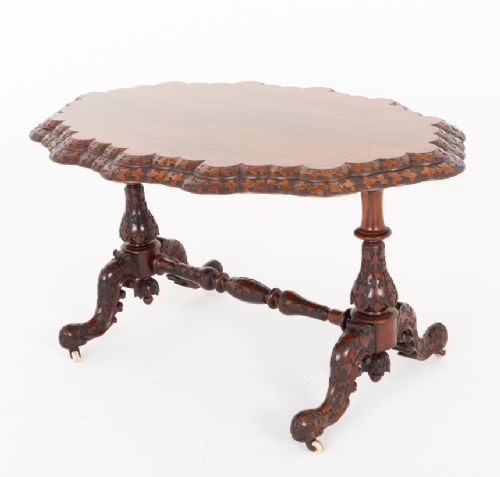
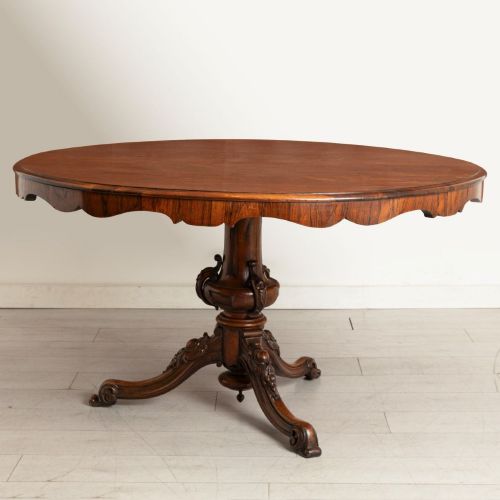
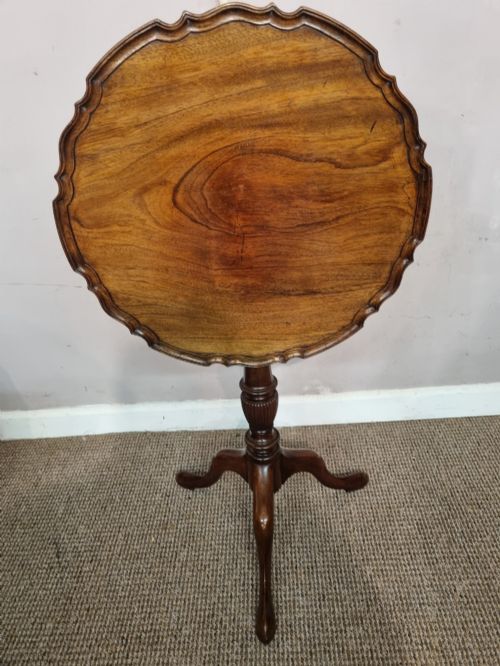
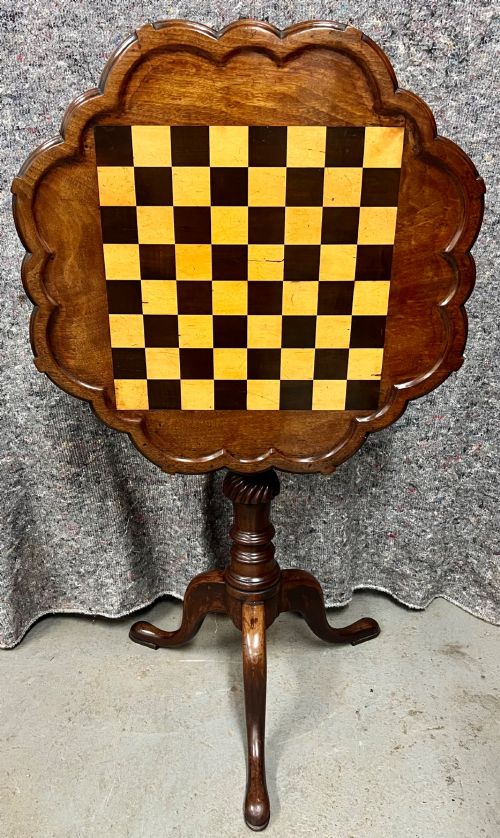
Scalloped Tilt Top Table
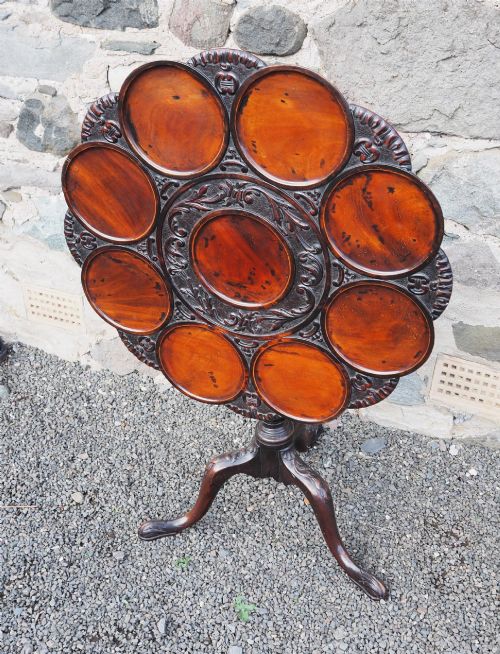
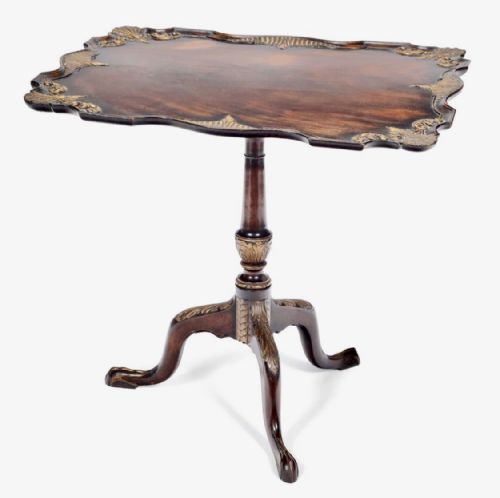
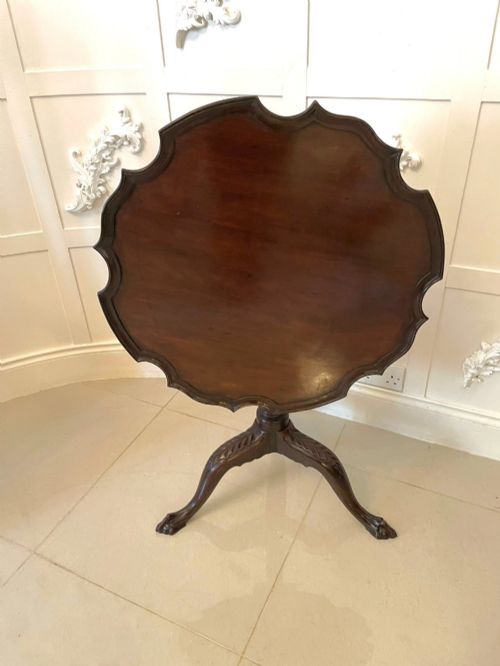
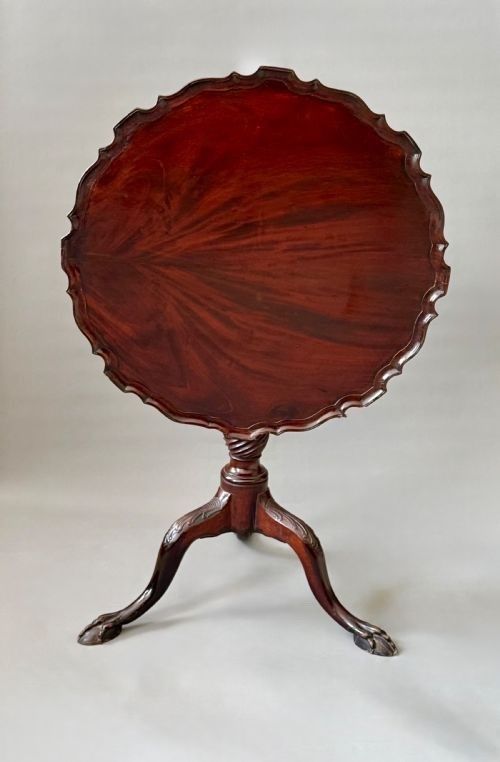
A scalloped tilt top table brings ingenious space-saving design and tactile carved edges to a room, offering a surface that folds away when not in use.
Scalloped Tilt Top Table
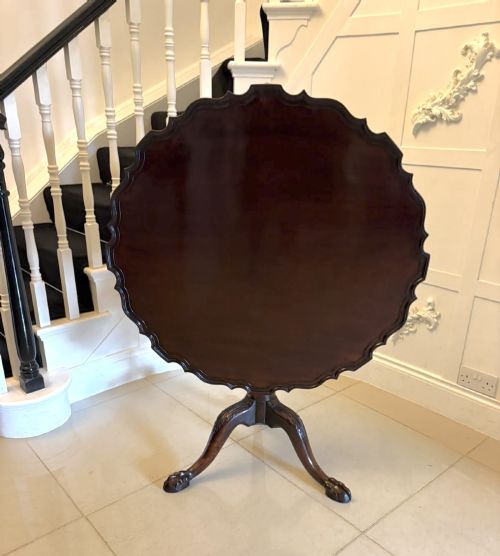
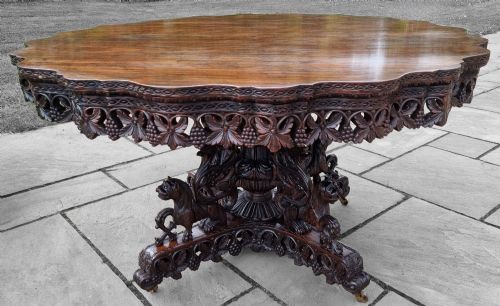
When you search for a scalloped tilt top table, you encounter occasional and side tables engineered with a mechanism that allows the top to rotate and pivot into a vertical position. These pieces originated primarily during the eighteenth and nineteenth centuries, spanning both the Georgian and Victorian eras.
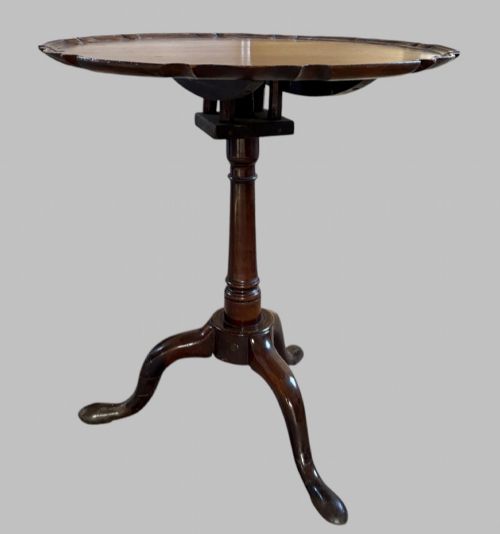
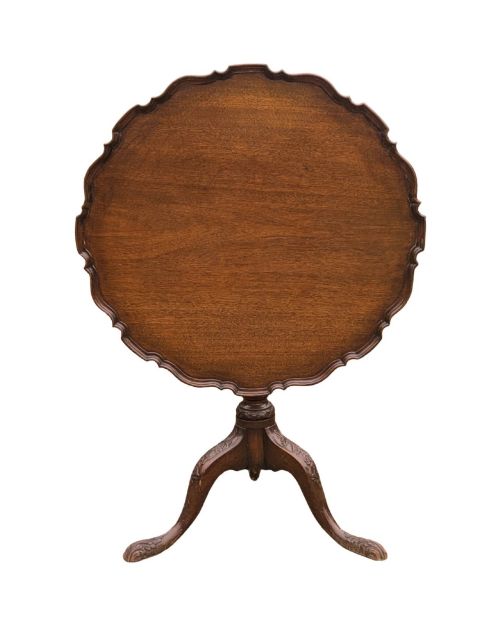
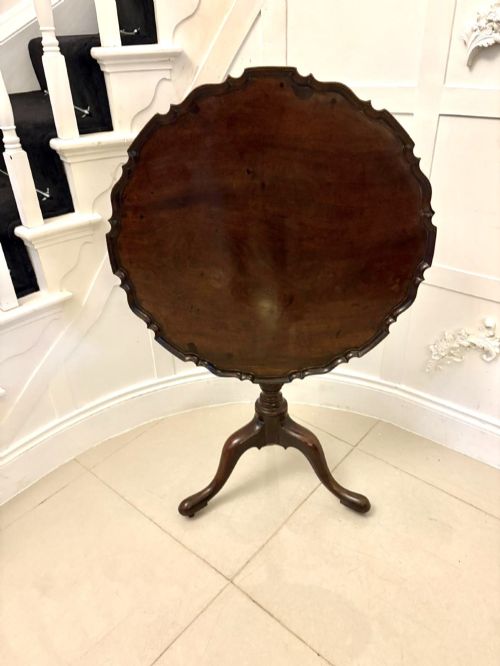
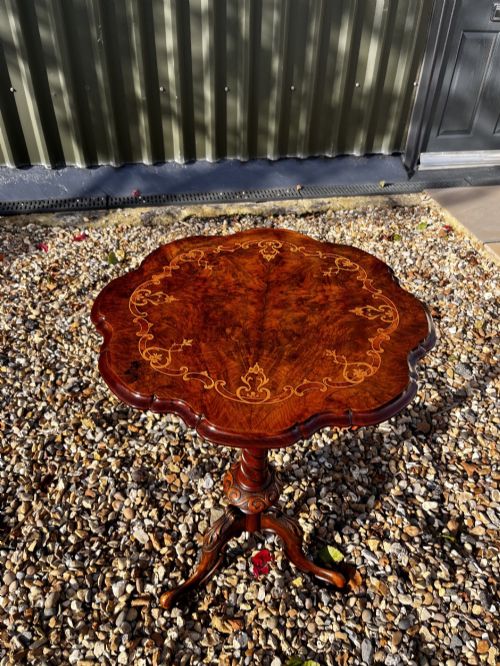
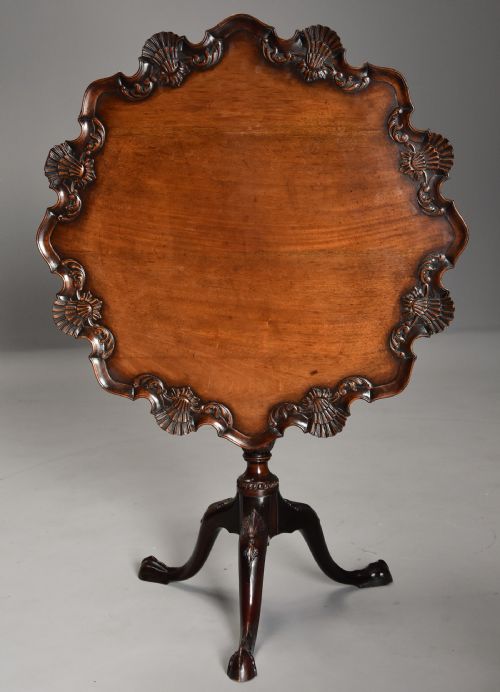
The version you are most likely to meet on this page is constructed from mahogany, often supported by a central pillar and tripod base. Examples also appear in painted papier-mache with mother of pearl inlay, olive wood marquetry, and grand Regency or Chinoiserie styles.
These versatile furnishings functioned historically as supper or games tables, designed to be tucked against a wall until needed for evening entertaining. Their distinctive feature remains the raised, shaped edge of the tabletop, frequently referred to in period terms as a pie crust design.
How they were made
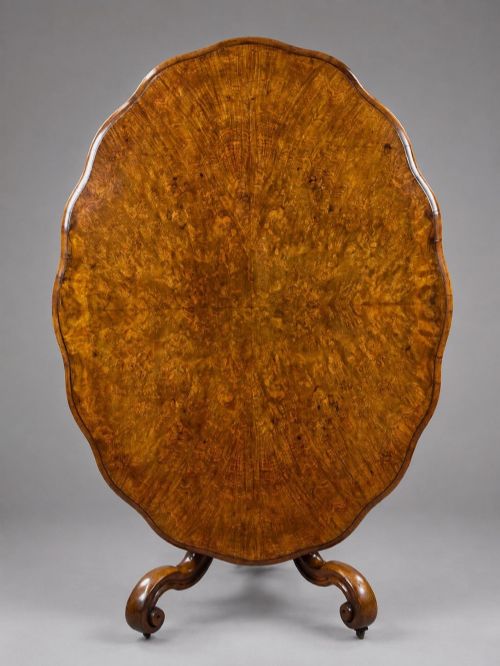
Cabinet makers utilised solid timbers such as mahogany and olive wood, shaping the characteristic scalloped rims directly from the solid board or applying intricate marquetry veneers. Tripod bases were turned on lathes and joined to central pedestals using sturdy dovetail or pegged construction.
Decorative surface techniques include hand painting, parcel gilding, and the application of mother of pearl inlay set into dark papier-mache grounds. Surfaces were finished with traditional polishing methods that highlight the natural grain and depth of the wood.
Scalloped Tilt Top Table Retail Price Guide 2026
Typical asking prices for scalloped tilt top table among the pieces listed under this phrase on Sellingantiques today, from the lower quarter to the upper quarter. They describe what is for sale here now, not the wider market.
Object forms catalogued in this category include occasional tables, side tables, and specific supper or games tables equipped with tilting mechanisms.
What varies in quality
The distinction between standard examples and the finest pieces lies in the crispness of the carved edge work and the harmony of the timber grain. A master craftsman sculpted the scalloped or pie crust profile with fluid, confident curves that complement the proportions of the tripod base.
Material selection and decorative execution further differentiate the range, visible in the precision of olive wood marquetry or the careful placement of mother of pearl within painted surfaces. The stability and smooth operation of the tilting mechanism remain central to the integrity of each piece.
The Scalloped Tilt Top Table Glossary
- Tilt top table
- An occasional table featuring a hinged mechanism that allows the surface to pivot flat for use or upright for storage. This clever engineering saved valuable floor space in period interiors.
- Pie crust table
- A table with a raised, carved, and scalloped edge resembling the fluted pastry of a pie. This decorative border prevented items from sliding off the surface.
- Tripod base
- A support structure comprising three legs radiating from a central column. This design ensured stability on uneven floors.
- Marquetry
- The art of applying pieces of veneer to a structure to form decorative patterns. Craftsmen used various contrasting woods to create pictorial designs.
- Chinoiserie
- European decorative art reflecting Chinese artistic influences. This style often involved hand-painted motifs on lacquered or dark surfaces.
Scalloped Tilt Top Table: Frequently Asked Questions
How were these tables used originally?
Historically, these tables served as flexible furniture for dining, suppers, or card games in principal rooms. Their ability to tilt upright meant servants could clear the floor quickly after use.
They stood against walls as decorative accents until required for evening entertaining or tea service.
How do I live with one today?
Living with a tilt top table involves placing it in a sitting room or hallway where its dual nature can be appreciated. You can display it tilted upright to showcase the underside and the shaped edge as a decorative panel, or keep it flat for lamps and books.
Position the table away from direct heat sources and strong sunlight to protect the timber and historic polishes.
How can I tell Georgian from Victorian pieces?
Georgian examples often feature rich solid mahogany with restrained carving, emphasising architectural proportions and clean tripod lines. They typically date from the late eighteenth century.
Victorian pieces frequently introduce eclectic materials, including painted papier-mache with mother of pearl inlay, olive wood marquetry, or heavier Chinoiserie decoration reflecting nineteenth-century tastes.