

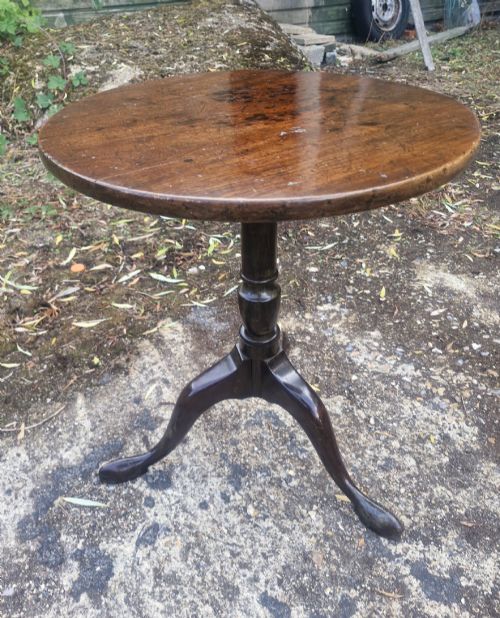
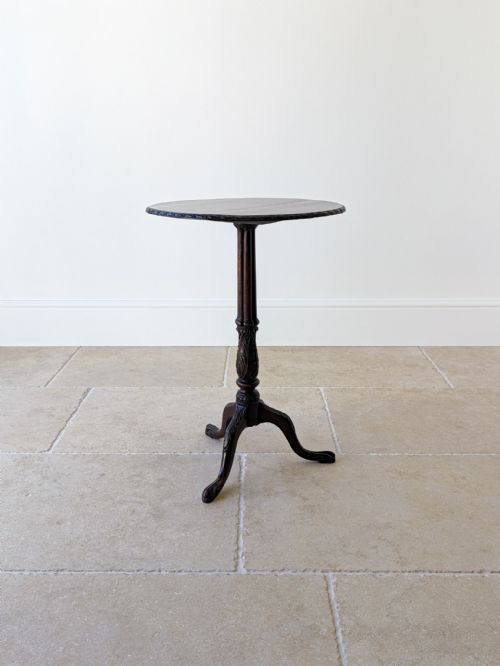
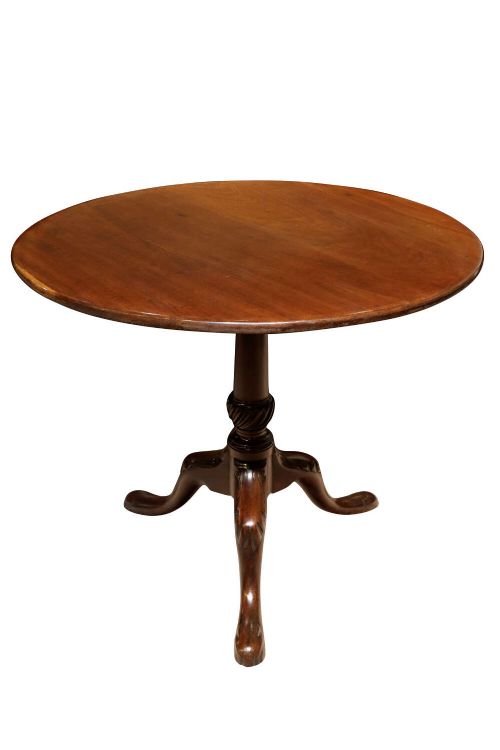
Tilt Top Occasional Table
When you search for a tilt top occasional table, you enter a centuries-old tradition of folding furniture designed to save space when not in use.

Tilt Top Occasional Table
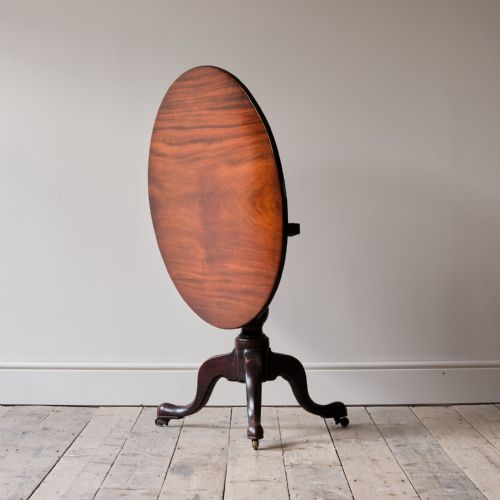
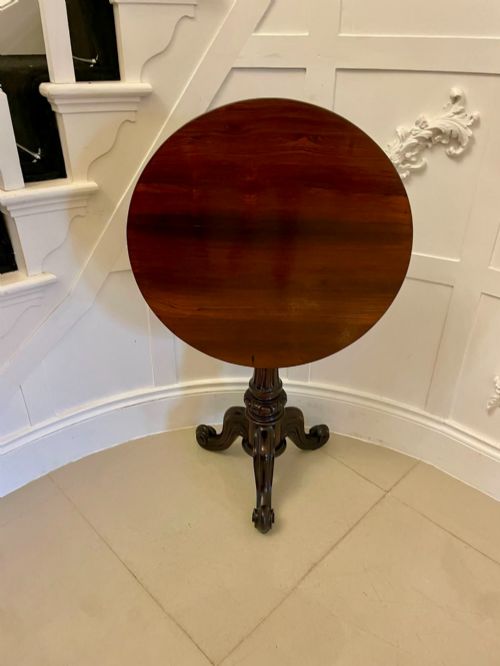
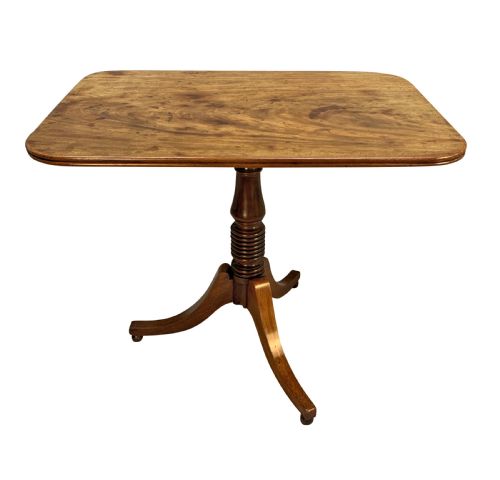
A tilt top occasional table combines a pivoting surface with a folding mechanism, allowing the top to stand vertically against its base when space is needed. These pieces served versatile roles in domestic settings as wine tables, supper tables, or lamp stands.
Makers from the 18th century onward produced these tables in various regional styles, including distinct Chippendale and Regency designs. The combination of a tipping surface and a sturdy pillar base remains the defining characteristic across all periods.
How they were made
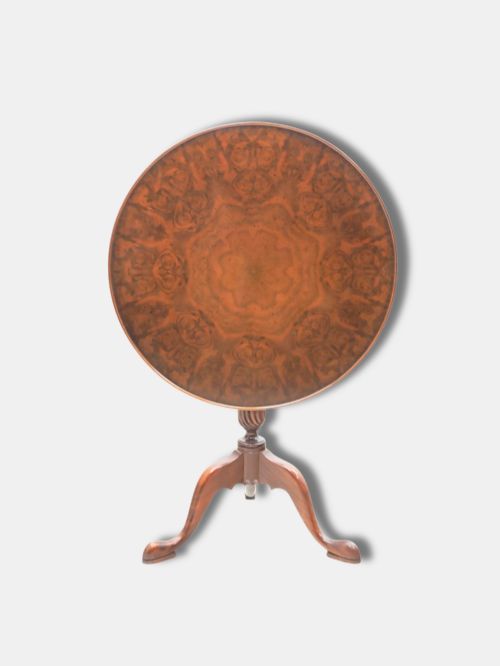
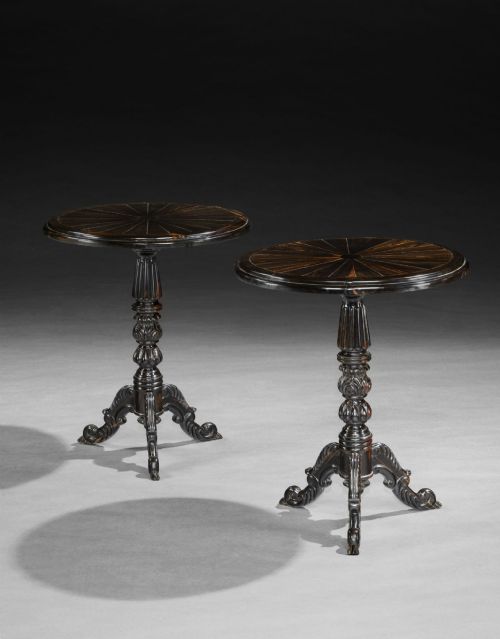
Cabinetmakers utilised dense hardwoods like mahogany, walnut, and oak to construct the tops and central pedestals, ensuring stability when the heavy timber pivoted on its axis. Fine examples frequently incorporated decorative veneers such as burr walnut or rosewood on the surface.
The tipping mechanism relied on precise joinery, often featuring a wooden or brass catch to secure the top in a horizontal position. Many sophisticated 18th and 19th-century models employed a birdcage mechanism beneath the top, allowing the surface to both tilt and rotate independently.
Tilt Top Occasional Table Retail Price Guide 2026
Typical asking prices for tilt top occasional table among the pieces listed under this phrase on Sellingantiques today, from the lower quarter to the upper quarter. They describe what is for sale here now, not the wider market.
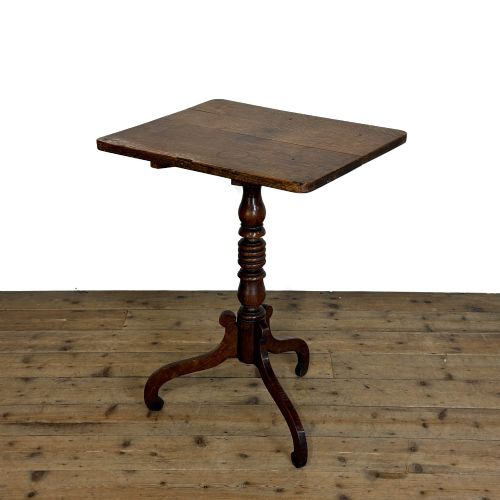
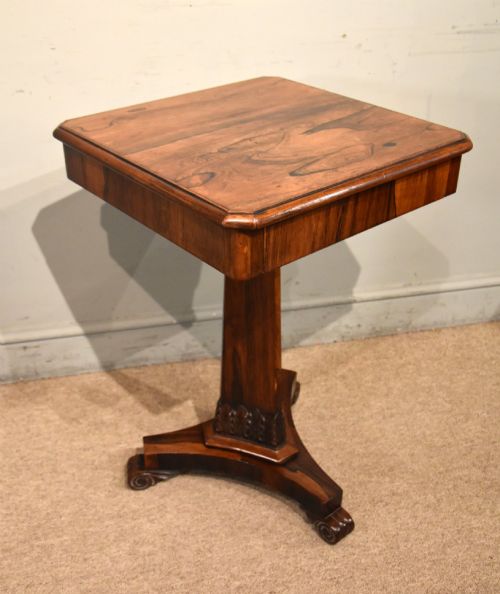
Table forms on this page include wine tables, supper tables, lamp tables, and side tables with tilting tops.
What varies in quality
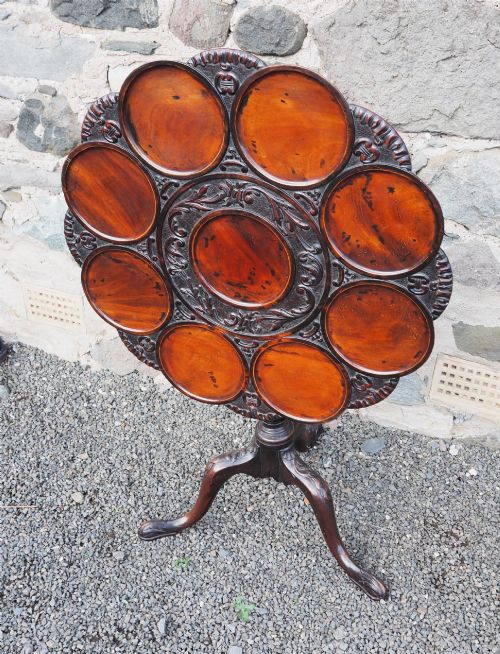
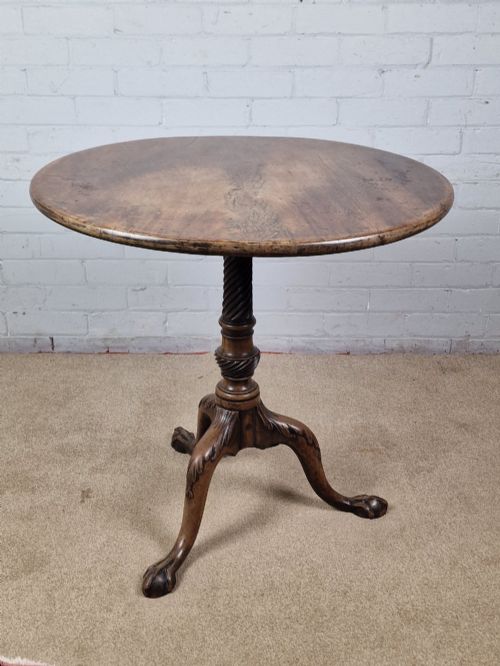
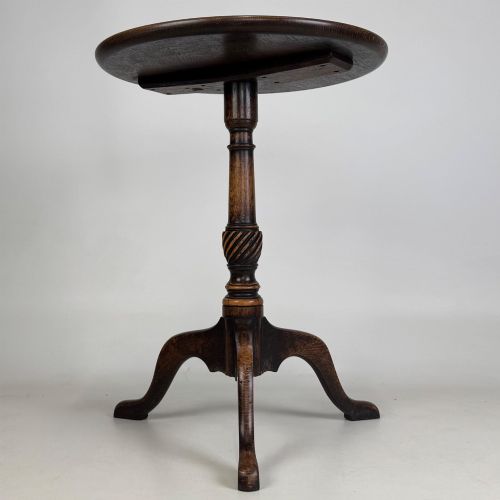
Quality rests upon the crispness of the carving on the tripod legs and pillar, where hand-chiseled details distinguish superior regional workshop output from plain utilitarian furniture. The weight and grain of the primary timber also dictate the overall caliber of the piece.
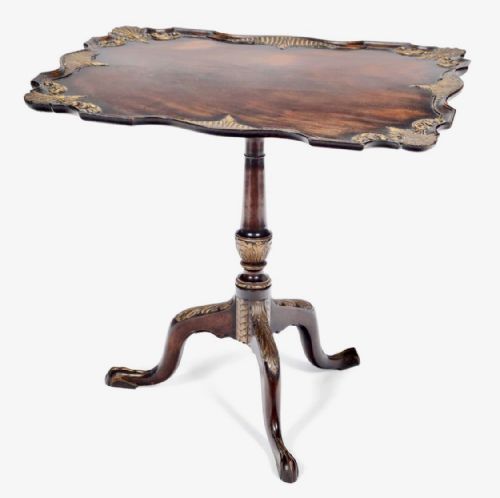
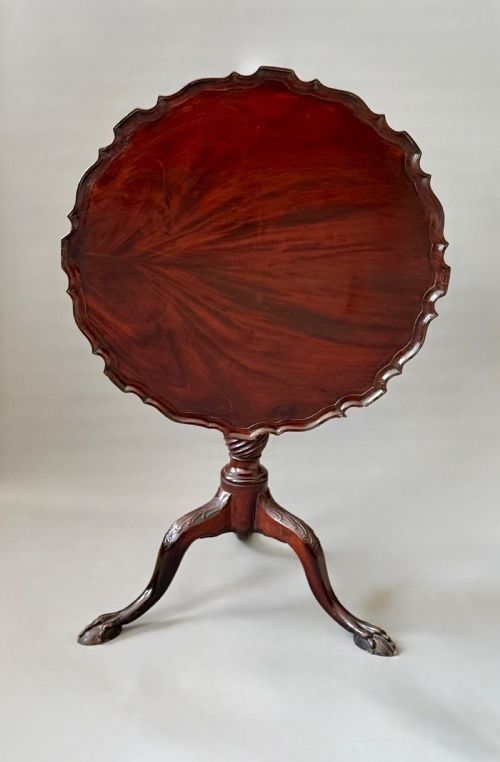
The engineering of the pivot mechanism reveals the maker's skill, with tight joints and smooth rotation indicating careful construction. Tables possessing original brass hardware or intricate moulded edges, such as pie crust designs, command greater appreciation.
Gillow
The Tilt Top Occasional Table Glossary
- Tripod base
- A support structure comprising three legs radiating from a central column. This configuration provides steady contact on uneven floor surfaces common in older houses.
- Birdcage
- A timber framework beneath the table top that enables the surface to rotate as well as tilt. It connects the top to the central pedestal through small vertical spindles.
- Pie crust edge
- A raised, scalloped perimeter carved directly from the solid timber of the table top. This ornate border often appears on mid 18th century dining and tea tables.
- Snap top
- An alternative term for a tilt top mechanism utilising a spring or latch to lock the table surface horizontally. It prevents the top from wobbling during use.
Tilt Top Occasional Table: Frequently Asked Questions
Why did tables tilt?
Tables tilted primarily to save floor space in domestic rooms when the furniture was not actively in use. Storing the top vertically against the wall allowed inhabitants to clear the centre of a parlour or dining space.
This practical innovation made multi-purpose rooms easier to manage before open-plan living became common. The folding action also protected the polished wood surface from accidental damage while out of service.
How do I spot a Georgian table?
Georgian tables generally exhibit dense Cuban mahogany, hand-carved pad or claw-and-ball feet on the tripod base, and solid timber construction without modern veneers. The proportions tend to feel robust yet refined.
Later revival pieces from the Victorian era often mimic these Georgian forms but typically employ machine-cut elements or different internal fixings. Examining the underside reveals the tool marks and construction methods specific to the 18th century.
Where should I place one?
These tables fit naturally beside a sofa or armchair as a lamp stand or drinks surface, echoing their original historic domestic functions. Their compact footprint suits corners or blank wall spaces where a larger piece would overwhelm the room.
You can also leave the top tilted against the wall when you want to display the wood grain as a decorative wall panel. This highlights the craftsmanship of the underside while keeping the floor completely clear.
What is a birdcage mechanism?
A birdcage is a small wooden assembly fixed beneath the table top that allows the surface to both pivot upright and rotate in a full circle. Small wooden or brass components lock the movement when the table is horizontal.
This feature represents a higher tier of 18th-century cabinetmaking, offering greater flexibility than a simple hinged pivot. Collectors prize tables with functioning original birdcage frames for their mechanical ingenuity.