
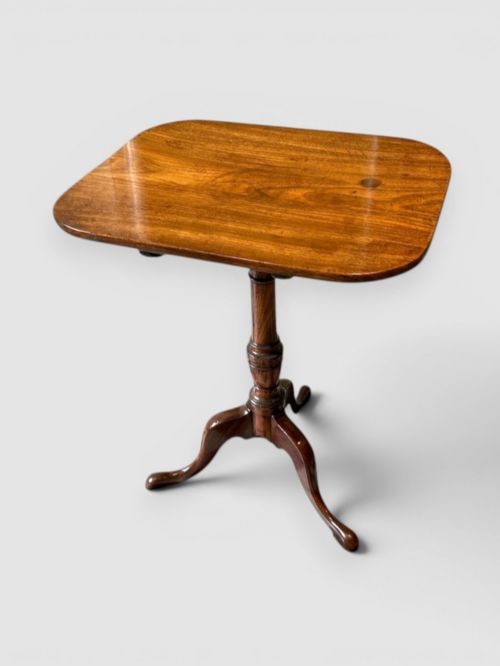
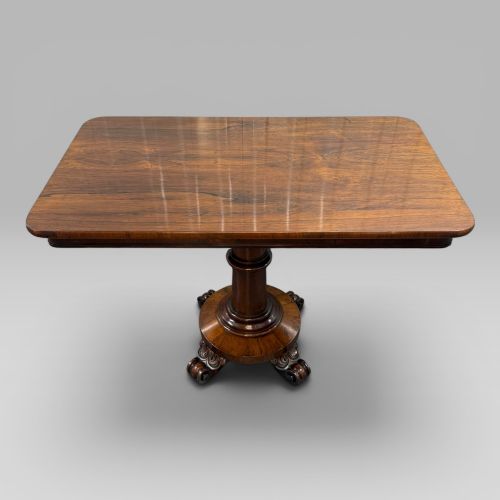


Rectangular Tilt Top Table
A rectangular tilt top table brings centuries of flexible English dining and occasion into a room without dominating the floor.

Rectangular Tilt Top Table
A rectangular tilt top table is an adaptable piece designed to fold flat against a wall when not in use, serving as a wine table, breakfast table, or occasional centre table. You will frequently encounter Georgian, Regency, and Victorian examples scaled for various domestic uses.
The selection ranges from compact tripod wine tables dating to the eighteenth century up to larger pedestal breakfast and dining tables from the nineteenth century. These pieces combine practical storage solutions with formal cabinetmaking.
Makers utilised mahogany predominantly, alongside rosewood, oak, and yew wood, often set upon turned columns with splayed legs or tripod bases. The tilting mechanism allows the top to pivot vertically via a catch.
Materials and construction
Cabinetmakers relied heavily on figured mahogany, rosewood, and oak, frequently applying fine veneer over secondary timbers to achieve rich surface grain. Timber selection dictated both the visual weight and structural stability of the top.
Tripod bases and turned central columns provided sturdy support, sometimes incorporating bird-cage mechanisms or brass castors for mobility. Original iron catches secured the rectangular top firmly in the horizontal position when lowered.
Rectangular Tilt Top Table Retail Price Guide 2026
Typical asking prices for rectangular tilt top table among the pieces listed under this phrase on Sellingantiques today, from the lower quarter to the upper quarter. They describe what is for sale here now, not the wider market.
Some nineteenth century examples include clever bird-cage supports that let the top spin like a compass while tilted.
Assessing quality
Quality rests upon the crispness of the timber figuring, the integrity of the tilting mechanism, and the balance of the pedestal support. Superior examples display thoughtful proportions where the rectangular top relates harmoniously to the column and splayed legs.
The refinement of the turning on the central column and the choice of dense, well-figured mahogany or exotic woods signal higher workshop standards. Original brass fittings and smooth-operating catches also distinguish better pieces from later or simpler work.
Wilkinson and Sons
The Rectangular Tilt Top Table Glossary
- Tilt top
- A table mechanism allowing the surface to pivot ninety degrees vertically. This clever design saved valuable floor space in historic interiors.
- Tripod base
- A three-legged support system commonly found on smaller occasional and wine tables. It ensures stability on uneven period flooring.
- Bird-cage
- A rotating wooden frame beneath the table top that permits the surface to both tilt and revolve. It represents a more complex form of joinery.
- Veneer
- A thin layer of figured wood applied over a stable base timber. This technique showcased decorative grain patterns without wasting scarce materials.
Rectangular Tilt Top Table: Frequently Asked Questions
Where were these tables used in historic homes?
Smaller tripod versions served as wine tables or occasional tables in parlours and drawing rooms. Larger pedestal examples functioned as breakfast tables or informal dining tables.
Because the tops folded away, servants cleared the floor space easily between meals or social gatherings. This versatility made them essential furnishings across Georgian and Victorian households.
How do I care for a polished mahogany surface?
Dust the timber regularly with a soft, dry cloth to prevent grit accumulation on the French polished finish. Apply traditional beeswax periodically to nourish the wood and maintain a gentle lustre.
Keep these tables away from direct sunlight and heat sources to prevent the veneer from drying or cracking. Use coasters under glasses to protect the historic polish from moisture marks.
How can I distinguish a Georgian table from a Victorian one?
Georgian tables tend to feature restrained elegance, lighter proportions, and simpler tripod or pillar supports dating from the eighteenth century. Timber selection often focuses on dense, rich mahogany with understated classical lines.
Victorian pieces frequently display heavier proportions, more ornate turning such as barley twists, and occasionally exotic woods like coromandel. Examining the construction details and secondary timbers helps confirm the period.