



Hand Carved Elephant Table
These hand carved elephant table examples bring distinct regional character into a room through rich wooden craftsmanship.
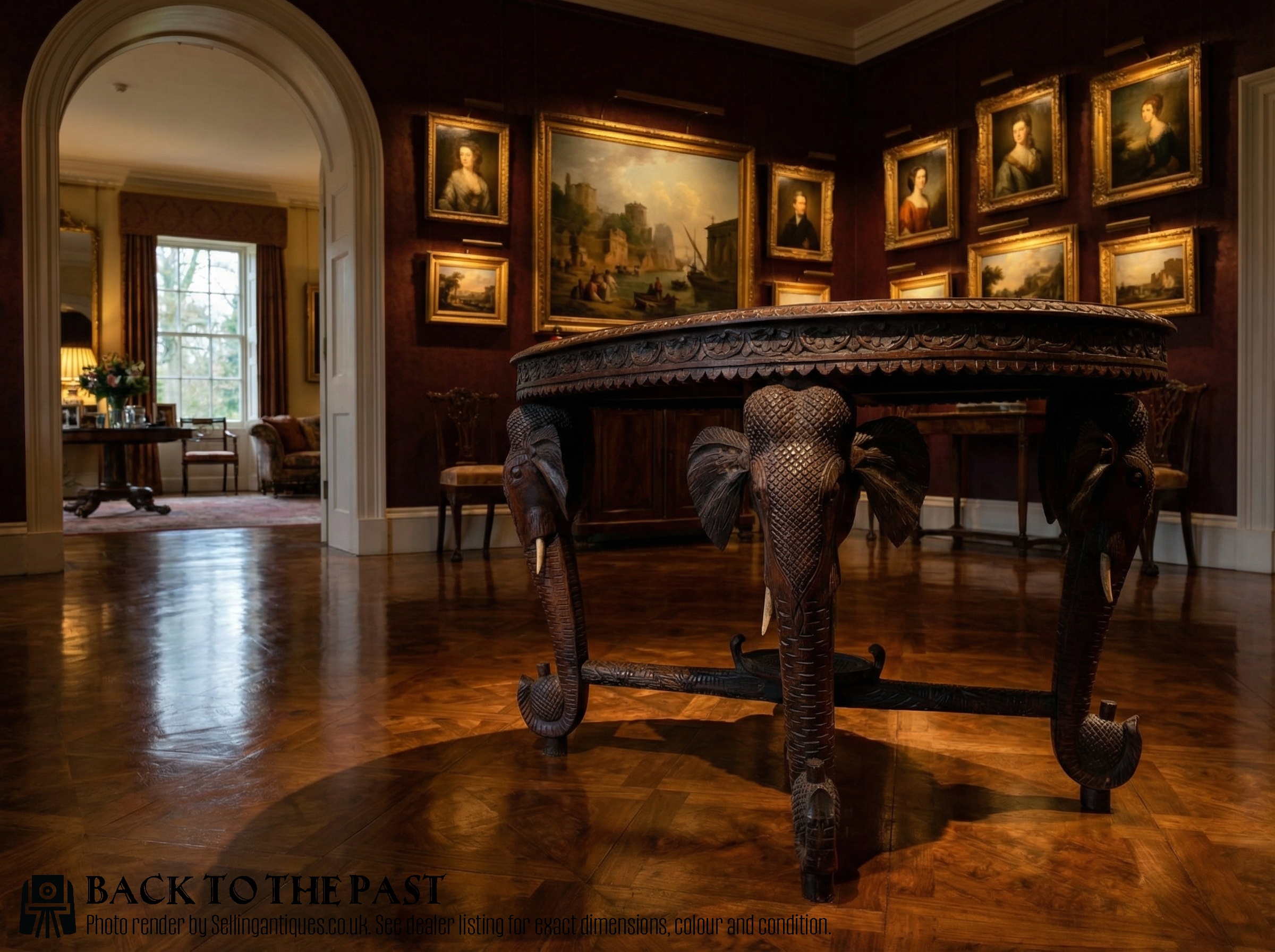
Hand Carved Elephant Table
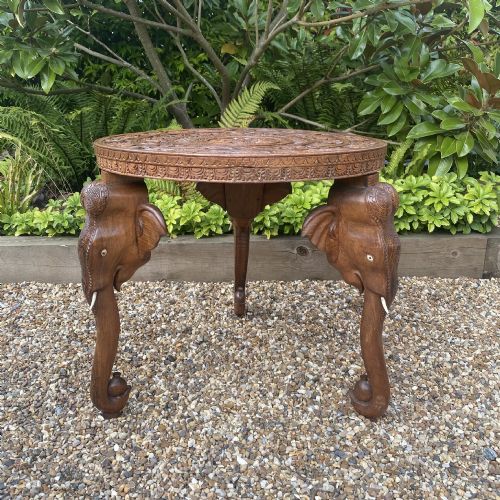
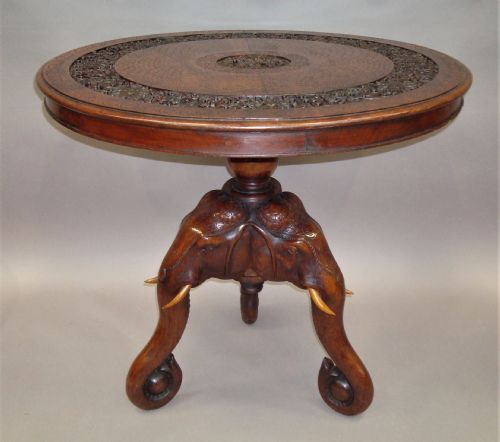
A hand carved elephant table is a distinctive form of occasional furniture, side table, or coffee table incorporating detailed elephant motifs into its structure. These pieces frequently emerge from Anglo-Indian, Anglo-Burmese, and Asian folk art traditions, reflecting colonial-era and regional woodworking artistry.
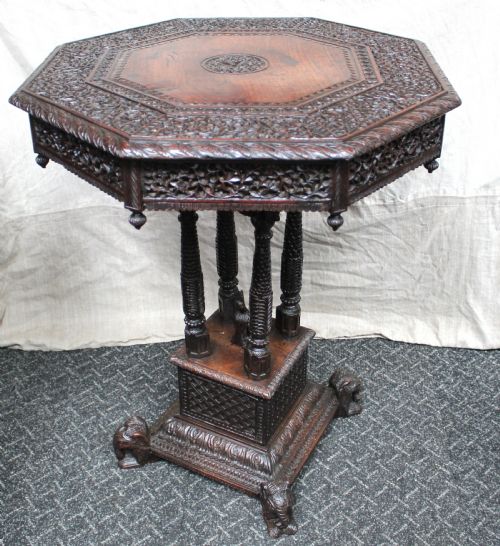
The versions most commonly met on this page span the late nineteenth century through to the early twentieth century, including periods such as the Victorian era, 1890, 1900, 1910, and 1920. They take various functional shapes, from octagonal and rectangular side tables to circular occasional tables and nesting coffee table sets.
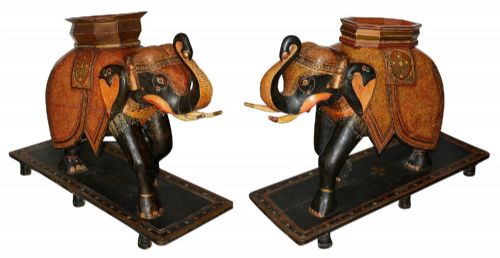
Beyond standard tables, related forms also appear, including sculpted animal bodies with tusks, window seats, hall benches, and stools. Their origins trace across the Bombay Presidency and Burma, establishing a strong identity rooted in colonial craftsmanship.
How they were made
Makers utilised dense timbers, predominantly teak and assorted hardwoods, to form the robust structural framework required for heavy relief carving. These foundational woods provided the necessary durability for intricate detailing on legs, aprons, and table tops.
Surface ornamentation relied on specialised techniques including bone inlay, gesso application, pigment colouring, and lacquer finishes. Artisans meticulously carved the wood and integrated contrasting materials to accentuate the sculptural elephant forms and geometric borders.
Hand Carved Elephant Table Retail Price Guide 2026
Typical asking prices for hand carved elephant table among the pieces listed under this phrase on Sellingantiques today, from the lower quarter to the upper quarter. They describe what is for sale here now, not the wider market.
Some tables feature elephants with prominent tusks and sculpted bodies ready to hold up your afternoon tea.
What varies in quality
The depth and crispness of the carving distinguish finer examples, where every fold of skin and facial feature is rendered with anatomical clarity. Lesser pieces often exhibit shallow, generalized tooling that lacks definition.
The selection and integration of secondary materials, such as finely fitted bone inlay or smooth lacquer coatings, separate standard items from superior specimens. Structural integrity in the stance of the supporting elephant figures also dictates overall execution.
The Hand Carved Elephant Table Glossary
- Anglo-Indian
- A style reflecting design elements produced during the British period in India. It merges traditional local woodworking techniques with European furniture forms.
- Bone Inlay
- A decorative technique where small pieces of bone are set into the surface of wood to create intricate patterns. This method adds striking contrast against dark hardwoods.
- Gesso
- A plaster-like mixture applied to wood surfaces as a base for paint or gilding. It provides a smooth ground for detailed polychrome work.
- Occasional Table
- A small, light table designed for intermittent use in various domestic settings. These items function easily as lamp stands or display surfaces.
Hand Carved Elephant Table: Frequently Asked Questions
What is an elephant table?
An elephant table is a piece of occasional furniture supported by carved wooden elephant figures, often originating from nineteenth-century India or Burma.
These tables serve practical functions as side or coffee tables while displaying rich colonial craftsmanship and animal motifs.
What materials are used?
Main construction relies on dense timbers such as teak and various hardwoods suited for deep hand carving.
Additional decorative elements frequently include bone inlay, gesso, pigment, and lacquer to highlight the sculptural details.
Where were they made?
These items originate primarily from regions within the Bombay Presidency and Burma during the colonial era.
Local artisans combined indigenous folk art traditions with European furniture demands to create these distinctive export pieces.