


Anglo Indian Carved Furniture
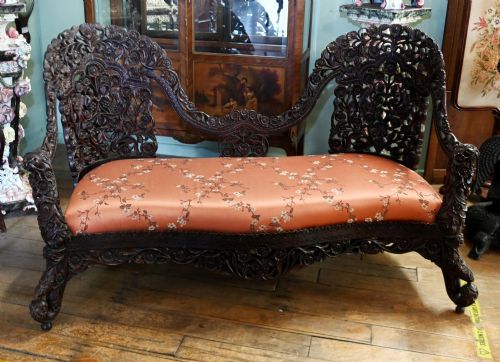
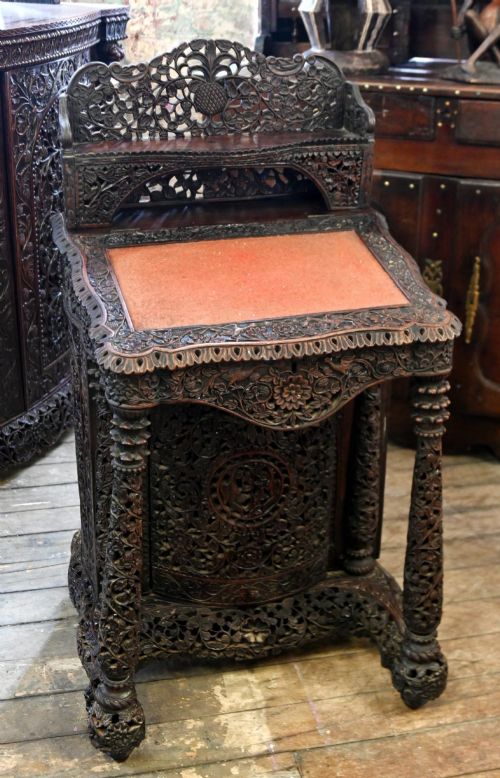
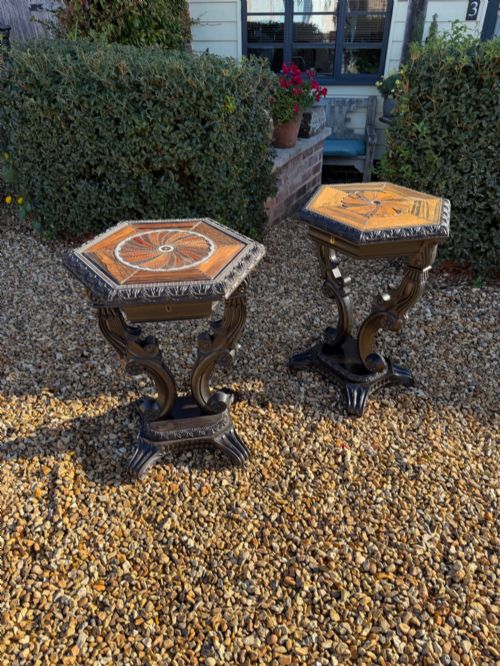
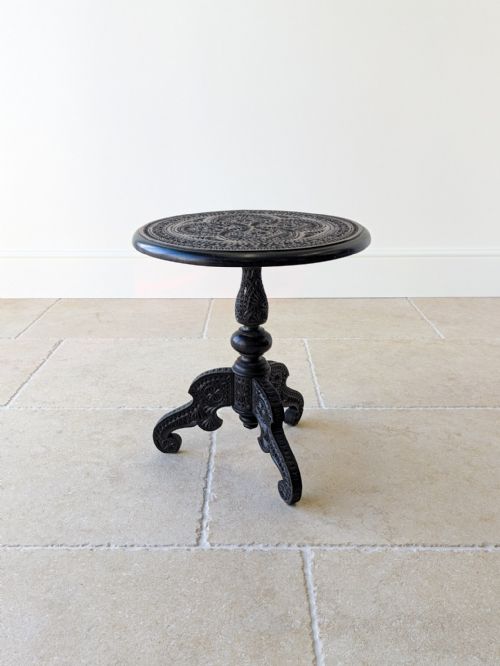
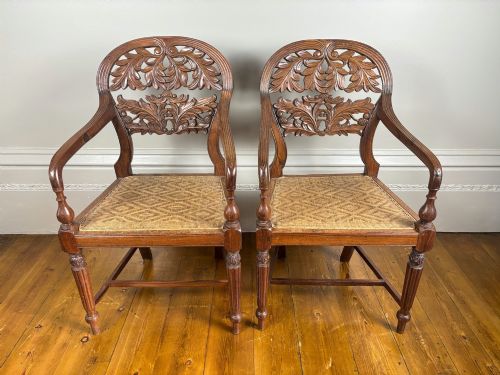
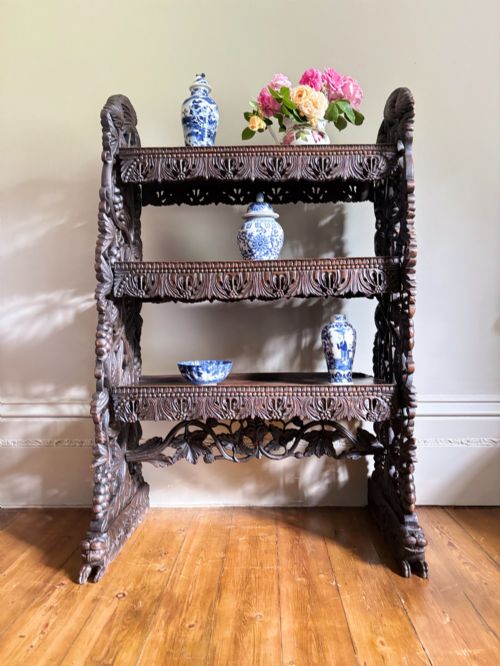
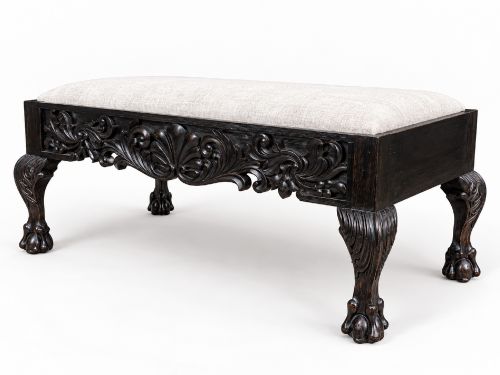
Anglo Indian carved furniture brings intricately worked timber and exotic forms straight into a room.

Anglo Indian Carved Furniture
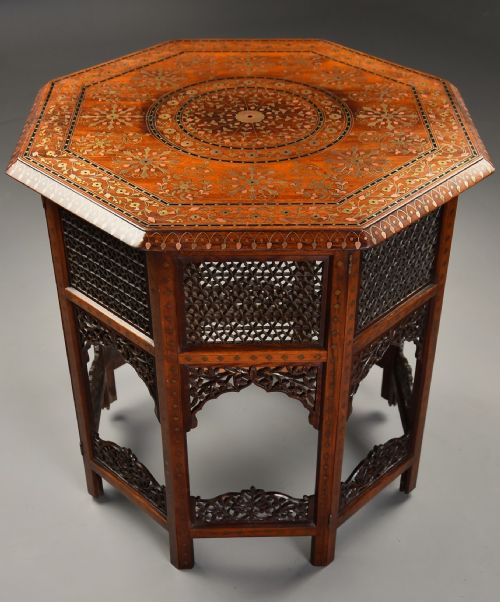
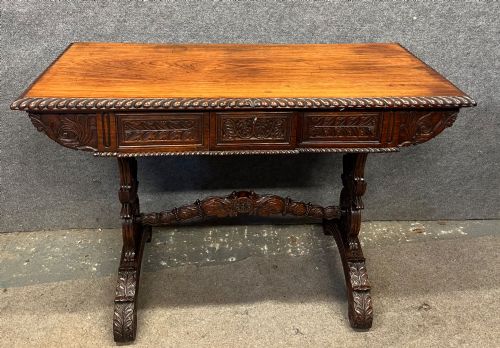
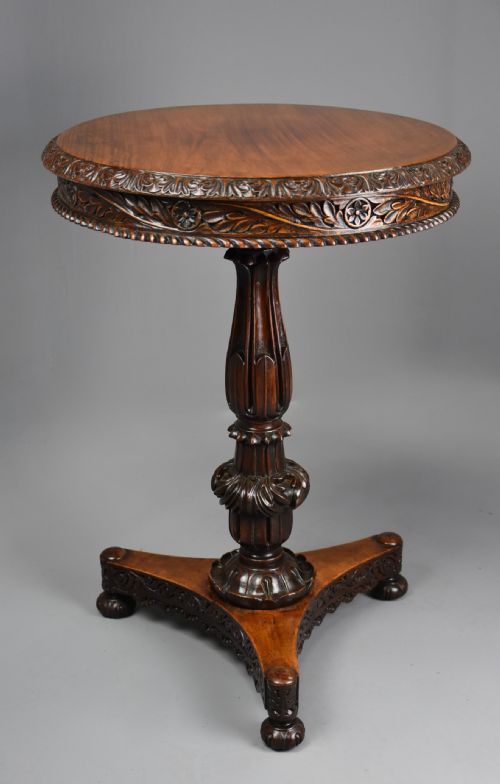
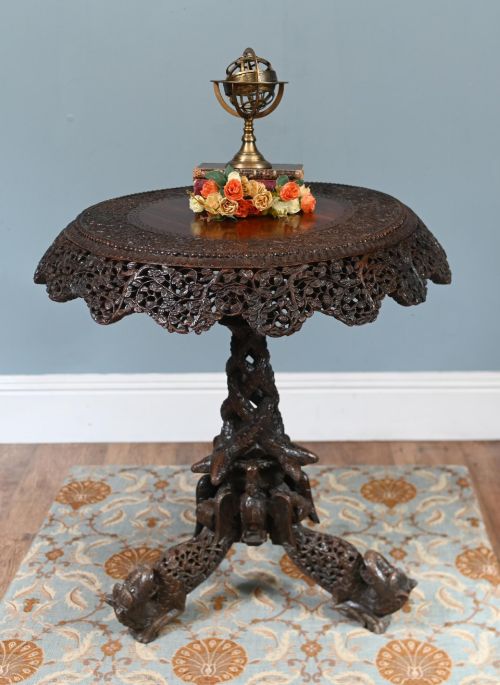
Anglo Indian carved furniture unites traditional Indian craftsmanship with British colonial room layouts and domestic requirements. Buyers searching for anglo indian carved furniture encounter side tables, occasional tables, centre tables, and campaign tea tables designed for versatility.
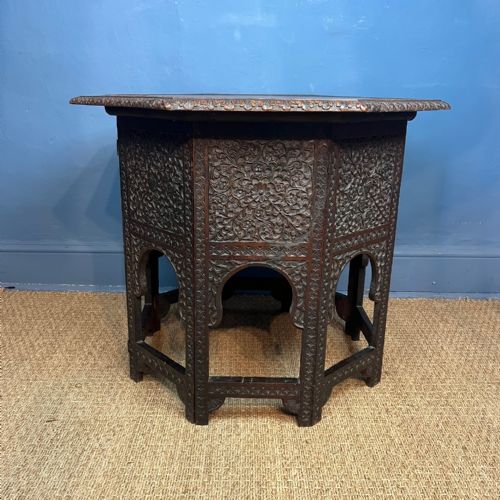
The pieces appearing here span the Victorian era, nineteen hundred, and nineteen twenty, reflecting the sustained popularity of colonial export pieces. Forms such as the folding serving table and the elephant table demonstrate the distinct dual heritage of these objects.
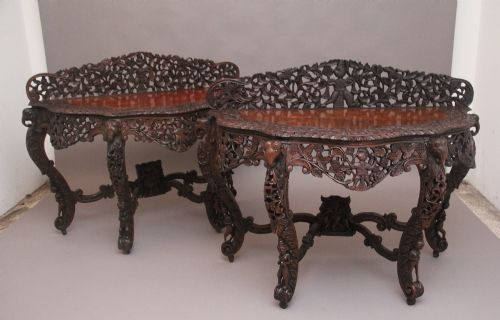
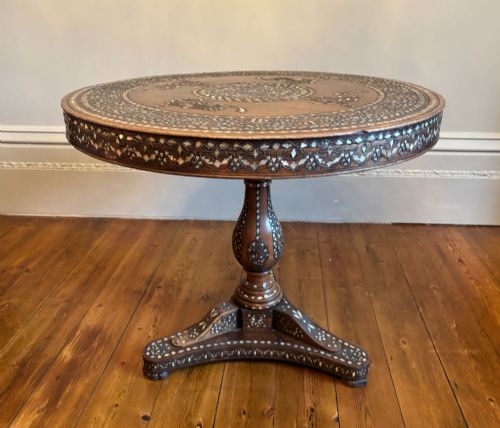
Side tables and centre tables dominate the selection, offering functional surfaces covered in deep relief carving. Each piece carries the characteristic stylistic markers of the Anglo-Indian and Anglo-Indian Colonial traditions.
Materials and Construction
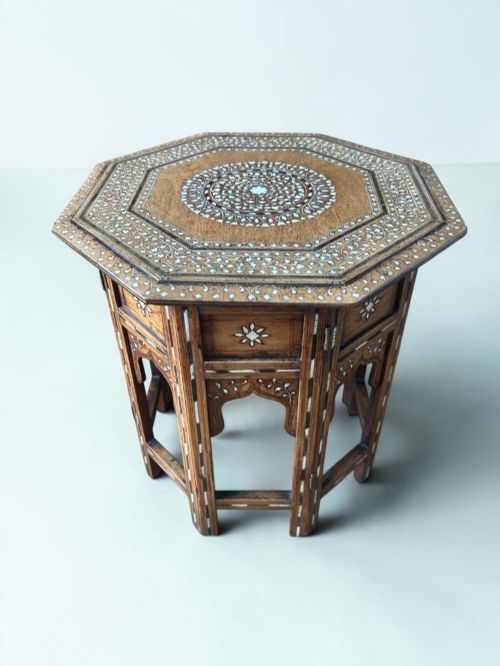
Joiners and carvers utilised dense tropical woods, primarily teak and other robust hardwoods, capable of holding extraordinarily fine detail. Bone inlay frequently accents the dark timber surfaces, creating striking tonal contrast across the carved decoration.
The construction methods balanced stability with portability, evidenced by folding campaign tea tables designed for colonial travel. Artisans worked the solid timber by hand, cutting deep motifs depicting figures, foliage, and animals directly into the heavy wood.
Anglo Indian Carved Furniture Retail Price Guide 2026
Typical asking prices for anglo indian carved furniture among the pieces listed under this phrase on Sellingantiques today, from the lower quarter to the upper quarter. They describe what is for sale here now, not the wider market.
Carved wooden elephants steadfastly hold up table tops, ensuring every tea break comes with a small safari.
Assessing Quality
The distinction between ordinary and exceptional work rests entirely on the depth, clarity, and discipline of the carving. Superior examples display crisp undercut foliage and well-defined animal figures that retain their sharpness across every surface.
Material selection also dictates standing, with dense, unblemished teak and precise bone inlay marking out the superior items in the range. The integration of functional elements, such as smooth folding mechanisms on tea tables, separates masterwork from standard production.
The Anglo Indian Carved Furniture Glossary
- Campaign tea table
- A portable folding table designed for easy transport by military officers or colonial administrators on the move.
- Elephant table
- A low or occasional table supported by carved wooden figures of elephants, often carrying a round tray top.
- Bone inlay
- The technique of embedding thin sections of carved animal bone into recesses within the timber to form geometric or floral patterns.
- Side table
- A small functional table intended to sit against a wall or beside seating, frequently utilised for lamps or display.
Anglo Indian Carved Furniture: Frequently Asked Questions
How do I date these pieces?
Dating relies on stylistic clues, construction methods, and the historical periods associated with surviving examples, such as the Victorian era and the early twentieth century. Teak and hardwood construction remains consistent across these decades.
Examining the complexity of the carving and the presence of bone inlay helps place a piece within the broader colonial production timeline.
Where were these tables used?
These tables served various practical functions in colonial drawing rooms, studies, and verandahs, acting as serving surfaces or display stands. Folding variations allowed for easy relocation and storage.
Today, side tables and centre tables fit easily into modern living spaces as accent pieces that provide both surface area and decorative impact.
What wood was used?
Carvers relied primarily on teak and other heavy hardwoods sourced locally in India. These timbers provided the necessary weight and durability for deep relief work.
The natural density of hardwood allowed artisans to carve intricate animal figures and foliage without compromising the structural integrity of the table.