

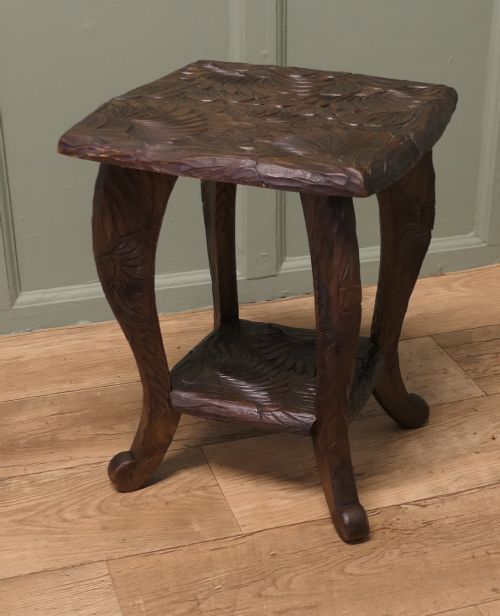

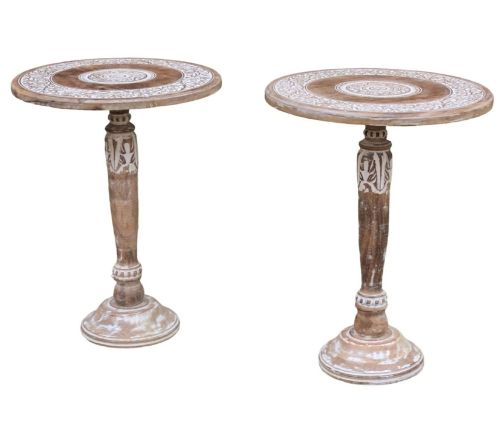
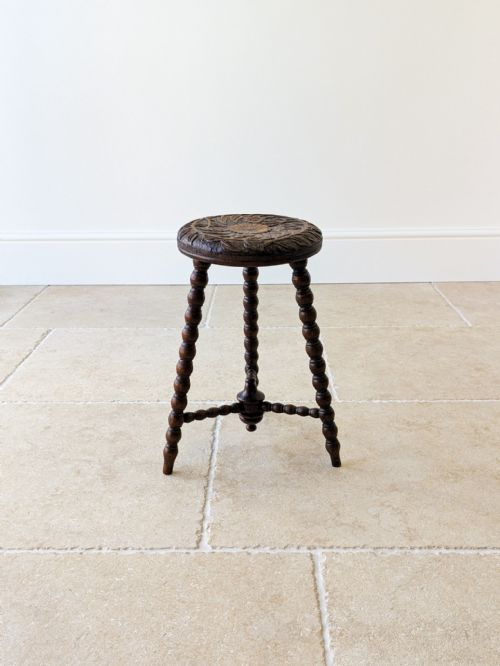
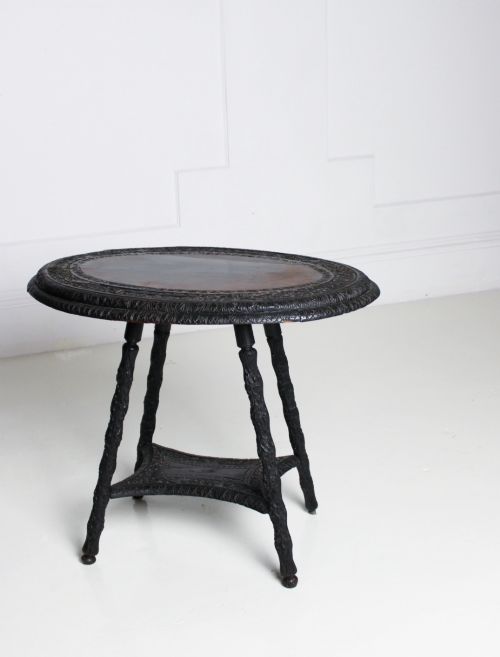
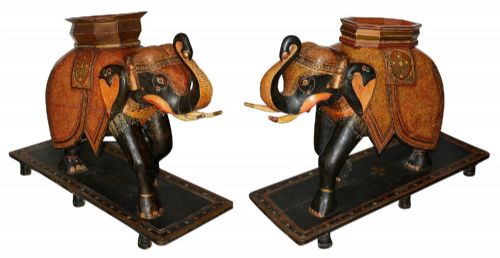
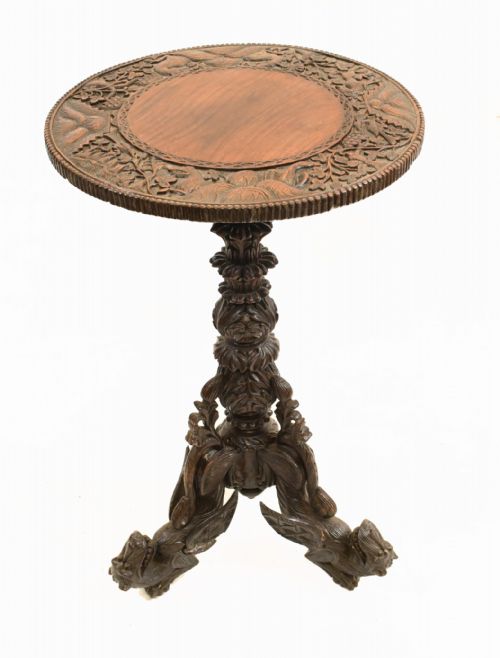


Hand Carved Plant Stand
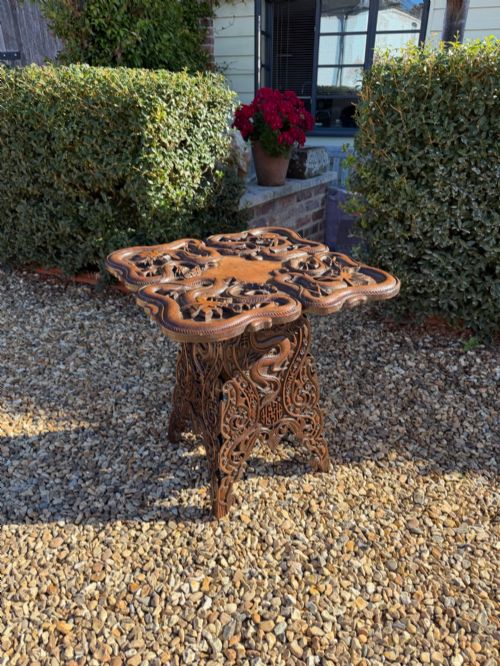
A hand carved plant stand brings intricate, regional woodwork into a room, offering a solid surface shaped by traditional hands.
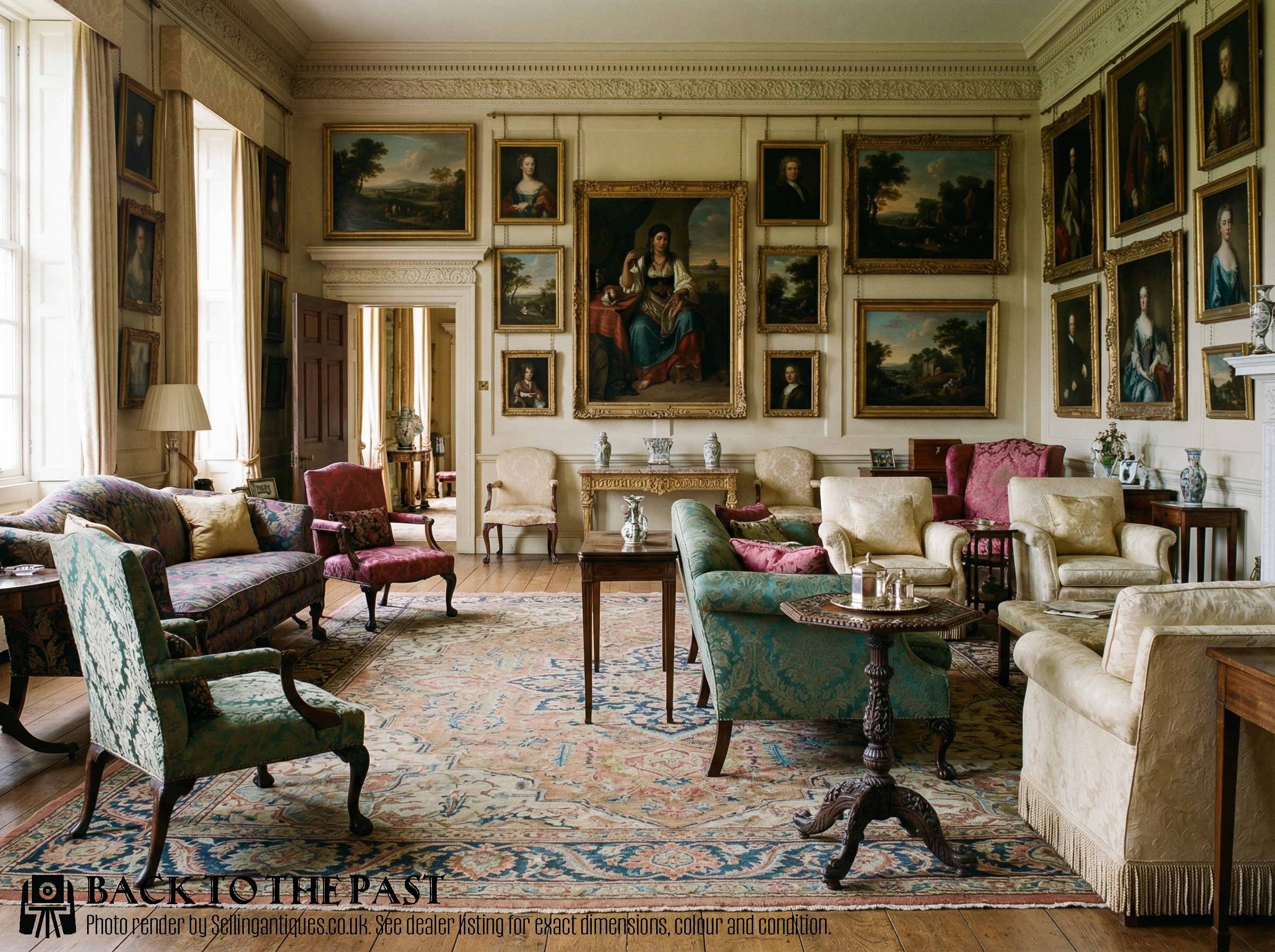
Hand Carved Plant Stand
A hand carved plant stand appears in forms such as side tables and elephant tables, serving as compact display pieces. These items arrive from the nineteenth century, including Victorian periods and the years 1900 and 1910.
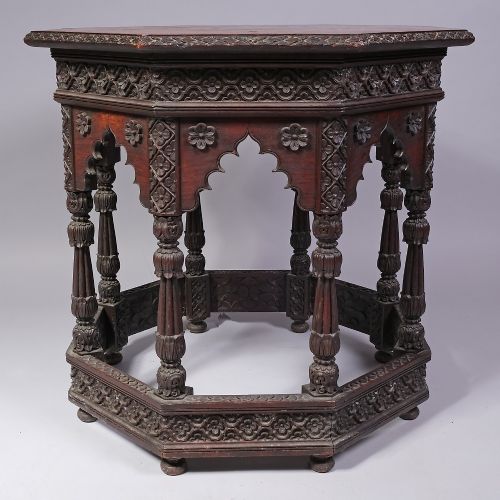
The aesthetic bridges several distinct cultural traditions, including Anglo-Indian, Chinese Export, Anglo-Indian Colonial, and Anglo-Burmese styles. Regional workshops produced these functional objects to meet both local utility and international export demands.
How They Were Made
Artisans utilised dense, durable timbers such as hardwood, teak, rosewood, and padauk wood to construct these stands. These heavy woods provided the stable structural foundation necessary to support deep, intricate relief carving without warping.
Skilful hands applied relief work, pierced details, and occasional bone inlay directly into the solid timber substrate. This subtractive technique required precise control to achieve the characteristic motifs seen across Chinese dragon and Indian floral patterns.
Hand Carved Plant Stand Retail Price Guide 2026
Typical asking prices for hand carved plant stand among the pieces listed under this phrase on Sellingantiques today, from the lower quarter to the upper quarter. They describe what is for sale here now, not the wider market.
What Varies in Quality
Excellence in these pieces rests upon the depth, clarity, and discipline of the chisel work across the timber. Superior examples exhibit sharp undercutting and well-defined figurative elements, whereas lesser pieces display shallow, generalised surface scoring.
The choice of material also dictates distinction, with heavy, figured rosewood and padauk commanding greater presence than standard hardwoods. Furthermore, the integration of delicate bone inlay elevates the decorative complexity of the structure.
The Hand Carved Plant Stand Glossary
- Padauk wood
- A heavy, durable tropical timber with a reddish hue used in regional cabinetmaking. It provides a stable dark canvas for intricate carving.
- Anglo-Indian
- A style blending British furniture forms with traditional Indian carving techniques. These objects date largely from the nineteenth century.
- Rosewood
- A dense, heavily figured hardwood prized for its dark grain and polished finish. Artisans selected it for high-relief decorative surfaces.
- Chinese Export
- Objects manufactured in China specifically for Western markets, often featuring distinct cultural motifs like dragons. They combine local materials with foreign form requirements.
Hand Carved Plant Stand: Frequently Asked Questions
What periods do these stands come from?
The pieces available originate primarily from the nineteenth century, including specific Victorian examples alongside items dated around 1900 and 1910.
These dates reflect the height of cross-cultural trade and colonial-era craftsmanship across Asian and British markets.
What materials were used?
Maker workshops utilised dense timbers such as teak, rosewood, padauk wood, and general hardwood to ensure structural integrity.
Some examples also incorporate bone details to accentuate the carved motifs across the surface.
How do I identify different styles?
Styles are recognised through specific regional motifs, such as Chinese dragon patterns or traditional Anglo-Indian and Anglo-Burmese floral carvings.
Examining the depth of the relief work and the specific timber grain helps distinguish one regional workshop tradition from another.
Where were these items made?
Origin points include workshops in India, Burma, and China that produced decorative furnishings for export during the nineteenth and early twentieth centuries.
These pieces reflect distinct regional woodworking traditions adapted for international domestic interiors.