

Dark Teak Side Table
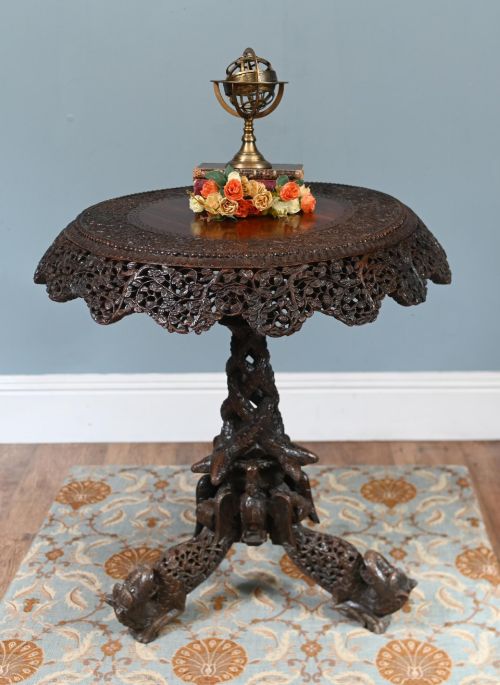
A dark teak side table brings rich colonial craftsmanship and intricate carving into a modern room.
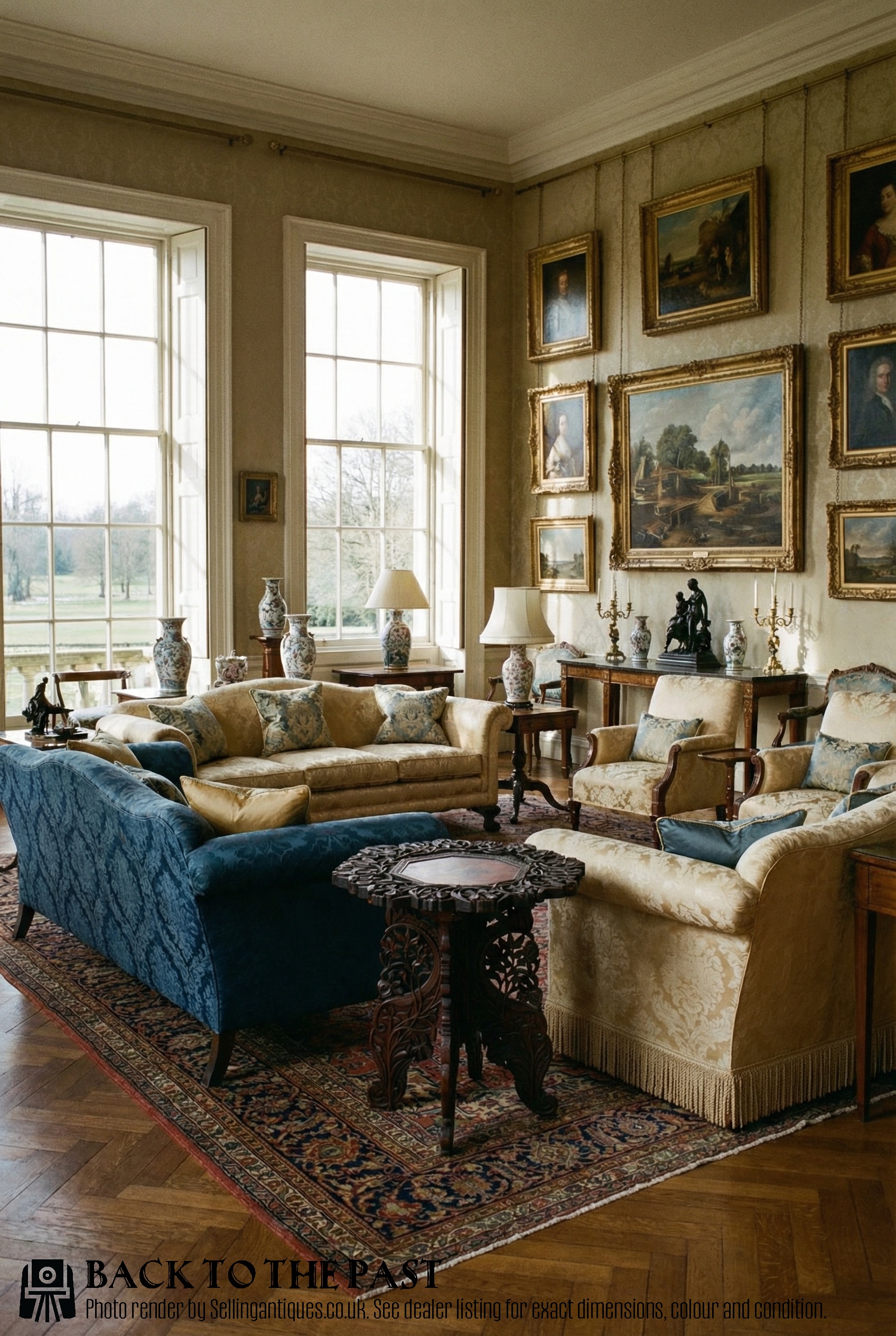
Dark Teak Side Table
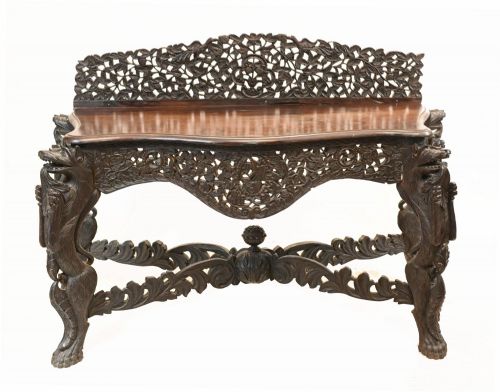
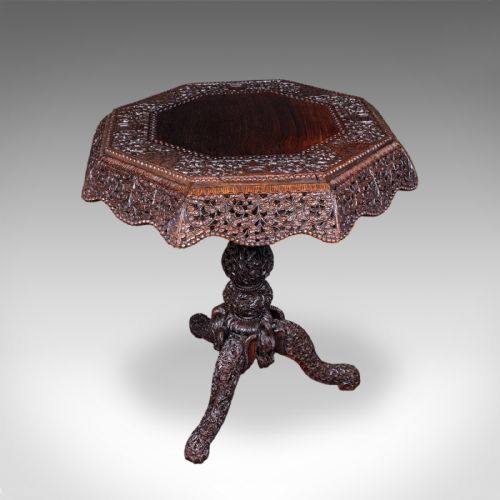
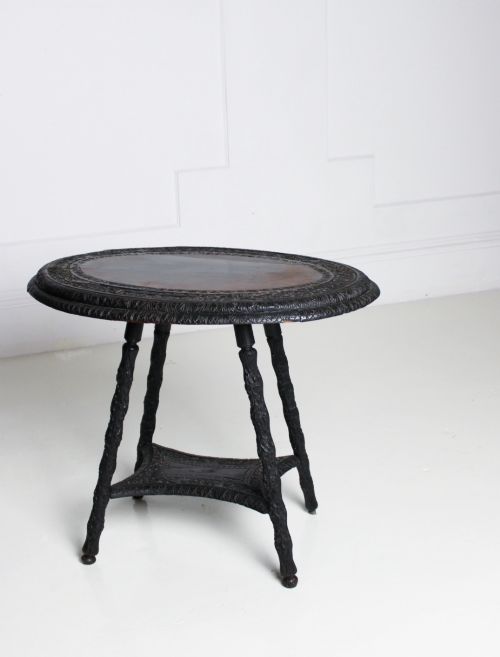
A dark teak side table sits at the intersection of British colonial history and traditional Eastern woodworking, taking forms like octagonal surfaces, tray tops, and occasional tables. These pieces arrive from regions such as Burma and the Bombay Presidency, dating primarily from the nineteenth and early twentieth centuries.
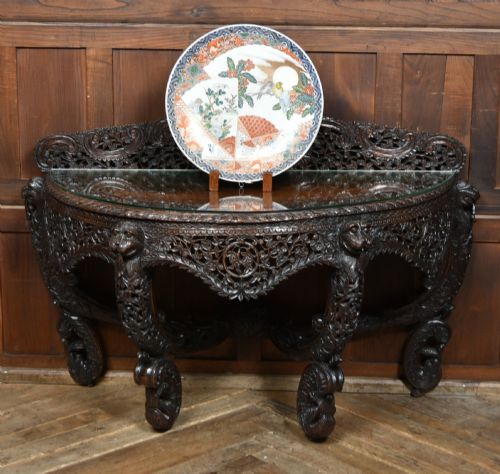
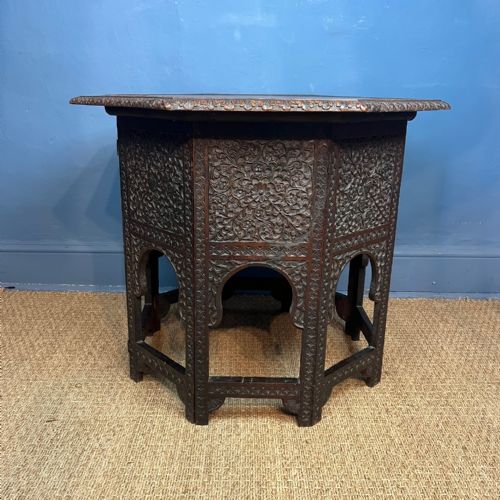
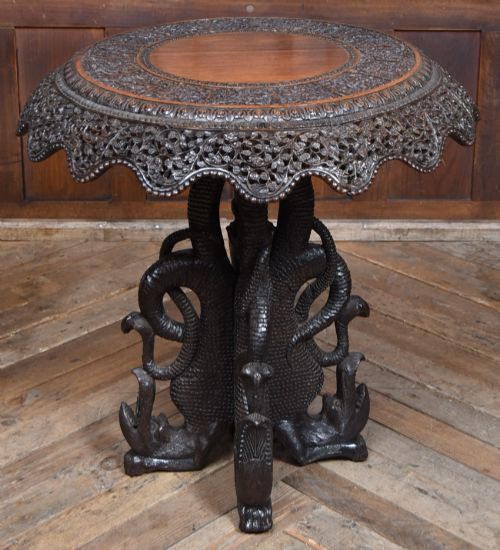
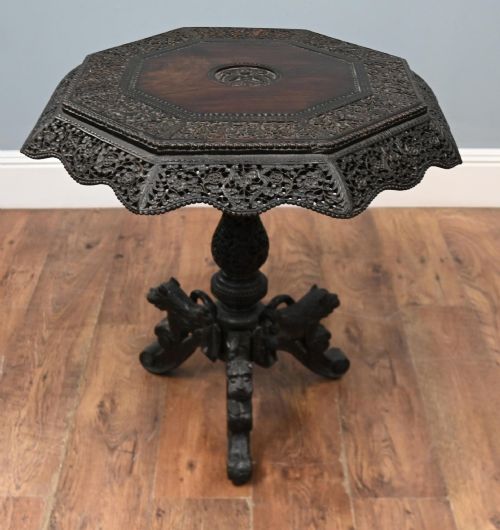
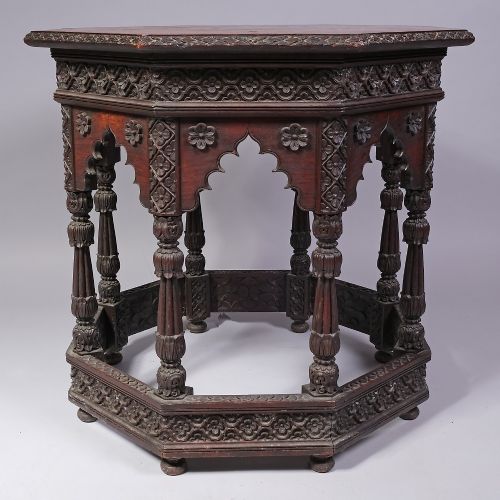
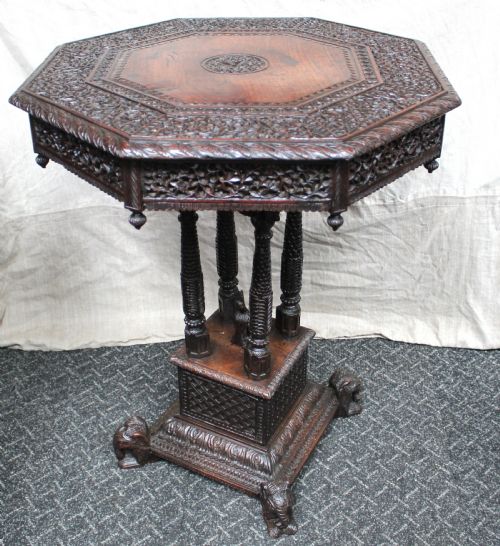
The version most commonly met on this page is the Anglo-Indian or Burmese octagonal table, frequently supported by carved elephant figures or folding bases. Such pieces combine utility with dense surface ornamentation, serving as lamp tables or low coffee tables in contemporary interiors.
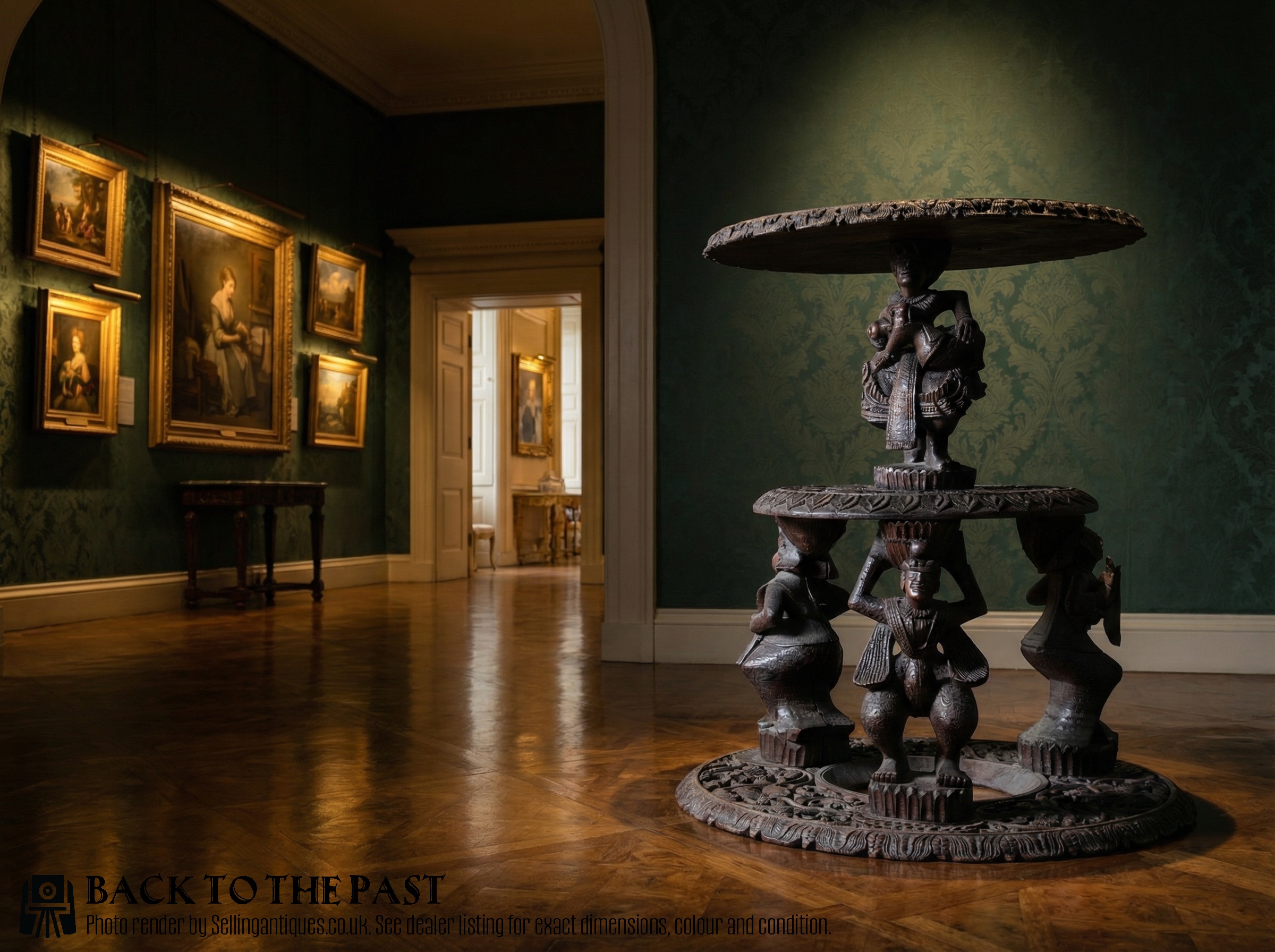
How they were made
Maker workshops utilised dense tropical timbers like teak, rosewood, and padouk, which provided a stable base for deep relief carving. Artisans chiselled intricate floral and geometric motifs directly into the solid wood, often integrating folding mechanisms for portability.
Contrasting materials provide the decorative highlights across these surfaces, with brass wire and sheet inlaid into the timber alongside delicate bone inserts. These metal and bone details define regional styles such as those associated with Hoshiarpur.
Dark Teak Side Table Retail Price Guide 2026
Typical asking prices for dark teak side table among the pieces listed under this phrase on Sellingantiques today, from the lower quarter to the upper quarter. They describe what is for sale here now, not the wider market.
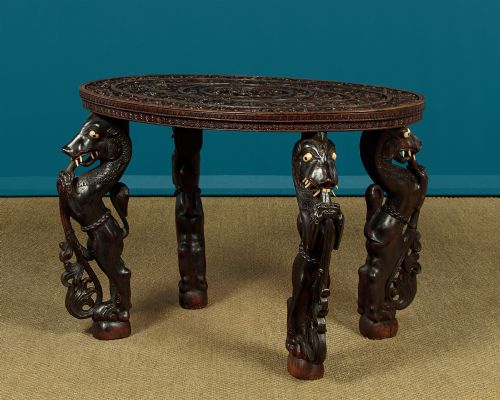
Several tables rely entirely on carved wooden elephants to hold up the tea.
What varies in quality
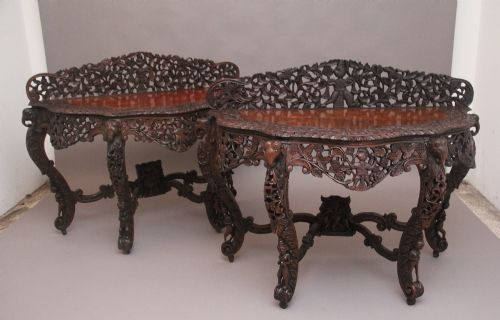
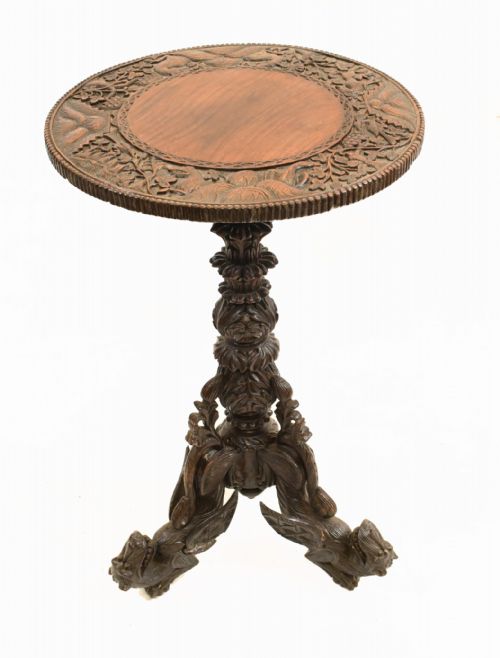
The depth and crispness of the hand carving separate standard production from superior examples, with finer pieces showing undercut foliage and sharp details that retain their definition across the entire surface. Inferior specimens often display shallow, hasty incisions that lack three-dimensional relief.
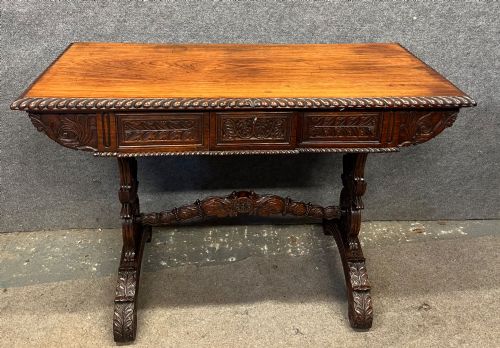
The integrity of the joinery and the precision of the brass or bone inlay determine the overall calibre of the table. Better examples maintain tight joints and securely seated metalwork, whereas lesser items suffer from lifted wire or loose structural elements.
The Dark Teak Side Table Glossary
- Tray top
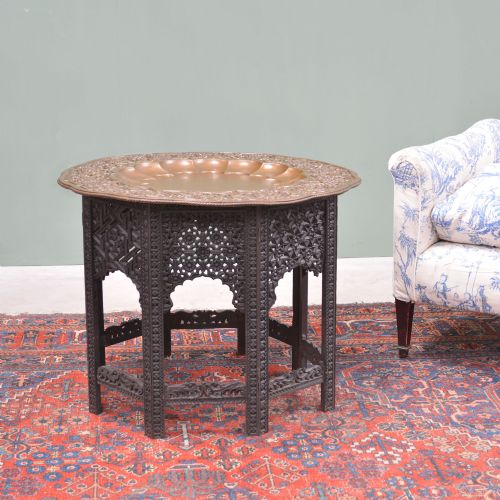
- A removable or stationary tabletop with a raised rim designed to prevent items from sliding off. This form frequently appears on folding stands.
- Octagonal table
- An eight-sided surface supported by folding legs or a central pedestal. This geometric form allows for intricate border carvings around the perimeter.
- Hoshiarpur
- A North Indian centre known for intricate woodwork and inlay. Pieces from this region typically feature dense brass wire work set into teak.
- Elephant table
- A low occasional support whose base incorporates carved elephant figures. These animals frequently form the legs or structural columns of the piece.
- Padouk
- A heavy tropical hardwood with a reddish-brown tone. Makers utilised this timber for circular tilt-top tables.
Dark Teak Side Table: Frequently Asked Questions
Where were these tables made?
The pieces originate primarily from workshops in India and Burma during the nineteenth and early twentieth centuries, created during the British colonial period.
Local artisans adapted indigenous woodworking traditions to suit British domestic tastes, producing items for export and colonial use.
How do I care for teak surfaces?
Maintain the timber by dusting with a soft cloth and occasionally applying a neutral beeswax to nourish the dense grain.
Avoid placing these tables in direct sunlight or near heat sources to prevent the wood and bone inlay from drying out.
Are folding tables sturdy?
Many examples utilise a clever interlocking wooden lattice mechanism that collapses flat without metal hinges.
When properly aligned and set up, these folding bases provide a stable platform for lamps and decorative objects.
What defines an Anglo-Indian style?
This style combines traditional British furniture forms, such as occasional and pier tables, with intricate Eastern carving techniques.
Craftsmen filled the dense teak surfaces with floral motifs, geometric brass inlay, and figural supports like elephants.