
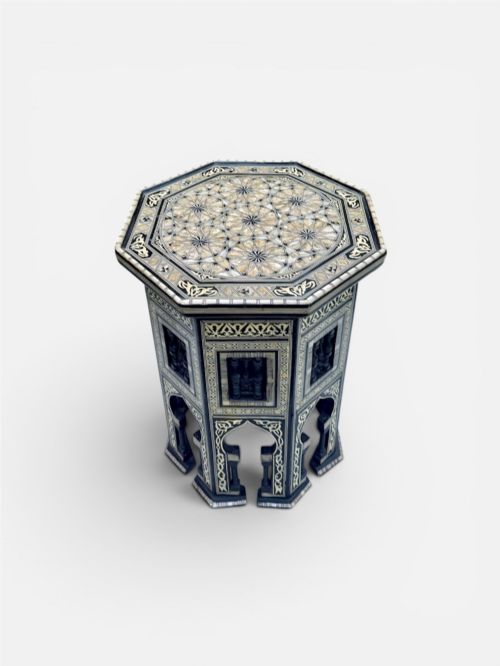
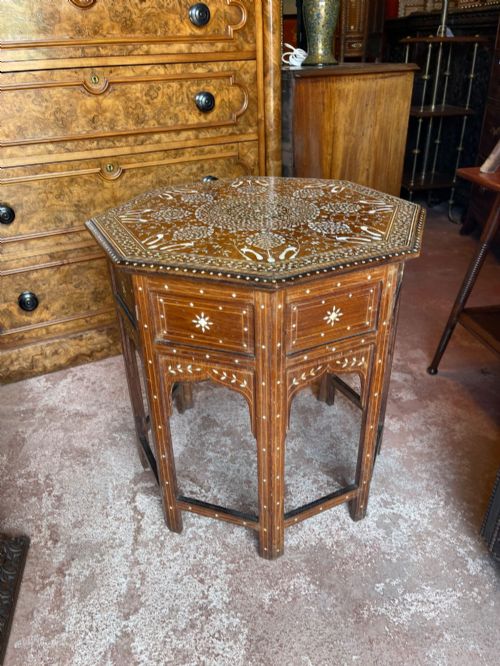
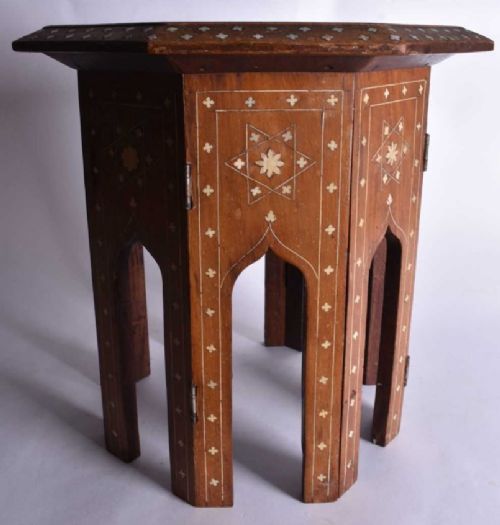
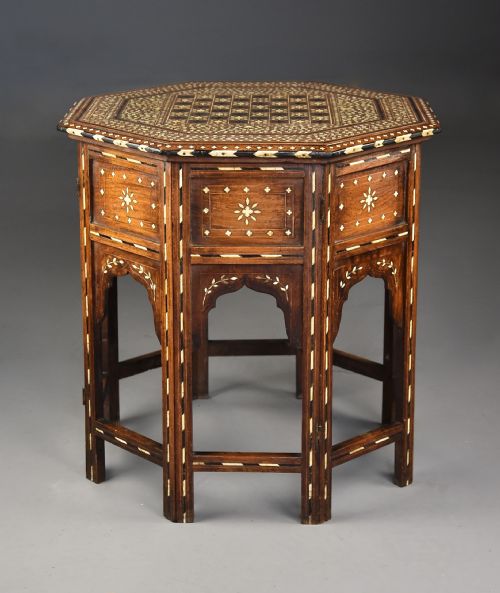
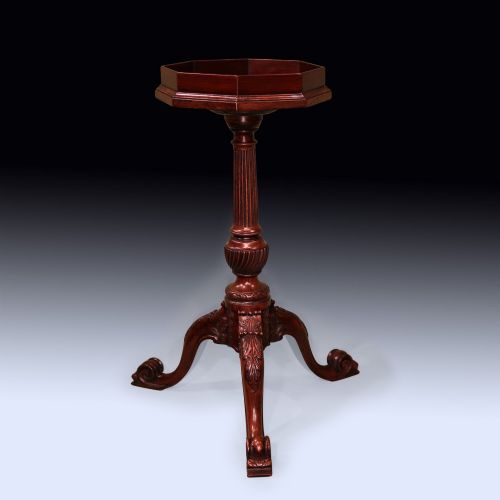

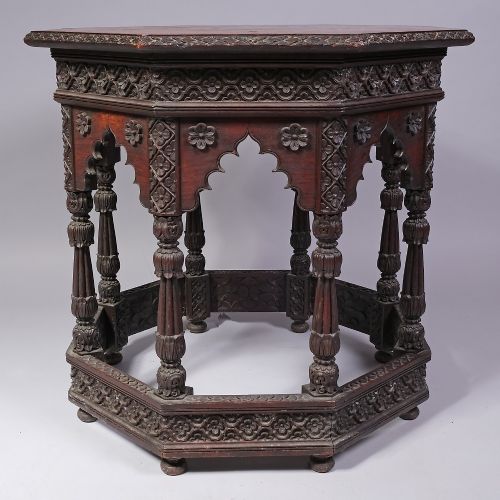
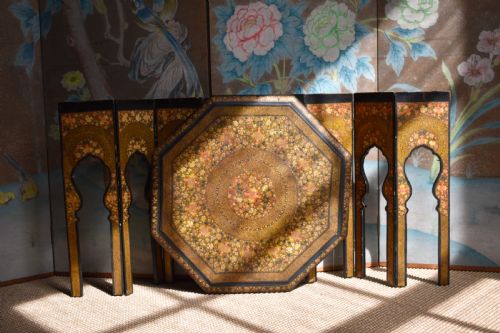
Octagonal Carved Side Table
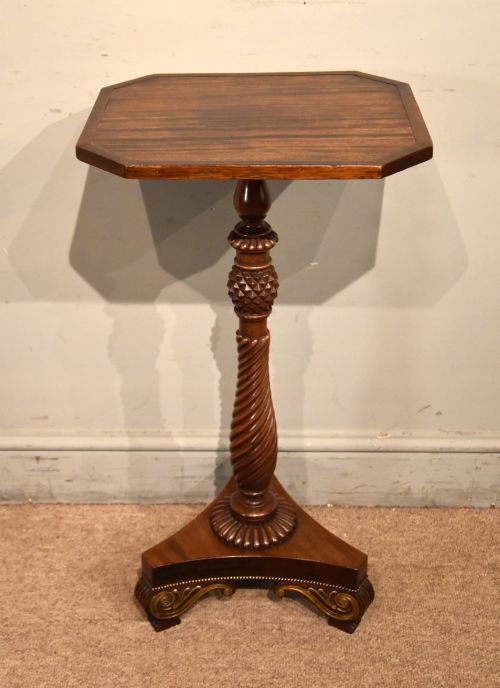
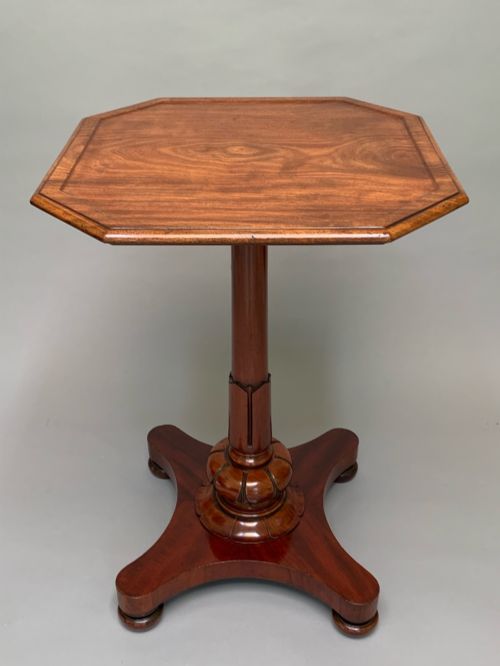
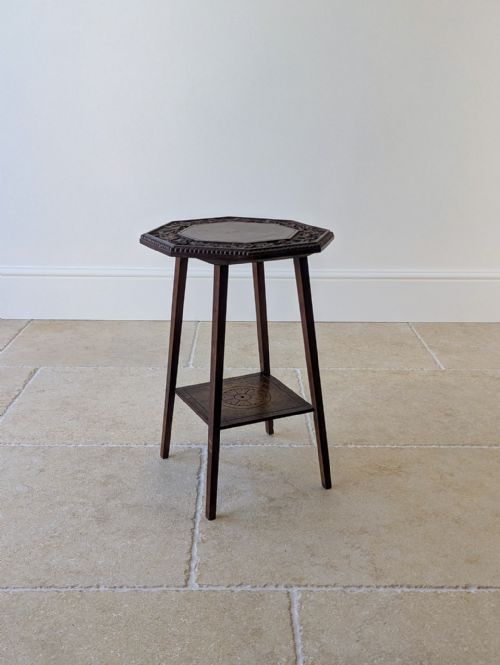
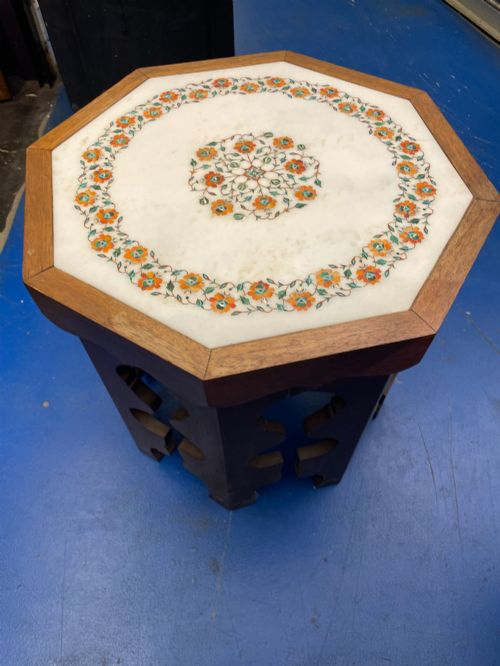
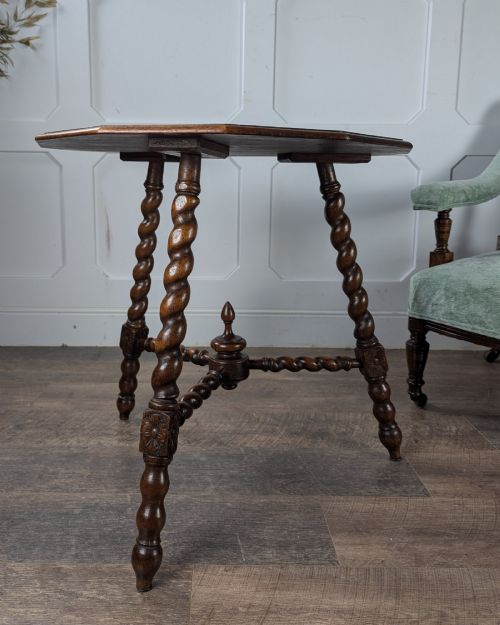
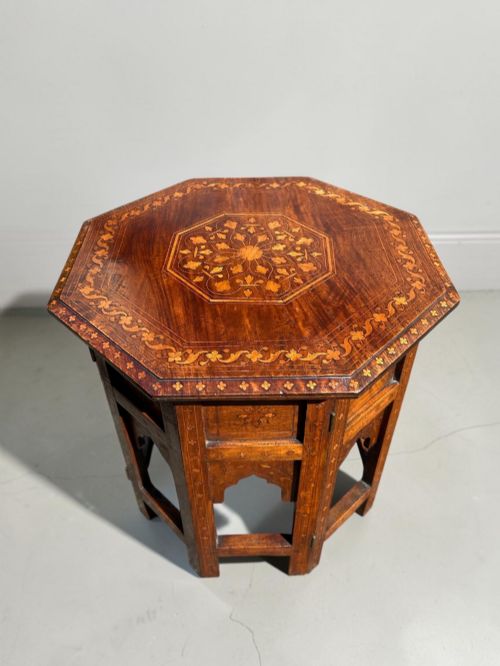
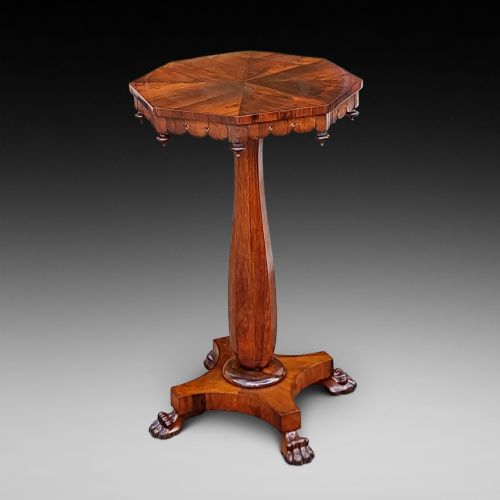
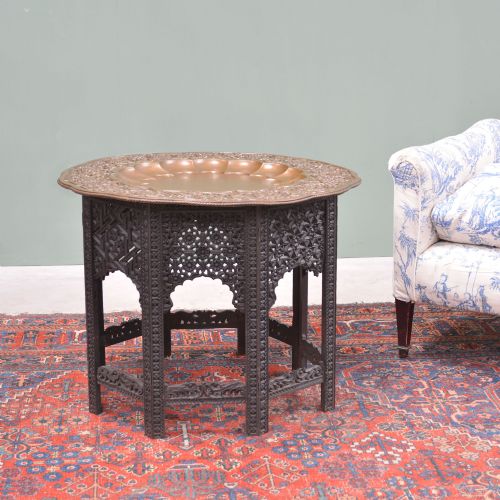
These octagonal carved side table pieces are folding, collapsible occasional and centre tables carved from teak, padauk, and bone inlay in the Anglo-Indian style.
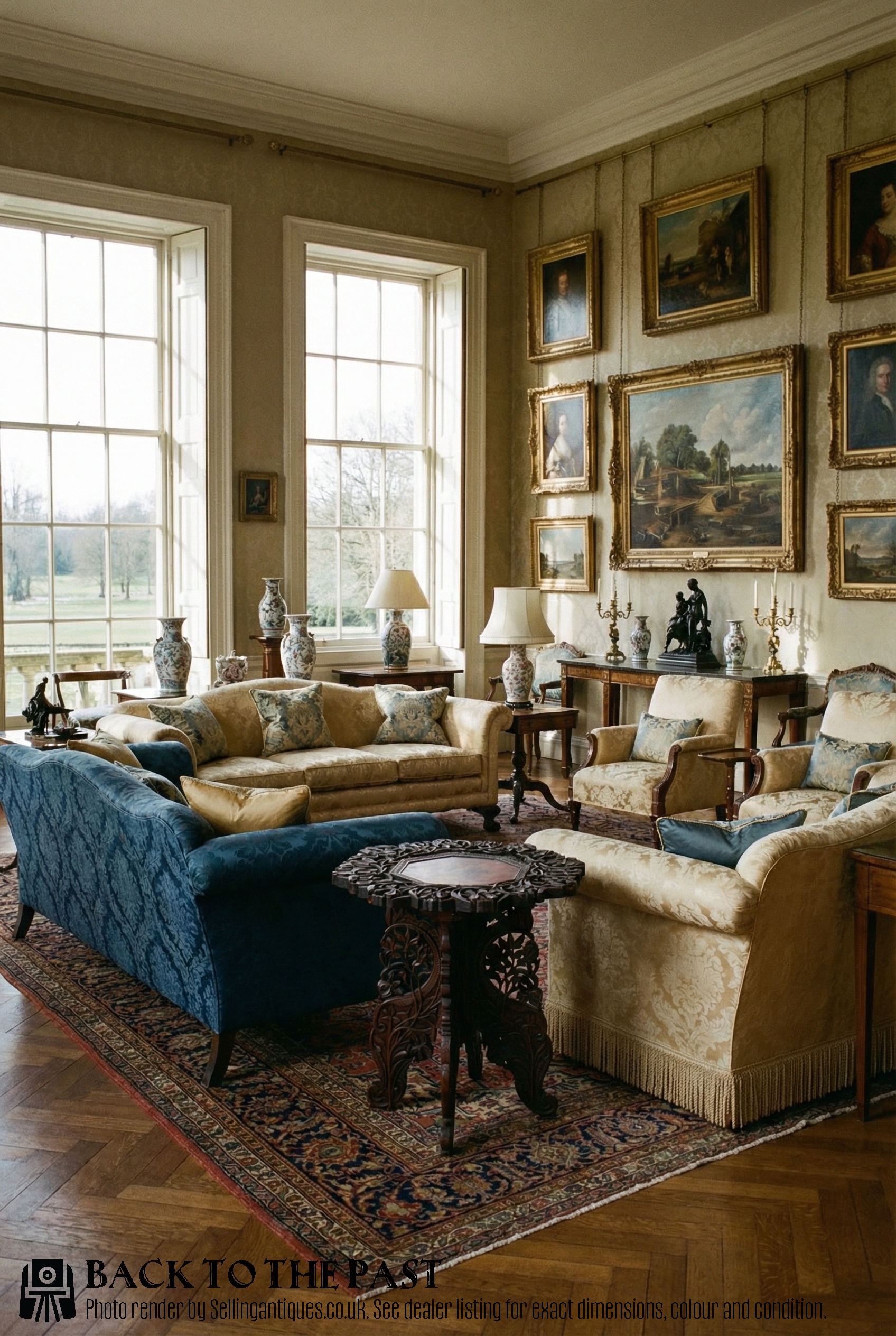
What these pieces are
An octagonal carved side table is typically an Anglo-Indian occasional, centre, or campaign tea table designed for folding or collapsible use. These items appear in forms such as large folding teak lamp tables and Indian elephant tables.
The pieces on this page span the Victorian era, the nineteenth century, and early twentieth-century decades including 1900, 1910, and 1920. They originate predominantly from traditions associated with the Bombay Presidency.
Buyers most frequently meet teak and padauk versions featuring intricate carved hardwood surfaces. Many incorporate functional folding mechanisms suited to campaign or occasional placement.
How they were made
Maker workshops constructed these tables using solid hardwoods such as teak and padauk. These timbers provide the dense, durable foundation necessary for intricate surface decoration and folding structural joints.
Craftsmen applied detailed hand carving across the wooden frames and incorporated bone inlay to create geometric and pictorial motifs. The integration of collapsible and folding hinges required precise joinery that allowed the tables to pack flat.
Retail Price Guide 2026
Typical UK retail prices for octagonal carved side table, calculated from the Sellingantiques database of over a million retail prices indexed since 2003. This retail price guide relies exclusively on Sellingantiques data; no external sources or auction records are used, so the figures do not describe the wider market.
Object types seen on this page include side tables, occasional tables, centre tables, lamp tables, and campaign tea tables.
What varies in quality
Quality rests in the crispness and depth of the carved hardwood and the precision of the bone inlay work. Finer examples display deeply undercut foliage and figures with sharp definition across every panel.
Structural integrity of the folding and collapsible mechanisms separates standard items from superior ones. Tables that retain smooth operation in their hinges and joints without looseness represent the higher tier of production.
The Octagonal Carved Side Table Glossary
- Anglo-Indian
- A style of decorative arts and furniture produced during the British period in India, combining British furniture forms with traditional Indian craftsmanship. This aesthetic defines the carved surfaces and folding frames seen on these tables.
- Padauk
- A heavy, durable reddish-brown tropical hardwood utilised for furniture and occasional tables. Its dense grain supports fine carving and sturdy collapsible construction.
- Bone Inlay
- A decorative technique where small pieces of bone are set into the wooden surface to form intricate patterns. This contrasting white material highlights the dark carved hardwood.
- Occasional Table
- A small, versatile table designed for specific, intermittent uses rather than permanent placement in a room. These pieces often feature folding legs for easy storage and relocation.
- Campaign Table
- Portable furniture constructed for travel and military use, engineered to fold or dismantle efficiently. The inclusion of folding frames in these listings reflects this functional heritage.
Frequently Asked Questions
Are these tables sturdy enough for daily use?
These tables are built from dense hardwoods like teak and padauk, which provides a solid structural foundation for everyday placement. Their folding and collapsible designs mean one should check the joints periodically to ensure steady performance.
They function well as lamp tables or tea tables in living spaces, though heavy loads should be avoided on older folding mechanisms. Proper handling preserves both the hinges and the carved surfaces.
How do I care for bone inlay and carved wood?
Dust the intricate carved surfaces regularly with a soft brush to prevent dirt accumulation in the recesses. Avoid placing the furniture in direct sunlight or near heat sources to protect the wood and bone inlay from drying out.
Applying a minimal amount of appropriate furniture wax helps maintain the lustre of the teak or padauk. Keep moisture away from the bone elements to prevent staining or lifting.
How do I identify an Anglo-Indian table?
Anglo-Indian tables typically feature dense, hand-carved hardwood bodies embellished with motifs such as foliage or elephants. The integration of bone inlay and folding bases provides a distinct visual and structural signature.
Materials like teak and padauk point directly to these regional workshops operating during the nineteenth and early twentieth centuries.
What is a campaign tea table?
A campaign tea table is a portable piece designed to fold or dismantle for ease of transport during travel. These tables combine utilitarian folding frames with decorative carving suited for serving tea.
Victorian examples reflect the practical needs of officers and administrators requiring adaptable furniture that could pack flat.