




Antique Teak Accent Table
An antique teak accent table brings dense timber and intricate colonial carving into a room, serving as a striking focal point for drinks or lamps.
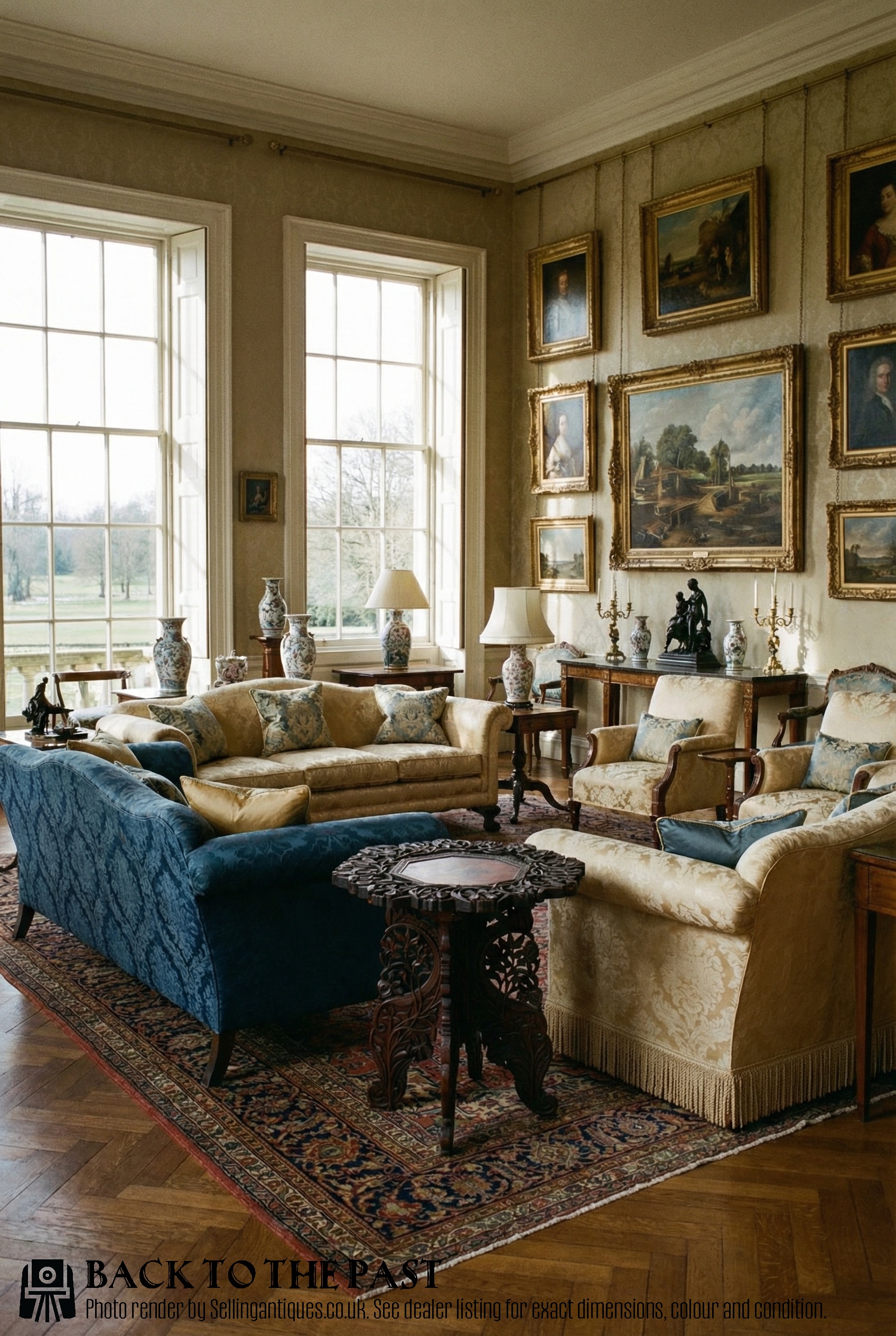
Antique Teak Accent Table
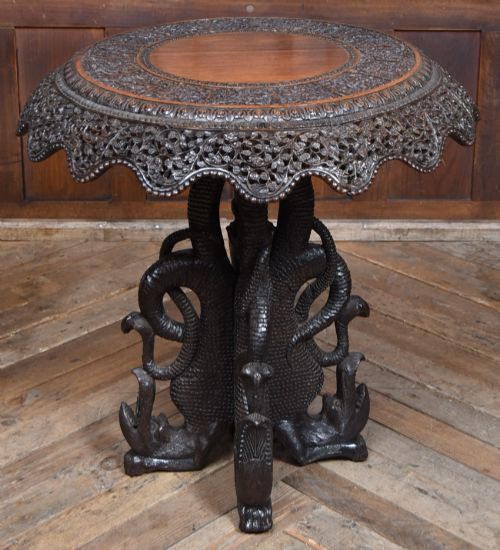
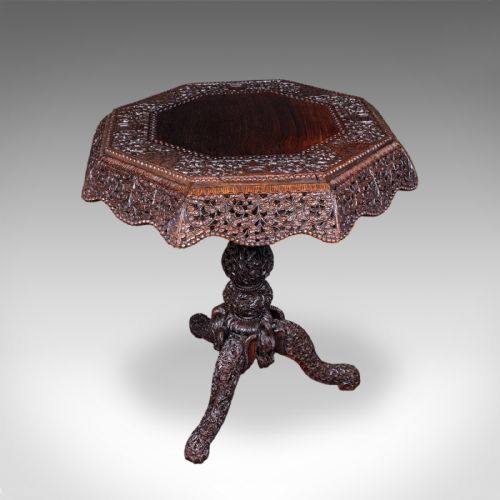
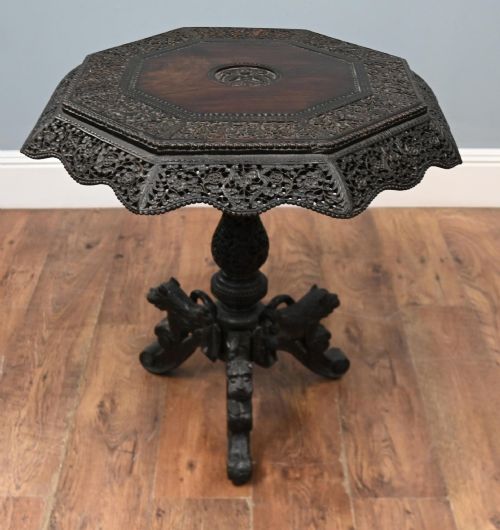
When you search for an antique teak accent table, you encounter diverse forms created across the British colonial world, including side tables, occasional tables, coffee tables, nesting tables, plant stands, and centre tables. These pieces emerge predominantly from nineteenth-century and early twentieth-century workshops across India and Burma, reflecting distinct regional designs made for export or colonial residences. Anglo-Indian and Anglo-Burmese styles dominate the selection, bringing densely carved surfaces and functional domestic furniture together in compact footprints.
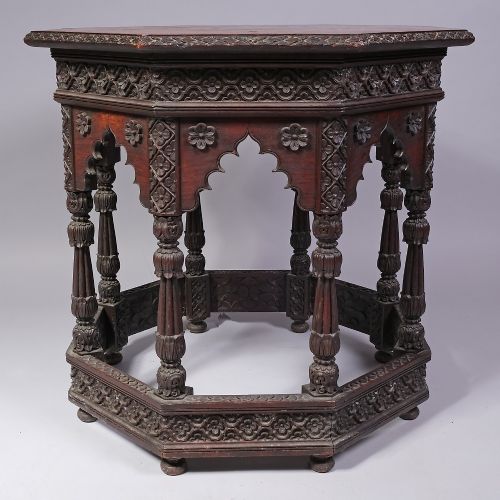
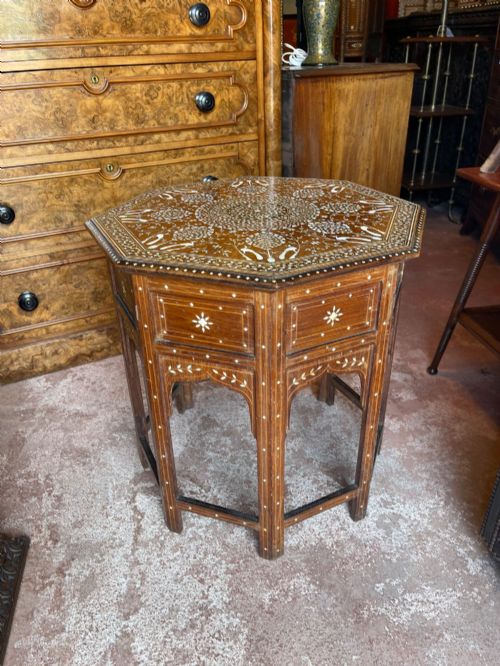
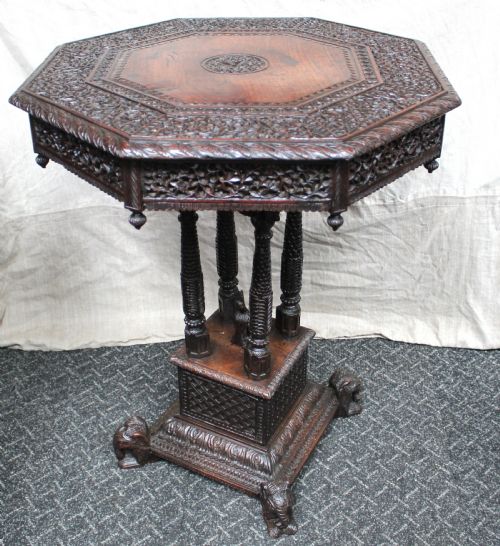
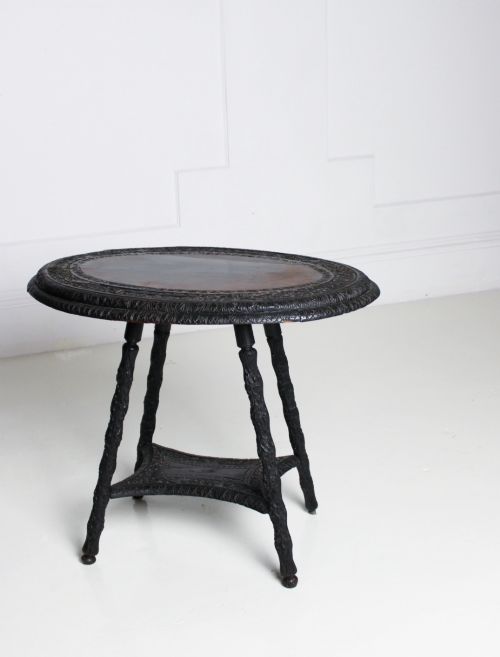
The most common iterations on this page are low tables, folding tables, and octagonal or square side tables supported by intricate legs carved in the likeness of elephants or geometric pillars. You also find two-tier models, tilt-top occasional tables, and nesting sets originating from centres like Hoshiarpur or the Bombay Presidency. Each piece utilises durable tropical timber, frequently paired with contrasting materials to highlight the deep grain of the wood.
How they were made
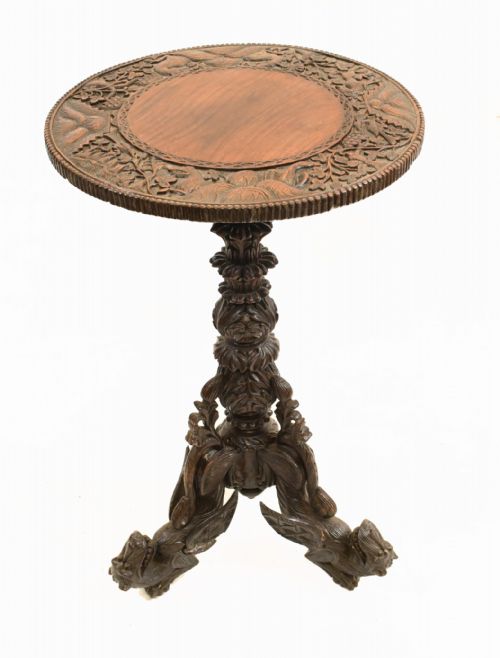
Carpenters constructed these tables using solid teak, rosewood, and related tropical hardwoods, chosen for their density and resistance to decay. Artisans shaped the timber with hand tools, executing deep relief carving across table tops and aprons to depict floral scrolls, foliage, and animal figures. Folding mechanisms and tripod bases required precise joinery to ensure stability without sacrificing portability.
Many surfaces feature intricate embellishments set directly into the wood. Craftsmen hammered brass wire and sheet into carved channels or inlaid delicate pieces of bone and lighter hardwoods to create geometric and architectural motifs. This combination of dense carved teak and contrasting inlay defines the visual weight of these regional tables.
Antique Teak Accent Table Retail Price Guide 2026
Typical asking prices for teak accent table among the pieces listed under this phrase on Sellingantiques today, from the lower quarter to the upper quarter. They describe what is for sale here now, not the wider market.
Current listings feature pieces spanning the nineteenth century through the early twentieth century, utilising teak, rosewood, bone inlay, and brass.
What varies in quality
The distinction between ordinary and exceptional pieces lies primarily in the depth, crispness, and complexity of the hand carving. Superior examples exhibit finely undercut foliage and sharp anatomical details on figural elements like elephant legs, whereas lesser items display shallow, repetitive stamping or machine-like uniformity. The harmony between the structural joinery and the surface decoration also determines the overall calibre of a piece.
Material selection and the integrity of the inlay work further separate grades of manufacture. Tables utilising dense, richly figured teak with secure, complete brass or bone inlay retain their structural tautness and visual contrast over time. Poorer examples often suffer from missing inlay fragments, loose joints, or replacement elements that disrupt the original design scheme.
The Antique Teak Accent Table Glossary
- Teak
- A durable tropical hardwood native to South and Southeast Asia, prized for its natural oils and deep brownish colour that darkens with age. It forms the primary structural material for colonial carved furniture.
- Anglo-Indian
- A descriptive term for furniture made in India during the British colonial period, combining traditional local craftsmanship with European forms tailored for Western domestic use.
- Hoshiarpur
- A town in Punjab renowned for intricate woodwork, particularly tables and screens featuring dense bone and brass inlay set into shisham or teak grounds.
- Tilt-top
- A table construction featuring a hinged top that pivots vertically, allowing the piece to be stored flat against a wall when not in use.
- Nesting tables
- A set of graduated tables designed to slide neatly underneath one another to save floor space while offering multiple surfaces when separated.
Antique Teak Accent Table: Frequently Asked Questions
What is an antique teak accent table used for?
These tables function primarily as small side surfaces for lamps, drinks, or decorative items within living spaces and bedrooms. Their compact dimensions allow them to fit easily beside armchairs or sofas.
Historically, pieces like folding tables and tilt-top designs offered portability for colonial administrators and travellers who needed flexible furnishing arrangements. Today, they serve both practical everyday utility and decorative roles as focal points in a room.
How do I care for antique teak furniture?
Maintain teak surfaces by dusting regularly with a soft, dry cloth to prevent dirt accumulation within the deep carved crevices. Avoid placing these tables near direct heat sources or strong sunlight, which can dry out the dense timber and cause splitting.
Apply a minimal amount of appropriate natural wax occasionally if the wood appears dry, avoiding heavy silicone polishes. Take care around inlaid bone or brass elements to prevent moisture from loosening the surrounding adhesive.
How can I tell Burmese tables apart from Indian ones?
Burmese furniture from the nineteenth century generally displays exceptionally deep, rounded relief carving dominated by dense foliate scrolls, mythical figures, and animals. The timber often presents a heavy, dark grain characteristic of Burmese forests.
Indian regional pieces frequently incorporate specific architectural motifs, geometric brass wire inlay, or distinct structural elements like elephant-form legs. Workshops in centres such as Hoshiarpur relied heavily on contrasting bone inlay, which creates a lighter, patterned surface distinct from purely carved Burmese work.
What periods do these tables come from?
The pieces listed span the nineteenth and early twentieth centuries, capturing the height of the British colonial era. You encounter examples dating from the mid-nineteenth century through the Edwardian period and into the nineteen-thirties.
Earlier examples from the mid-to-late nineteenth century often exhibit hand-carved provenance directly tied to exhibition pieces or bespoke colonial commissions. Pieces from the early twentieth century frequently include more standardised folding mechanisms and export-oriented designs.