

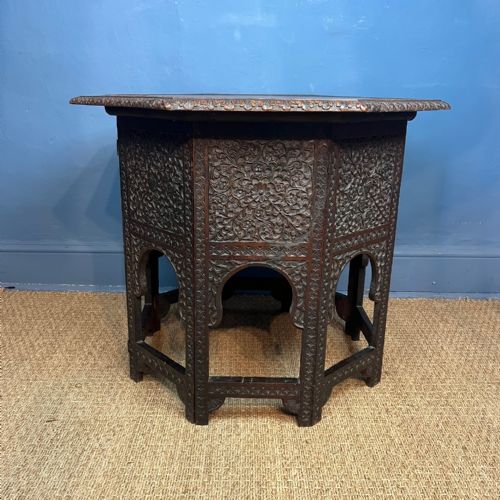
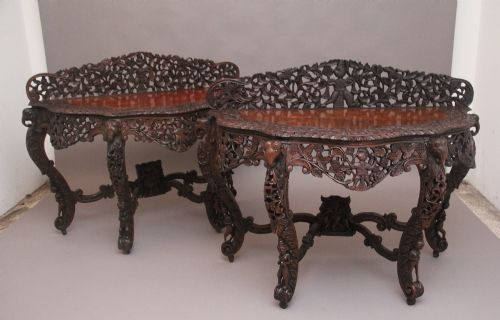
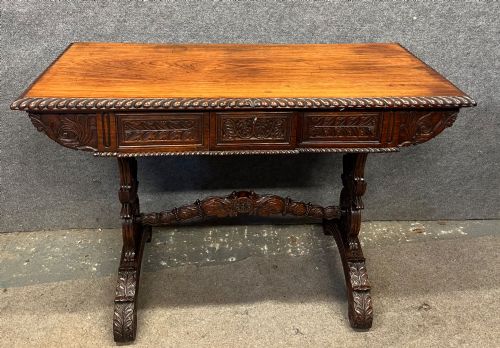

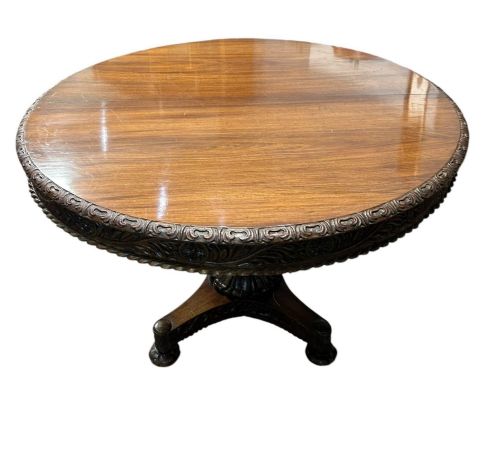
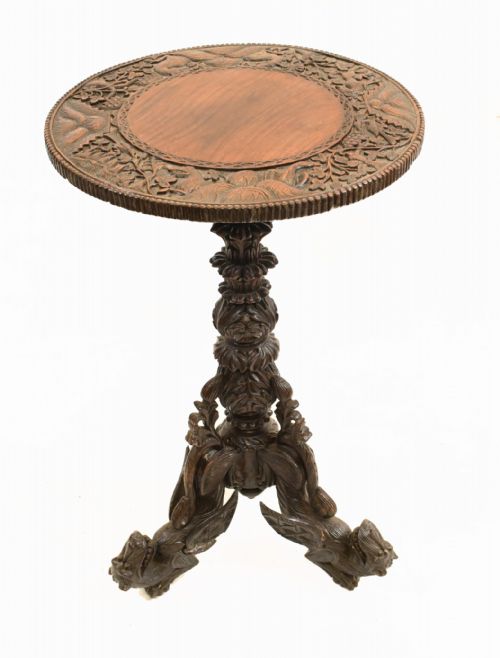


Hand Carved Teak Table
A hand carved teak table brings rich regional craft and dense tropical timber straight into a sitting room.

Hand Carved Teak Table
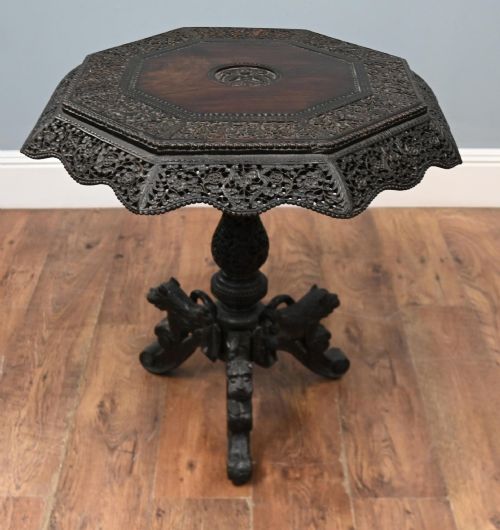
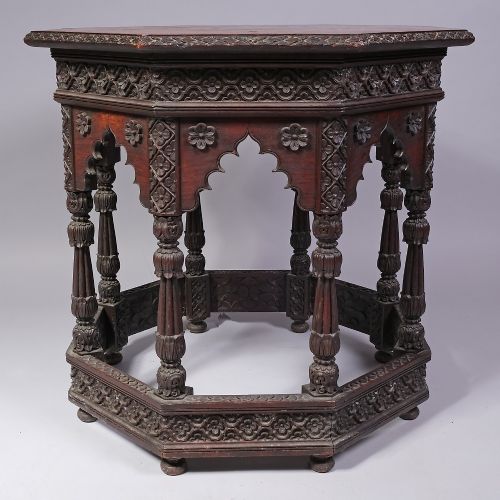
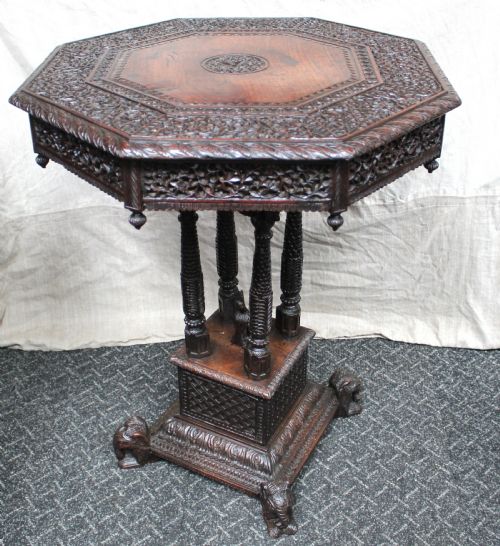
A hand carved teak table is a distinctive piece of functional furniture originating primarily from nineteenth-century Indian and Burmese workshops. The selection here spans side tables, occasional tables, coffee tables, and nested sets, often featuring octagonal or rectangular tops supported by intricate folding or rigid bases.
Buyers seeking a hand carved teak table will most commonly encounter pieces reflecting Victorian, Anglo-Indian, and Art Deco styles. These works frequently incorporate deep relief carving, pierced fretwork, and figurative motifs such as elephants into solid hardwood structures.
How they were made
Makers constructed each hand carved teak table using dense tropical hardwoods, predominantly teak, selected for its natural oils and durability. Artisans applied hand tools to execute deep surface carving across the timber, sometimes pairing the primary wood with contrasting materials such as bone or bone inlay.
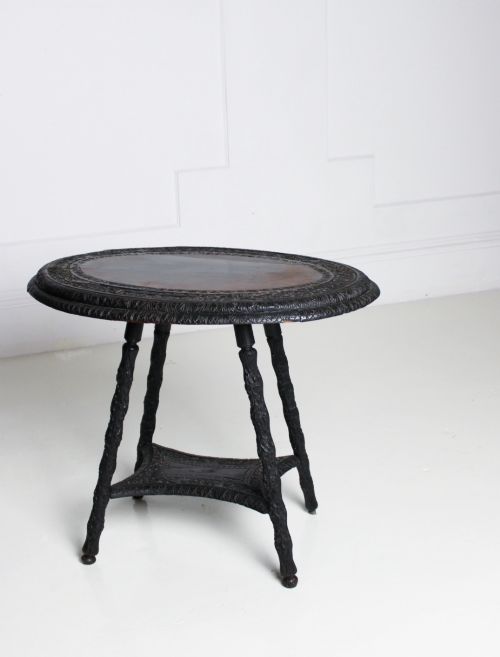
Construction techniques include traditional folding mechanisms for occasional tables, rigid frames for side tables, and smooth wax finishes applied to enhance the grain and tone of the wood. Some examples integrate glass surfaces or multi-tiered nesting designs into the carved wooden framework.
Hand Carved Teak Table Retail Price Guide 2026
Typical asking prices for hand carved teak table among the pieces listed under this phrase on Sellingantiques today, from the lower quarter to the upper quarter. They describe what is for sale here now, not the wider market.
What varies in quality
The standard of a hand carved teak table rests upon the depth, sharpness, and complexity of the chisel work across the timber. Superior examples display crisp detail in figurative elements like elephants and intricate pierced fretted borders without splintering in the dense grain.
Construction integrity also separates finer items, seen in how tightly folding occasional tables lock into position and the careful integration of bone inlay within the hardwood. Richness of colour and the preservation of the original wax finish further distinguish the higher tier of production.
The Hand Carved Teak Table Glossary
- Teak
- A dense tropical hardwood prized for its durability and resistance to moisture. It provides a stable base for deep sculptural carving.
- Anglo-Indian
- A stylistic term describing furniture produced during the British colonial period in India, merging European forms with local decorative carving traditions.
- Fretwork
- Openwork ornamentation created by cutting patterns through the material. This technique appears frequently on the aprons and folding stands of occasional tables.
- Bone Inlay
- The decorative practice of recessing small pieces of carved bone into the wood surface to form geometric or floral patterns.
- Occasional Table
- A light, movable small table designed for specific, temporary uses in a reception room or parlour.
Hand Carved Teak Table: Frequently Asked Questions
Where were these tables made?
The listings show origins primarily in India and Burma during the nineteenth and early twentieth centuries.
Craftsmen in regions such as the Bombay Presidency produced these works for both local use and export.
How do I care for a teak table?
Maintain the timber by dusting with a dry cloth and occasionally applying a suitable wax finish.
Keep the furniture away from direct heat sources to prevent the dense hardwood from drying out.
Are these tables sturdy?
Solid teak provides a naturally strong and heavy structural foundation for daily use.
Folding versions rely on clever interlocking wooden hinges that require careful handling when opening and closing.
What styles are available?
The available pieces predominantly showcase Anglo-Indian, Victorian, and Art Deco design characteristics.
Carving styles range from geometric pierced fretted panels to naturalistic depictions of elephants and foliage.