

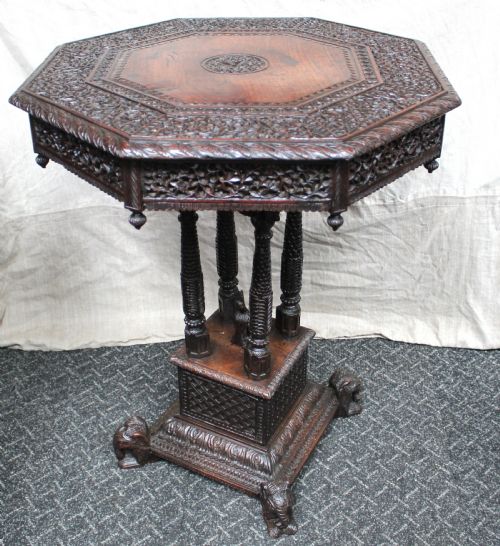


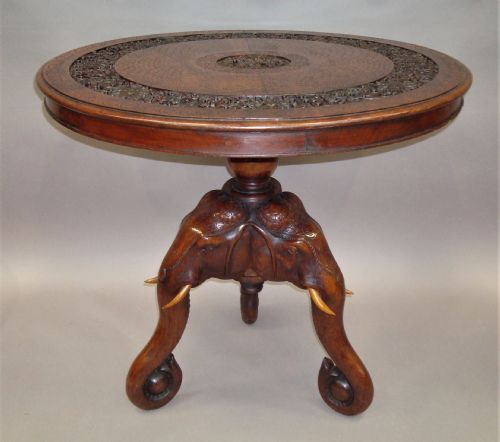

Carved Teak Elephant Table
A carved teak elephant table brings a distinctive Anglo-Indian presence into a room, supported on finely modelled animal forms.
Carved Teak Elephant Table
A carved teak elephant table unites practical surface utility with elaborate figural woodwork originating from nineteenth-century and early twentieth-century workshops. These pieces appear in various forms on this page, including occasional tables, side tables, coffee tables, centre tables, and occasional stands supported by carved elephant legs or trunk bases.
Most examples emerge from regional colonial traditions, notably the Anglo-Indian and Anglo-Burmese styles spanning the Victorian era through the Edwardian period and into the Art Deco epoch. Buyers encounter octagonal, circular, rectangular, and oval formats, often showcasing deeply undercut foliage alongside sculptural animal figures.
While primarily designed as functional furniture, these tables also encompass related forms such as plant stands, pedestals, and hall benches featuring identical carved motifs. The predominant timber is teak, occasionally supplemented by rosewood or hardwood frames accented with bone, ebony, and brass inlay.
Materials and construction
Maker workshops relied heavily on dense tropical hardwoods, chiefly teak and solid rosewood, selected for their structural stability and capacity to hold intricate, sharp relief carving. Artisans shaped these timbers using traditional hand tools to form table tops and supportive figural bases.
Surface embellishment frequently involved elaborate piercing and undercut foliage alongside contrasting details executed in bone inlay, ebony inlay, and brass. Structural elements such as tripod bases or four-leg elephant supports were joined using period-appropriate joinery to sustain the weight of the heavy timber tops.
Carved Teak Elephant Table Retail Price Guide 2026
Typical asking prices for carved teak elephant table among the pieces listed under this phrase on Sellingantiques today, from the lower quarter to the upper quarter. They describe what is for sale here now, not the wider market.
Every elephant support bears its own distinct expression, proving that nineteenth-century woodcarvers possessed a fine sense of individual animal personality.
Separating the ordinary from the exceptional
The distinction between standard production and superior craftsmanship rests in the depth, crispness, and anatomical precision of the figural carving. Finer tables exhibit life and naturalism in the elephant supports, with cleanly defined tusks, eyes, and trunk details that remain sharp rather than smoothed over by hasty finishing.
The Carved Teak Elephant Table Glossary
- Anglo-Indian
- A stylistic classification describing furniture manufactured in India during the British colonial period, typically combining British form requirements with indigenous carving techniques. This aesthetic defines many tables featuring figural elephant supports.
- Teak
- A durable tropical hardwood prized for its dense grain and resistance to warping, serving as the primary structural material for these carved tables. It accepts deep relief carving exceptionally well.
- Octagonal
- A geometric eight-sided table top shape frequently encountered in Bombay Presidency pieces. This layout often frames intricate central carving surrounded by floral borders.
- Bone Inlay
- A decorative technique where small pieces of animal bone are set flush into recesses within the teak or rosewood surface to create contrasting patterns. It appears on select tables alongside ebony accents.
- Occasional Table
- A small, versatile table intended for intermittent use around a living space, such as beside a chair or sofa. These form a large portion of the available elephant tables.
Carved Teak Elephant Table: Frequently Asked Questions
What periods do these tables come from?
The available pieces span the nineteenth century through the early twentieth century, encompassing Victorian, Edwardian, and Art Deco eras. Many examples date from the late nineteenth century up to the 1920s.
Workshop traditions from this timeframe reflect British colonial influence in regions such as Bombay and Burma, producing distinct styles that collectors group under Anglo-Indian and Anglo-Burmese designations.
How were elephant tables used originally?
These pieces served as functional household furniture, functioning as side tables, coffee tables, occasional tables, or plant stands within domestic interiors. Their sturdy teak construction accommodated lamps, decorative objects, and daily items.
Beyond basic utility, their elaborate figural carving and exotic materials made them conversation pieces that displayed the owner's taste for global colonial aesthetics during the Victorian and Edwardian periods.
How do I distinguish regional styles?
Regional variations often appear in the choice of secondary materials and the specific character of the woodcarving. Tables associated with Bombay frequently utilise octagonal or circular tops with dense floral relief, while Burmese examples may emphasise different figural proportions.
Inlay work also helps separate types, as specific workshops incorporated bone and ebony inlay into geometric borders that differ from plain carved teak surfaces.
How do I care for carved teak furniture?
Maintain teak surfaces by dusting gently with a dry or slightly damp cloth to prevent accumulation in the deep recesses of the carving. Avoid harsh chemical polishes that can build up within the intricate details.
Protect the timber from direct sunlight and extreme humidity fluctuations to safeguard the joints, inlay elements, and the structural integrity of the figural elephant supports.