




Carved Elephant Trunk Table
A carved elephant trunk table brings distinct nineteenth-century Anglo-Indian character into a room through elaborate woodwork and zoomorphic supports.

Carved Elephant Trunk Table
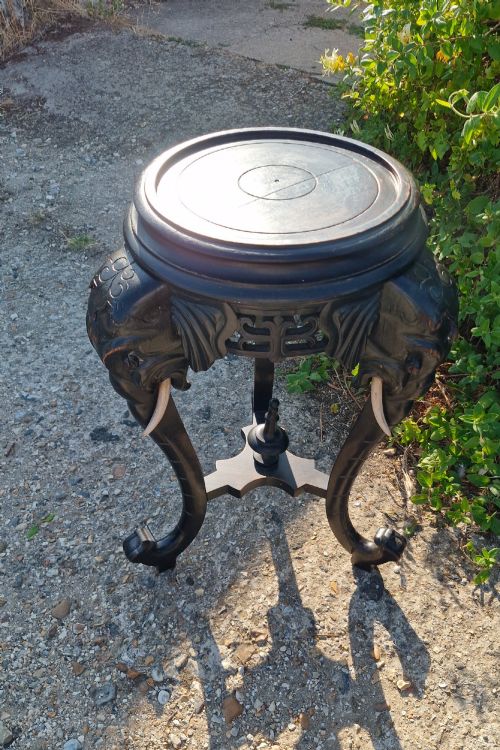
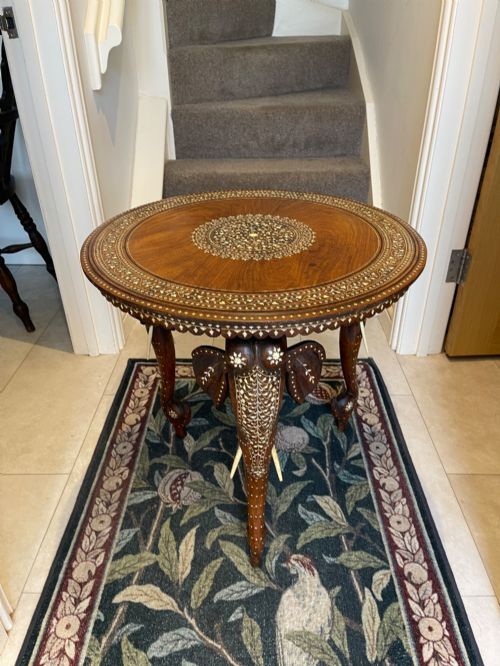
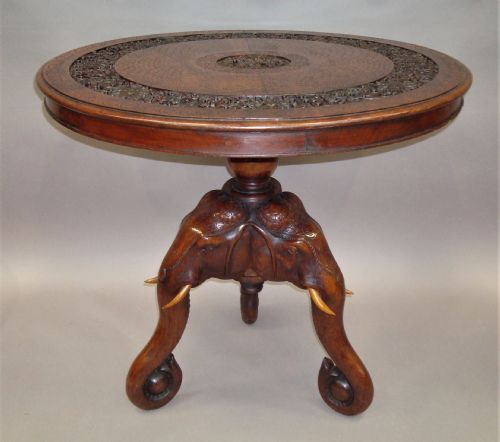
A carved elephant trunk table is a distinctive form of occasional or side table, often associated with nineteenth-century Anglo-Indian production and the Bombay Presidency. These pieces typically take circular, octagonal, or rectangular shapes, resting upon figural supports carved to resemble elephant heads and trunks.
The versions most commonly met on this page span the Victorian era, alongside pieces dated around 1890, 1910, and 1920. Makers utilised regional timbers such as teak and rosewood, applying dense surface decoration that defines the group.
How they were made
These tables rely on dense carved hardwood, predominantly teak and rosewood, chosen for their stability and capacity to hold intricate detail. Artisans worked the surfaces by hand, carving foliage, geometric motifs, and figural elements directly into the timber.
Some examples incorporate subsidiary materials, utilising bone inlay or brass details to accent the woodwork, while others feature painted wooden tusks fitted to the elephant heads.
Carved Elephant Trunk Table Retail Price Guide 2026
Typical asking prices for carved elephant trunk table among the pieces listed under this phrase on Sellingantiques today, from the lower quarter to the upper quarter. They describe what is for sale here now, not the wider market.
Listings feature teak, rosewood, hardwood, and bone materials across Victorian and early twentieth-century periods.
What varies in quality
Proportion and structural integrity also separate the output, as pieces with well-balanced geometric or circular tops and firmly integrated leg assemblies demonstrate superior craftsmanship during construction.
The Carved Elephant Trunk Table Glossary
- Anglo-Indian
- A descriptive term for furniture made in India during the British period, combining local timber and carving traditions with European forms. These objects often display intricate botanical motifs.
- Bombay Presidency
- A historical administrative division of British India associated with specific regional schools of decorative woodworking and furniture production. Pieces from this origin frequently feature dense carving in teak.
- Occasional table
- A small, movable table designed for secondary use in a room, such as holding a lamp or decorative items. In this category, they typically feature elephant trunk supports.
- Teak
- A durable tropical hardwood native to South and Southeast Asia, prized for its strength and rich grain. It serves as the primary material for the majority of these carved tables.
Carved Elephant Trunk Table: Frequently Asked Questions
What is an elephant trunk table?
An elephant trunk table is a small occasional or side table supported by carved wooden elephant heads and trunks. They originated during the nineteenth century within Anglo-Indian contexts.
These tables combine utilitarian furniture forms with figurative carving, reflecting nineteenth-century design interests in colonial and regional craftsmanship.
How do I date an elephant table?
Dating relies on stylistic markers, construction methods, and materials recorded across nineteenth-century and early twentieth-century periods. Pieces from the Victorian era or around 1890 typically exhibit specific regional carving characteristics.
Examining the timber species, such as teak or rosewood, and the integration of elements like painted wooden tusks helps establish the timeframe of manufacture.
Where were these tables made?
These pieces were produced in India during the British colonial period, with specific examples attributed to the Bombay Presidency and Hoshiarpur. Local artisans executed the detailed woodwork using native timbers.
Production catered to both domestic markets and export to Britain, incorporating traditional Indian motifs into European furniture shapes.
How do I live with one?
Living with a carved elephant trunk table involves placing it as a focal point where the detailed supports remain visible. They function well as side or occasional tables in living spaces.
Regular dusting with a dry cloth protects the intricate carved recesses from accumulating debris, preserving the finish of the hardwood.