







Carved Hardwood Accent Table
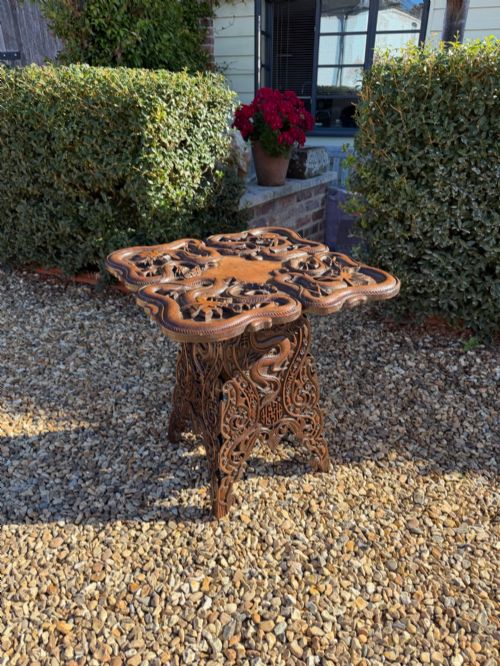
A carved hardwood accent table brings deep grain, dense timber and intricate regional motifs directly into a modern interior.

Carved Hardwood Accent Table
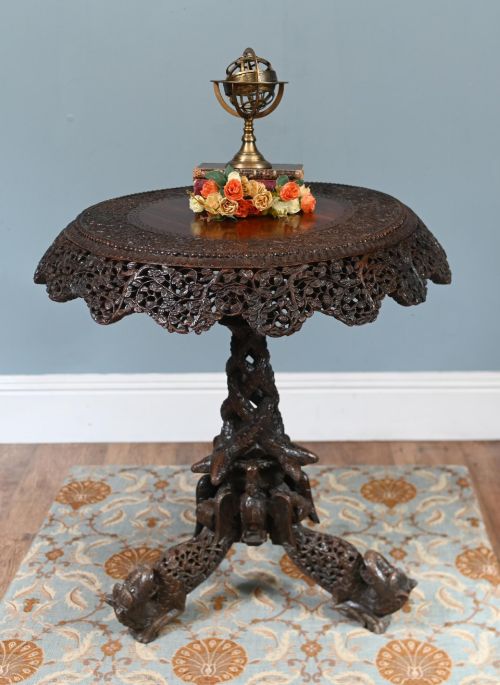
A carved hardwood accent table spans practical domestic surfaces like side tables, coffee tables and occasional tables alongside taller plant stands, vase stands and jardiniere supports. These pieces emerge primarily from nineteenth-century workshops in China, India, Burma and Vietnam, often created for export or colonial interiors.
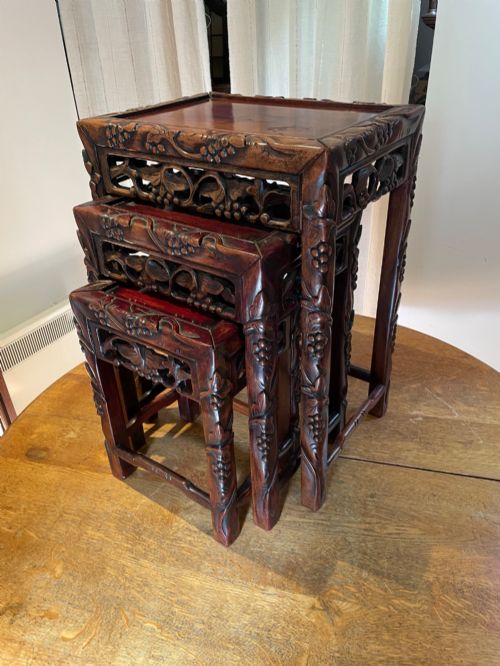
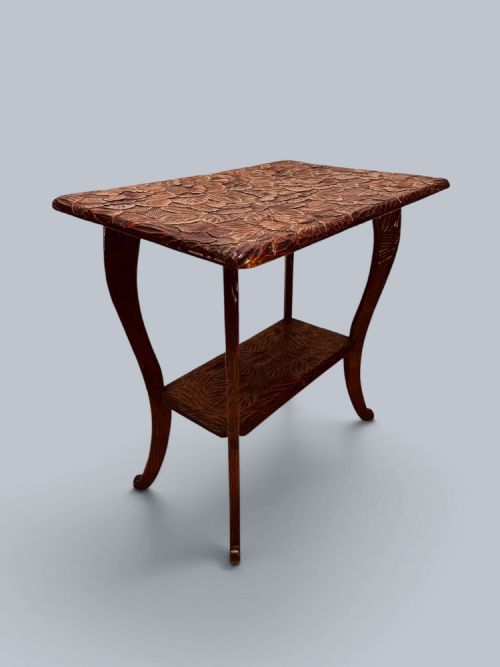
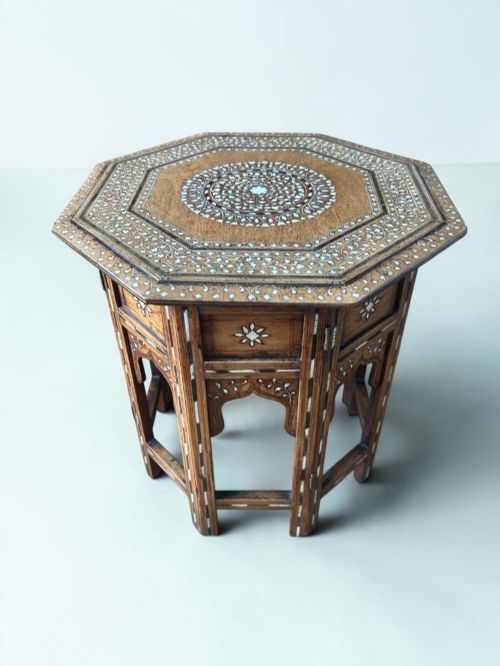
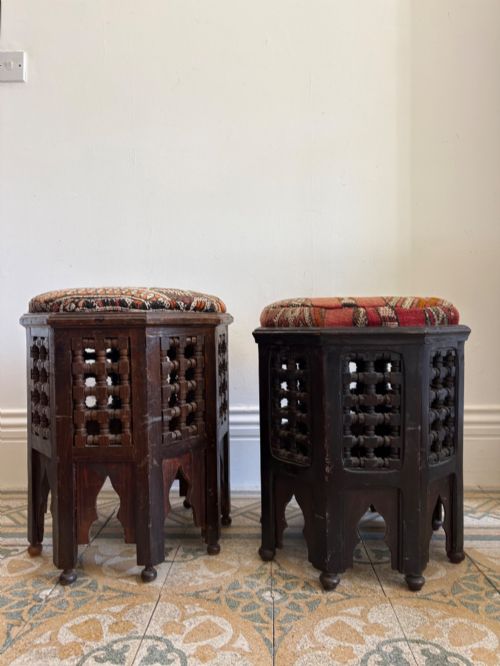
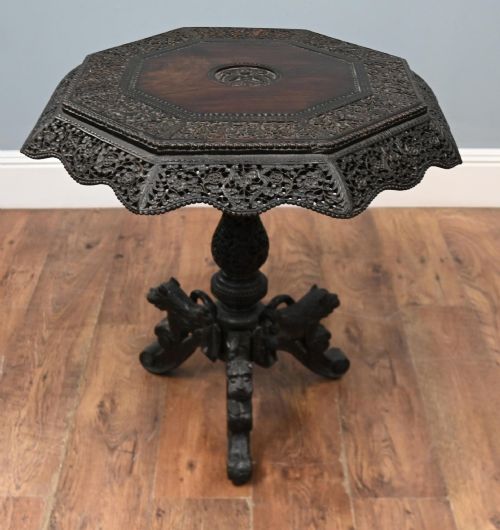
Buyers encounter compact forms such as octagonal lamp tables, nests of tables and low opium tables alongside freestanding centre pieces. The timber frames frequently incorporate regional decorative traditions, including dragon motifs, elephant heads and dense foliage carvings.
Materials and construction
Artisans built these tables using dense timbers including rosewood, padauk, hongmu and teak, which allowed for deep, crisp chisel work without splintering. These heavy woods provide the structural integrity needed for heavily carved aprons, cabriole legs and folding or interlocking bases.
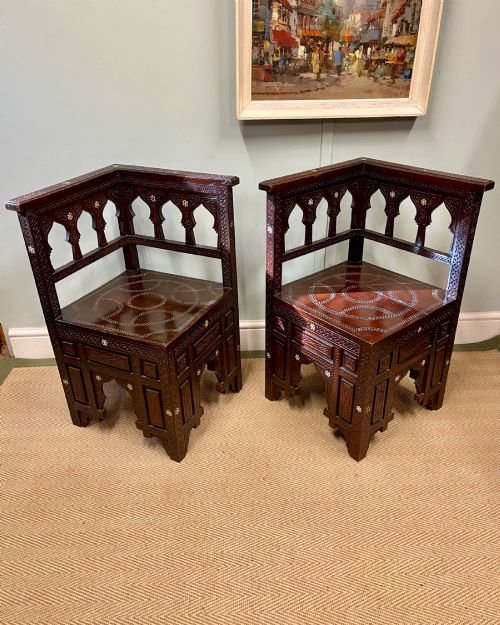
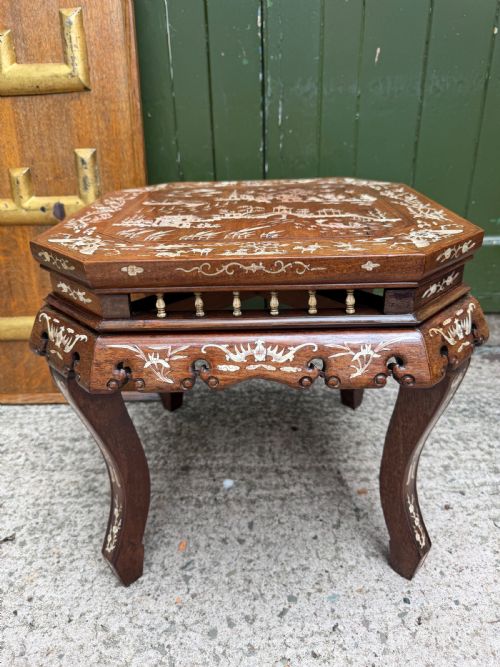
Many surfaces feature contrasting inlays of bone, mother of pearl or white marble inset into the wooden top. These secondary materials require precise channel cutting and secure fitting to sit flush within the figured grain of the hardwood.
Carved Hardwood Accent Table Retail Price Guide 2026
Typical asking prices for carved hardwood accent table among the pieces listed under this phrase on Sellingantiques today, from the lower quarter to the upper quarter. They describe what is for sale here now, not the wider market.
Several nineteenth-century tables feature carved wooden elephants supporting the top surface with their trunks.
Execution and depth of carving
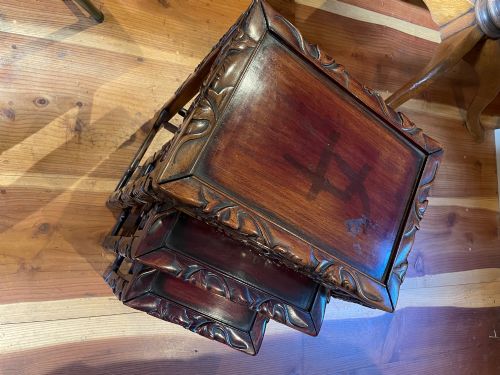
The standard of a carved hardwood accent table rests on the crispness and depth of the chisel work across the foliage, figures and animal motifs. Superior examples display undercut relief and sharp detailing where simpler pieces rely on shallow surface stamping or soft definition.
Material selection and stability dictate the upper tier of the range, seen in heavy, stable timbers with tight grain patterns and securely seated marble or inlaid panels. Construction methods that avoid excessive shrinkage cracks and loose joints separate museum-grade furnishings from standard utility items.
Liberty & Co·Gabriel Viardot
The Carved Hardwood Accent Table Glossary
- Hongmu
- A traditional Chinese term denoting dense, dark hardwoods often translated as red wood. This category encompasses heavy, richly coloured timbers utilised in fine export furniture.
- Jardiniere stand
- A tall, slender support designed to hold a ceramic plant pot or flower bowl. These pieces usually feature a circular top and elevated legs to display greenery.
- Padauk
- A heavy tropical hardwood known for its reddish hue and durability. Makers utilised this timber for deeply carved tables and stands.
- Anglo-Indian
- A descriptive term for furniture made in India during the British colonial period. These items blend traditional Indian carving techniques with European domestic forms.
- Nesting tables
- A set of graduated tables designed to slide neatly beneath one another when not in use. This practical form became popular in late nineteenth and early twentieth-century export production.
Carved Hardwood Accent Table: Frequently Asked Questions
What is a carved hardwood accent table used for?
These versatile tables serve as functional surfaces for lamps, drinks and books beside seating, or as decorative stands for plants and vases. Their compact footprints allow them to fit easily into smaller residential spaces.
Taller versions function as plant stands and pedestal displays, while lower coffee and opium tables anchor sitting room arrangements with rich surface texture and dark timber tones.
How do I identify an Anglo-Indian table?
Anglo-Indian tables typically combine traditional British furniture shapes, such as circular or octagonal occasional tables, with dense, deeply carved Indian botanical motifs. Look for dense hardwoods like padauk or rosewood paired with intricate floral or animal carvings.
Many examples also incorporate bone or ivory inlay work depicting foliage, hunting scenes or geometric patterns across the top surface.
How should I care for antique rosewood furniture?
Maintain dense hardwoods by keeping them away from direct heat sources and sudden temperature fluctuations that can cause timber to split. Dust regularly with a soft, dry cloth to prevent grit accumulation in the deep crevices of the carving.
Avoid commercial silicone sprays and instead apply a microcrystalline wax sparingly when the timber appears dry, buffing gently to preserve the natural grain.
Are marble top plant stands heavy?
Marble top plant stands carry significant weight due to the combination of dense hardwood frames and solid stone inserts. This heavy construction provides necessary stability for supporting tall ceramic pots and heavy planters without tipping.
When moving these pieces, lift them from the main structural frame rather than the upper rim or decorative aprons to protect the joints.